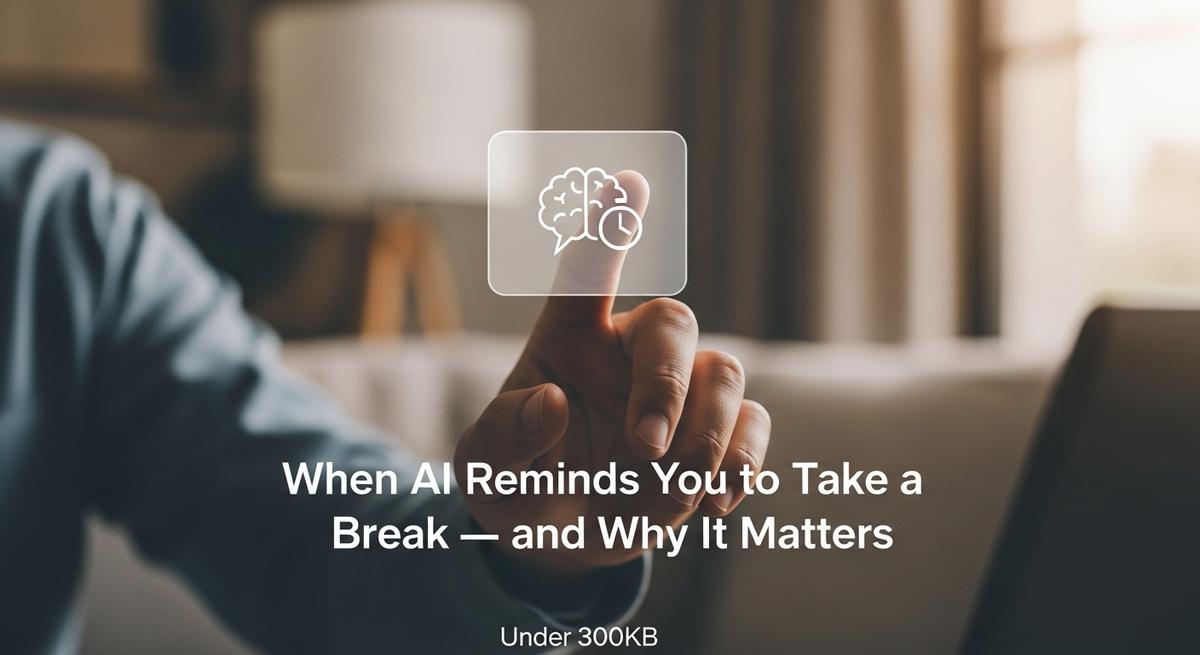
When AI Reminds You to Take a Break — and Why It Matters
- November 23, 2025
- ~ 1 min read
- 152 views
- Everyday AI , Future of Work , Lifestyle & AI
Introduction to AI-Powered Break Reminders and Their Importance
In today’s fast-paced digital era, artificial intelligence (AI) is increasingly woven into the fabric of our daily lives and work routines. From managing emails to optimizing schedules, AI tools are transforming how we operate, often enhancing efficiency in unprecedented ways. Yet, as the boundaries between work and personal time blur, concerns about mental health and workplace burnout have surged, prompting a critical need for solutions that support employee wellbeing.
AI break reminders have emerged as a vital innovation addressing this challenge. These intelligent systems monitor work patterns and prompt users to take timely breaks, helping to prevent the physical and psychological toll of continuous work. By integrating seamlessly into workflows, AI-powered reminders not only encourage healthier habits but also contribute to sustained focus and productivity.
The Growing Need for Mental Health and Burnout Prevention in the Workplace
Modern workplaces are grappling with rising levels of stress and burnout, fueled by nonstop connectivity and increasing workloads. Studies reveal that a significant portion of employees feel overwhelmed by the relentless pace of work, leading to diminished job satisfaction and productivity. As a result, organizations are recognizing the importance of proactive strategies to protect workplace wellbeing and foster a balanced work environment.
How AI Intervenes by Prompting Breaks
AI-powered break reminders leverage data such as activity levels, computer usage patterns, and even biometric signals to intelligently suggest when a user should pause and recharge. These reminders can be personalized to individual work rhythms, ensuring breaks are optimally timed to maximize recovery and minimize disruption. This approach not only helps reduce cognitive fatigue but also supports physical health by encouraging movement and eye rest.
What to Expect in This Article
In this article, readers will explore the multifaceted impact of AI break reminders on mental health and productivity. We will delve into the benefits these tools offer, examine real-world examples, and uncover the technology behind their effectiveness. Additionally, practical tips will be provided to help individuals and organizations harness AI for better burnout prevention and enhanced workplace wellbeing.
By understanding the role of AI in promoting healthier work habits, readers will gain valuable insights into how technology can be a powerful ally in creating more sustainable, focused, and mentally resilient work environments.
How AI Reminds You to Take Breaks and Why It Matters
Mechanisms AI Uses to Detect When Breaks Are Needed
AI technology employs a variety of sophisticated methods to determine the optimal timing for break reminders. By continuously monitoring user activity—such as keyboard strokes, mouse movements, and application usage—AI systems can identify signs of prolonged focus or inactivity. Advanced algorithms analyze these behavioral cues in real time to detect patterns indicating fatigue or cognitive overload.
Some AI solutions integrate stress detection by leveraging biometric data like heart rate variability, facial expression analysis, or posture monitoring when sensors or cameras are available and users opt in. Machine learning models synthesize this data to predict stress levels and mental fatigue, triggering timely prompts for micro-breaks or longer rest periods. Additionally, AI can factor in calendar events, meeting density, and workload fluctuations to personalize break scheduling dynamically, ensuring reminders are contextually relevant and minimally disruptive.
Scientific and Psychological Basis for Taking Breaks
Research in cognitive psychology and neuroscience consistently shows that taking regular breaks improves mental health and productivity. Continuous work without rest leads to cognitive overload, where the brain's capacity to process information diminishes, resulting in decreased focus, increased errors, and heightened stress. Breaks help reset attention spans, reduce mental fatigue, and promote recovery of cognitive resources.
Short pauses—often called micro-breaks—aid in lowering stress hormones and improving mood, which enhances overall well-being. Studies also demonstrate that breaks facilitate memory consolidation and creative problem-solving by allowing the brain to shift from focused to diffuse modes of thinking. Hence, AI reminders aligned with these scientific principles can effectively support healthier work habits and sustainable productivity.
How AI Break Reminders Reduce Fatigue, Stress, and Cognitive Overload
By delivering personalized interventions at the right moments, AI-powered break reminders help users avoid the pitfalls of prolonged mental strain. When AI detects signs of fatigue or elevated stress, it prompts users to pause before burnout symptoms escalate. These reminders can be subtle nudges or interactive prompts offering guided breathing exercises, mindfulness techniques, or simple physical stretches, which have been shown to alleviate tension and restore focus.
Such timely interventions reduce the risk of chronic stress and burnout by breaking up continuous work periods, thereby maintaining cognitive efficiency. Furthermore, AI’s ability to adjust recommendations based on individual responses and preferences increases the likelihood that users will adhere to break suggestions, making the process more effective than generic, fixed-timing alerts.
The Role of Personalized AI Interventions in Enhancing User Adherence
One of the key advantages of AI in promoting breaks is its capacity for personalized interventions. Unlike one-size-fits-all reminders, AI systems learn from individual behavior patterns, stress signals, and productivity rhythms to tailor break notifications. For example, an AI might delay a break prompt if a user is in a critical meeting or accelerate it if signs of cognitive overload are detected.
This customization fosters greater acceptance and compliance, as users perceive the reminders as supportive rather than intrusive. Moreover, AI can integrate with existing workflows and communication platforms, delivering prompts seamlessly through tools like Slack or Microsoft Teams. Over time, these personalized, context-aware nudges help cultivate healthier work habits and contribute to improved mental health and sustained productivity.
Real-World Examples and Use Cases of AI Break Reminders
AI Tools and Apps That Remind Users to Take Breaks
In the realm of AI wellness apps, numerous tools have emerged to help users manage their work rhythms by reminding them to take regular breaks. Popular apps like TickTick integrate built-in Pomodoro timers, which prompt users to engage in focused work sessions followed by scheduled breaks, enhancing both concentration and rest periods. Similarly, ClickUp offers customizable reminders and time-blocking templates that not only manage tasks but also encourage timely pauses to prevent burnout. These apps use AI-driven notifications and personalized schedules to ensure users maintain a healthy balance between productivity and rest, making break reminders an integral part of daily task management.
Workplace Implementations: AI in Employee Wellness and Productivity Tools
Organizations increasingly incorporate AI-powered break reminders into their employee wellness programs and productivity platforms. Tools like AI wellness apps are embedded within broader productivity suites to promote healthier work habits. For example, companies using platforms such as ClickUp or Akiflow leverage AI to analyze work patterns and automatically suggest optimal break times, helping employees avoid fatigue and maintain sustained productivity. These AI systems also adjust reminders based on real-time workload and calendar events, ensuring breaks fit naturally into busy schedules. This integration supports HR managers' goals of enhancing employee mental health by reducing stress and preventing burnout through proactive, AI-guided interventions.
Case Studies Demonstrating Improvements in Mental Health and Productivity
Several case studies highlight the tangible benefits of AI break reminders in professional settings. For instance, a tech company implemented an AI-driven scheduling assistant that intelligently interspersed breaks within employees’ calendars, resulting in a 20% increase in reported focus and a significant reduction in stress-related absences. Another study in healthcare showed that AI reminders helped nurses and staff take short restorative pauses during long shifts, leading to improved alertness and fewer errors. These success stories underscore how AI-powered reminders not only boost productivity but also contribute to better overall employee mental health, validating their role as essential workplace wellness tools.
Use Cases Across Industries: Tech, Healthcare, and Manufacturing
The adaptability of AI break reminders spans diverse industries, each with unique demands and workflows. In the technology sector, developers and designers use AI timers to maintain deep focus while preventing eye strain and physical fatigue through scheduled screen breaks. In healthcare, AI-driven alerts help medical professionals balance intense workloads with necessary rest, improving patient care quality and staff wellbeing. Meanwhile, in manufacturing, AI tools monitor physical activity and suggest micro-breaks to reduce repetitive strain injuries and maintain operational safety. These varied use cases demonstrate how AI wellness apps and productivity tools are tailored to meet the specific needs of different roles, making break reminders a versatile solution for enhancing workplace health and efficiency.
Advanced Insights: The Technology and Psychology Behind AI Break Reminders
How AI Detects Fatigue and Stress
Modern AI-powered break reminder systems leverage a combination of machine learning algorithms and real-time biometric monitoring to detect signs of fatigue and stress. These systems analyze diverse data streams, including facial expressions, voice patterns, and physiological signals such as heart rate variability and electroencephalogram (EEG) readings. For example, convolutional neural networks (CNNs) are frequently employed to track subtle changes in facial cues—like eye closure duration and yawning frequency—while recurrent neural networks (RNNs) can process time-series data from wearable sensors to identify patterns indicative of mental exhaustion. By integrating these advanced models, AI can move beyond simple timers and deliver personalized, context-aware break suggestions.
Biometric Monitoring and Real-Time Feedback
The integration of biometric monitoring is central to the effectiveness of AI break reminders. Wearable devices equipped with sensors capture continuous physiological data, enabling systems to detect early signs of cognitive fatigue before performance declines. For instance, changes in heart rate variability or skin conductance can signal rising stress levels, prompting the AI to recommend a break. These systems often use multi-modal data fusion, combining inputs from various sensors to improve accuracy and reliability. This approach not only enhances detection but also allows for adaptive interventions tailored to individual needs, ensuring that break reminders are timely and relevant.
Psychological Foundations and Ethical Considerations
The timing and frequency of AI break reminders are informed by psychological theories such as cognitive load theory and ultradian rhythms. Cognitive load theory suggests that mental resources are finite and that periodic breaks help restore cognitive capacity, while ultradian rhythms highlight the natural cycles of alertness and fatigue throughout the day. By aligning break suggestions with these principles, AI systems can optimize productivity and well-being. However, designing effective reminders requires careful consideration of user experience to avoid disruption or alert fatigue. Moreover, the use of sensitive biometric data raises important questions about data privacy and ethical AI practices. Experts emphasize the need for transparent data handling, robust security measures, and user consent to ensure that AI break reminders are both effective and trustworthy.
"Balancing technological innovation with ethical responsibility is crucial in the development of AI-driven wellness tools. The goal is not just to monitor, but to empower individuals with actionable insights while respecting their privacy and autonomy."
- AI break reminders use machine learning to analyze behavioral and physiological cues.
- Biometric monitoring enables real-time detection of fatigue and stress.
- Psychological theories guide the timing and frequency of break suggestions.
- Ethical AI and data privacy are essential for building trust and ensuring user well-being.
Implementing AI Break Reminders: Practical Tips and Best Practices
Choosing and Setting Up AI Break Reminder Tools
Implementing AI break reminders begins with selecting the right tool that fits your personal or organizational needs. Start by identifying your primary goals—whether it's improving productivity, enhancing wellbeing, or ensuring compliance with break policies. Popular AI tools offer customizable reminder schedules, real-time notifications, and integration capabilities with calendars and work platforms.
Follow these steps to set up your AI break reminder system effectively:
- Research and select AI tools that support break management and customization features aligned with your workflow.
- Install and configure the software or app, ensuring it has access to your calendar, task manager, or communication platforms for seamless integration.
- Define break intervals based on your work patterns or regulatory requirements, such as the Pomodoro technique or company break policies.
- Customize notification settings to choose reminder formats (pop-ups, sounds, mobile alerts) and timing that suit your preferences.
- Test the reminders during a trial period to ensure they trigger appropriately without causing disruptions.
Integrating AI Reminders into Daily Work Routines Without Disruption
To maximize the benefits of AI reminders without interrupting workflow, it’s essential to adopt a thoughtful integration approach. AI systems that use context-aware logic—such as detecting active meetings, typing activity, or screen sharing—can defer reminders to more suitable moments, making breaks feel natural rather than forced.
Consider these actionable tips:
- Schedule reminders during natural pauses in work, like task completion or meeting ends, to reduce annoyance.
- Leverage AI’s smart detection features to avoid sending break alerts during calls or focused work sessions.
- Use subtle notification methods such as gentle sounds or unobtrusive pop-ups to encourage compliance without distraction.
- Incorporate buffer periods between meetings or tasks to allow time for breaks, supported by AI scheduling preferences.
Customizing Reminders to Individual Needs and Preferences
Customization is key to effective break management. AI tools often allow users to tailor reminders to their unique rhythms, preferences, and health needs, enhancing both adherence and wellbeing.
Best practices for customization include:
- Adjust break frequency and duration based on personal energy levels, workload intensity, and health recommendations.
- Choose reminder types that resonate with you—visual cues, auditory signals like a calming bell, or even motivational messages.
- Set flexible schedules that adapt on busy days or during different work modes, ensuring reminders remain relevant and respectful.
- Incorporate user feedback by regularly reviewing reminder effectiveness and making adjustments accordingly.
Common Pitfalls to Avoid
While AI break reminders offer powerful support, certain pitfalls can reduce their effectiveness if not addressed:
- Ignoring reminders: Over time, users may develop “reminder fatigue” and dismiss alerts. To avoid this, keep notifications subtle and meaningful.
- Over-reliance on AI: AI should complement—not replace—human judgment and self-awareness. Users must remain mindful of their own needs beyond automated prompts.
- Poor timing: Sending breaks during critical tasks or meetings can cause frustration. Use AI tools with context-awareness to prevent ill-timed interruptions.
- Lack of customization: Generic reminders may feel intrusive or irrelevant. Personalize reminders to increase engagement and compliance.
Combining AI with Human-Led Wellbeing Strategies
For optimal results, integrate AI implementation with broader wellbeing strategies that include human elements. AI can handle scheduling and nudging, but human-led initiatives foster motivation, accountability, and emotional support.
Recommendations include:
- Encourage managers and HR teams to promote break culture alongside AI tools, reinforcing the importance of rest for mental health and productivity.
- Offer training sessions on how to use AI reminders effectively while maintaining self-awareness and autonomy.
- Combine AI data with employee feedback to tailor organizational policies and wellbeing programs.
- Use AI insights to identify patterns of burnout or stress and intervene with human support when needed.
Balancing AI-driven break reminders with human judgment and personalized wellbeing approaches creates a sustainable environment where productivity and mental health thrive together.
Comparing AI Break Reminders with Traditional Break Strategies
As digital wellbeing tools become more sophisticated, the way we manage breaks at work and in daily life is undergoing a transformation. AI-powered break reminders offer a new level of automation and personalization, but how do they stack up against traditional scheduling methods and other digital wellbeing solutions? Understanding the strengths and limitations of each approach helps users and organizations make informed decisions about their break management strategies.
Advantages of AI Reminders Over Manual or Calendar-Based Scheduling
Traditional break strategies—such as manually setting calendar alerts or relying on workplace policies—often lack flexibility and real-time adaptability. In contrast, AI vs traditional breaks reveals several key benefits:
- Adaptive Timing: AI systems analyze user behavior, workload, and historical patterns to suggest breaks at optimal moments, rather than at fixed intervals.
- Proactive Alerts: Unlike static calendar reminders, AI can send real-time notifications when it detects prolonged screen time or signs of mental fatigue.
- Integration with Workflows: AI-powered tools can sync with project management platforms, automatically adjusting break suggestions based on task progress and deadlines.
- Multi-Regulation Compliance: In workplace settings, AI can enforce complex break rules across different jurisdictions and employee types, reducing compliance risks.
These features make AI reminders especially valuable for busy professionals, remote teams, and organizations with diverse regulatory requirements.
Potential Drawbacks and Limitations of AI Break Systems
Despite their advantages, AI break reminders are not without limitations. Some common concerns include:
- Over-Automation: Excessive reliance on AI can reduce user autonomy, making individuals feel micromanaged or disconnected from their own wellbeing.
- Privacy Issues: AI systems often require access to personal usage data, raising concerns about data security and employee privacy.
- False Positives/Negatives: AI may misinterpret activity patterns, leading to unnecessary break prompts or missed opportunities for rest.
- Customization Limits: Not all AI tools allow for deep personalization, which can be a drawback for users with unique break needs.
These automation trade-offs highlight the importance of balancing convenience with user control.
Comparison with Other Digital Wellbeing Tools
AI break reminders are just one type of digital wellbeing tool available today. Other solutions include mindfulness apps, Pomodoro timers, and manual break trackers. While mindfulness apps focus on guided relaxation and mental health, Pomodoro timers offer a simple, structured approach to work-break cycles. AI systems, however, combine the best of both worlds by offering adaptive, data-driven suggestions while integrating with broader productivity workflows.
AI-powered break reminders excel in environments where flexibility, compliance, and real-time adaptation are critical, but they may not replace the simplicity and user control offered by manual timers or mindfulness apps.
The choice between these tools often comes down to the user’s specific needs, preferences, and the level of user autonomy they wish to maintain.
Conclusion and Next Steps for Embracing AI Break Reminders
As we have explored throughout this article, AI break benefits extend far beyond simple reminders—they play a crucial role in supporting mental health and enhancing overall productivity. By integrating intelligent prompts into our daily routines, AI helps us acknowledge the importance of stepping away from screens, reducing burnout, and fostering mindful work habits. These technologies serve as proactive partners in promoting mental health support, encouraging users to pause, reflect, and recharge before continuing their tasks.
Key Takeaways on AI and Mindful Break-Taking
Mindful break-taking, supported by AI, is more than a convenience; it is an essential practice for maintaining emotional well-being and cognitive performance. AI tools can detect signs of fatigue or stress and gently nudge users toward healthier behaviors, such as taking short breaks, practicing mindfulness, or engaging in relaxation techniques. These interventions contribute to better focus, reduced anxiety, and improved resilience at work and beyond. Importantly, AI’s ability to personalize reminders based on individual patterns makes these breaks more effective and sustainable over time.
Empowering Your Wellbeing Through AI
To harness the full potential of AI for your wellbeing, consider exploring the growing array of AI-powered break reminder tools available today. Whether integrated into workplace software or accessible via mobile apps, these solutions can be tailored to fit your unique schedule and needs. Start by setting realistic break intervals, allowing AI to guide you in balancing productivity with self-care. By embracing this technology, you take an active role in safeguarding your mental health and enhancing your daily performance.
Call to Action: Prioritize Your Wellbeing with AI
We encourage you to take the next step and incorporate AI break reminders into your routine. Experiment with different tools to find what resonates best with your workflow and lifestyle. Share these insights with colleagues, HR professionals, and mental health advocates to foster a culture that values wellbeing alongside achievement. Remember, the journey to better mental health and productivity is continuous, and AI can be a powerful ally in that pursuit.
Embrace the synergy of human intention and AI support to create healthier, more balanced workdays—because your wellbeing matters.

Comments (0)
Please login or register to leave a comment.
No comments yet. Be the first to comment!