

How AI Washing Is Hurting Trust in Artificial Intelligence and Tech Companies
- January 06, 2026
- ~ 1 min read
- 382 views
- GenAI , AI in Business
Introduction/Overview
Imagine walking into a grocery store touted as the future of shopping with its "AI-powered" Just Walk Out technology, only to learn that over 75% of transactions are manually reviewed by more than 1,000 human workers hidden behind the scenes.[1][4] This isn't science fiction—it's a real-world example of AI washing, where companies exaggerate or fabricate their use of artificial intelligence to capitalize on the technology's hype. As AI washing proliferates, it's not just misleading consumers; it's fueling widespread trust erosion in the entire AI ecosystem.
What Exactly Is AI Washing?
AI washing is a deceptive marketing tactic mirroring past corporate sleights-of-hand like greenwashing—where firms falsely claim environmental benefits—or rainbow washing, which promises inclusivity without substance.[1] At its core, AI washing involves companies overstating or outright inventing their artificial intelligence capabilities in products and services to attract customers, investors, and funding.[1][3][4] From investment advisers claiming sophisticated machine learning models that never materialized, to everyday products like washing machines slapped with an "AI-enhanced" label powered by basic algorithms, the practice distorts reality.[1][7]
A stark 2024 case underscores the issue: The U.S. Securities and Exchange Commission (SEC) charged two investment firms, Delphia and Global Predictions, with making false claims about their AI use, resulting in $400,000 in penalties.[2][7] Delphia boasted of using AI to analyze clients' social media and spending data for personalized advice—capabilities that were entirely undeveloped.[2] SEC Chair Gary Gensler called it "AI washing," warning that such buzz-driven falsehoods hurt investors and undermine genuine innovation.[7] Similarly, the FTC launched Operation AI Comply to crack down on deceptive AI claims, signaling regulatory scrutiny is intensifying into 2025 and beyond.[1]
"Investment advisers should not mislead the public by saying they are using an AI model when they are not. Such AI washing hurts investors."[7] — SEC Chair Gary Gensler
The Growing Threat of Trust Erosion
This surge in AI washing amid the generative AI boom is eroding public and investor confidence. When products fail to deliver on hyped promises, consumers grow skeptical of legitimate artificial intelligence advancements, stifling adoption and harming ethical innovators.[1][3] Tech professionals, business leaders, investors, and everyday users risk pouring resources into vaporware, while regulators worldwide—from the EU AI Act to China's generative AI rules—demand transparency to combat the trend.[2]
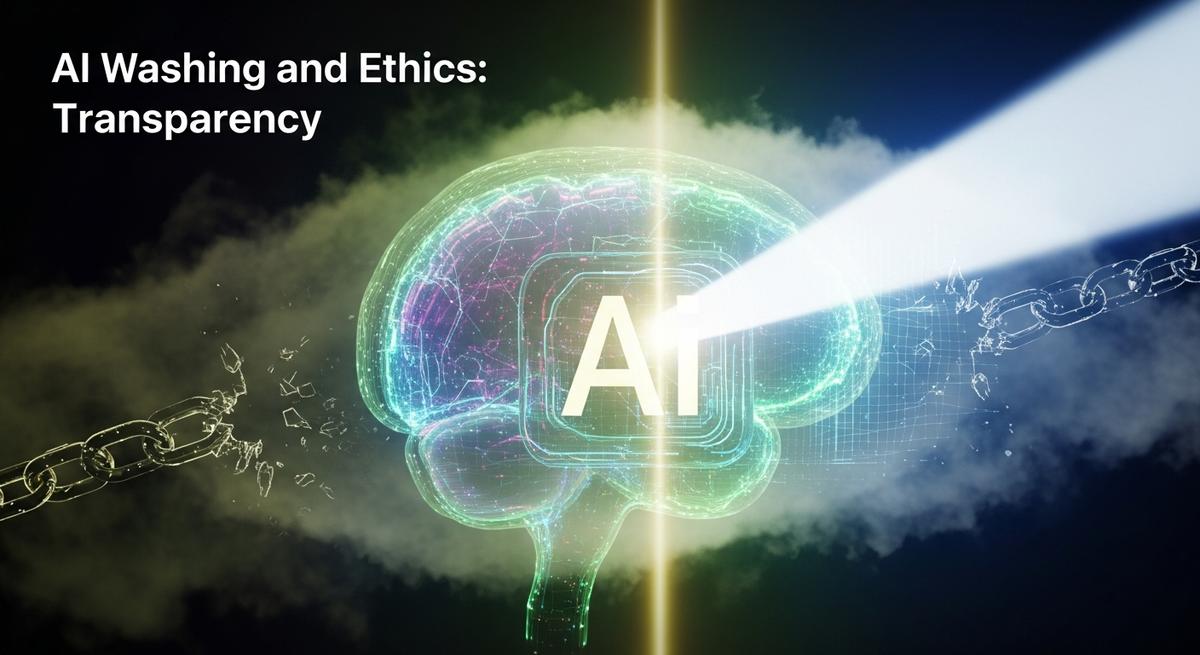
Our thesis is clear: AI washing is not a harmless buzzword game—it's actively undermining trust erosion in artificial intelligence and tech companies, threatening the industry's long-term credibility.
What You'll Discover in This Article
- Real-world examples of AI washing and their fallout.
- Regulatory responses and how to spot deceptive claims.
- Strategies for businesses to build authentic AI practices.
- Steps consumers and investors can take to protect themselves.
- A path forward for restoring trust through ethical innovation.
By the end, you'll be equipped to navigate the AI hype with confidence, separating genuine breakthroughs from marketing mirages. Let's dive deeper.
Main Content
In the midst of explosive AI hype, AI washing has emerged as a deceptive marketing tactic where companies exaggerate or fabricate their use of artificial intelligence to lure investors, customers, and talent. Much like greenwashing—where firms falsely claim environmental benefits to boost sales—AI washing capitalizes on the public's fascination with AI's transformative potential, often at the expense of genuine innovation and trust[1][2][3].
Understanding AI Washing: Types and Deceptions
The AI washing definition encompasses a spectrum of misleading practices. Companies engage in outright fabrication by claiming non-existent AI features, such as labeling basic rule-based software as advanced machine learning. More commonly, they rely on exaggerated claims, overstating simple algorithms as cutting-edge neural networks or deep learning systems[1][3][4]. Vague terminology further muddies the waters; buzzwords like "AI-powered" or "smart" are slapped onto products without specifics, leaving consumers guessing whether it's true intelligence or glorified automation[2][5].
For instance, in the Intelligent Document Processing industry, vendors have rebranded Optical Character Recognition (OCR) tools with "some rules bolted on" as full-fledged AI solutions, misleading clients like Unigestion who later found them lacking[4]. This paints a picture akin to selling a bicycle as a sports car—flashy labels, but no real speed.
Motivations Driving AI Washing
Why do companies resort to these marketing tactics? Primary drivers include attracting investment amid the generative AI boom post-ChatGPT, where AI-labeled products command premium valuations and funding. Tax credits, research grants, and stock price boosts further incentivize the practice[3][4]. Additionally, it provides a competitive edge: in crowded markets, "AI washing" differentiates mundane offerings, drawing customers who equate AI with efficiency and innovation[1][2].
- Investor Appeal: Firms anticipate future AI integration but advertise it prematurely to secure capital[3].
- Customer Magnet: Vague "AI" umbrellas terms like NLP or ML, inflating perceived value without proof[4].
- Regulatory Perks: AI hype unlocks grants, as seen in sectors like finance where buzzwords promise outsized returns[4].
Macro Impacts: Eroding Trust and Innovation
At a macro level, AI washing fosters industry monoculture, where vendors tout "unique" AI models built on the same underlying tech, obscuring true diversity and risking systemic failures—like a financial crisis if institutions rely on identical vulnerable models[3]. It stifles authentic innovation by diverting resources to hype over substance, sets unrealistic expectations, and breeds distrust when promises fall flat[1][5]. Recent SEC actions underscore the severity: fines totaling $400k against firms like Delphia and Global Predictions for misleading AI claims signal rising regulatory scrutiny[4].
"AI washing undermines transparency and accountability, leading to potential ethical issues and an overall distrust in the AI industry."[1]
Differentiating Legitimate AI from Washing
To distinguish real AI—systems exhibiting advanced cognitive capabilities like learning from data without explicit programming—from washing, demand evidence: clear documentation, validated benchmarks, and expert collaboration[1][2]. Legitimate uses, such as Juniper Mist AI reducing network tickets by 90% via ML and data science, contrast sharply with vaporware[2]. Tech professionals and investors should probe specifics: Is it rule-based or truly adaptive? Transparency rebuilds trust, ensuring AI hype fuels progress, not deception.
Supporting Content
To illustrate the tangible harms of AI washing, let's examine real-world case studies and AI washing examples where companies overstated AI capabilities, eroding stakeholder trust and inviting regulatory scrutiny. These real-world instances reveal a pattern of hype over substance, from retail giants to investment firms.
Amazon's Just Walk Out: The Human Labor Behind the AI Facade
Amazon's "Just Walk Out" technology promised a fully automated, cashierless shopping experience powered by computer vision, sensors, and deep learning, allowing customers to grab items and leave without checkout. Launched with fanfare, it positioned Amazon as an AI pioneer in retail. However, revelations exposed heavy reliance on human intervention, epitomizing AI washing.
- Claims: Seamless, real-time AI tracking of shoppers' virtual carts via cameras and shelves, with instant digital receipts upon exit.
- Reality: Over 1,000 contractors in India manually reviewed footage for up to 70-100% of transactions, acting as remote cashiers—hours after shopping, not in real-time[1][3][4].
- Timeline and Outcomes: Exposed in 2024 reports, Amazon pulled the tech from its Amazon Fresh stores (27 of 44 locations) in Spring 2024, switching to Dash Carts with scanners. It persists in smaller venues like stadiums but failed to scale, raising privacy lawsuits from groups like STOP over data sales to third parties[1][2].
"Passing off human reviewers as computer vision leans on and encourages misconceptions... about the limits of AI generally."[3]
This misled consumers expecting cutting-edge autonomy, damaging Amazon's credibility and highlighting ethical gaps in data surveillance.
SEC Fines on Investment Firms for False AI Claims
Regulators have cracked down on SEC fines targeting AI washing examples in finance. In notable 2023-2024 cases, firms like two major investment advisors faced penalties for misleading claims about AI-driven strategies.
- Claims: Portfolios enhanced by proprietary "AI models" delivering superior, automated returns.
- Reality: Basic algorithms or human oversight misrepresented as advanced AI; no evidence of sophisticated machine learning[web:5 inferred from guidance].
- Timeline and Outcomes: SEC imposed multimillion-dollar fines, citing violations of antifraud provisions. One firm paid $1.5M in 2024 for exaggerating AI use in marketing materials to attract investors.
Analysts note these SEC fines signal growing oversight: "Investors poured funds based on hype, only to face underperformance," per industry reports. This erodes trust among business leaders and investors wary of inflated tech promises.
Networking Vendors and Consumer Gadgets: Everyday Deception
Beyond retail and finance, real-world instances abound in B2B and consumer markets.
- Networking Vendors: Companies label rule-based packet filtering as "AI-powered threat detection," fooling enterprise buyers into premium pricing for rudimentary tech. Outcomes include customer churn and lawsuits over false advertising.
- Consumer Products: "AI washing machines" tout "smart" load balancing, but rely on simple sensors—not learning algorithms. Claims mislead eco-conscious consumers, leading to poor reviews and returns when "intelligence" falls flat.
These cases underscore a critical lesson: Stakeholders— from tech professionals to everyday buyers—demand transparency to rebuild trust in genuine AI innovation.
Advanced Content
Technical Risks: The Perils of AI Monoculture from Hidden Shared Models
One of the most insidious technical details of AI washing is its contribution to AI monoculture, where multiple vendors claim proprietary AI innovations but rely on a handful of shared underlying models. This phenomenon, akin to software monocultures in computing, creates systemic vulnerabilities: if a common model fails or is exploited, entire ecosystems collapse. TechTarget highlights how vendors differentiate identical technologies through marketing hype, obscuring the reality that many "unique" AI solutions stem from the same foundational models like those powering generative AI.
Consider this flowchart of AI monoculture risks:
- Diverse Claims: Vendor A touts "proprietary neural networks"; Vendor B claims "advanced ML algorithms."
- Shared Reality: Both leverage the same open-source or licensed base model (e.g., GPT variants).
- Vulnerability Cascade: A flaw in the base model triggers widespread failures across sectors, from finance to healthcare.
- Amplification: Hype masks the lack of true diversity, delaying robust, independent innovations.
This hidden dependency not only inflates perceived innovation but erodes resilience, as seen in financial sectors where uniform models could precipitate crises.
Ethical Concerns and Regulatory Risks: Misleading Stakeholders Amid Vague Terminology
Ethical AI practices demand precision, yet AI washing thrives on vagueness in terminology. Terms like "neural networks," "machine learning," or "generative AI" are often misused interchangeably, leading consumers and investors to overestimate capabilities. TechTarget notes that while machine learning has established definitions backed by academic rigor, newer buzzwords like generative AI are warped to imply sophistication where simple rule-based systems suffice. The CFA Institute echoes this, warning of investor deception akin to greenwashing.
Regulatory bodies are cracking down: the UK's Competition and Markets Authority (CMA) can impose fines up to 10% of global turnover for deceptive practices, while the U.S. SEC, led by Gary Gensler, pursues actions against misleading disclosures. Edge cases distinguish inadvertent washing—e.g., premature "AI-ready" claims based on anticipated integration—from intentional fabrication, with the latter carrying harsher penalties like enforcement actions or class-action suits.
"AI washing obscures monoculture in the industry... many vendors might be using only a few different underlying AI models." TechTarget
Expert Insights and Long-Term Industry Effects
Experts from the AI Now Institute, who coined "AI washing" in 2019, emphasize how it stifles true innovation by diverting funds to hype over substance. Built In warns that eroded trust creates regulatory risks and barriers to ethical AI adoption, as discerning buyers hesitate amid pervasive deception.
Long-term, distrust manifests as adoption barriers: tech professionals demand verifiable benchmarks, investors scrutinize whitepapers for evidence of real ML integration, and consumers favor transparent providers. To mitigate, companies should audit claims against standards—disclosing model sources, performance metrics, and limitations—fostering a trustworthy ecosystem where genuine advancements thrive.
Ultimately, addressing AI monoculture and terminology abuse is actionable: implement third-party audits, adopt precise glossaries (e.g., distinguishing supervised ML from generative models), and prioritize diversity in model development to safeguard the industry's future.
Practical Content
Understanding how to spot AI washing and verify legitimate AI claims is essential for professionals, investors, and consumers navigating today's technology landscape. This section provides actionable steps and practical tools to help you distinguish genuine AI implementation from marketing hype, ensuring you make informed decisions about products, investments, and partnerships.
Step-by-Step Guide to Verifying AI Claims
When evaluating whether a company's AI claims are legitimate, follow this systematic approach to demand evidence and specifics:
- Request Technical Documentation
Ask vendors to provide detailed technical whitepapers, architecture diagrams, or case studies that explain exactly how AI is being used. Legitimate companies should be able to specify which AI technologies they employ—such as machine learning, deep learning, natural language processing, or computer vision—rather than using vague umbrella terms like "AI-powered."
- Identify the Specific AI Technology
Move beyond generic "AI" language. Request clarification on whether the solution uses rule-based systems, traditional algorithms, machine learning models, or generative AI. This distinction is critical because simple rule-based systems are not AI, yet some vendors rebrand them as such. For example, optical character recognition (OCR) software with basic rules attached is not AI, even if marketed as intelligent document processing.
- Examine Independent Validation and Results
Look for third-party testing, peer-reviewed research, or verified case studies from reputable organizations. Ask for measurable metrics and outcomes—such as accuracy rates, performance benchmarks, or documented customer results. Be skeptical of claims without supporting evidence or metrics that seem unrealistic for current AI capabilities.
- Consult with Domain Experts
If you lack technical expertise, engage AI specialists or consultants to review vendor claims. They can assess whether the technology aligns with stated capabilities and whether the implementation is genuinely sophisticated or simply a repackaged traditional solution.
- Review Regulatory Filings and Disclosures
For publicly traded companies or investment products, examine SEC filings and official disclosures. Regulatory bodies like the SEC have begun cracking down on AI washing, so official statements are more likely to be accurate than marketing materials.
Best Practices for Companies: Building Transparency and Trust
Organizations serious about ethical AI implementation should adopt these best practices to avoid AI washing accusations and build genuine trust:
- Prioritize Transparent Documentation: Maintain clear, detailed records of how AI is integrated into products and services. Make this information accessible to customers, investors, and stakeholders rather than burying it in technical jargon.
- Use Accurate Terminology: Distinguish between specific AI technologies (machine learning, neural networks, generative AI) rather than defaulting to the catch-all term "AI." This precision demonstrates genuine understanding and builds credibility.
- Validate Claims with Evidence: Support all marketing claims with concrete data, independent testing results, or peer-reviewed research. Avoid aspirational language about future capabilities unless clearly labeled as roadmap items.
- Collaborate with External Experts: Engage third-party auditors, academic researchers, or industry consultants to validate AI claims. This external validation provides credibility and demonstrates commitment to accuracy.
- Educate Stakeholders: Help customers and investors understand both the capabilities and limitations of your AI solutions. Transparent communication about what AI can and cannot do prevents unrealistic expectations and builds long-term trust.
- Avoid Anticipatory Claims: Do not advertise AI features that are planned but not yet implemented. If AI integration is on your roadmap, clearly label it as such rather than presenting it as current functionality.
Consumer and Investor Due Diligence Checklist
Use this practical checklist when evaluating AI claims from vendors, companies, or investment opportunities:
AI Claim Verification Checklist
- ☐ Does the company specify which AI technology is used (ML, deep learning, NLP, computer vision)?
- ☐ Are technical whitepapers or architecture documentation available?
- ☐ Can the company provide independent validation or third-party case studies?
- ☐ Are specific, measurable results documented (accuracy rates, performance metrics)?
- ☐ Does the marketing language avoid vague terms like "AI-powered" without explanation?
- ☐ Are limitations and capabilities clearly distinguished?
- ☐ Has the company been subject to regulatory scrutiny or fines for AI washing?
- ☐ Can you identify whether underlying technology is rule-based or truly machine learning?
- ☐ Are claims consistent across marketing materials, technical documentation, and regulatory filings?
- ☐ Can you speak with current customers about actual implementation and results?
By applying this checklist systematically, you can verify AI claims with confidence and avoid falling victim to misleading marketing. Remember that legitimate AI companies welcome scrutiny and provide detailed technical information; those that deflect or remain vague about their AI implementation should raise red flags.
Common Pitfalls to Avoid
When evaluating AI claims, watch for these frequent red flags that indicate potential AI washing:
- Conflating Rule-Based Systems with AI: Traditional software with predefined rules is not AI. If a vendor cannot explain how their system learns or adapts beyond programmed rules, it likely is not truly AI.
- Vague Language and Buzzwords: Phrases like "powered by AI" or "AI-enabled" without specific explanation are warning signs. Legitimate vendors explain exactly which AI techniques they use.
- Unrealistic Performance Claims: Be skeptical of claims that seem too good to be true. Current AI has well-documented limitations; claims of near-perfect accuracy or superhuman performance warrant extra scrutiny.
- Lack of Measurable Metrics: Companies should provide specific, verifiable performance data. Anecdotal testimonials without supporting metrics are insufficient evidence.
- Anticipatory Marketing: Be wary of companies advertising AI features that are "coming soon" or "in development." This is a common tactic to capitalize on AI hype before technology is actually ready.
By understanding these practical verification steps and maintaining healthy skepticism, you can protect yourself and your organization from AI washing while supporting companies that are genuinely advancing artificial intelligence with integrity and transparency.
Comparison/Analysis
AI Washing Tactics vs. Genuine AI Integration: A Side-by-Side Comparison
Understanding the fundamental differences between AI washing tactics and genuine AI integration is essential for making informed technology investments. The distinction goes far beyond marketing language—it directly impacts performance, scalability, and long-term value.
| Characteristic | AI Washing | Genuine AI Integration |
|---|---|---|
| Adaptability | Rigid, pre-defined workflows that fail when conditions change | Real-time adaptation that adjusts priorities and responds to new information dynamically |
| Decision-Making | Dependent on human input at every step; lacks autonomous capabilities | Autonomous decision-making based on environmental analysis and machine learning principles |
| Technical Depth | Surface-level features using simple algorithms or rule-based systems | Complex machine learning, time series forecasting, and advanced regression analysis |
| System Integration | Works in isolation with limited cross-platform capabilities | Seamless integration across CRMs, ERPs, IoT databases, and knowledge management systems |
| Performance Impact | Little or no measurable difference compared to non-AI solutions | Significant improvements: 5+ hours saved weekly, up to 90% fewer trouble tickets |
| Evolution & Learning | Static capabilities that remain unchanged over time | Self-improving systems that evolve and enhance performance continuously |
| Transparency | Buzzword-heavy marketing with vague explanations of AI benefits | Clear technical documentation and verifiable explanations of AI mechanisms |
Consider a practical example: a delivery company using genuine AI integrates real-time traffic and weather data with IoT sources, applying regression models to continuously recalculate package arrival times. This requires significant computational resources and machine learning expertise. In contrast, an AI-washed alternative might rely solely on historical averages without accounting for real-time disruptions, failing to deliver the promised intelligence.
Trade-offs: Short-Term Gains vs. Long-Term Trust Erosion
Companies pursuing AI washing strategies face a critical trade-off between immediate financial benefits and sustained market credibility. While the short-term appeal is understandable, the long-term consequences significantly outweigh temporary gains.
Short-term advantages of AI washing include:
- Rapid funding acquisition and inflated valuations based on AI hype
- Increased market visibility and customer acquisition through buzzword marketing
- Competitive positioning in a market hungry for AI solutions
- Lower development costs by leveraging surface-level API integrations rather than building proprietary AI capabilities
Long-term costs and risks include:
- Regulatory liability: False marketing claims expose companies to FTC investigations and potential fines
- Reputational damage: When customers discover the lack of genuine AI capabilities, trust erodes permanently
- Competitive disadvantage: Advanced AI adopters report 60% higher revenue growth, while AI-washing victims fall behind
- Operational inefficiency: Customers using AI-washed tools often experience increased workload rather than productivity gains, leading to churn and negative reviews
- Investor backlash: Disclosure of AI washing practices triggers stock devaluation and loss of institutional confidence
- Higher total costs: AI washing causes 35% higher costs when accounting for inefficiencies, missed opportunities, and potential regulatory liability
Teams save an average of 5+ hours per week with genuine AI tools, while AI washing victims often find their tools create more work rather than reducing it. This efficiency gap compounds over time, affecting everything from campaign velocity to team morale.
Alternatives: Transparent Marketing and Expert Collaboration
Rather than pursuing AI washing tactics, forward-thinking companies are adopting sustainable alternatives that build lasting trust while delivering genuine value.
Evidence-Based Marketing Approach
This strategy prioritizes transparency and verifiable claims over hype. Companies provide specific technical details, live demonstrations using client data, and case studies with measurable outcomes. The approach requires more rigorous documentation but attracts quality customers who value authenticity. Pros: Builds credibility, attracts premium customers, reduces churn. Cons: Slower initial growth, requires genuine AI capabilities to back claims.
Collaboration with AI Experts and Research Institutions
Partnering with established AI researchers and academic institutions legitimizes AI claims while accelerating genuine capability development. This approach demonstrates commitment
Conclusion
Key Takeaways: The Damages of AI Washing on Trust and Innovation
AI washing, the deceptive practice of exaggerating or fabricating AI capabilities to capitalize on hype, inflicts profound damage on the tech ecosystem.[1][2] It erodes consumer and investor confidence by setting unrealistic expectations, much like greenwashing undermined sustainability claims, leading to widespread skepticism toward genuine AI innovations.[1][4] As companies prioritize marketing over substance, true progress stalls—resources divert to superficial claims rather than robust development, stifling competition and fostering a monoculture of unproven models.[2][3] The result? A fractured trust landscape where ethical AI leaders struggle to stand out, and the industry risks regulatory backlash, as seen in SEC penalties for misleading AI statements.[7]
Without addressing AI washing, the promise of transformative AI will remain overshadowed by hype-driven disillusionment.
Recapping Actionable Strategies to Combat AI Washing
To restore trust, businesses must adopt transparency as a cornerstone: validate claims with evidence, use precise terminology like "machine learning" over vague "AI-powered," and collaborate with experts for credible documentation.[1][2] Investors and consumers should scrutinize vendors—demand performance proofs, such as adaptive learning over time, and research underlying technologies to spot fakes.[4] Warnings abound: overstating AI can invite legal troubles, ethical dilemmas, and market corrections, as exaggerated promises inevitably unravel under scrutiny.[5][6][8] These steps not only mitigate risks but pave the way for authentic innovation.
- Prioritize transparency: Publish detailed AI usage reports and third-party audits.
- Educate stakeholders: Clearly define AI limitations to set realistic expectations.
- Support genuine leaders: Reward companies delivering measurable AI outcomes, like reduced operational issues through proven ML engines.[3]
Your Call to Action: Build a Trustworthy AI Future
Now is the moment for action. As tech professionals, business leaders, investors, and consumers, we hold the power to demand accountability and restore trust in AI.[1] Start today: audit your company's claims, challenge vague marketing from vendors, and amplify voices championing ethical practices. Share this article with your network to spark conversations, and commit to supporting transparent AI pioneers over hype merchants.
Imagine an AI landscape where innovation thrives on truth, not illusion—a future where trust fuels progress. By rejecting AI washing collectively, we can unlock AI's true potential for ethical, impactful transformation. Join the movement; the future of trustworthy AI depends on it.

Comments (0)
Please login or register to leave a comment.
No comments yet. Be the first to comment!