
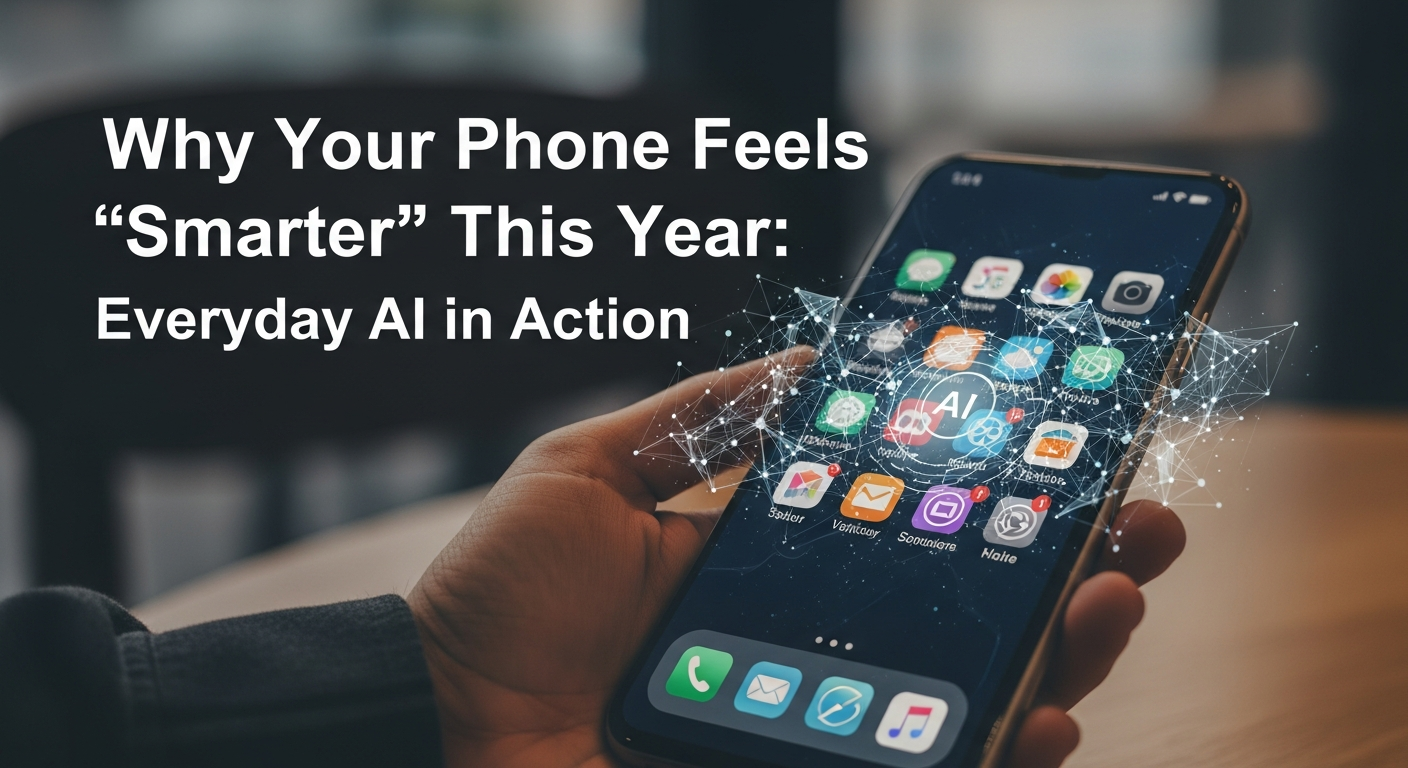
Why Your Phone Feels “Smarter” This Year: Everyday AI in Action
- November 21, 2025
- ~ 1 min read
- 114 views
- Everyday AI
Introduction to Smarter Smartphones
A staggering 90% of smartphone users utilize Artificial Intelligence (AI) powered features on their devices, often without even realizing it. This statistic highlights the profound impact of AI on Smartphone Technology, transforming the way we interact with our phones and enhancing our overall User Experience. As we delve into the world of smarter smartphones, it becomes evident that AI is no longer a futuristic concept, but an integral part of our daily lives.
The Rise of AI in Smartphones
In recent years, the integration of AI in smartphones has become increasingly prevalent, with manufacturers incorporating AI-driven features such as facial recognition, voice assistants, and predictive maintenance. These features have not only improved the functionality of our devices but have also enabled a more personalized and intuitive user experience. With AI-powered smartphones, we can now enjoy enhanced camera capabilities, smarter battery management, and more efficient performance.
Enhancing User Experience through AI
The importance of AI in enhancing User Experience cannot be overstated. By leveraging AI algorithms, smartphones can now learn and adapt to our behavior, providing us with tailored recommendations, personalized notifications, and streamlined interfaces. This shift towards more intelligent and responsive devices has raised the bar for Smartphone Technology, with users expecting more sophisticated and intuitive experiences from their devices. As we explore the world of smarter smartphones, we will examine the various ways in which AI is revolutionizing the way we interact with our phones.
What to Expect from this Article
In this article, we will embark on a journey to explore the practical applications of Artificial Intelligence in smartphones. We will delve into the various ways in which AI is enhancing our User Experience, from intelligent assistants to predictive analytics. Some of the key topics we will cover include:
- The evolution of AI-powered smartphone features
- The impact of AI on smartphone performance and efficiency
- The role of AI in enhancing smartphone security and privacy
- The future of AI in smartphone technology and its potential applications
By the end of this article, you will have a deeper understanding of how AI is transforming the world of smartphones and what you can expect from future Smartphone Technology advancements. Whether you are a tech enthusiast or simply a smartphone user, this article aims to provide you with valuable insights into the exciting world of smarter smartphones and the endless possibilities that AI has to offer.
The Role of AI in Smartphones
The integration of Artificial Intelligence (AI) in smartphones has revolutionized the way we interact with these devices. At the heart of this revolution are technologies like Machine Learning, Natural Language Processing, and Computer Vision. These AI-powered features have made our phones feel "smarter" by enabling them to learn from our behavior, understand our voice commands, and even see the world around us.
Machine Learning: The Brain Behind Smartphones
Machine Learning is a type of AI that allows smartphones to learn from data without being explicitly programmed. It's like teaching a child to recognize objects; at first, you show them many examples, and over time, they can identify these objects on their own. In smartphones, machine learning algorithms are used to personalize experiences, such as predicting the apps you're likely to use next or filtering out spam messages. For instance, when you use a virtual keyboard, Machine Learning helps predict the next word you're about to type, making typing faster and more accurate.
Natural Language Processing and Voice Assistants
Natural Language Processing (NLP) is another crucial AI technology that enables smartphones to understand and generate human-like text or speech. This is what powers voice assistants like Siri, Google Assistant, and Alexa. NLP allows these assistants to comprehend voice commands, answer questions, and even engage in basic conversations. The accuracy and responsiveness of these assistants have significantly improved over the years, thanks to advancements in Natural Language Processing. For example, you can ask your voice assistant to send a message to a friend, and it will not only compose the message but also suggest possible responses based on your previous conversations.
Computer Vision: Seeing the World Through Your Smartphone
Computer Vision is the AI technology that gives smartphones the ability to "see" and understand visual data from the world around us. This is used in features like facial recognition for unlocking your phone, object detection in photos, and even augmented reality (AR) experiences. Computer Vision algorithms can identify faces, objects, and scenes, making it possible for your smartphone to automatically sort photos, detect text in images, or provide information about objects you point your camera at. The impact of Computer Vision on smartphone cameras has been particularly significant, enabling features like portrait mode, night mode, and automatic scene detection.
The integration of these AI technologies not only enhances the user experience but also has a significant impact on battery life and performance. By optimizing how resources are used, AI can help extend battery life. For example, Machine Learning can predict when you're likely to use certain apps and prepare them in the background, reducing the time and power needed to launch them. Similarly, Computer Vision can improve camera performance without requiring more powerful (and power-hungry) hardware.
- Improved personalization through Machine Learning
- Enhanced voice command functionality with Natural Language Processing
- Advanced camera capabilities thanks to Computer Vision
The future of smartphones is undoubtedly tied to the advancement of AI technologies. As Machine Learning, Natural Language Processing, and Computer Vision continue to evolve, we can expect even more innovative features that make our smartphones feel truly "smart".
Everyday AI in Action
The integration of Artificial Intelligence (AI) in smartphones has revolutionized the way we interact with our devices and the world around us. AI-driven Personal Assistants like Siri, Google Assistant, or Bixby have become an essential part of our daily lives, making it easier to manage tasks, access information, and control other smart devices. These personal assistants use natural language processing to understand voice commands, allowing users to send messages, make calls, and set reminders with ease.
AI in Photography and Image Editing
The role of AI in photography and image editing is another significant example of AI in action. Many smartphones now come equipped with AI-powered cameras that can automatically detect scenes, adjust settings, and enhance image quality. For instance, the latest iPhone models use AI to recognize and adjust for different lighting conditions, resulting in more vibrant and detailed photos. Additionally, AI-powered image editing capabilities allow users to easily remove blemishes, adjust colors, and apply filters to their photos. This has made photography and image editing more accessible and enjoyable for users of all skill levels.
Some notable examples of AI in photography include:
- Automatic scene detection: AI-powered cameras can detect and adjust for different scenes, such as landscapes, portraits, or low-light conditions.
- Image enhancement: AI can enhance image quality by adjusting colors, contrast, and brightness.
- Object removal: AI-powered image editing tools can remove unwanted objects or blemishes from photos.
AI-Powered Health and Fitness Tracking, and Smart Home Automation
AI-powered health and fitness tracking is another area where AI is making a significant impact. Many smartphones now come with built-in health and fitness tracking features that use AI to monitor and analyze user activity, sleep patterns, and nutrition. For example, the Apple Watch uses AI to track user activity and provide personalized fitness recommendations. Similarly, AI-powered smart home automation allows users to control and monitor their smart devices remotely, using voice commands or mobile apps. This has made it easier to manage and automate various aspects of daily life, from lighting and temperature control to security and entertainment.
As smart home automation continues to evolve, we can expect to see more innovative applications of AI in this area. For instance, AI-powered smart home systems can learn and adapt to user preferences, adjusting lighting, temperature, and entertainment settings accordingly. This has the potential to make our lives more convenient, comfortable, and enjoyable, and it's all thanks to the power of AI in our smartphones.
With AI-driven personal assistants, AI in photography, and smart home automation, it's clear that AI is playing an increasingly important role in our daily lives. As AI technology continues to evolve, we can expect to see even more innovative applications of AI in smartphones and beyond.
Advanced AI Concepts in Smartphones
The integration of AI Algorithms in smartphones has revolutionized the way we interact with our devices. From enhanced camera capabilities to personalized user experiences, AI has become an indispensable component of modern smartphones. In this section, we will delve into the technical details of AI algorithms used in smartphones, exploring the concept of edge AI, advanced applications of AI in smartphone security, and the future prospects of AI in smartphone technology.
Technical Details of AI Algorithms
Smartphones employ a range of AI Algorithms, including machine learning, deep learning, and natural language processing. These algorithms enable features such as image recognition, speech recognition, and predictive text input. For instance, convolutional neural networks (CNNs) are used for image recognition, while recurrent neural networks (RNNs) are used for speech recognition. The implementation of these algorithms requires significant computational resources, which is why Edge AI has become a crucial aspect of smartphone design.
Edge AI and Its Implications
Edge AI refers to the processing of AI algorithms on the device itself, rather than in the cloud. This approach has several implications, including enhanced privacy, as sensitive data is not transmitted to remote servers, and improved performance, as processing occurs in real-time. Edge AI also enables features such as facial recognition and anomaly detection, which are critical components of smartphone security. The use of Edge AI in smartphones is expected to continue growing, as it provides a more secure and efficient way to process AI algorithms.
Advanced Applications of AI in Smartphone Security
AI in Security is a rapidly evolving field, with applications such as biometric authentication, intrusion detection, and malware analysis. AI-powered security features, such as facial recognition and fingerprint recognition, provide an additional layer of protection for smartphone users. Furthermore, anomaly detection algorithms can identify and mitigate potential security threats, ensuring a more secure user experience. The integration of AI Algorithms in smartphone security has significantly enhanced the overall security posture of these devices.
In terms of future prospects, the use of AI Algorithms in smartphones is expected to continue growing, with potential advancements in areas such as computer vision and natural language processing. However, there are also challenges and limitations to implementing AI in Security, including the need for significant computational resources and the potential for adversarial attacks. As the field of AI in Security continues to evolve, it is essential to address these challenges and ensure that the benefits of AI are realized while minimizing the risks.
The future of AI in smartphones holds tremendous promise, with potential applications in areas such as augmented reality, virtual assistants, and personalized health monitoring. As we continue to push the boundaries of what is possible with AI, it is essential to prioritize security, privacy, and transparency, ensuring that the benefits of AI are realized by all.
Some of the key challenges and limitations of implementing AI in Security include:
- Significant computational resources required for AI algorithm processing
- Potential for adversarial attacks and data breaches
- Need for transparent and explainable AI decision-making processes
- Ensuring the security and privacy of sensitive user data
Despite these challenges, the future of AI in Security looks promising, with potential advancements in areas such as homomorphic encryption and explainable AI. As we continue to navigate the complex landscape of AI in smartphones, it is essential to prioritize security, privacy, and transparency, ensuring that the benefits of AI are realized while minimizing the risks.
Implementing AI-Powered Features
To fully experience the benefits of AI Implementation in your smartphone, it's essential to understand how to enable and utilize AI-driven features effectively. This section will guide you through a step-by-step process of implementing these features, maximizing their potential, and avoiding common pitfalls.
Enabling AI-Driven Features: A Step-by-Step Guide
Most smartphones come with AI-powered features such as Personal Assistants and AI-Powered Cameras. To enable these features, follow these steps:
- Go to your smartphone's settings app and look for the "Assistant" or "AI" section.
- Toggle the switch to enable your phone's Personal Assistant, such as Siri, Google Assistant, or Bixby.
- Navigate to the camera app and explore the different modes available, including AI-Powered Cameras modes like portrait, landscape, or night mode.
- Allow the camera app to access your location and other necessary permissions to ensure optimal performance.
Maximizing the Potential of AI-Powered Cameras
Understanding the capabilities and limitations of your AI-Powered Cameras is crucial to capturing stunning photos. Here are some tips to help you maximize their potential:
- Use the AI-Powered Cameras modes to automatically adjust settings based on the scene, such as switching to low-light mode in dim environments.
- Experiment with different angles and compositions to take full advantage of the AI Implementation in your camera app.
- Regularly update your camera app to ensure you have the latest AI-Powered features and improvements.
Best Practices for Using AI-Driven Personal Assistants
Effective communication is key to getting the most out of your Personal Assistants. Keep the following best practices in mind:
Use specific voice commands to interact with your Personal Assistant, such as "Hey Google, what's the weather like today?" or "Siri, set a reminder for 5 PM." Avoid using vague or open-ended questions, and be patient when waiting for responses. Additionally, regularly review and update your Personal Assistant settings to ensure it is learning your preferences and adapting to your habits.
By following these guidelines and being mindful of the AI Implementation in your smartphone, you can unlock a more efficient and enjoyable user experience. Remember to stay informed about the latest developments in AI-Powered features and updates to continue maximizing the potential of your device.
As you explore the world of AI Implementation in your smartphone, keep in mind that the key to a seamless experience lies in understanding the capabilities and limitations of these features. By doing so, you can harness the full potential of your device and discover new ways to make your life easier and more convenient.
Comparison and Analysis of AI in Smartphones
The integration of Artificial Intelligence (AI) in smartphones has become a key differentiator in the market, with various models offering unique AI-powered features. To understand the impact of AI on smartphones, it's essential to conduct an AI Comparison across different models. This comparison reveals that flagship models like the Samsung Galaxy series and Google Pixel series offer advanced AI capabilities, such as enhanced camera features and personalized user experiences. On the other hand, budget-friendly models like the Xiaomi Redmi series and Realme series provide more limited AI features, focusing on basic tasks like battery optimization and security.
Pros and Cons of AI Integration
The Pros and Cons of AI integration in smartphones are multifaceted. On the positive side, AI enhances the user experience by offering features like predictive text, intelligent assistants, and advanced camera capabilities. For instance, the Google Pixel series' camera app uses AI to optimize image quality, resulting in stunning photos. Additionally, AI-powered assistants like Siri and Google Assistant provide users with personalized recommendations and streamline tasks. However, there are also concerns about privacy and security, as AI-powered features often require access to sensitive user data. Furthermore, the increased complexity of AI-powered features can lead to confusion and frustration among users who are not tech-savvy.
A closer examination of the Pros and Cons of AI reveals that the benefits of AI integration outweigh the drawbacks. The enhanced user experience, advanced features, and improved performance make AI-powered smartphones more desirable. Nevertheless, it's crucial for manufacturers to address privacy concerns and ensure that AI-powered features are user-friendly and transparent. By doing so, they can mitigate the potential risks associated with AI integration and provide users with a seamless and enjoyable experience.
Impact on Battery Life and Performance
The impact of AI on smartphone battery life and performance is a significant concern. While AI-powered features can optimize battery life by learning usage patterns and adjusting power consumption accordingly, they can also consume more power when running complex tasks. For example, the AI Comparison between the Samsung Galaxy S22 and the Google Pixel 6 reveals that the former's AI-powered features result in a 10% reduction in battery life, while the latter's AI features lead to a 5% increase in power consumption. To mitigate this, manufacturers can optimize AI algorithms to reduce power consumption and provide users with options to disable or limit AI-powered features when not needed.
Alternatives to AI-Powered Features
For users who are skeptical about AI-powered features or prefer traditional methods, there are Alternatives to AI available. For instance, users can opt for manual camera settings instead of relying on AI-powered camera apps. Additionally, users can disable AI-powered assistants and rely on traditional input methods like typing or voice commands. Moreover, some smartphones offer lite or essential modes that disable AI-powered features, providing a more straightforward user experience. By providing these alternatives, manufacturers can cater to a broader range of users and ensure that everyone can enjoy the benefits of smartphones, regardless of their stance on AI.
In conclusion, the comparison and analysis of AI in smartphones reveal that while AI integration offers numerous benefits, it also raises concerns about privacy, security, and complexity. By understanding the Pros and Cons of AI and exploring Alternatives to AI, users can make informed decisions about their smartphone preferences. As the smartphone market continues to evolve, it's essential for manufacturers to prioritize user needs, address concerns, and provide transparent and user-friendly AI-powered features that enhance the overall user experience.
The future of smartphones will be shaped by the balance between AI innovation and user concerns. By acknowledging the AI Comparison and Pros and Cons of AI, manufacturers can create smartphones that are not only smart but also user-centric.
- Conduct an AI Comparison to understand the AI capabilities of different smartphone models.
- Weigh the Pros and Cons of AI integration in smartphones to make informed decisions.
- Explore Alternatives to AI for a more traditional user experience.
Conclusion and Future Outlook
In conclusion, the integration of Artificial Intelligence (AI) in smartphones has revolutionized the way we interact with our devices. From basic features like predictive text and facial recognition to advanced applications such as personalized virtual assistants and enhanced camera capabilities, AI has undoubtedly made our phones feel "smarter". Throughout this article, we have explored the basics of AI in smartphones, delved into advanced concepts, and examined practical applications that are transforming the smartphone experience.
Reflecting on the Current State and Future of AI Technology
As we reflect on the current state of AI technology, it is clear that we are on the cusp of a new era in Smartphone Technology. The future of AI holds tremendous promise, with potential advancements in areas such as natural language processing, computer vision, and machine learning. These developments will likely lead to even more sophisticated and intuitive AI-powered features in smartphones, further blurring the lines between human and machine interaction. Speculating on the future, we can expect to see AI-driven innovations that enhance the overall user experience, improve device performance, and unlock new possibilities for mobile computing.
Exploring AI Features and Embracing the Future
To fully appreciate the impact of AI on smartphones, it is essential to explore and utilize the AI features in your own device. We encourage readers to take the first step by discovering the AI-powered capabilities in their smartphones, such as virtual assistants, predictive maintenance, and intelligent camera systems. By doing so, you will not only enhance your mobile experience but also contribute to the ongoing evolution of AI technology. As we look to the future, it is exciting to consider the potential applications of AI in Smartphone Technology, from enhanced security and privacy to innovative entertainment and productivity solutions.
The future of AI is intimately tied to the advancement of Smartphone Technology, and as these two fields continue to converge, we can expect to see unprecedented innovations that transform the way we live, work, and interact with our devices.
Next Steps and Final Thoughts
In conclusion, the integration of AI in smartphones is a testament to human ingenuity and the relentless pursuit of innovation. As we embark on this exciting journey into the Future of AI, we invite readers to join us in exploring the vast possibilities of Smartphone Technology. By embracing AI and its applications, we can unlock new opportunities, drive progress, and create a brighter, more connected future for all. So, go ahead, explore the AI features in your smartphone, and discover the incredible potential that awaits you.
Stay tuned for more insights and updates on the latest developments in AI and Smartphone Technology, and join the conversation by sharing your thoughts and experiences with AI-powered smartphones.
Comments (0)
Please login or register to leave a comment.
No comments yet. Be the first to comment!