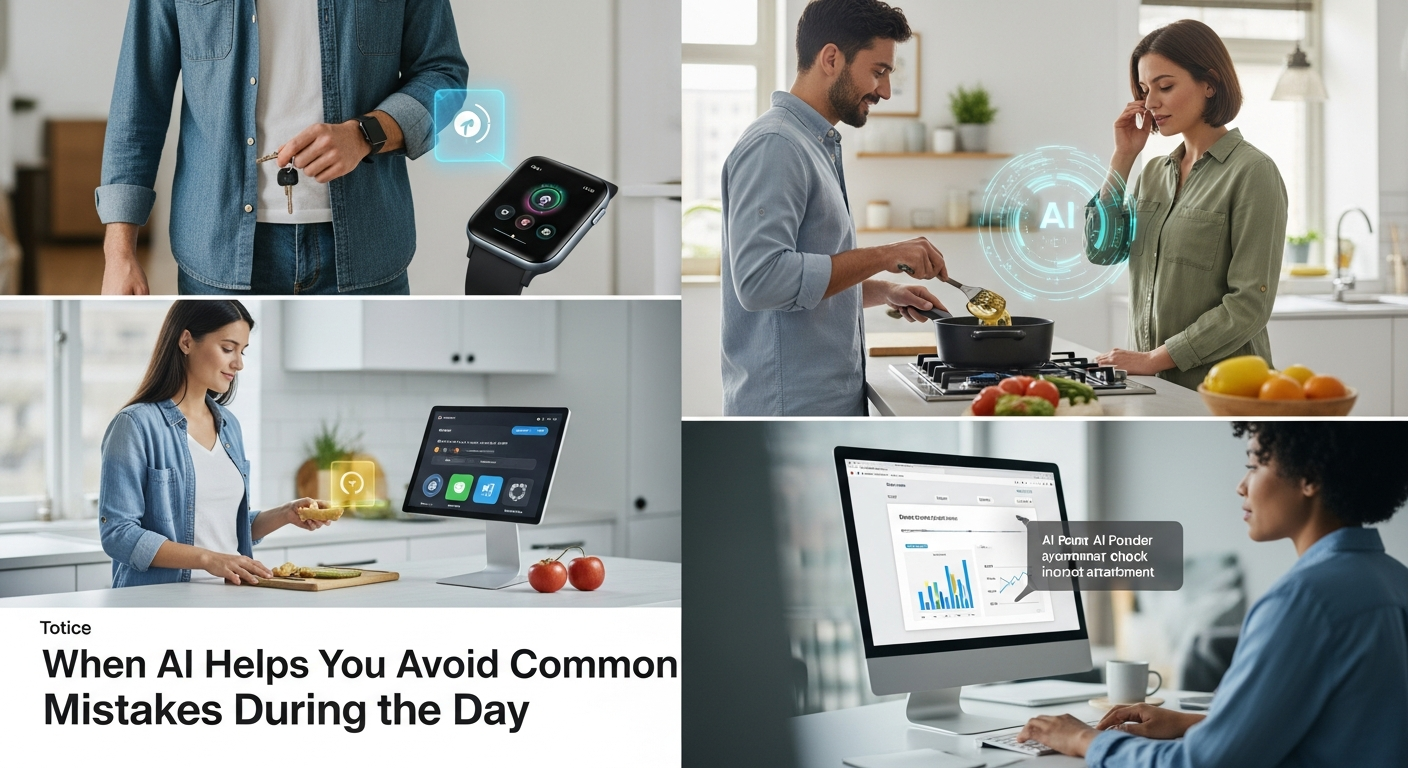
When AI Helps You Avoid Common Mistakes During the Day
- November 21, 2025
- ~ 1 min read
- 157 views
- Everyday AI , Lifestyle & AI
Introduction to AI-Powered Mistake Prevention
Imagine having a personal assistant that can help you avoid common mistakes and increase your productivity throughout the day. With the growing presence of AI technology in our daily lives, this is now a reality. From virtual assistants like Siri and Alexa to more complex systems like predictive maintenance and AI-powered chatbots, artificial intelligence is revolutionizing the way we live and work. In this article, we will explore the concept of AI-assisted mistake prevention and how it can help you avoid common errors and achieve your goals more efficiently.
The Importance of Avoiding Common Mistakes
Avoiding common mistakes is crucial for maintaining productivity and achieving success in our personal and professional lives. According to a recent study, the average person makes around 10-20 mistakes per day, ranging from minor errors like typos and missed appointments to more significant mistakes like financial errors and poor decision-making. These mistakes can have a significant impact on our daily routines, causing frustration, wasting time, and affecting our overall well-being. By leveraging AI technology, we can reduce the likelihood of these mistakes and create a more efficient and streamlined daily routine.
Introduction to AI-Assisted Mistake Prevention
So, how can AI help us avoid common mistakes? The answer lies in its ability to analyze vast amounts of data, identify patterns, and make predictions. By integrating AI into our daily lives, we can tap into its predictive capabilities and receive personalized recommendations and alerts that help us avoid mistakes. For example, a virtual assistant can remind us of upcoming appointments, suggest alternative routes to avoid traffic, or even detect potential errors in our work documents. By providing us with real-time feedback and guidance, AI-assisted mistake prevention can help us stay on track, avoid common pitfalls, and achieve our goals more efficiently. In the following sections, we will delve deeper into the world of AI-assisted mistake prevention and explore its practical applications in daily life, from productivity tools and virtual assistants to more complex systems like predictive maintenance and AI-powered chatbots.
Throughout this article, we will provide actionable tips, real-life examples, and expert insights on how to harness the power of AI to avoid common mistakes and boost productivity. Whether you're a busy professional, a student, or simply someone looking to optimize your daily routine, this article will provide you with a comprehensive overview of the benefits and applications of AI-assisted mistake prevention and inspire you to start leveraging the power of AI in your own life.
Understanding AI-Driven Mistake Prevention
AI-driven mistake prevention is a rapidly evolving field that leverages the power of AI algorithms to identify and prevent errors in various aspects of daily life. At its core, AI-driven mistake prevention relies on complex algorithms that analyze vast amounts of data to detect patterns and anomalies, allowing for proactive intervention to prevent mistakes. To understand how this works, imagine a skilled navigator who uses maps and compasses to chart a course, avoiding obstacles and pitfalls along the way. Similarly, AI algorithms use data and machine learning to navigate the complexities of human decision-making, providing guidance and warnings to help avoid mistakes.
The Role of Machine Learning in AI-Driven Mistake Prevention
Machine learning plays a crucial role in improving the accuracy of AI-driven mistake prevention. By continuously learning from data and adapting to new patterns and trends, machine learning enables AI algorithms to refine their predictions and recommendations, reducing the likelihood of errors. This process is similar to how a doctor might use medical histories and test results to diagnose and treat a patient, refining their approach based on the patient's response to treatment. In the context of AI-driven mistake prevention, machine learning allows algorithms to learn from successes and failures, iteratively improving their performance over time.
Examples of AI-Powered Tools and Platforms
There are numerous examples of AI-powered tools and platforms that assist in mistake prevention, including virtual assistants like Siri and Alexa, which use AI algorithms to provide personalized recommendations and warnings. Other examples include AI-powered project management tools, which help teams avoid mistakes by identifying potential roadblocks and providing real-time feedback. Additionally, AI-driven decision support systems are being used in industries such as finance and healthcare to enhance decision-making and reduce the risk of errors. Some notable examples of AI-powered tools and platforms include:
- Grammarly, a writing tool that uses AI to detect grammatical errors and suggest improvements
- Trello, a project management platform that uses AI to provide personalized recommendations and warnings
- IBM Watson, a decision support system that uses AI to analyze data and provide insights in industries such as healthcare and finance
The benefits of AI-driven mistake prevention are numerous, including increased efficiency and reduced errors. By automating routine tasks and providing real-time feedback, AI-powered tools and platforms can help individuals and teams avoid mistakes, freeing up time and resources for more strategic and creative work. Furthermore, AI-driven mistake prevention can help reduce the financial and reputational costs associated with errors, enhancing overall performance and competitiveness. As the field of AI-driven mistake prevention continues to evolve, we can expect to see even more innovative applications of AI algorithms and machine learning in the years to come.
By leveraging the power of AI-driven mistake prevention, individuals and organizations can unlock new levels of efficiency, productivity, and innovation, while minimizing the risks and costs associated with errors.
Real-World Examples of AI-Assisted Mistake Prevention
The integration of AI applications in various industries has led to significant improvements in mistake prevention. From healthcare to finance, AI-assisted tools and platforms have been instrumental in reducing errors and enhancing overall efficiency. In this section, we will delve into real-world examples of companies and individuals who have successfully implemented AI-powered mistake prevention, highlighting the benefits and challenges of such implementations.
Case Studies of Successful Implementations
One notable example is the use of AI in medical diagnosis. A study by Google Health found that AI-powered algorithms were able to detect breast cancer more accurately and quickly than human radiologists. This is a prime example of how AI-assisted mistake prevention can lead to better patient outcomes and improved healthcare services. Similarly, in the finance sector, companies like JPMorgan Chase have implemented AI-powered systems to detect and prevent fraudulent transactions, resulting in significant reductions in financial losses.
Another example is the use of AI in the manufacturing industry. Companies like Siemens have implemented AI-powered quality control systems that can detect defects and anomalies in real-time, reducing the likelihood of faulty products reaching the market. These industry examples demonstrate the potential of AI-assisted mistake prevention to improve product quality, reduce waste, and enhance customer satisfaction.
Benefits and Challenges of Implementation
The benefits of implementing AI-driven mistake prevention are numerous. For instance, AI-powered systems can analyze vast amounts of data quickly and accurately, reducing the likelihood of human error. Additionally, AI can help identify patterns and trends that may not be apparent to human operators, enabling proactive measures to prevent mistakes. However, there are also challenges to consider, such as the need for high-quality training data, the risk of bias in AI algorithms, and the requirement for human oversight and review to ensure that AI-driven decisions are accurate and reliable.
Despite these challenges, the benefits of AI-assisted mistake prevention far outweigh the costs. By leveraging AI applications and case studies, companies can develop targeted strategies to improve their operations and reduce the risk of mistakes. As the use of AI becomes more widespread, we can expect to see even more innovative applications of AI-assisted mistake prevention in various industries.
Impact on Productivity and Efficiency
The impact of AI-assisted mistake prevention on productivity and efficiency cannot be overstated. By reducing the likelihood of errors and defects, companies can improve product quality, reduce waste, and enhance customer satisfaction. Additionally, AI-powered systems can automate routine tasks, freeing up human operators to focus on higher-value tasks that require creativity, problem-solving, and critical thinking. As a result, companies that implement AI-assisted mistake prevention can expect to see significant improvements in their overall productivity and efficiency, leading to increased competitiveness and profitability.
- Improved product quality and reduced waste
- Enhanced customer satisfaction and loyalty
- Increased productivity and efficiency
- Reduced costs and improved profitability
The key to successful implementation of AI-assisted mistake prevention is to strike a balance between AI applications and human oversight and review. By leveraging the strengths of both humans and machines, companies can develop robust systems that improve productivity, efficiency, and overall performance.
Advanced Concepts in AI-Driven Mistake Prevention
As we delve deeper into the realm of AI assistance in daily life, it becomes essential to explore the advanced AI techniques that enable effective mistake prevention. Two prominent techniques that have gained significant attention in recent years are deep learning and natural language processing. Deep learning, a subset of machine learning, involves the use of neural networks to analyze complex patterns in data, allowing for more accurate predictions and decision-making. Natural language processing, on the other hand, enables AI systems to comprehend and generate human-like language, facilitating more intuitive human-AI collaboration.
The Role of Data Quality and Availability
The success of AI-driven mistake prevention relies heavily on the quality and availability of data. Data quality refers to the accuracy, completeness, and consistency of the data used to train AI models. High-quality data ensures that AI systems can learn from relevant examples and make informed decisions. However, poor data quality can lead to biased or inaccurate models, ultimately compromising the effectiveness of mistake prevention. To mitigate this risk, it is crucial to implement robust data validation and cleaning protocols, as well as ensure that data is sourced from diverse and reliable channels. Furthermore, data availability is also a critical factor, as AI systems require access to sufficient data to learn and improve over time.
Human-AI Collaboration and Decision Making
Human-AI collaboration is a vital aspect of effective mistake prevention. By combining the strengths of human intuition and AI-driven analysis, individuals can make more informed decisions and avoid common mistakes. For instance, in medical diagnosis, AI systems can analyze vast amounts of medical data to identify potential health risks, while human doctors can provide context and expertise to ensure accurate diagnoses. This collaborative approach not only enhances the accuracy of decision-making but also fosters a more efficient and productive workflow. To illustrate the importance of human-AI collaboration, consider the following examples:
- AI-powered virtual assistants can help individuals manage their schedules and reminders, but human oversight is necessary to ensure that important tasks are not overlooked.
- In financial trading, AI systems can analyze market trends and make predictions, but human traders must review and validate these predictions to avoid costly mistakes.
- In education, AI-driven adaptive learning systems can personalize learning experiences, but human teachers must provide guidance and support to ensure that students are meeting their learning objectives.
In addition to the benefits of human-AI collaboration, it is also essential to acknowledge the potential risks and limitations of relying on AI for mistake prevention. For example, AI systems can be vulnerable to bias and errors, particularly if they are trained on incomplete or inaccurate data. Moreover, over-reliance on AI can lead to a lack of human critical thinking and problem-solving skills, ultimately compromising the effectiveness of mistake prevention. To address these risks, it is crucial to implement robust testing and validation protocols, as well as ensure that AI systems are designed with transparency and accountability in mind.
Ethical Implications of AI-Driven Decision Making
The increasing reliance on AI-driven decision making raises important ethical implications that must be carefully considered. For instance, AI systems can perpetuate existing biases and discrimination if they are trained on biased data, leading to unfair outcomes and decisions. Furthermore, the use of AI in decision-making can also raise concerns about accountability and transparency, particularly if the decision-making process is opaque or difficult to understand. To address these concerns, it is essential to develop and implement ethical guidelines for AI development and deployment, ensuring that AI systems are designed and used in ways that prioritize fairness, transparency, and accountability. As we continue to explore the potential of AI-driven mistake prevention, it is crucial that we prioritize these ethical considerations to ensure that AI is used for the betterment of society, rather than its detriment.
The future of AI-driven mistake prevention relies on our ability to balance the benefits of advanced AI techniques with the need for human oversight, ethical consideration, and transparent decision-making. By acknowledging the potential risks and limitations of AI and prioritizing human-AI collaboration, we can unlock the full potential of AI to improve our daily lives and prevent common mistakes.
Implementing AI-Assisted Mistake Prevention in Daily Life
As we've explored the various ways AI implementation can help us avoid common mistakes, it's time to dive into the practical aspects of integrating these tools into our daily routines. In this section, we'll provide a step-by-step guide on how to implement AI-powered tools and platforms to enhance our productivity and reduce errors. We'll also discuss best practices for overcoming common challenges and limitations, and highlight examples of AI-assisted tools that can be used in daily life.
Step-by-Step Guide to AI Implementation
To start, it's essential to begin small and scale up. Identify areas in your daily life where mistakes frequently occur, such as scheduling, email management, or data entry. Once you've pinpointed these areas, research and select AI-assisted tools that can help automate or streamline these tasks. Some popular options include virtual assistants like Siri, Google Assistant, or Alexa, which can help with scheduling and reminders. For more complex tasks, consider using AI-powered platforms like Zapier or IFTTT, which can automate workflows and integrate multiple apps.
Here's a step-by-step guide to get you started:
- Research and select AI-assisted tools that align with your needs and goals.
- Set up and configure the tools, following the provider's instructions and guidelines.
- Integrate the tools into your daily routines, starting with small, manageable tasks.
- Monitor and evaluate the tools' performance, making adjustments as needed.
- Scale up your AI implementation by introducing new tools and platforms, and expanding their use to more complex tasks.
Best Practices for Integrating AI into Daily Routines
When integrating AI-assisted tools into your daily life, it's crucial to follow best practices to ensure a seamless and effective experience. Here are some tips to keep in mind:
- Start small and focus on one area or task at a time.
- Set clear goals and objectives for your AI implementation.
- Monitor and evaluate the performance of your AI-assisted tools regularly.
- Be patient and flexible, as AI implementation can take time to adjust to.
- Stay up-to-date with the latest developments and updates in AI technology.
Overcoming Common Challenges and Limitations
While AI-assisted tools can be incredibly powerful, they're not without their limitations. Common challenges include data quality issues, algorithmic biases, and integration complexities. To overcome these challenges, it's essential to:
Understand the limitations of your AI-assisted tools and be aware of potential biases or errors. Regularly review and update your data to ensure accuracy and quality. Finally, be prepared to adapt and adjust your AI implementation as needed, and don't be afraid to seek support or guidance from experts or online resources.
By following these steps and best practices, you can effectively implement AI-assisted mistake prevention in your daily life, reducing errors and enhancing productivity. Remember to start small, be patient, and stay flexible, and you'll be well on your way to harnessing the power of AI implementation to achieve your goals.
Comparing AI-Powered Mistake Prevention Tools and Platforms
As we explore the world of AI assistance in daily life, it's essential to evaluate the various AI comparison tools and platforms available for mistake prevention. With numerous options on the market, each with its unique features, pricing, and user experience, making an informed decision can be overwhelming. In this section, we'll delve into the pros and cons of different AI-powered tools and platforms, analyzing their strengths and weaknesses to help you choose the best solution for your needs.
Evaluating Features and Pricing
When comparing mistake prevention tools, it's crucial to consider the features that matter most to you. Some platforms may offer advanced natural language processing capabilities, while others may excel in machine learning algorithms. Pricing is also a significant factor, with options ranging from free, open-source solutions to premium, enterprise-level subscriptions. The following table illustrates a comparison of popular AI-powered mistake prevention tools and platforms:
| Tool/Platform | Features | Pricing |
|---|---|---|
| Tool A | Advanced NLP, ML algorithms | Free (basic), $99/month (premium) |
| Tool B | Real-time feedback, customizable workflows | $29/month (basic), $199/month (enterprise) |
| Tool C | Integration with popular productivity software | $49/month (basic), $299/month (premium) |
Analyzing Trade-Offs and Scenarios
As you evaluate different AI-powered tools and platforms, it's essential to consider the trade-offs between accuracy, speed, and cost. For instance, a platform with high accuracy may require more processing time, while a faster solution may compromise on accuracy. The following scenarios illustrate the importance of choosing the right AI solution for the task at hand:
- Scenario 1: A writer needs to meet a tight deadline and requires a fast, accurate grammar and spell checker. In this case, a premium AI-powered tool with advanced NLP capabilities may be the best choice.
- Scenario 2: A small business owner needs to automate routine tasks and requires a cost-effective solution. A free, open-source AI-powered platform may be a suitable option.
- Scenario 3: A developer needs to integrate AI-powered mistake prevention into their application and requires a customizable, scalable solution. A premium, enterprise-level AI-powered platform may be the best fit.
In conclusion, choosing the right AI-powered mistake prevention tool or platform depends on your specific needs and priorities. By evaluating the pros and cons of each solution, considering the trade-offs between accuracy, speed, and cost, and analyzing scenarios where different AI solutions may be more or less suitable, you can make an informed decision and harness the power of AI to avoid common mistakes in your daily life.
Remember, the key to effective AI assistance is finding the right balance between features, pricing, and user experience. By doing your research and evaluating the options available, you can unlock the full potential of AI-powered mistake prevention and achieve greater productivity, efficiency, and accuracy in your daily tasks.
Conclusion and Key Takeaways
In conclusion, AI-assisted mistake prevention has the potential to revolutionize the way we approach daily tasks and responsibilities. Throughout this article, we have explored the various ways in which AI can help us avoid common mistakes, from simple errors in communication to complex issues in decision-making. By leveraging AI-powered tools and platforms, individuals can streamline their workflows, reduce stress, and achieve greater productivity.
Summary of Key Points
The key takeaways from this article can be summarized as follows:
- AI can help individuals avoid common mistakes by providing real-time feedback and suggestions for improvement.
- AI-assisted mistake prevention can be applied to a wide range of tasks and activities, from email management to project planning.
- By using AI-powered tools and platforms, individuals can save time and reduce the risk of errors, leading to greater efficiency and effectiveness.
Final Thoughts and Call-to-Action
In today's fast-paced world, it is more important than ever to stay ahead of the curve and leverage the latest technologies to achieve success. AI-assisted mistake prevention is a powerful tool that can help individuals achieve their goals and avoid common pitfalls. We encourage readers to take action and start exploring AI-powered tools and platforms that can help them streamline their workflows and reduce the risk of errors. Whether you are a busy professional or an entrepreneur, investing in AI-assisted mistake prevention can have a significant impact on your productivity and success.
By embracing AI-assisted mistake prevention, individuals can unlock new levels of efficiency, productivity, and innovation, leading to greater success and achievement in all areas of life.
So why not take the first step today and start exploring the many AI-powered tools and platforms that are available? With so many options to choose from, you are sure to find a solution that meets your needs and helps you achieve your goals. Remember, AI-assisted mistake prevention is not just a luxury, but a necessity in today's fast-paced world. By leveraging the power of AI, you can stay ahead of the curve and achieve greater success and achievement in all areas of life.
Comments (0)
Please login or register to leave a comment.
No comments yet. Be the first to comment!