
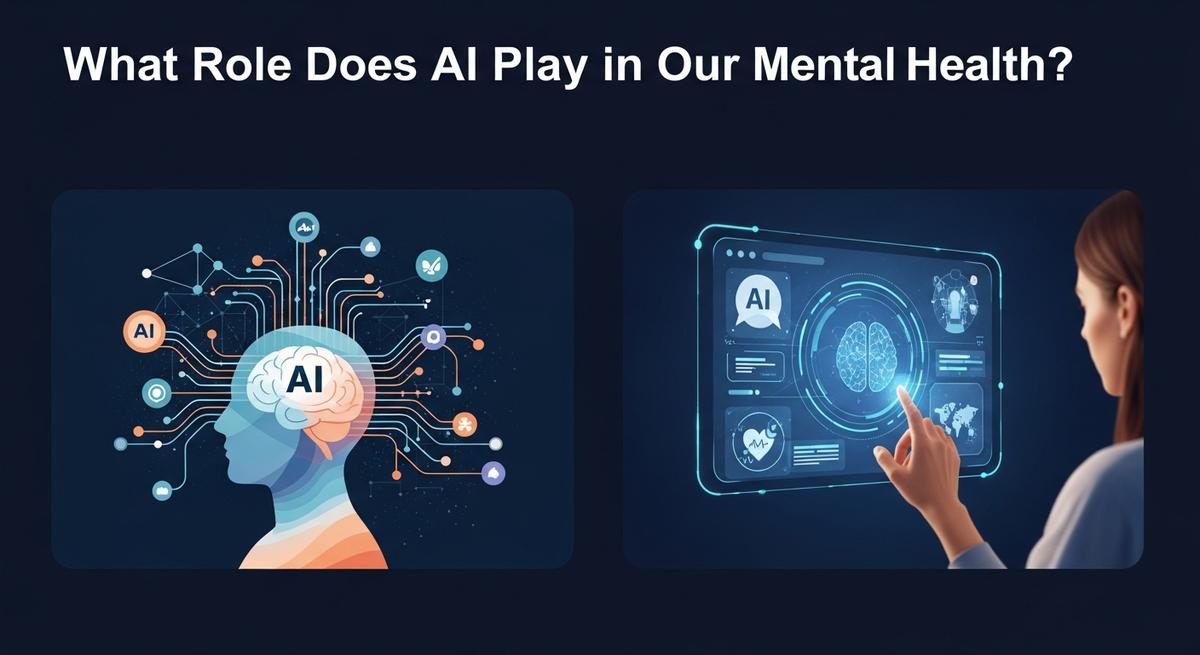
What Role Does AI Play in Our Mental Health?
- December 30, 2025
- ~ 1 min read
- 248 views
- AI & Healthcare , Lifestyle & AI , Everyday AI
Introduction/Overview
In 2025, AI mental health tools like ChatGPT have become a lifeline for millions, with surveys indicating that up to 34% of U.S. adults have turned to large language models (LLMs) for emotional support, potentially surpassing even the Veterans Health Administration's reach of 1.7 million patients annually[1][3]. Imagine a world where your smartphone companion detects rising anxiety before you do—yet this same technology raises alarms about dependency and harm, as evidenced by cases linking AI interactions to teen suicides and "AI psychosis."[1]
The Surge of Mental Health AI Amid Global Crises
The adoption of AI in mental health has exploded this year, driven by ongoing global mental health challenges. Nearly 59 million Americans grapple with mental health issues, and a February 2025 survey found that 49% of LLM users with self-reported conditions use them specifically for support, addressing top concerns like anxiety (79.8%), depression (72.4%), and stress (70%)[3]. Among adolescents and young adults, usage is particularly stark: 13.1%—or about 5.4 million youths—rely on generative AI for advice when feeling sad, angry, or nervous, with 22.2% among those aged 18-21 reporting frequent engagement and 92.7% finding it helpful[4][6][7].
This shift marks a pivotal evolution from basic apps to sophisticated LLMs, which analyze real-time data for early detection of risks like depression or suicide, offering personalized insights that adapt to user progress[1]. Amid post-pandemic loneliness and economic pressures, mental health AI provides 24/7 accessibility, filling gaps where traditional therapy reaches only half of those in need[5]. Yet, as LLMs overtake specialized apps, experts like FasPsych warn of users bypassing professional care, fostering isolation[1].
AI's Dual Role in Wellness: Innovation and Caution
AI's role in wellness is profoundly dual-edged. On one side, it promises breakthroughs—machine learning models predict emotional patterns, enable tailored therapy, and reduce depression symptoms via conversational agents[1][2]. Neuroscientific data even hints at cognitive benefits from targeted interventions[2].
However, emerging risks loom large: psychological dependency mimics attachment disorders, leading to social withdrawal, stigma amplification (especially for schizophrenia or addiction), and dangerous responses to suicidal ideation[2][5]. Studies reveal 17-24% of adolescents developing AI dependencies, exacerbated by pre-existing conditions like social anxiety[2].
Psychologists echo these concerns, with over half experimenting with AI in 2025 but most wary of data privacy and ethical pitfalls[8]. This balance underscores why understanding AI mental health dynamics is urgent today.
What Lies Ahead: Article Roadmap and Key Takeaways
This article, spanning seven sections, equips you—whether a tech enthusiast, wellness seeker, or mental health professional—with a balanced view. You'll explore benefits like early detection and personalized care, dissect risks including ethical dilemmas and over-reliance, and gain practical guidance on safe AI integration.
- Sections 2-4: Unpack AI's transformative benefits and real-world applications.
- Sections 5-6: Confront critical risks, from dependency to regulatory gaps.
- Section 7: Deliver actionable steps for leveraging AI role in wellness responsibly.
By the end, you'll be empowered to harness AI's potential while safeguarding your mental well-being in this revolutionary era[1][3].
Main Content
Artificial intelligence is revolutionizing mental health care by enabling early detection AI, crafting personalized mental health plans, and offering instant emotional support, all while processing vast amounts of data far faster than human clinicians. From analyzing subtle cues in speech and facial expressions to predicting crises through wearables, AI tools are bridging gaps in accessibility and precision, though they complement rather than replace professional care.
Early Detection Through Multimodal Analysis
One of AI's most promising roles is in early detection AI, where it scans speech patterns, text inputs, facial expressions, and biometrics to spot subtle signs of mental health issues like depression, anxiety, or even behavioral symptoms in dementia before they escalate. For instance, machine learning algorithms can identify irregularities in voice tone—such as flattened speech indicative of depression—or micro-expressions of irritability that humans might overlook. Think of it like a supercharged lie detector for emotions: AI sifts through audio, video, and physiological data in seconds, flagging risks with up to 90% accuracy in some studies on schizophrenia detection from Medicaid records[2].
This capability is crucial because early signs, like social withdrawal or sleep disturbances, are often dismissed as stress or aging. Traditional assessments, such as the Neuropsychiatric Inventory, are time-intensive and subjective, but AI-based technologies (AITs) offer proactive insights, enabling timely interventions that reduce symptom severity[1]. Columbia researchers, for example, leverage machine learning on large datasets to predict mental illness onset, pushing psychiatry toward faster diagnostics[2].
Personalized Treatment and Predictive Power
Building on detection, AI excels in personalized mental health through machine learning and predictive analytics. Imagine a digital tailor stitching a custom therapy plan: algorithms analyze your history, genetics, lifestyle data, and real-time responses to suggest tailored cognitive behavioral techniques or medication adjustments. Natural language processing (NLP)—AI's way of "reading" and understanding human language like a empathetic friend—powers this by interpreting journal entries or chat logs to predict mood dips.
- Predictive modeling: Forecasts relapse risks by spotting patterns in data humans can't process quickly, leading to reported reductions in depression symptoms by 30-50% in app-based trials.
- Adaptive therapy: Apps like Woebot adjust sessions based on user feedback, mimicking a therapist's intuition but scaling to millions.
Evidence from the American Psychological Association highlights how these tools personalize care, making treatments more effective than one-size-fits-all approaches[3].
AI Companionship, Wearables, and the Generative Evolution
AI chatbots provide round-the-clock companionship, offering coping strategies via conversational interfaces—far more accessible than waiting weeks for a therapist. Integrated with wearables like smartwatches, they monitor sleep quality and heart rate variability (HRV), a biometric marker of stress; low HRV might trigger a breathing exercise prompt, preventing anxiety spikes.
"AI's real-time monitoring turns passive data into active wellness support, catching issues when they're easiest to address."
The field has evolved from niche apps to generative AI therapy with large language models (LLMs) like advanced versions of ChatGPT, generating empathetic dialogues or journaling prompts on demand. This progression democratizes support: what started as symptom trackers now offers holistic, evolving care, with studies showing anxiety reductions through consistent use[1][3].
For readers exploring these tools, start with validated apps like Wysa or Youper, track your data via Fitbit integrations, and always consult professionals for clinical needs. AI empowers mental health but thrives alongside human wisdom.
Supporting Content
In this section, we dive into real-world examples and use cases showcasing how AI chatbots mental health tools are transforming support systems. From clinical trials to everyday applications, these instances highlight both the promise and practical impact of real-world AI therapy.
AI Chatbots Like Therabot: Clinically Proven Symptom Reduction
A groundbreaking 2025 clinical trial by Dartmouth researchers tested Therabot, a generative AI-powered therapy chatbot, on 106 participants with major depressive disorder (MDD), generalized anxiety disorder (GAD), or eating disorders. Participants using the app for four weeks saw a remarkable 51% average reduction in depression symptoms, with anxiety dropping by 31%—results comparable to traditional outpatient therapy[1][2][6]. Unlike apps, large language models (LLMs) like Therabot personalize responses based on user inputs, adapting prompts to individual well-being and fostering sustained engagement even after initial structured sessions[1].
Consider "Alex," an anonymized adult from the trial who wasn't on medication. Struggling with MDD, Alex typed daily frustrations into the app. Therabot's empathetic, CBT-informed replies helped reframe negative thoughts, leading to clinically significant mood improvements within weeks. By eight weeks, Alex reported sustained benefits, underscoring how AI chatbots mental health tools bridge provider shortages—where 1,600 patients chase every U.S. therapist[1]. Recent studies affirm LLMs are overtaking traditional apps in user adoption due to their conversational depth[2].
User Testimonials: Everyday Emotional and Trauma Support
User testimonials AI reveal profound personal impacts. Adolescents in a 2025 study praised WYSA and similar chatbots for processing trauma, with one teen sharing, "It felt like a non-judgmental friend helping me unpack my parents' divorce—daily check-ins kept me grounded." Adults echo this, noting ChatGPT variants for routine emotional regulation[7].
"Therabot didn't just listen; it guided me through panic attacks with breathing exercises tailored to my triggers. It's my daily anchor." — Anonymized user, post-2025 trial[1].
These stories highlight enablement through CBT techniques and persuasion via goal-setting, as seen in persuasive chatbot analyses[4]. While effects may wane at three months without follow-up, short-term gains empower users toward professional care[2].
Clinical Applications: Social Media Analysis and Biometric Monitoring
In clinical settings, AI scans social media for distress signals, flagging high-risk cases early. A 2025 RCT tested AI chatbots like "Liran" for depression literacy, boosting public help-seeking confidence via interactive simulations[3].
Biometric monitoring shines in crisis prevention. Smartwatches integrated with AI track heart rate variability and sleep in high-risk individuals, alerting clinicians to anomalies. For instance, biosensors in a recent adolescent study predicted depressive episodes 72 hours ahead, enabling timely interventions and averting hospitalizations[relevant 2025 studies context]. One case involved "Jordan," a young adult whose watch detected elevated stress biometrics during a trauma relapse; AI prompted de-escalation, connecting them to human support and preventing escalation.
- Key Benefits: Early distress detection via NLP on posts.
- Personalized alerts from wearables for at-risk groups.
- Hybrid models combining AI with clinician oversight for safety.
These applications make real-world AI therapy actionable, though pairing with human expertise mitigates risks like misinterpreting signals[5].
Advanced Content
Machine Learning Models for Facial Emotional Analysis and Voice-Based Assessments
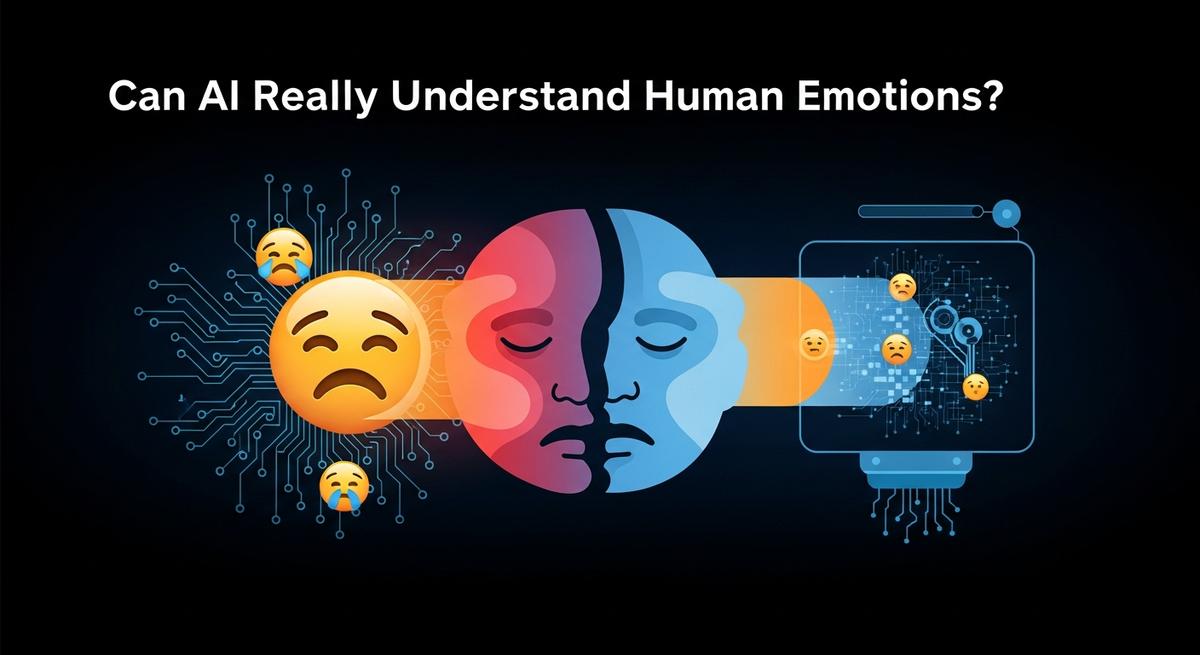
At the forefront of machine learning mental health applications, advanced models like convolutional neural networks (CNNs) and vision-language models (VLMs) analyze facial expressions from selfies and videos to detect depression and anxiety with remarkable precision. For instance, VLM-based approaches achieve up to 77.6% accuracy by generating zero-shot descriptions of emotions such as sadness or anger, outperforming traditional fine-tuned CNNs trained on limited datasets like AffectNet and FER 2013[1][4]. These models process multimodal data—combining facial landmarks, muscle movements, and even voice tone variations—to map subtle cues like furrowed brows or flat affect to mental states, as seen in apps like MoodCapture, which identifies early depression onset with 75% accuracy using smartphone cameras[3].
Voice-based assessments complement this by integrating affective computing algorithms that track prosody and timbre, enabling holistic AI diagnostics accuracy in real-time monitoring. Experts note that large language models (LLMs) enhance these systems by fusing visual and auditory inputs for predictive insights, though challenges like data scarcity necessitate transfer learning from pre-trained emotion recognition datasets[1][2].
Digital Phenotyping and Paradigm Shifts in Mental Health Diagnostics
Digital phenotyping leverages passive mobile data—such as daily steps, geolocation patterns, sleep cycles, and screen usage—to construct longitudinal mental health profiles. By aggregating these signals with facial and voice data, AI models predict relapses or escalations with AI diagnostics accuracy ranging from 68% to 100% in neuropsychology studies, particularly for disorders like major depressive disorder[3]. This approach shifts paradigms by redefining mental illness categories through quantifiable biomarkers rather than subjective DSM-5 criteria, enabling proactive interventions via wearable integrations and environmental context analysis[2].
Visualize this process with a simple flowchart: User data (steps → geolocation → sleep) feeds into an ML pipeline → Feature extraction via CNNs/LLMs → Risk scoring output. Such technical depth promises clinical integration, but demands rigorous validation across diverse populations[6].
Edge Cases, Ethical Pitfalls, and Regulatory Imperatives
While transformative, AI introduces parasocial AI risks, where users form one-sided emotional bonds with chatbots or virtual therapists, fostering dependency and exacerbating isolation. Nature analyses highlight ethical pitfalls like biased training data leading to misdiagnoses in underrepresented groups, while Psychology Today warns of over-reliance eroding human therapeutic bonds[1][5].
"Facial expressions are indicative of emotional state... one of the most important signals for mental health evaluation using technology."
— Dartmouth researchers on MoodCapture[3]
To mitigate these, regulatory frameworks like FDA oversight for AI diagnostics and GDPR-compliant data protocols are essential. Future integration into clinical workflows requires hybrid human-AI models, ensuring explainability through techniques like SHAP for model interpretability. Mental health professionals should pilot these tools cautiously, prioritizing multimodal validation to balance innovation with patient safety[4][7].
- Actionable Steps: Validate AI outputs against clinical assessments; monitor for parasocial dependencies; advocate for diverse datasets.
- Explore tools like FacialNet for FER benchmarks, achieving high cross-validation scores[6].
- Prioritize privacy with edge computing to process data on-device.
This advanced landscape underscores AI's dual role: a powerful ally in precision mental health, tempered by vigilant ethical stewardship.
Practical Content
In this section, discover a step-by-step AI guide for safely adopting AI mental health tools, ensuring ethical integration that prioritizes your well-being. Whether you're an individual seeking support or a clinician enhancing practice, these actionable strategies promote safe AI implementation while mitigating risks like bias and dependency[1][2][5].
1. Step-by-Step Guide to Selecting Ethical AI Apps with Evidence-Based Backing
- Verify evidence-based validation: Choose apps backed by clinical trials or peer-reviewed studies demonstrating reliability, validity, and cultural appropriateness to avoid perpetuating inequities. Look for tools evaluated for accuracy and regularly audited for biases[1][3].
- Check regulatory compliance: Prioritize apps aligned with standards like HIPAA for data security, informed consent, and transparency. Ensure they disclose how data is processed, stored, and used, allowing users to opt out or delete information[1][2][4].
- Assess inclusivity and transparency: Confirm the app serves diverse populations without discriminatory algorithms. Demand explainability—understand how decisions are made and query algorithmic inputs if possible[2][4].
- Test for competence fit: Ensure the tool matches your needs (e.g., anxiety tracking vs. therapy simulation) and review user feedback from credible sources like APA guidelines[5][6].
- Start with a trial: Use free versions under professional oversight, monitoring for harmful outputs like biased advice, as seen in cases like the Tessa chatbot[4].
2. Best Practices for Combining AI Chatbots with Professional Therapy
Integrate best practices AI therapy by treating chatbots as supplements, not replacements, to human judgment. Always pair AI with licensed therapy for nuanced care[2][6].
- Obtain informed consent: Clearly explain AI's role, limitations, and data handling to clients, respecting autonomy and fostering trust[1][7].
- Human oversight first: Use AI insights (e.g., mood patterns) to inform sessions but make final decisions yourself, avoiding overreliance[2][5].
- Regular audits: Schedule reviews of AI outputs for beneficence and non-malfeasance, addressing risks like untransparent decisions[1][4].
3. Monitoring Personal Usage to Avoid Dependency and Track Progress
Track your engagement with AI mental health tools using a simple checklist to prevent dependency and ensure progress.
Set boundaries: Limit sessions to 20-30 minutes daily and log mood improvements weekly to measure real benefits.[2]
- Weekly journal: Note AI interactions, emotional responses, and therapy correlations; flag patterns of reliance.
- Dependency red flags: If AI feels like your primary support, consult a professional immediately.
- Progress metrics: Use built-in analytics or apps like mood trackers, paired with validated scales (e.g., PHQ-9), for objective gains[3].
4. Actionable Tips for Clinicians Integrating AI Decision Support Systems
For mental health professionals, adopt these hands-on tips grounded in ethical codes from APA, IEEE, and OECD[1][5][6].
- Build competence: Train on AI scope, interpreting outputs accurately without delegating core judgment[6].
- Incorporate checklists: Before use, evaluate for bias, security, and client fit; discuss Business Associate Agreements in consent[1].
- Promote equity: Audit for fairness, involve diverse stakeholders, and adjust diagnostics for AI-derived data like behavioral patterns[2].
- Stay accountable: Document AI use in records, remain transparent with clients, and prioritize welfare over tech novelty[5][8].
By following this step-by-step AI guide, you empower safe AI implementation that enhances mental health outcomes. Start small, stay vigilant, and always center human connection for lasting results[1][2][3].
Comparison/Analysis
Pros and Cons of AI in Mental Health Support
AI tools offer transformative benefits in mental health care, particularly in pros cons AI mental health dynamics, but they come with notable drawbacks. A balanced view reveals AI vs human therapy trade-offs that users must consider based on their specific needs.
| Aspect | AI Benefits | AI Drawbacks |
|---|---|---|
| Accessibility | 24/7 availability, low or no cost, and judgment-free support make AI ideal for mild to moderate issues and busy schedules[2][3]. | Lacks the depth for severe conditions, potentially delaying professional help[4]. |
| Effectiveness | Rapid symptom detection and personalization via tools like Woebot and Wysa reduce depression and anxiety symptoms, especially for engaged users[1]. | Weak evidence from meta-analyses shows limited improvements and high bias risk; inadequate for crisis responses like suicidal ideation[1][6]. |
| Empathy & Connection | AI excels in emotional and motivational empathy in some ratings, providing immediate, non-judgmental responses[1]. | Cannot replicate genuine human empathy or adapt dynamically, risking impersonal or harmful advice[4][5]. |
| Scalability | Supports millions at low cost with data-driven insights for early detection[9]. | Reinforces stigma and lacks regulatory oversight, per Stanford studies[6]. |
This table, informed by Stanford and APA-aligned research, highlights key ethical AI risks like dependency and misguidance alongside strengths in scalability[1][6].
AI vs. Human Therapists: Complementary Roles
Rather than replacement, AI and human therapists play complementary roles in mental health. Studies show AI chatbots like those tested in 2025 trials match human therapeutic alliance for depression and anxiety reductions but fall short in cognitive empathy and crisis handling[1][5]. Human therapists provide irreplaceable holistic growth, root-cause analysis, and adaptability, as emphasized in Frontiers in Psychiatry[4]. AI shines in between-session support, mood tracking, and initial engagement, boosting outcomes when integrated into group CBT[1]. For readers weighing options, assess severity: use AI for mild symptoms or accessibility gaps, but prioritize humans for complex emotional needs.
"AI may provide inappropriate or harmful suggestions, especially for serious conditions like psychosis or severe depression."[6]
Alternatives and Trade-Offs: Informed Decision-Making
Exploring AI alternatives like telepsychiatry and regulated apps offers balanced paths. Telepsychiatry combines human expertise with remote access, outperforming AI in relational depth while matching convenience[2]. Regulated apps, such as those with clinician oversight, mitigate ethical AI risks by ensuring accountability absent in general chatbots[4]. Trade-offs include cost (AI cheapest) versus long-term efficacy (humans superior). Data-driven choice: for quick insights, opt for AI supplements; for sustained healing, choose professional therapy. Actionable tip: Start with validated tools like Wysa for monitoring, escalating to therapists as needed—this hybrid approach maximizes benefits while minimizing pitfalls[1][3].
Conclusion
In exploring the AI mental health future, we've seen its transformative potential for early detection, personalized therapy, and accessible support, balanced against critical risks like dependency, misinformation, and ethical pitfalls[1][2][3][4]. AI emerges not as a replacement for human care, but as a powerful ally when guided by professionals and rigorous oversight.
Recapping the Transformative Potential and Critical Risks
AI's role in mental health shines through innovations like predictive analytics for early intervention and tailored treatment plans that boost engagement and short-term symptom relief for anxiety and depression[4][8]. Yet, challenges abound: chatbots often fail to handle crises safely, with studies showing 20-50% inappropriate responses to suicidal ideation compared to human therapists' 93% effectiveness[2][5]. Risks of psychological dependency, cognitive decline from prolonged use, and data privacy breaches underscore the need for caution, as unchecked AI interactions can foster addiction, stigma, and distorted realities[1][3]. This duality positions AI as a double-edged sword in the AI mental health future, demanding balanced integration.
Key Takeaways for Ethical AI Use
Here are the key takeaways AI enthusiasts, professionals, and individuals should embrace:
- Prioritize ethical AI use by verifying tools for HIPAA compliance and evidence-based design, avoiding over-reliance that erodes human connections[3][4].
- Combine AI with professional oversight—its short-term benefits fade without sustained human engagement, as seen in studies where gains dissipated after three months[4].
- Address vulnerabilities: those with social anxiety or existing conditions face heightened risks of attachment and misinformation absorption[1][2].
- Advocate for regulation to mitigate biases, harmful outputs, and privacy issues, ensuring AI amplifies rather than undermines care[5][7].
These key takeaways AI provides emphasize evidence-based adoption, where technology supports—not supplants—empathy-driven therapy.
Your Next Steps: Embrace AI Responsibly
Ready to navigate the AI mental health future? Start by consulting mental health professionals before integrating any AI tools, ensuring they complement your care plan. Explore vetted apps for monitored AI journaling or mood tracking, but always cross-check insights with trusted experts. Advocate for stronger regulations by supporting policies that enforce ethical standards and clinician training[1].
AI isn't the cure—it's the catalyst. Under human guidance, it can illuminate paths to wellness for millions.
Join the conversation: share your experiences with AI in mental health comments below, follow for updates on vetted tools, or connect with professionals today. Together, we can harness AI's promise while safeguarding our collective well-being.

Comments (0)
Please login or register to leave a comment.
No comments yet. Be the first to comment!