
What Does AI Actually Do for Normal People?
- December 26, 2025
- ~ 1 min read
- 119 views
- Everyday AI , Lifestyle & AI
Introduction/Overview
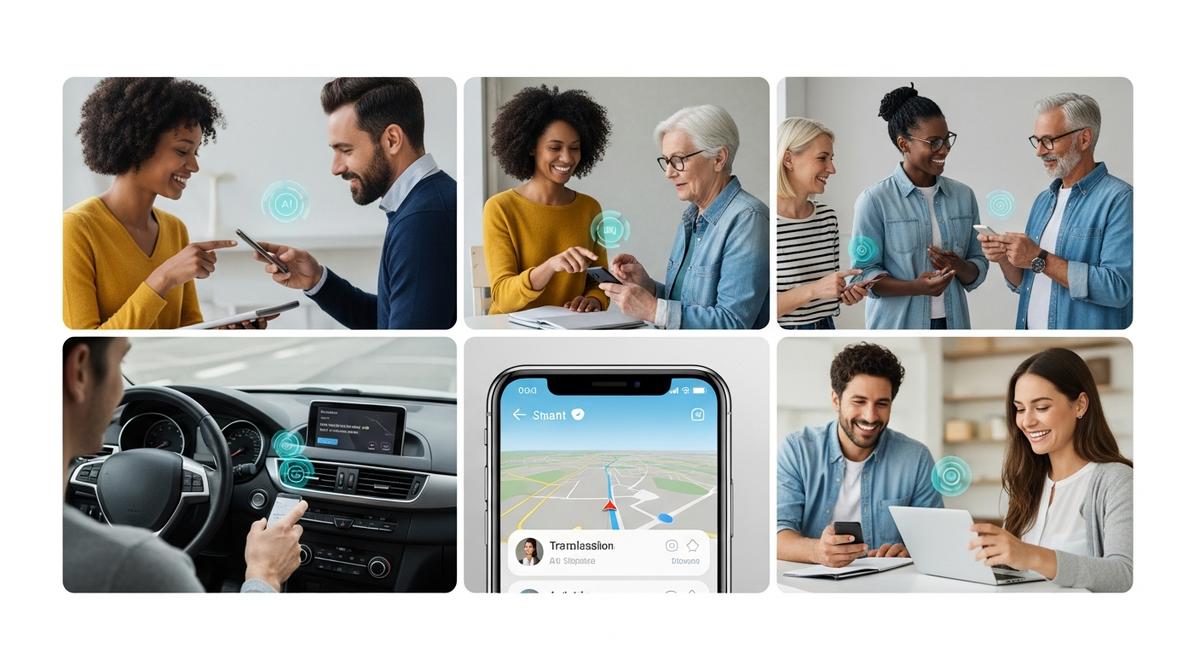
Picture this: It's a hectic Tuesday morning, and I'm rushing to get the kids out the door for school. As I scroll through my phone for a quick breakfast idea, my streaming app suggests the perfect kid-friendly cartoon based on what we've watched before. On the drive, my navigation app reroutes me around traffic jams I didn't even see coming, and later at the grocery store, my shopping app nudges me toward deals on items I usually buy—all without me lifting a finger to search or plan. This seamless help? That's AI in daily life working its magic, often so quietly that we barely notice it[1][3][7].
AI Isn't Just Sci-Fi—It's for Everyday People
Many folks picture AI as something out of a futuristic movie—robots taking over jobs or supercomputers solving world hunger, reserved only for tech geniuses and corporations. But that's a myth. In reality, practical AI is already woven into the fabric of our routines, making life smoother for non-experts like you and me[1][2][4]. Think about it: AI powers the voice assistants on your phone that set reminders, the personalized Netflix queues that keep you binge-watching guilt-free, or even the spam filters keeping your inbox clean[3][5][7].
At its core, AI is simply smart software that learns from data to help with tasks. No PhD required. It analyzes patterns—like your shopping habits or commute times—and offers tailored suggestions, saving you time and hassle. Whether it's facial recognition unlocking your phone or chatbots handling customer service queries around the clock, AI for everyday people democratizes efficiency without the complexity[1][2][7].
Why Practical AI Matters for Your Busy Life
In a world overflowing with to-do lists, AI steps in as your invisible sidekick. It predicts what you need before you ask, from recipe suggestions in your smart fridge to fraud alerts on your bank app[4][5][7]. The beauty? It's accessible right now on devices you already own—no fancy setup needed. This isn't about replacing humans; it's about amplifying what we do best, freeing up mental space for family, hobbies, or that coffee break you deserve[3][6].
- Boosts efficiency: Virtual assistants like Siri or Alexa handle reminders and smart home controls effortlessly[1][3][7].
- Personalizes experiences: Streaming and shopping recommendations feel custom-made[5].
- Enhances safety: Navigation apps dodge traffic, and banking AI spots fraud in real-time[7].
"AI isn't the future—it's the now that's already transforming how normal people live, work, and play."[1][4]
What You'll Discover in This Guide
Over the next sections, we'll dive into real-world examples of AI in daily life, from home automation to smarter shopping, with practical tips you can try today. No jargon overload—just actionable insights to harness practical AI for your routine. By the end, you'll see why AI isn't just for experts; it's a game-changer for everyday efficiency. Ready to uncover how it's already working for you?
Main Content
AI isn't some distant sci-fi dream—it's already working behind the scenes in your daily life, making things simpler through core functions like pattern recognition, prediction, and AI automation. Think of it as an invisible helper that spots trends, guesses what you need next, and handles repetitive tasks so you don't have to.
Fundamental AI Functions: Spotting Patterns, Predicting, and Automating
At its heart, AI excels at three basic jobs. First, pattern recognition is like a super-smart librarian scanning thousands of books to instantly find similarities—whether it's identifying faces in photos or flagging spam in your email. Second, prediction uses past data to forecast outcomes, such as your weather app warning about rain based on cloud patterns and history. Finally, AI automation takes over boring chores, like a robot vacuum mapping your home and cleaning without instructions.
These functions rely on data processing: AI sifts through massive amounts of information quietly in the background, delivering results without you lifting a finger. No coding required on your end—just seamless smarts.
Machine Learning: AI That Gets Smarter from Experience
Machine learning, a key subset of AI, is like teaching a child to ride a bike—they fall a few times, learn from each tumble, and soon pedal smoothly on their own. Unlike traditional programming where humans spell out every rule, machine learning lets computers analyze data, spot patterns, and improve automatically over time.[1][2][3]
- In supervised learning, AI trains on labeled examples, like photos tagged "cat" or "dog," to classify new images accurately.
- Unsupervised learning dives into unlabeled data to uncover hidden groups, such as grouping shoppers into "bargain hunters" or "big spenders."
- Reinforcement learning mimics trial-and-error, perfect for games or optimizing routes in navigation apps.
Everyday analogy: Imagine a personal chef who peeks in your fridge, remembers your past meals, and suggests recipes that match your tastes—learning from what you loved (or skipped) without you explaining a thing. That's machine learning powering Netflix recommendations or Spotify playlists.
Key Areas: Personalization, Assistance, and Optimization
AI shines in three everyday zones. Personalization tailors experiences, like Amazon suggesting books based on your browsing history. Assistance comes via voice helpers like Siri scheduling your day or translating languages on the fly. Optimization streamlines life, from fitness apps predicting your calorie burn to traffic apps rerouting you around jams.
"Machine learning is a type of artificial intelligence that enables self-learning from data and then applies that learning without the need for human intervention."[1]
Behind-the-Scenes Magic and AI's Evolution
AI processes your data—clicks, locations, preferences—through neural networks mimicking the brain, turning chaos into useful insights. It evolved from clunky 1950s experiments to today's seamless integration in smartphones, smart homes, and apps, freeing up your time for what matters.
Infographic idea: A flowchart showing data → pattern recognition → prediction → automation, with icons like a lightbulb for insights and gears for automation. Another: Timeline from basic chatbots to personalized AI chefs.
By understanding these basics, you're set to explore how AI fits your routine—without the tech jargon overload.
Supporting Content
AI isn't just for tech experts—it's quietly enhancing everyday life through familiar tools and apps. In this section, we'll explore AI examples daily life with real-world use cases that deliver those "aha" moments, showing how you've likely benefited from AI without realizing it.
Smart Assistants: Your Personal Sidekick
Think about starting your day with a simple voice command. Smart assistants like Siri, Alexa, or Google Assistant handle reminders, play your favorite music, and control smart home devices effortlessly. For instance, tell Alexa, "Remind me to pick up groceries at 5 PM," and it sets a precise alert while syncing with your calendar via tools like Calendly. Or dim the lights and adjust the thermostat with "Alexa, good night"—all powered by AI that understands natural language and learns your routines. These assistants make life smoother, saving time on mundane tasks.
Recommendation Engines: Personalized Picks You Love
Ever binge-watched a show on Netflix or discovered the perfect playlist on Spotify? That's recommendation engines at work, using AI to analyze your viewing or listening history and suggest tailored content. Online shopping sites like Amazon do the same: "Customers who bought this also bought..." leads to spot-on recommendations, boosting satisfaction and convenience. In one vivid scenario, after watching a few thrillers, Netflix queues up an entire lineup of edge-of-your-seat series, keeping you hooked without endless scrolling. These systems create seamless, customized experiences that feel intuitively personal.
Navigation AI: Beating Traffic Before It Hits
Getting stuck in traffic is a thing of the past thanks to navigation AI in apps like Google Maps. It predicts congestion by analyzing historical patterns—such as the 280 freeway slowing to 15-20 mph in late afternoons—and combines them with live data from millions of users[1][3]. Machine learning, including Graph Neural Networks from DeepMind, achieves over 97% ETA accuracy, rerouting you proactively to avoid jams[1]. Imagine heading to an appointment: Google Maps spots building traffic ahead, suggests a quieter alternative considering road quality and incidents, and gets you there on time[1][5]. Tools like Waze amplify this with real-time crowd-sourced updates, turning chaotic commutes into stress-free trips[3].
Smart Home Devices: Hands-Free Efficiency
Robotic vacuums like Roomba use AI to map your home, navigate obstacles, and clean autonomously while you're out. Picture coming home to a spotless floor—no effort required. Smart fridges, such as those from Samsung, track inventory with cameras, alerting you when milk is low and suggesting recipes based on what's inside. These devices learn your habits, optimizing energy use and chores for effortless living.
Health and Fitness Trackers: Insights That Motivate
Wearables like Fitbit or Apple Watch harness AI to turn raw data into personalized health advice. They analyze sleep patterns, heart rate, and activity to provide insights like "Walk 20 more minutes for your daily goal" or detect irregularities for early warnings. Apps like AccuWeather even predict personal weather impacts, such as turbulence alerts for flights. These tools empower you with actionable data, making wellness approachable and effective.
- Key takeaway: AI in fitness trackers customizes goals based on your unique data.
- Integrates with apps for holistic tracking.
- Delivers motivating nudges that stick.
"Google Maps' predictive models provide accurate ETAs by learning from patterns and live data, saving you time daily."[1]
These AI examples daily life prove technology works behind the scenes to simplify routines, from voice commands to smarter routes. Next, discover how AI scales these benefits further.
Advanced Content
While AI seems magical for everyday tasks, its power stems from sophisticated technologies like natural language processing (NLP), computer vision, predictive analytics, and deep learning. This section dives deeper, explaining how these work under the hood with analogies and expert insights, while addressing key AI limitations to give you a balanced view.
Natural Language Processing: The Brain Behind Voice Assistants and Chatbots
Imagine natural language processing as a super-smart linguist who has "read" billions of conversations, learning to decode human speech like a polyglot mastering dialects[1][2]. NLP powers Siri, Alexa, and chatbots by breaking down your words into tokens (small units like words or phrases), spotting intent, and crafting human-like replies[3][5].
For voice assistants, it starts with speech-to-text conversion, then analyzes context—handling accents, slang, or even typos to grasp what you mean, like changing a flight query into actionable steps[4]. As one expert notes, "NLP enables chatbots to understand intention behind a query, fetch data, and respond coherently," turning "What's the weather?" into "Sunny, 25°C today"[2]. This reduces errors in call centers, boosting efficiency by 30-50% through better first-call resolutions[1].
Computer Vision and Deep Learning: Seeing the World Like Humans
Computer vision lets AI "see" like eyes connected to a brain, using deep learning neural networks—layered structures mimicking brain neurons—to identify patterns in images[6]. Picture a simplified neural network:
- Input Layer: Pixels from a photo.
- Hidden Layers: Filters detect edges, shapes (e.g., eyes for facial recognition), then full faces.
- Output Layer: "This is you" or "License plate: ABC123."
Apps use this for photo filters (swapping faces seamlessly), security (spotting intruders), or traffic cams reading plates. Deep learning trains on millions of images, enabling creative tasks like generating art from text prompts[6].
Predictive Analytics: Forecasting the Future from Data
Predictive analytics sifts vast data to predict outcomes, like banks flagging fraud (unusual spending patterns) or stores forecasting demand to avoid stockouts[6]. In health, it assesses risks by analyzing your records against patterns, alerting doctors early. It's like a weather forecaster using historical data for tomorrow's rain probability.
Deep Learning in Action: Creativity and Generation
Deep learning models, like those in GPT or DALL-E, generate content by predicting "next words" or pixels from trained data. This powers AI writing emails or creating images, making prosumer tools accessible—but always refine outputs for your voice[6].
AI Limitations: Bias, Privacy, and Real-World Challenges
Despite advances, AI limitations persist. Bias creeps in from skewed training data, leading to unfair facial recognition for certain ethnicities[3]. Privacy risks arise as models hoard personal data, and accuracy falters with ambiguity or rare scenarios—chatbots might miss sarcasm[5]. Pew Research highlights low public awareness: only 40% understand AI basics, fueling concerns[6]. Industry leader Andrew Ng advises, "AI is narrow; it excels at specifics but lacks true understanding," urging ethical use.
To navigate this, demand transparent AI, check sources, and use tools mindfully. These insights empower you to harness AI's strengths while sidestepping pitfalls.
Practical Content
Discover AI tools for beginners that deliver real-world value through simple setups and quick wins. This section provides step-by-step AI guides, practical AI tips, and AI best practices to integrate AI into your daily life without tech expertise.
1. Set Up and Customize Voice Assistants for Personalized Routines
Voice assistants like Google Assistant or Alexa make mornings effortless. Follow this 5-minute setup for hyper-local weather alerts and routine automation.
- Open your phone's Google app or Alexa app and sign in.
- Go to settings > Voice Match > Retrain your voice for personalized responses.
- Create a routine: Say "Hey Google, good morning" to trigger weather, traffic, and calendar updates. Customize with "Remind me to take vitamins."[1]
- Test it: Ask for hands-free directions using Gemini-powered features for landmark-based navigation, like "Turn after the Thai Siam Restaurant."[1][2][3]
- Link to smart devices, such as a bulb that dims for bedtime, for seamless routines.
Pro tip: Experiment with phrases like "Plan my commute" for proactive traffic alerts before you leave home.[3]
2. Enable AI Features in Free Apps Like Google Maps, Fitness Trackers, and Shopping Tools
Unlock hidden AI in apps you already use—no downloads needed.
- Google Maps: Update to the latest version. Enable Gemini for conversational navigation: Say "Find EV chargers nearby" or get proactive alerts for crashes and construction.[1][2][3]
- Fitness Trackers (e.g., Google Fit): Turn on AI insights in settings for personalized workout suggestions based on your habits.
- Shopping Tools (e.g., Google Shopping): Use Lens with Gemini to scan items for reviews, prices, and alternatives—point your camera at a product for instant summaries.[3]
These features roll out to Android and iOS, serving over 2 billion users with accurate, real-time guidance.[1]
3. Best Practices for Privacy and Actionable Tips
Prioritize safety with these AI best practices.
- Review data usage: In Google Maps settings, manage navigation data collection for traffic improvements while opting out of glanceable directions if preferred.[6]
- Choose trusted apps: Stick to Google, Apple, or verified developers to avoid risks.
- Actionable tips: Use Calendly's AI scheduling for free meeting bookings. Try Reclaim AI to auto-block focus time on your calendar. For grocery lists, enable smart fridge inventory or Google Keep's AI suggestions for recipes based on your staples.
Start small: A 5-minute tweak like enabling Maps' landmark navigation can save hours weekly.
4. Avoid Common Pitfalls
AI shines when used wisely.
- Don't over-rely: Always verify suggestions, like double-checking AI routes against signs—Google's safeguards reduce errors, but stay alert.[1]
- Start small: Pick one tool, like proactive traffic alerts, before scaling to full routines.[2]
- Experiment confidently: Tweak settings weekly to build habits without overwhelm.
These practical AI tips empower beginners to gain immediate value, turning curiosity into daily efficiency.
Comparison/Analysis
Pros and Cons of Popular AI Assistants: Siri vs. Google Assistant vs. Alexa
When diving into AI tools comparison, popular virtual assistants like Siri, Google Assistant, and Alexa stand out for everyday use. Each excels in specific areas but has trade-offs. Google Assistant leads in contextual understanding and search-powered answers, making it ideal for quick facts and cross-device integration. Alexa shines in smart home control and proactive suggestions, especially with the 2025 Alexa+ upgrade for more natural conversations and multi-task handling. Siri prioritizes privacy and seamless Apple ecosystem integration, supporting multimodal inputs via Apple Intelligence.
| Assistant | Key Strengths | Pros | Cons |
|---|---|---|---|
| Google Assistant | Contextual queries, smart home | Powerful search, Gemini models for accuracy | Less intuitive music curation, setup complexity for scenes |
| Alexa (Alexa+) | Smart home, proactive tasks | Wide third-party support, responsive, fun interactions | Requires WiFi, occasional quirks in complex queries |
| Siri (Siri 2.0) | Privacy, iOS integration | Personalized music discovery, app seamless control | Limited to Apple devices, fewer third-party skills |
This pros and cons AI breakdown shows Alexa often wins for home automation, while Google edges out for information-heavy tasks.[1][3]
Free vs. Paid AI Features and Key Trade-offs
In apps like weather (e.g., AccuWeather's AI forecasts), navigation (Google Maps' predictive routing), and productivity tools (Notion AI), free tiers offer basic predictions, while paid unlocks advanced personalization. Free Google Maps saves time with traffic avoidance, but premium features in apps like Waze Pro add real-time incident alerts. The big debate? Privacy vs convenience in smart homes and recommendations. Devices like Echo or Nest listen constantly for hands-free control, cutting setup time by 30-50%, but risk data exposure—Amazon reported enhanced encryption in 2025, yet breaches remain a concern.
| Tool | Free Features | Paid Upgrades | Time Saved (Est.) |
|---|---|---|---|
| Roomba vs. Traditional Vacuum | Basic mapping | AI obstacle avoidance ($ premium models) | 60% less manual cleaning |
| Zendesk AI vs. Human Support | Chatbot basics | AI resolution (95% accuracy) | 40% faster responses |
- Convenience: AI recommendations on Netflix or Spotify boost engagement by 20-30% via personalization.
- Privacy risk: Opt for local processing like Siri's on-device AI to minimize cloud data sharing.
AI Alternatives and When AI Excels vs. Human Judgment
For AI alternatives, open-source options like Grok-inspired models offer customizable privacy without ChatGPT's data policies, ideal for personal tinkering. Proprietary tools like ChatGPT provide polished outputs but collect usage data. AI excels in repetitive tasks—fraud detection systems block 99% of threats preemptively, saving banks billions. Yet, human judgment trumps in nuanced scenarios: therapy, creative writing, or ethical decisions where empathy matters.
Choose based on your lifestyle: Tech-savvy? Go open-source. Privacy-focused? Stick to on-device AI. Busy parent? Embrace smart home convenience with safeguards.
Ultimately, weigh efficiency gains against risks—AI frees hours weekly, but audit privacy settings regularly for peace of mind.
Conclusion
In wrapping up our exploration of what AI actually does for normal people, it's clear that artificial intelligence isn't some distant sci-fi dream—it's a practical powerhouse already transforming everyday life through tools like virtual assistants, personalized recommendations, and smart automation. From saving time on routine tasks to delivering tailored experiences and enabling smarter decisions, AI delivers tangible everyday AI benefits that anyone can access without needing a tech degree.
Key AI Takeaways for Everyday Life
Here are the most impactful insights from our journey, tying directly back to real-world examples:
- Time-saving automation: Virtual assistants like Siri, Alexa, and Google Assistant handle reminders, scheduling, and even smart home controls, freeing you from mundane chores just like robotic vacuums that map your home and clean efficiently[1][4].
- Personalization at your fingertips: Streaming services such as Netflix use AI to recommend shows based on your viewing habits, while shopping apps suggest products tailored to your preferences, making entertainment and e-commerce feel effortless and intuitive[2][3].
- Smarter decisions daily: AI powers fraud detection in banking, health monitoring via wearables, and route optimization in ride-sharing apps like Uber, helping you avoid pitfalls and stay ahead without second-guessing[1][2][5].
- Accessibility for all: These tools are embedded in phones, homes, and apps you already use, proving AI enhances efficiency across healthcare, communication, and productivity without complexity[4].
"AI is already helping normal people live more efficiently—it's not a threat, but a tool woven into the fabric of society."[1]
Looking to the Future of AI: Empowerment Awaits
The future of AI is brighter and more accessible than ever, with advancements in multimodal AI, stronger virtual assistants, and ethical integrations set to amplify these benefits further. Imagine even smarter meal planning from your fridge, predictive health insights from wearables, or seamless language translation bridging global conversations—all designed for non-experts[2][6]. AI empowers you to focus on what matters: creativity, relationships, and joy, rather than repetitive drudgery.
AI is easy to adopt intentionally today. Start small, and watch how it boosts your productivity and peace of mind.
Your Next Steps: Take Action Today
Don't just read about it—experiment now. Pick one AI feature from this guide, like setting up voice reminders on your phone or trying personalized recommendations on your favorite streaming app, and integrate it this week. Share your experiences in the comments below—we'd love to hear how AI is making your life better!
For the latest AI takeaways and tips on harnessing everyday AI benefits, sign up for our newsletter. Stay ahead of the future of AI and unlock more ways to simplify your world.
Comments (0)
Please login or register to leave a comment.
No comments yet. Be the first to comment!