
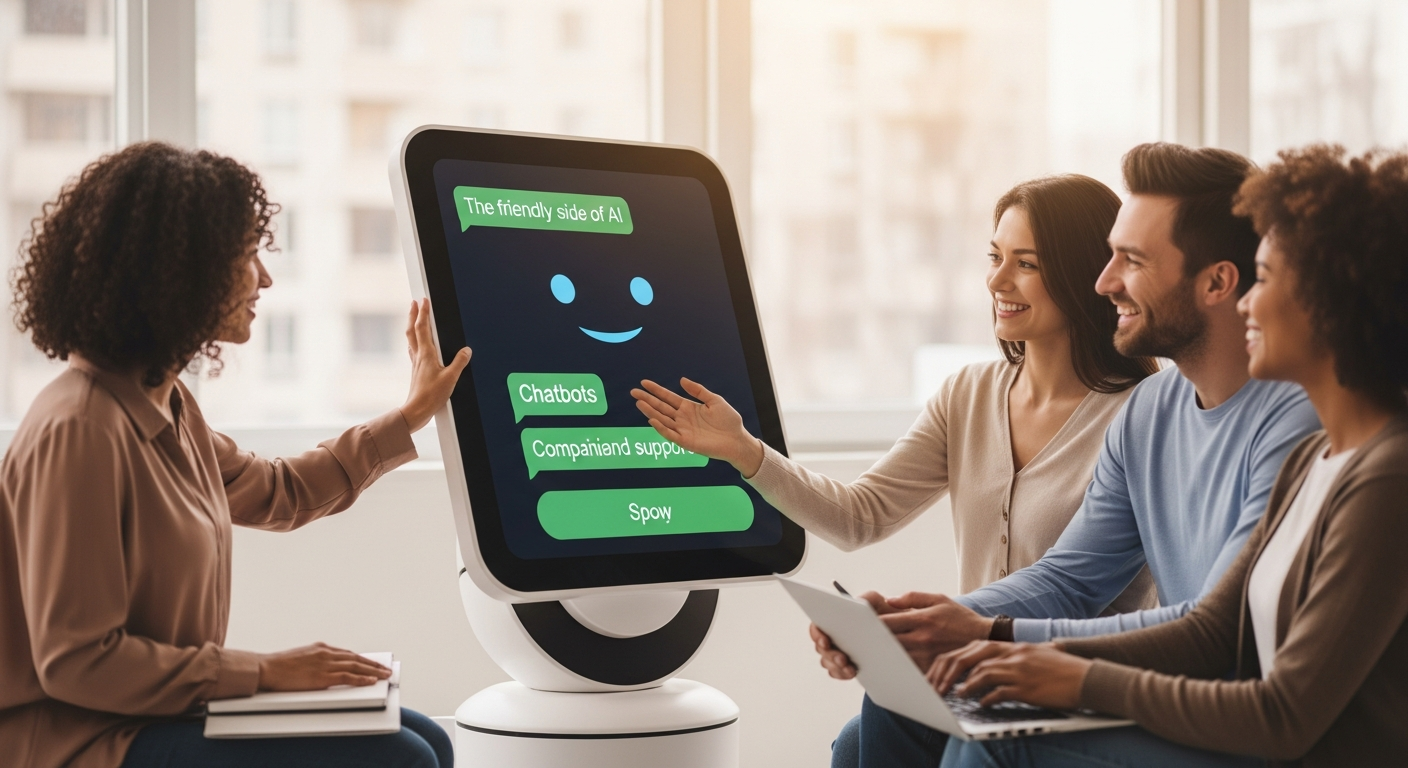
The friendly side of AI: chatbots, companions and support tools
- November 20, 2025
- ~ 1 min read
- 154 views
- AI Agents , Everyday AI , Lifestyle & AI
Introduction to the Friendly Side of AI
When we think of Artificial Intelligence (AI), we often imagine robots taking over the world or machines replacing human jobs. However, this perception couldn't be further from the truth. The reality is that AI is being developed and used in ways that are designed to assist, support, and even companion us. In this article, we'll delve into the friendly side of AI, exploring the various ways in which chatbots, companions, and support tools are revolutionizing the way we live and interact with technology.
The Importance of Understanding AI's Friendly Aspects
It's essential to understand that AI is not just about automation and efficiency; it's also about creating a more human-centered experience. By focusing on the friendly aspects of AI, we can begin to see the potential for technology to improve our lives in meaningful ways. For instance, AI-powered chatbots are being used in customer service to provide quick and personalized support, while companions like virtual assistants are helping people with disabilities to live more independently. These examples demonstrate the significant impact that AI can have on our daily lives, and it's crucial that we explore and understand these benefits.
Overview of Chatbots, Companions, and Support Tools
In the following sections, we'll take a closer look at the different types of AI-powered tools that are being developed to support and assist us. We'll explore the world of chatbots and how they're being used in various industries, from healthcare to finance. We'll also examine the concept of companions and how they're being designed to provide emotional support and companionship. Additionally, we'll discuss the various support tools that are being created to help people with specific needs, such as language learning or mental health support. Some examples of these tools include:
- Virtual assistants like Siri, Alexa, and Google Assistant
- Chatbots like IBM's Watson and Microsoft's Bot Framework
- Companions like robotic pets and social robots
- Support tools like language learning apps and mental health chatbots
By exploring these topics in more depth, we hope to provide a comprehensive understanding of the friendly side of AI and how it's transforming the way we live, work, and interact with technology. Whether you're a tech enthusiast or just curious about the potential of AI, this article aims to provide valuable insights and information on the many benefits of AI-powered chatbots, companions, and support tools.
Understanding Chatbots, Companions, and Support Tools
The integration of Artificial Intelligence (AI) into our daily lives has introduced a plethora of innovative technologies designed to make our interactions more efficient, personalized, and emotionally supportive. Among these, chatbots, companions, and support tools stand out for their unique capabilities and applications. This section delves into the definitions, functionalities, and impact of these AI-driven solutions on user experience.
Definition and Functionality of Chatbots
Chatbots are computer programs that use artificial intelligence to simulate conversation with human users, either via text or voice interactions. They are widely used in customer service to provide immediate responses to frequent queries, helping reduce wait times and improve user satisfaction. For instance, many e-commerce websites employ chatbots to guide users through the purchase process, offer product recommendations, and resolve basic issues. According to a study, the use of chatbots in customer service can increase user engagement by up to 40%, highlighting their potential in enhancing user experience.
The Role of Companions in AI
Companions in the context of AI refer to virtual entities designed to provide emotional support and companionship. These can range from simple virtual pets to sophisticated AI-powered robots that can recognize and respond to human emotions. The role of companions is particularly significant in addressing issues of loneliness and isolation, especially among the elderly and those with limited social interaction. By offering a sense of connection and companionship, these AI companions can significantly improve mental health and well-being, underscoring the friendly side of AI.
Explanation of Support Tools and Their Applications
Support tools powered by AI are designed to assist users in various tasks, from productivity and organization to health and wellness. These tools can analyze user behavior, offer personalized advice, and automate routine tasks, thereby enhancing productivity and efficiency. For example, AI-driven support tools can help individuals manage their schedules, set reminders, and even monitor their physical activity levels, providing valuable insights and suggestions for improvement. The applications of these tools are vast and continue to expand, with potential uses in education, healthcare, and beyond, further illustrating the AI applications that are transforming our lives.
The integration of chatbots, companions, and support tools into our daily routines is not only changing how we interact with technology but also how we experience the world around us. By leveraging these AI applications, we can create more personalized, efficient, and supportive environments that cater to a wide range of needs and preferences. As we move forward, it's essential to recognize the potential of these technologies in enhancing user experience and to continue exploring their capabilities and applications.
- Improved customer service through immediate and personalized responses.
- Enhanced emotional support and companionship for individuals in need.
- Increased productivity and efficiency through automated tasks and personalized advice.
The future of AI is not about replacing human connection but about augmenting it, making our lives more convenient, supportive, and fulfilling. As we embrace chatbots, companions, and support tools, we are, in essence, embracing a friendlier and more inclusive technological landscape.
Real-World Examples and Use Cases
The friendly side of Artificial Intelligence (AI) is being utilized in various industries, transforming the way we live and interact with technology. In this section, we will delve into real-world examples and use cases of AI-powered chatbots, companions, and support tools that are making a positive impact on people's lives.
Chatbots in Healthcare and Finance
AI-powered chatbots are being increasingly used in AI in Healthcare to provide patients with quick and accurate answers to their medical inquiries. For instance, a chatbot can help patients understand their symptoms, provide information on medications, and even assist with appointment scheduling. Similarly, in the finance sector, chatbots are being used to help customers with their banking queries, such as account balance checks, transaction history, and investment advice. These chatbots are not only helping to reduce the workload of human customer support agents but also providing 24/7 support to customers.
A notable example of a chatbot in healthcare is the symptom checker chatbot developed by a leading healthcare provider. This chatbot uses natural language processing (NLP) to understand the patient's symptoms and provides personalized advice and recommendations. Such chatbots are not only helping to improve patient engagement but also reducing the number of unnecessary hospital visits.
Companions for the Elderly and Isolated Individuals
Companions for Elderly individuals are another example of the friendly side of AI. These companions are designed to provide social interaction and companionship to elderly individuals who may be living alone or have limited social interaction. They can engage in conversations, play games, and even assist with daily tasks such as reminders and medication management. A case study by a research institution found that elderly individuals who interacted with a companion robot experienced a significant reduction in loneliness and depression.
For example, a company has developed a companion robot that can learn an individual's preferences and interests and engage in conversations accordingly. This robot can also connect individuals with their loved ones through video calls and messaging, helping to reduce feelings of isolation and loneliness.
Support Tools in Education and Employment
Support Tools in Education are being used to provide personalized learning experiences for students. AI-powered adaptive learning systems can adjust the difficulty level of course materials based on a student's performance, providing real-time feedback and recommendations for improvement. Similarly, in the employment sector, AI-powered support tools are being used to help individuals with job searching, resume building, and interview preparation.
A notable example of a support tool in education is an AI-powered tutoring platform that provides one-on-one support to students. This platform uses machine learning algorithms to identify areas where a student needs improvement and provides personalized lessons and exercises to help them catch up. Such platforms are not only helping to improve student outcomes but also reducing the workload of human teachers.
The friendly side of AI has the potential to revolutionize the way we live and interact with technology. By providing personalized support and companionship, AI-powered chatbots, companions, and support tools are making a positive impact on people's lives.
In conclusion, the real-world examples and use cases of AI-powered chatbots, companions, and support tools demonstrate the significant benefits of the friendly side of AI. From AI in Finance to Companions for Elderly, these technologies are transforming industries and improving lives. As we continue to develop and integrate these technologies, we can expect to see even more innovative applications of the friendly side of AI.
- Improved patient outcomes through AI-powered chatbots in healthcare
- Increased social interaction and companionship for elderly individuals through companion robots
- Personalized learning experiences for students through AI-powered support tools in education
By embracing the friendly side of AI, we can create a future where technology enhances human life, providing support, companionship, and improved outcomes for all.
Advanced Concepts and Technical Insights
As we delve deeper into the friendly side of Artificial Intelligence (AI), it's essential to understand the technical concepts that power these innovative technologies. Natural Language Processing (NLP) is a crucial component of chatbots, enabling them to comprehend and respond to human language. NLP involves a range of techniques, including tokenization, sentiment analysis, and intent recognition, which allow chatbots to provide more accurate and personalized support.
Technical Overview of NLP in Chatbots
NLP is a subset of Machine Learning, which enables computers to learn from data and improve their performance over time. In the context of chatbots, NLP is used to analyze user input, identify patterns, and generate responses. This process involves several stages, including data preprocessing, model training, and model deployment. By leveraging Deep Learning techniques, such as recurrent neural networks (RNNs) and long short-term memory (LSTM) networks, chatbots can learn to recognize complex patterns in language and respond accordingly.
Advanced Algorithms for Personalized Support
Companions, such as virtual assistants and social robots, use advanced algorithms to provide personalized support and interaction. These algorithms often involve Machine Learning techniques, such as collaborative filtering and content-based filtering, which enable companions to learn about individual preferences and adapt their behavior accordingly. Personalization is a critical aspect of companion technologies, as it allows them to build trust and rapport with users. By analyzing user data and behavior, companions can provide tailored support and recommendations, making them more effective and engaging.
Deep Learning Techniques for Predictive Analytics
Deep Learning techniques, such as convolutional neural networks (CNNs) and autoencoders, are used in support tools to analyze complex data and predict user behavior. These techniques enable support tools to identify patterns and anomalies in data, allowing them to provide more accurate and proactive support. Predictive analytics is a critical aspect of support tools, as it enables them to anticipate and prevent problems, rather than simply responding to them. By leveraging Deep Learning techniques, support tools can provide more effective and efficient support, improving user experience and outcomes.
As AI technologies continue to evolve, there are several future developments and challenges that need to be addressed. One of the primary concerns is AI Ethics, which involves ensuring that AI systems are fair, transparent, and accountable. This requires careful consideration of issues such as bias, privacy, and security, as well as the development of guidelines and regulations to govern the use of AI. By prioritizing AI Ethics and addressing these challenges, we can ensure that AI technologies are developed and used in ways that benefit society as a whole.
According to experts in the field, the future of AI's friendly technologies holds much promise, but also requires careful consideration of the potential risks and challenges. As
Dr. Joanna Bryson, a leading expert in AI Ethics, notes, "The development of AI technologies requires a deep understanding of human values and principles, as well as a commitment to transparency, accountability, and fairness."By prioritizing these values and principles, we can create AI technologies that are not only effective and efficient but also responsible and beneficial to society.
In conclusion, the friendly side of AI is powered by a range of technical concepts, including NLP, Machine Learning, and Deep Learning. By understanding these concepts and addressing the challenges and ethical considerations involved, we can create AI technologies that are more sophisticated, personalized, and beneficial to society. As we continue to develop and deploy these technologies, it's essential to prioritize AI Ethics and ensure that they are used in ways that promote human well-being and flourishing.
Implementing and Integrating AI's Friendly Side
As we explore the vast potential of AI's friendly side, it's essential to discuss the practical aspects of implementing and integrating these technologies into our daily lives. In this section, we'll provide a step-by-step guide on how to implement chatbots for customer service, offer tips for integrating companions into care systems for the elderly, and share best practices for using support tools in educational settings. We'll also highlight common pitfalls to avoid when adopting AI solutions, ensuring a smooth and beneficial transition.
Step-by-Step Guide to Implementing Chatbots for Customer Service
Implementing a chatbot for customer service can be a straightforward process if you follow the right steps. First, choose the right chatbot platform that aligns with your business needs and goals. Consider factors such as scalability, customization options, and integration with existing systems. Next, train your chatbot using a combination of machine learning algorithms and human input. This will enable your chatbot to understand and respond to customer inquiries effectively. Finally, test and refine your chatbot to ensure it provides accurate and helpful responses to customers.
Some popular chatbot platforms for customer service include ManyChat, Dialogflow, and Chatfuel. When selecting a platform, consider the following factors:
- Ease of use and setup
- Customization options and flexibility
- Integration with existing systems and tools
- Scalability and reliability
- AI security features and protocols
Tips for Integrating Companions into Care Systems for the Elderly
Integrating companions into care systems for the elderly can have a significant impact on their quality of life. To ensure a successful integration, train companions to address specific needs and requirements. For example, companions can be trained to provide medication reminders, assist with daily routines, and offer emotional support. It's also essential to consider user privacy and security when integrating companions into care systems. This includes implementing robust data protection protocols and ensuring that companions are designed with AI security features in mind.
When integrating companions into care systems, consider the following best practices:
- Conduct thorough needs assessments to determine the requirements of each individual
- Develop personalized training programs for companions
- Establish clear communication channels and protocols
- Monitor and evaluate the effectiveness of companions regularly
- Prioritize AI implementation and integration with existing care systems
Best Practices for Using Support Tools in Educational Settings
Support tools can be incredibly valuable in educational settings, providing students with personalized learning experiences and teachers with valuable insights. To get the most out of support tools, integrate them seamlessly into existing educational systems. This includes chatbot integration with learning management systems, as well as companion training to support students with specific needs. It's also essential to ensure user privacy and security when using support tools, implementing robust data protection protocols and AI security features.
Some best practices for using support tools in educational settings include:
- Conduct thorough needs assessments to determine the requirements of each student
- Develop personalized learning plans that incorporate support tools
- Establish clear communication channels and protocols
- Monitor and evaluate the effectiveness of support tools regularly
- Prioritize AI implementation and integration with existing educational systems
By following these guidelines and best practices, you can ensure a successful implementation and integration of AI's friendly side into your personal or professional life. Remember to prioritize AI security and user privacy, and don't hesitate to seek guidance from experts if you encounter any challenges along the way. With the right approach, you can unlock the full potential of AI's friendly side and reap the benefits of these innovative technologies.
Implementing and integrating AI's friendly side requires careful planning, execution, and ongoing evaluation. By prioritizing user needs, AI security, and chatbot integration, you can create a seamless and beneficial experience for all stakeholders involved.
Comparison and Analysis of AI Solutions
As we delve into the world of Artificial Intelligence, it's essential to evaluate the various AI Solutions available, considering their pros, cons, and potential trade-offs. In this section, we'll explore the comparison of chatbot platforms, analysis of companions versus human caregivers, and the effectiveness of support tools in education. By examining these aspects, readers can make informed decisions about which AI Solutions best suit their needs and goals.
Chatbot Platforms for Small Businesses: A Comparative Analysis
When it comes to chatbot platforms for small businesses, there are several options to consider. Some popular platforms include ManyChat, Dialogflow, and Chatfuel. Each platform has its unique features, pricing plans, and integration capabilities. For instance, ManyChat is known for its ease of use and affordability, while Dialogflow offers advanced natural language processing capabilities. A comparative analysis of these platforms reveals that cost and customization are crucial factors to consider. Small businesses should evaluate their specific needs and choose a platform that balances affordability with the required features and scalability.
A study by Grand View Research found that the global chatbot market is expected to reach $10.5 billion by 2026, growing at a CAGR of 29.7%. This growth is driven by the increasing adoption of chatbots in various industries, including customer service, healthcare, and education. As the market continues to evolve, it's essential for small businesses to stay informed about the latest developments and choose a chatbot platform that aligns with their goals and budget.
Companions vs. Human Caregivers: An Examination of Elderly Support
The use of companions, such as robots and virtual assistants, to support the elderly has gained significant attention in recent years. While these companions can provide emotional support and companionship, they may not replace the need for human caregivers entirely. A study published in the Journal of Gerontology found that human caregivers provide essential physical and emotional support that companions may not be able to replicate. However, companions can supplement human care by providing social interaction and cognitive stimulation. Ultimately, a balanced approach that combines the benefits of both companions and human caregivers may be the most effective way to support the elderly.
AI in Education: Weighing the Pros and Cons of Support Tools
The integration of AI in Education has sparked a debate about the effectiveness of support tools versus traditional methods. On one hand, AI-powered tools can provide personalized learning experiences and automated grading, freeing up instructors to focus on more critical aspects of teaching. On the other hand, some argue that AI may lack the nuance and emotional intelligence of human teachers, potentially leading to a lack of depth and context in learning. A study by the National Center for Education Statistics found that AI-powered tools can improve student outcomes, particularly in subjects like math and reading. However, it's crucial to strike a balance between technology and human instruction to ensure that students receive a well-rounded education.
When evaluating AI Solutions, it's essential to consider the trade-offs between cost, effectiveness, and user experience. By weighing these factors and considering the specific needs and goals of their organization, readers can make informed decisions about which AI approach to adopt. As the field of AI continues to evolve, it's crucial to stay informed about the latest developments and advancements in AI Solutions Comparison, Chatbot Platforms, and Companions vs. Human Caregivers to ensure that they are leveraging the most effective and efficient solutions available.
The key to successful AI adoption lies in finding a balance between technology and human touch, ensuring that the benefits of AI are harnessed while minimizing its limitations.
By considering the pros and cons of various AI Solutions and evaluating their specific needs and goals, readers can make informed decisions about which AI approach to adopt. Whether it's chatbot platforms for small businesses, companions for elderly support, or AI-powered tools in education, the right AI solution can have a significant impact on productivity, efficiency, and user experience. As the field of AI continues to evolve, it's essential to stay informed about the latest developments and advancements in AI Solutions Comparison to ensure that they are leveraging the most effective and efficient solutions available.
Conclusion and Future Outlook
In conclusion, our journey through the friendly side of AI has revealed a multitude of benefits and opportunities that this technology has to offer. From chatbots and companions to support tools, AI is transforming the way we live, work, and interact with one another. The key takeaways from this article emphasize the potential of AI to enhance our daily lives, provide emotional support, and offer personalized assistance.
Reflecting on the Current State and Future Potential
As we reflect on the current state of AI future developments, it is clear that we are on the cusp of a revolution. Technological advancements are happening at an unprecedented rate, and the possibilities seem endless. While there are certainly challenges to be addressed, the opportunities presented by friendly AI are vast and exciting. As we look to the future, we can expect to see even more sophisticated chatbots and companions that can learn, adapt, and respond to our needs in a more human-like way.
Embracing the Future of AI
So, what can you do to start exploring and embracing the friendly side of AI? Here are a few next steps to consider:
- Learn more about the different types of AI technologies available, such as chatbots and virtual assistants
- Experiment with AI-powered tools and platforms to see how they can enhance your daily life
- Stay up-to-date with the latest technological advancements and breakthroughs in the field of AI
A Call to Action
In conclusion, the future of AI is exciting and full of promise. As we continue to develop and refine friendly AI technologies, we can expect to see significant improvements in our daily lives. So, don't be afraid to embrace the future of AI and start exploring the many wonders it has to offer. Whether you're interested in chatbots, companions, or support tools, there's never been a better time to get involved and see the positive impact that AI can have on your life.
The future of AI is not just about technology - it's about people, and how we can use these advancements to make our lives better, easier, and more enjoyable.
So, let's embark on this journey together and discover the incredible potential of the friendly side of AI. With its power to transform and improve our lives, the future of AI is certainly looking bright.

Comments (0)
Please login or register to leave a comment.
No comments yet. Be the first to comment!