
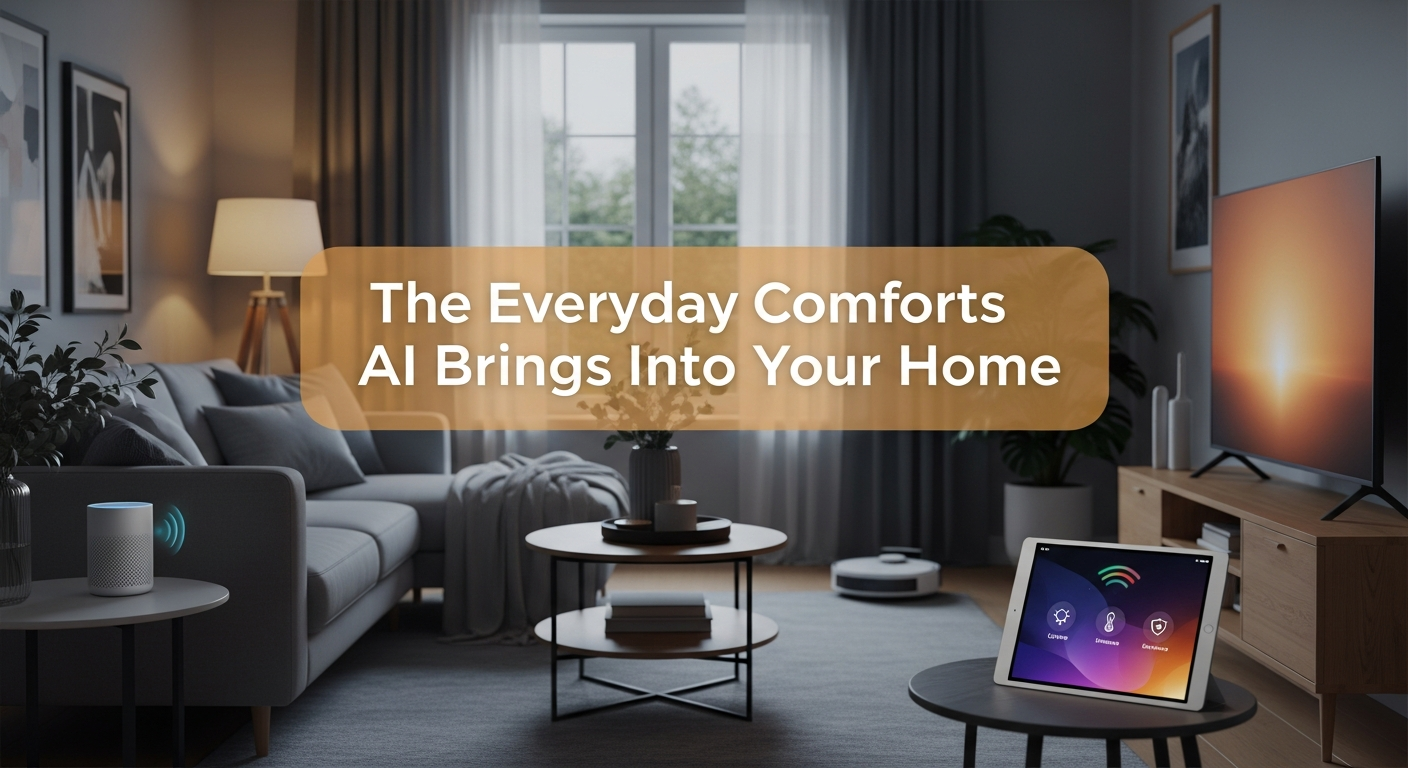
The Everyday Comforts AI Brings Into Your Home
- November 21, 2025
- ~ 1 min read
- 130 views
- Everyday AI , Lifestyle & AI
Introduction to AI-Powered Home Comforts
Imagine walking into your home after a long day, and being greeted by a warm, cozy atmosphere that's perfectly tailored to your preferences. The lights are dimmed, your favorite music is playing softly in the background, and the temperature is just right. This isn't a scene from a futuristic movie, but a reality that's becoming increasingly common, thanks to the growing presence of AI in our homes. According to recent statistics, over 60% of households in the US alone are expected to have at least one smart home device by 2025, with AI being a key driver of this trend.
The Importance of Comfort and Convenience
In today's fast-paced world, comfort and convenience are no longer luxuries, but essential aspects of our daily lives. We crave a sense of well-being and relaxation in our living spaces, and are willing to invest in technologies that can provide us with these benefits. AI-powered home comforts are at the forefront of this innovation, using machine learning algorithms and data analytics to learn our habits, preferences, and routines, and adjust our home environments accordingly. From smart thermostats that optimize energy consumption, to voice assistants that control our entertainment systems, AI is transforming the way we experience comfort and convenience in our homes.
What to Expect from This Article
In this article, we'll delve into the world of AI-powered home comforts, exploring the latest innovations, trends, and applications of AI in the smart home space. We'll examine the benefits of AI-driven home comforts, including increased energy efficiency, enhanced security, and improved overall well-being. You'll also learn about the different types of AI-powered devices and systems available, and how to integrate them into your existing home setup. Whether you're a tech-savvy enthusiast or just starting to explore the world of smart home technology, this article will provide you with a comprehensive overview of the AI-powered home comforts that are revolutionizing the way we live, work, and play. As
the future of home comfort is increasingly intertwined with the development of AI, we'll also discuss the potential challenges and limitations of AI-powered home comforts, and what the future holds for this exciting and rapidly evolving field.
By the end of this article, you'll have a deeper understanding of the role that AI is playing in shaping the future of home comforts, and be equipped with the knowledge and insights needed to start creating your own AI-powered smart home. So, let's get started on this journey into the world of AI-powered home comforts, and discover the incredible benefits and possibilities that this technology has to offer.
Understanding AI in Home Comforts
As we delve into the world of AI applications in home comforts, it's essential to understand the basics of Artificial Intelligence (AI) and machine learning. In simple terms, AI refers to the development of computer systems that can perform tasks that typically require human intelligence, such as learning, problem-solving, and decision-making. Machine learning, a subset of AI, enables systems to learn from data and improve their performance over time. To illustrate this concept, consider a thermostat that learns your temperature preferences and adjusts the temperature accordingly. This is a classic example of machine learning in action, where the system improves its performance based on your behavior and preferences.
AI in Home Comforts: An Overview
AI is revolutionizing the way we experience comfort in our homes. From smart devices that automate lighting and temperature control to advanced security systems, AI is making our lives more convenient and comfortable. For instance, smart lighting systems can learn your daily routines and adjust the lighting accordingly, while smart thermostats can optimize temperature settings to reduce energy consumption. Home automation is becoming increasingly popular, and AI is at the forefront of this trend. With AI-powered systems, you can control and monitor your home's comfort settings remotely, ensuring that your home is always comfortable and secure.
Some common AI applications in home comforts include:
- Temperature control: AI-powered thermostats learn your temperature preferences and adjust the temperature accordingly
- Lighting control: Smart lighting systems adjust lighting levels and colors based on your daily routines and preferences
- Security: AI-powered security systems detect and respond to potential security threats, such as intruders or fire hazards
Integration with IoT Devices
The integration of AI with IoT devices is a key factor in the development of smart home technology. IoT devices, such as sensors and cameras, provide AI systems with the data they need to learn and make decisions. For example, a smart security system can use data from motion sensors and cameras to detect and respond to potential security threats. This integration enables AI systems to interact with their environment and make decisions in real-time, creating a more seamless and convenient experience for homeowners. IoT devices are becoming increasingly ubiquitous, and their integration with AI is driving innovation in the smart home industry.
Some popular AI-powered home devices include:
- Amazon Echo: A smart speaker that uses AI to control and automate various aspects of your home, such as lighting and temperature
- Nest Learning Thermostat: A smart thermostat that uses AI to learn your temperature preferences and optimize energy consumption
- August Smart Lock: A smart lock that uses AI to detect and respond to potential security threats, such as unauthorized access
As AI continues to evolve and improve, we can expect to see even more innovative applications of AI in home comforts. From home automation to energy efficiency, AI is poised to revolutionize the way we live and interact with our homes.
Real-World Examples of AI in Home Comforts
The integration of Artificial Intelligence (AI) into home comforts is not just a concept, but a reality that many homeowners are already experiencing. From case studies of homes fully integrated with AI systems to individual examples of how AI improves daily life, the impact is undeniable. One of the most significant advantages of AI in home comforts is its ability to enhance energy efficiency, thereby reducing costs and environmental impact. For instance, smart thermostats can learn a household's schedule and preferences, adjusting the temperature accordingly to save energy when no one is home or when everyone is asleep.
Improving Energy Efficiency and Home Security
AI-powered systems can analyze energy consumption patterns and provide insights on how to optimize energy use. This can include automatically turning off lights, TVs, and other appliances when not in use. Moreover, home security is another area where AI makes a significant difference. AI-driven security systems can detect anomalies in real-time, alerting homeowners to potential threats. These systems can also integrate with other smart devices in the home, such as door locks and surveillance cameras, to provide an additional layer of safety and security. For example, if a security camera detects motion outside the home, it can trigger the lights to turn on and send a notification to the homeowner's smartphone.
Real-Life Scenarios and User Testimonials
In real-life scenarios, AI has proven to enhance home security and safety in numerous ways. For instance, AI-powered smoke detectors can detect the difference between cooking smoke and an actual fire, reducing false alarms. Additionally, fall detection systems can alert emergency services if a senior living alone experiences a fall, ensuring timely medical attention. Users of AI-powered home comfort systems often report a significant improvement in their quality of life. As one homeowner noted, "Since integrating AI into our home, we've not only reduced our energy bills but also feel safer and more secure. The user testimonials from others who have made the switch were a big factor in our decision, and we're glad we did."
Some of the key benefits of AI in home comforts, as highlighted by users, include:
- Enhanced energy efficiency leading to cost savings
- Improved home security through real-time threat detection
- Increased convenience through automated tasks and personalized settings
- Peace of mind knowing that the home and its occupants are safe and secure
AI is not just about making our homes smarter; it's about making our lives easier, safer, and more comfortable. With the right integration, the possibilities are endless, and the benefits are tangible.
In conclusion, the integration of AI into home comforts is a step towards creating a more convenient, secure, and sustainable living environment. Through case studies and user testimonials, it's clear that AI can significantly improve energy efficiency and home security, among other aspects. As technology continues to evolve, we can expect even more innovative applications of AI in home comforts, further enhancing the quality of life for homeowners around the world.
Advanced AI Concepts for Home Comforts
As we delve deeper into the world of AI-powered home comforts, it becomes essential to understand the machine learning algorithms that drive these systems. These algorithms enable home AI systems to learn from user behavior, adapt to changing environments, and make predictions to enhance the overall comfort experience. For instance, deep learning techniques can be used to analyze data from various sensors and devices, allowing the system to optimize temperature, lighting, and entertainment settings.
Emerging Trends in Home AI
The future of AI in home comforts is exciting, with emerging trends like edge AI, augmented reality (AR), and virtual reality (VR) set to revolutionize the way we interact with our homes. Edge AI, which involves processing data at the edge of the network, closer to the source, can significantly reduce latency and improve real-time decision-making. The integration of AI with AR and VR can enable new forms of immersive experiences, such as virtual home tours and interactive decor planning. Other emerging trends include the use of natural language processing to improve voice assistant capabilities and the development of more sophisticated computer vision systems for object recognition and tracking.
Some of the key benefits of these emerging trends include:
- Enhanced user experience through more intuitive and interactive interfaces
- Improved system efficiency and reduced latency through edge AI
- Increased accuracy and precision in object recognition and tracking
- New forms of entertainment and education through AR and VR integration
The Role of Voice Assistants in AI-Powered Homes
Voice assistants, such as Amazon Alexa and Google Assistant, play a vital role in AI-powered homes, enabling users to control various devices and systems with simple voice commands. These assistants use machine learning algorithms to understand user preferences and adapt to their behavior over time. However, the impact of voice assistants on the user experience can be significant, with benefits including increased convenience, improved accessibility, and enhanced entertainment options. Nevertheless, there are also potential challenges, such as privacy concerns and system compatibility issues, which must be addressed through robust security measures and standardized protocols.
According to experts, the future of voice assistants in home AI will be shaped by advances in natural language processing and the development of more sophisticated dialog management systems. These advancements will enable voice assistants to better understand user intent, handle complex conversations, and provide more personalized recommendations.
Challenges and Limitations of AI Integration
While AI has the potential to revolutionize home comforts, there are several technical challenges and limitations that must be addressed. These include:
- Ensuring system compatibility and interoperability across different devices and platforms
- Addressing privacy concerns and security risks associated with data collection and processing
- Developing more sophisticated machine learning algorithms that can handle complex data sets and edge cases
- Providing transparent and explainable AI decision-making processes to build user trust
Despite these challenges, the potential benefits of AI in home comforts are significant, and ongoing research and development are focused on addressing these limitations and creating more seamless, intuitive, and personalized experiences for users. As
the home becomes increasingly connected, the role of AI will be to orchestrate and optimize the various systems and devices, creating a truly smart and comfortable living space.
Implementing AI in Your Home
As we delve into the world of AI-powered home comforts, it's essential to understand the practical aspects of implementing these technologies in your daily life. In this section, we will provide a comprehensive guide on how to set up a basic AI-powered home system, choose the right smart devices, and integrate AI with your existing home technologies. We will also emphasize the importance of security best practices to protect your AI-powered devices from potential threats.
Setting Up a Basic AI-Powered Home System: A Step-by-Step Guide
To get started with AI in your home, you'll need to set up a basic system that can control and connect your various smart devices. Here's a step-by-step guide to help you through the process:
- Choose a central hub or controller that can connect all your smart devices. Popular options include Amazon Echo, Google Home, or Apple HomeKit.
- Select compatible smart devices that can be controlled by your chosen hub. This may include lights, thermostats, security cameras, or door locks.
- Download and install the necessary apps or software to control your smart devices and hub.
- Connect your smart devices to your hub and configure them according to the manufacturer's instructions.
- Test your system to ensure that all devices are connected and functioning correctly.
Tips for Choosing the Right Smart Devices and AI Services
With so many smart devices and AI services available, it can be overwhelming to choose the right ones for your home. Here are some tips to consider:
- Consider your specific needs and goals for implementing AI in your home. Do you want to improve energy efficiency, enhance home security, or simplify entertainment?
- Research different smart devices and AI services to find ones that are compatible with your hub and meet your needs.
- Read reviews and check ratings to ensure that you're choosing reliable and high-quality devices and services.
- Look for devices and services that offer seamless integration with your existing home technologies.
Integrating AI with Existing Home Systems and Ensuring Security
Once you've set up your basic AI-powered home system, you'll want to integrate it with your existing home technologies to create a cohesive and convenient experience. This may include connecting your smart devices to your home network, integrating with your entertainment system, or linking to your home security cameras.
However, as you integrate AI with your existing home systems, it's essential to prioritize security best practices to protect your devices and data from potential threats. Here are some tips to keep in mind:
Always change default passwords, keep your software up to date, and use strong encryption to protect your data. Additionally, consider implementing a setup guide to help you configure your devices and services securely.
By following these tips and guidelines, you can create a secure and intelligent home that enhances your comfort and convenience. Remember to stay informed about the latest developments in AI and smart home technology to ensure that your system remains up to date and secure.
Comparing AI Home Comfort Systems
When it comes to integrating AI into your home comfort systems, the market offers a plethora of options. Two of the most popular choices are Amazon Alexa and Google Home, each with its unique features, advantages, and disadvantages. In this section, we will delve into a system comparison of these leading AI home comfort systems, discussing their pros and cons, cost analysis, and compatibility with other smart devices.
Popular AI Home Comfort Systems: A Closer Look
A thorough system comparison reveals that Amazon Alexa and Google Home are the frontrunners in the AI home comfort market. Amazon Alexa, with its wide range of compatible devices and skills, offers an immersive experience for users. On the other hand, Google Home, powered by Google Assistant, provides seamless integration with other Google services, making it a popular choice among Android users. Other notable mentions include Apple HomeKit and Samsung SmartThings, each with its own set of unique features and advantages.
Some key features to consider when comparing these systems include:
- Voice assistant capabilities
- Smart device compatibility
- Integration with other services (e.g., music streaming, calendar management)
- Security and privacy features
Cost Analysis and Value Proposition
A cost analysis of these AI home comfort systems reveals that the initial investment can vary significantly. Amazon Alexa devices, for example, can range from under $50 to over $200, depending on the specific device and features. Google Home devices, on the other hand, tend to be priced slightly higher. However, when considering the value for money, it's essential to factor in the ongoing costs, such as subscription fees for premium services, and the potential for future expansion.
According to a recent study, the average homeowner can expect to spend around $1,000 to $2,000 on a comprehensive smart home system, including devices, installation, and ongoing subscription fees. While this may seem like a significant investment, the long-term benefits of increased convenience, energy efficiency, and property value make it a worthwhile consideration for many homeowners.
Compatibility and Ecosystem Lock-in
When choosing an AI home comfort system, it's crucial to consider the compatibility with other smart devices and the potential for ecosystem lock-in. Amazon Alexa, for example, has a wide range of compatible devices, but users may find themselves locked into the Amazon ecosystem, making it difficult to switch to a different platform in the future. Google Home, on the other hand, offers more flexibility, with seamless integration with other Google services and a wider range of compatible devices.
Ultimately, the choice of AI home comfort system depends on individual preferences and needs. By considering the pros and cons of each system, as well as the cost analysis and compatibility with other devices, homeowners can make an informed decision that meets their unique requirements and budget.
Conclusion and Future of AI in Home Comforts
In conclusion, the integration of AI into home comforts has revolutionized the way we live, making our homes more convenient, comfortable, and connected. Throughout this article, we have explored the various ways AI is transforming home living, from smart thermostats and lighting systems to voice assistants and home security. The key takeaways from our discussion include the ability of AI to learn and adapt to our preferences, provide personalized experiences, and enhance home safety and security.
Reflection on the Potential of AI
As we reflect on the potential of AI to revolutionize home living, it becomes clear that the future of smart homes is exciting and full of possibilities. Imagine a home that anticipates your needs, adjusting the temperature, lighting, and entertainment systems to create the perfect ambiance. With AI, this is no longer a fantasy, but a reality that is becoming increasingly accessible to homeowners. As AI technology continues to evolve, we can expect to see even more innovative applications in home comforts, making our lives easier, more convenient, and enjoyable.
Final Thoughts and Future Trends
As we look to the future, it is essential to consider how AI will continue to shape the concept of home comforts. Upcoming trends in smart homes include the integration of AI with other technologies, such as the Internet of Things (IoT) and 5G networks, to create even more seamless and connected living experiences. Additionally, we can expect to see advancements in voice assistants, home automation, and energy management, making our homes more efficient, sustainable, and comfortable. To stay ahead of the curve, homeowners should consider investing in AI-powered devices and systems, exploring new ways to integrate AI into their daily lives, and staying informed about the latest future trends in smart homes.
In final thoughts, embracing AI for a smarter, more comfortable home is not just about adopting new technology; it is about creating a better quality of life. By leveraging the power of AI, homeowners can enjoy greater convenience, comfort, and connectivity, making their homes a true reflection of their needs and preferences. As we move forward in this exciting era of AI innovation, one thing is clear: the future of home comforts has never looked brighter.
The integration of AI into home comforts is not just a trend, but a revolution that is transforming the way we live, making our homes more convenient, comfortable, and connected.
We encourage readers to explore the possibilities of AI in home comforts, to discover how this technology can enhance their living experience, and to join the journey towards creating smarter, more comfortable homes for all. By doing so, we can unlock the full potential of AI and create a future where our homes are truly our sanctuaries, providing us with the comfort, convenience, and connection we deserve.


Comments (0)
Please login or register to leave a comment.
No comments yet. Be the first to comment!