Life After 60: How AI Assists Older Adults in Everyday Life
- December 02, 2025
- ~ 1 min read
- 616 views
- Everyday AI , AI & Healthcare , Lifestyle & AI
Introduction and Overview
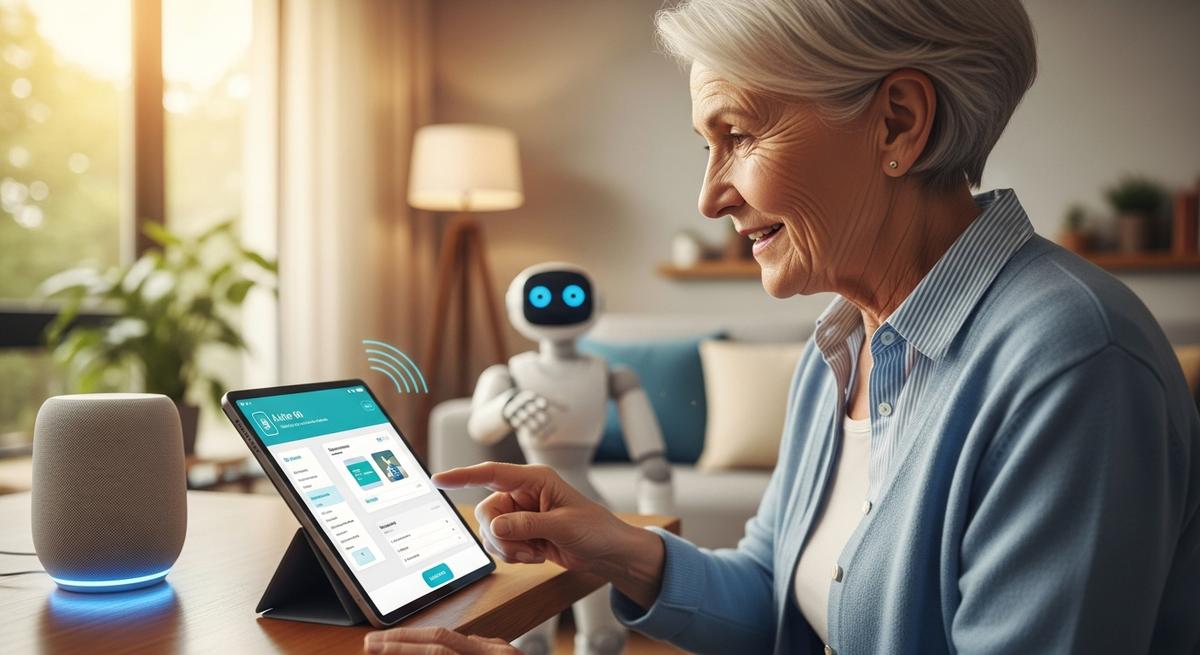
Imagine a grandparent effortlessly setting reminders for medication, checking the weather, or even video-calling their grandchildren—all with just a few simple voice commands. This isn’t science fiction; it’s the reality for millions of older adults who are embracing AI for seniors in their daily lives. In fact, recent surveys show that a remarkable 78% of adults aged 55 and above are now using some form of AI-powered technology, from smart speakers to health monitoring apps. Artificial intelligence is no longer just for the young or tech-savvy—it’s becoming a trusted companion for those navigating life after 60.
What Is AI, Really?
At its core, artificial intelligence (AI) is technology that helps machines learn, reason, and make decisions in ways that mimic human thinking. For older adults, this means tools that can anticipate needs, simplify tasks, and offer support—without requiring advanced technical skills. Whether it’s a voice assistant that answers questions, a smartwatch that tracks health, or an app that reminds you to take your pills, AI is designed to make everyday life easier and more manageable.
Why AI Matters for Life After 60
As we age, life brings new challenges—managing health, staying connected with loved ones, and maintaining independence. This is where older adults technology and aging technology solutions step in. AI isn’t about replacing human connection or care; it’s about enhancing it. For seniors, AI can mean greater senior independence, improved health outcomes, and a stronger sense of security. Whether it’s a smart home system that helps with daily routines or a telemedicine platform that connects you with doctors from the comfort of your living room, AI is reshaping what it means to age gracefully.
What You’ll Discover in This Article
In the pages ahead, we’ll explore how artificial intelligence 60+ is making a real difference in the lives of older adults. From health and safety to social connection and everyday convenience, you’ll learn about the tools and technologies that are helping seniors live fuller, more independent lives. We’ll also share practical tips for getting started with AI, address common concerns, and highlight the ways caregivers and families can support their loved ones in embracing these innovations. By the end, you’ll see that AI isn’t just a trend—it’s a powerful ally for aging well in today’s world.
Core AI Applications for Older Adults
Health Monitoring and Predictive Alerts
One of the most impactful ways health monitoring AI supports older adults is through wearable technology and smart home systems that continuously track vital signs and daily activities. Devices like smartwatches can measure heart rate, blood oxygen levels, and sleep patterns, analyzing this data to detect irregularities early. For example, a smartwatch might identify an irregular heart rhythm and promptly alert a caregiver or family member, enabling timely medical intervention before symptoms worsen.
Smart home sensors can also monitor movement patterns to detect falls or unusual inactivity, which are common risks for seniors living independently. These AI-driven systems provide predictive alerts that can reduce emergency room visits and promote peace of mind for both seniors and their loved ones. By integrating seamlessly into daily routines, these tools offer continuous, passive health tracking without requiring complex user input.
Medication Management and Adherence Support
Managing multiple medications can be challenging for older adults, but AI-powered medication management systems simplify this task by providing automated reminders and tracking adherence. These systems can be integrated into smartphones, smart speakers, or dedicated devices, ensuring timely notifications for each dose.
For instance, an AI assistant might remind a senior to take their blood pressure medication and confirm intake by prompting a simple voice or touchscreen response. This not only improves medication adherence but also reduces the risk of adverse drug events, which are a leading cause of hospitalizations in seniors. Additionally, these tools can generate reports that caregivers or healthcare providers can review to adjust treatment plans as needed, supporting independent living with greater safety and confidence.
Cognitive Engagement and Mental Health Support
Cognitive support for seniors is another vital application of AI, addressing challenges such as memory decline, loneliness, and mental health. AI chatbots and interactive games provide personalized mental stimulation by engaging memory, language, and attention skills through daily conversations and brain exercises.
For example, an AI companion might play memory games, share stories, or simply chat to reduce feelings of isolation. These interactions can be especially beneficial for individuals with dementia or Alzheimer’s, offering companionship and cognitive engagement that help maintain mental acuity and emotional well-being. The adaptability of AI allows these tools to tailor activities to each user’s preferences and abilities, making cognitive support both enjoyable and effective.
Communication Enhancement via Voice Assistants
Communication can become more difficult with age due to hearing loss or mobility challenges, but voice assistants for the elderly have transformed how seniors stay connected. Devices like Amazon Alexa, Google Assistant, and Apple’s Siri enable users to send messages, make phone calls, and access information simply by speaking.
For example, a senior with limited dexterity can ask their voice assistant to schedule a doctor’s appointment or check the weather without needing to navigate complex menus. Speech-to-text applications powered by AI also help those with hearing impairments by converting spoken words into readable text, facilitating conversations in real time. These technologies empower older adults to maintain social connections and access services independently, enhancing quality of life.
Financial Management and Fraud Detection
Financial security is a crucial concern for many older adults, and AI plays an increasingly important role in protecting and managing their finances. AI-driven financial management tools assist with budgeting, tracking expenses, and planning retirement income, offering tailored advice based on spending habits and goals.
More importantly, financial security AI systems monitor transactions for suspicious activity, helping to detect and prevent fraud—a significant risk for seniors who may be targeted by scams. For example, AI algorithms can flag unusual withdrawals or unauthorized payments and alert the account holder or a trusted contact immediately.
By automating these protective measures and simplifying money management, AI helps older adults maintain control over their finances with greater confidence and safety.
Real-World Examples and Use Cases
Artificial intelligence is no longer a futuristic concept—it’s making a real difference in the lives of older adults every day. From preventing emergencies to enhancing social connection, AI-powered solutions are transforming senior care. Here are some compelling AI success stories seniors have experienced, showing how technology is improving safety, health, and quality of life.
Health Monitoring: Smartwatches That Save Lives
Take the case of 72-year-old Margaret, who lives alone in suburban Chicago. After a fall in her kitchen, her smartwatch detected the impact and immediately sent an alert to her daughter and local emergency services. Thanks to the device’s senior health monitoring examples, help arrived within minutes, preventing a potentially serious outcome. “I didn’t even have to press a button,” Margaret says. “The watch just knew something was wrong.”
Studies show that seniors using smartwatches with fall detection and emergency alerts experience up to a 30% reduction in emergency room visits for fall-related injuries. These devices continuously track vital signs like heart rate, blood oxygen, and even detect irregular rhythms, sending real-time alerts to caregivers and medical professionals.
Cognitive Engagement: AI Companions in Assisted Living
In an assisted living facility in Florida, residents interact daily with Moxie, an AI-powered companion robot. Moxie engages seniors in conversation, memory games, and even reminds them to take medication. “It’s like having a friend who never forgets,” says 78-year-old resident James. “I look forward to our chats every morning.”
Facility staff report improved mood and cognitive engagement among residents using AI companions. “We’ve seen a noticeable drop in feelings of loneliness and isolation,” says caregiver Maria. “It’s especially helpful for those with early-stage dementia.”
This is a prime example of AI companions for elderly making a measurable impact on mental well-being in assisted living technology environments.
Communication and Daily Living: Breaking Barriers
For seniors with hearing impairments, AI-powered speech-to-text apps have revolutionized phone conversations. 68-year-old Linda, who has moderate hearing loss, uses an app that transcribes calls in real time. “I can finally talk to my grandchildren without missing a word,” she says. “It’s made me feel more connected.”
Meanwhile, AI-driven care planning tools in residential facilities analyze residents’ routines and preferences, enabling staff to deliver more personalized support. “We can now anticipate needs before they arise,” explains facility manager David. “It’s made our care more proactive and less reactive.”
Remote Healthcare Access: Telehealth for Rural Seniors
In rural Montana, 75-year-old Robert relies on telehealth and AI consultations to manage his diabetes. His wearable device sends health data directly to his doctor, who reviews trends and adjusts his treatment plan remotely. “I don’t have to drive an hour to see my doctor anymore,” Robert says. “It’s made managing my health so much easier.”
Remote monitoring and telehealth rural seniors programs have led to improved medication adherence and fewer hospitalizations in underserved areas. “AI is helping us bridge the gap in access to care,” says Dr. Patel, a geriatrician. “Seniors are healthier and more independent.”
These case studies older adults have lived through demonstrate that AI is not just a tool—it’s a lifeline, making everyday life safer, more connected, and more fulfilling for people over 60.
Advanced Concepts and Deep Dive
Machine Learning Algorithms for Personalized Health Predictions
At the core of modern AI systems designed for older adults lies machine learning health prediction, a sophisticated technology that transforms raw health data into actionable insights. These algorithms analyze patterns across thousands of data points—from vital signs to medication adherence—to create personalized health profiles that evolve over time. Rather than applying one-size-fits-all medical guidelines, machine learning models adapt to each individual's unique health trajectory, accounting for their specific age, medical history, lifestyle, and genetic predispositions.
Research demonstrates that machine learning models incorporating demographic information, health behaviors, disease history, and blood biomarkers can predict cognitive function and health decline with remarkable accuracy. The balanced random forest algorithm has achieved accuracy rates exceeding 88% in identifying individuals at risk of significant cognitive decline within three-year periods. These models work by identifying the most influential predictors—such as instrumental activities of daily living, baseline cognitive scores, and age—and weighting them according to their predictive power. For seniors, this means early warning systems that can detect subtle changes in health status before they manifest as serious medical events.
Behavioral pattern recognition represents another critical dimension of machine learning for older adults. These systems learn to distinguish between normal variations in daily activity and concerning deviations that may indicate falls, infections, or other health emergencies. By establishing baseline patterns unique to each individual—their typical sleep duration, activity levels, bathroom visits, and movement patterns—AI systems can identify anomalies with high sensitivity. When a senior's behavior deviates significantly from their established baseline, the system can alert caregivers or healthcare providers, enabling rapid intervention before situations become critical.
IoT Integration and Comprehensive Health Data Ecosystems
The true power of AI for senior care emerges when IoT senior monitoring devices work in concert with machine learning algorithms. Modern smart home ecosystems create a comprehensive data collection infrastructure that operates seamlessly in the background, requiring minimal active participation from older adults. Motion sensors, environmental monitors, smart medication dispensers, fall detection systems, and wearable devices continuously gather data about the senior's environment and health status.
This wearable device integration extends beyond simple step counting. Contemporary wearables measure heart rate variability, sleep quality, oxygen saturation, body temperature, and even subtle changes in gait that may indicate increased fall risk. When integrated with smart home systems, these devices create a holistic picture of health. For example, if a wearable detects an irregular heart rhythm while simultaneously a smart home sensor shows the senior hasn't moved from their bedroom in an unusual pattern, the system can correlate these data points and trigger appropriate alerts. The infrastructure supporting this integration includes edge computing devices that process sensitive data locally before transmitting only essential alerts to healthcare providers, preserving privacy while enabling real-time monitoring.
The architecture of these ecosystems typically involves multiple layers: sensor networks collecting raw data, local processing units filtering and analyzing information, cloud-based machine learning models making predictions, and user interfaces presenting insights to seniors, caregivers, and healthcare professionals. This distributed approach ensures that critical alerts can be generated even if cloud connectivity is temporarily interrupted, while still leveraging the computational power of cloud systems for more complex analyses.
Natural Language Processing and Contextual AI Communication
Natural language processing for elderly users addresses a unique challenge: seniors often communicate differently than younger populations. They may use outdated terminology, speak more slowly, have regional accents, or express health concerns indirectly. Advanced NLP systems trained on senior communication patterns can understand these nuances, interpreting "my chest feels heavy" as a potential cardiac concern rather than literal weight, or recognizing that "I'm just tired" might indicate depression, infection, or medication side effects.
These conversational AI systems employ contextual understanding that goes beyond simple keyword matching. They maintain conversation history, understand pronouns and references, and can ask clarifying questions when seniors' statements are ambiguous. For instance, when a senior mentions "my usual pain is worse," the system understands this requires comparison to their baseline pain levels, automatically retrieving historical data to contextualize the statement. This capability is particularly valuable for seniors with mild cognitive impairment or those for whom typing is difficult. Voice-based interfaces become not just convenient but essential accessibility tools that enable seniors to interact with health monitoring systems naturally.
The training data for these NLP systems increasingly includes diverse senior populations, accounting for variations in speech patterns, vocabulary, and communication styles across different regions and demographics. This ensures that the technology serves all older adults equitably, rather than only those who conform to narrow communication norms.
Predictive Analytics for Early Health Issue Detection
Predictive analytics healthcare systems excel at identifying health problems in their earliest stages, when intervention is most effective. Research shows that machine learning models can predict 1-year mortality rates with moderate to good discrimination, identifying key predictors such as albumin levels, hospitalization frequency, and urea levels. More importantly, these systems can detect specific acute conditions before they become emergencies.
Consider infection detection: seniors often present atypical symptoms for infections compared to younger populations. An older adult with a urinary tract infection might not report dysuria but instead show confusion, increased falls, or changes in appetite. Machine learning systems trained on thousands of senior health records learn these atypical presentation patterns. By analyzing wearable data showing subtle temperature fluctuations, activity pattern changes, and sleep disruptions in combination with recent medication use and medical history, these systems can flag potential infections days before traditional symptoms appear, prompting preventive medical evaluation.
Similarly, predictive models for dehydration and respiratory problems work by identifying the constellation of subtle indicators that precede clinical manifestation. Dehydration might be detected through changes in heart rate variability, reduced activity levels, and shifts in bathroom patterns. Respiratory problems can be identified through changes in sleep patterns, voice analysis, or activity tolerance. These early warnings enable healthcare providers to intervene with simple preventive measures—increased fluid intake, medication adjustments, or clinical evaluation—before seniors require hospitalization.
Privacy, Security, and Ethical Considerations for Vulnerable Populations
AI privacy security seniors represents a critical concern given that older adults often have limited technical literacy and may not fully understand data collection practices. Health data is among the most sensitive personal information, and seniors are frequently targets for fraud and exploitation. Robust privacy protections must be built into every layer of AI systems serving this population.
Advanced encryption protocols ensure that health data remains confidential both in transit and at rest. Many modern systems employ edge computing specifically to minimize the amount of sensitive data leaving the home environment. Rather than transmitting raw sensor data to cloud servers, local processing units analyze information and transmit only high-level alerts and aggregated insights. This architectural choice dramatically reduces privacy risks while maintaining system functionality.
Data governance frameworks must include clear consent mechanisms that seniors can genuinely understand. Rather than lengthy legal documents, effective systems use plain language explanations, visual demonstrations of data collection, and granular privacy controls allowing seniors to specify exactly what data is collected, who can access it, and how it can be used. Regular privacy audits and third-party security certifications provide accountability.
Ethical considerations extend beyond technical security. Systems must be designed to enhance senior autonomy rather than enable surveillance or control by family members or institutions. Transparent algorithms that explain their reasoning help seniors understand why alerts are generated and maintain trust in the technology. Additionally, bias mitigation in machine learning models ensures that predictions remain accurate across diverse senior populations, preventing scenarios where certain demographic groups receive inadequate monitoring or inappropriate alerts based on algorithmic bias in training data.