
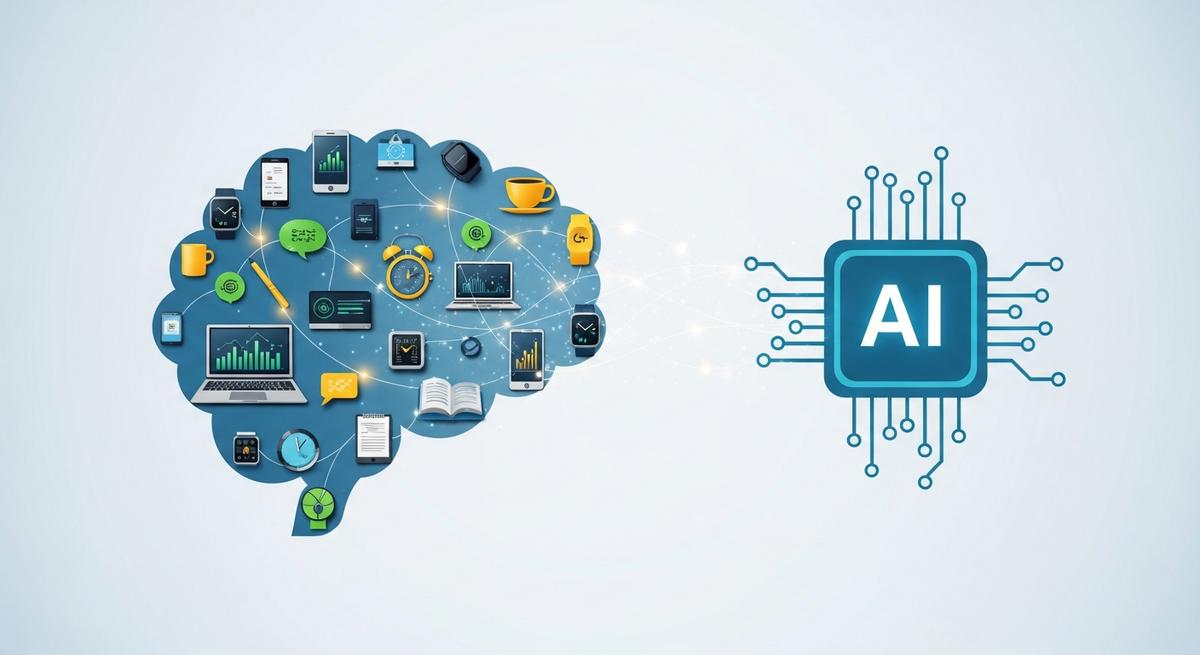
How your personal habits and devices give AI a “learning edge”
- November 22, 2025
- ~ 1 min read
- 172 views
- Edge AI , Everyday AI , Lifestyle & AI
Introduction: Unlocking AI’s Learning Edge Through You and Your Devices
Artificial Intelligence (AI) is no longer a distant, futuristic concept reserved for labs or sci-fi movies. Today, AI is deeply intertwined with our daily lives, learning and adapting through the very devices we use and the habits we form. From the smart assistants that respond to your voice commands to wearable devices that monitor your health in real time, AI devices are constantly collecting and analyzing user data to gain a learning edge—making technology more intuitive, personalized, and responsive than ever before.
This dynamic interaction between your personal habits and AI-powered devices is a cornerstone of modern technology. By understanding patterns in how you live, work, and play, AI systems become adaptive, tailoring their responses to fit your unique preferences and needs. This not only enhances convenience but also drives innovations in areas such as healthcare, entertainment, and smart home automation, ultimately transforming the way we engage with technology on a daily basis.
Why Your Habits and Devices Matter to AI Development
The significance of this relationship lies in the continuous feedback loop created between you and your devices. Every action you take—whether it’s adjusting the thermostat, choosing a playlist, or tracking your sleep—feeds valuable data into AI algorithms. These algorithms learn from your behavior, refining their models to anticipate your needs and deliver smarter solutions. This process is what gives AI its learning edge, enabling it to evolve beyond static programming into systems that grow smarter with use.
For example, smart home devices learn your daily routines and adjust settings automatically to optimize comfort and energy efficiency. Similarly, AI-powered wellness wearables analyze your physical activity and health metrics to provide personalized guidance, helping you achieve better outcomes. The result is technology that doesn’t just respond but proactively supports your lifestyle.
What You Will Learn in This Article
In the sections that follow, we will explore how your personal habits and various AI devices work together to create an adaptive AI ecosystem. You’ll gain insights into:
- How AI collects and processes data from daily activities and devices
- The technological mechanisms behind AI’s adaptive learning capabilities
- Practical benefits and real-world applications of AI’s personalized intelligence
- Future trends shaping the ongoing integration of AI into everyday life
By understanding these concepts, you’ll appreciate how AI’s “learning edge” is not just about complex algorithms but about the meaningful ways it enhances your daily experiences through the data you generate. Let’s unlock the potential of AI by first looking closely at how it learns from you and your devices.
How Personal Habits and Devices Feed AI’s Learning Process
Data Collection from Personal Devices and Habits
Artificial intelligence systems continuously gather data from the devices we use daily and the habits we exhibit. These include smartphones, smartwatches, home assistants, and IoT gadgets, all embedded with sensors that monitor various aspects of our behavior. This data collection happens both intentionally—when users provide information or interact with apps—and unintentionally, such as AI capturing sensor inputs or monitoring usage patterns without explicit user awareness. For example, AI can track your location via GPS, monitor your browsing history, or analyze your interaction with smart home devices to build a comprehensive understanding of your lifestyle and preferences.
Types of Data: Behavioral Patterns, Sensor Inputs, and Usage Statistics
The data feeding AI’s learning process can be broadly categorized into three types:
- Behavioral data: This includes patterns like the times you use certain apps, your browsing habits, purchase history, and interaction preferences. AI analyzes these patterns to predict your future actions or tailor personalized experiences.
- Sensor data: Devices collect continuous streams of information from embedded sensors—accelerometers, gyroscopes, microphones, cameras, and biometric sensors. This data captures contextual information such as your movement, voice commands, heart rate, or ambient environment.
- Usage statistics: Metrics such as app usage frequency, device settings adjustments, and response times provide AI with insights into how you engage with technology, enabling it to optimize performance and relevance.
By combining these data types, AI develops a detailed and dynamic profile that evolves with your habits and environment.
Machine Learning Models Adapting to Personal Data
At the core of AI’s ability to learn from personal habits is machine learning. These models use the collected data to identify patterns and make predictions or decisions without explicit programming for every scenario. For instance, a recommendation system learns your preferences over time and adjusts suggestions accordingly, while predictive text algorithms adapt to your writing style.
Machine learning models operate through iterative training cycles, where new data continually refines their accuracy. This ongoing adaptation allows AI to personalize experiences in real time, improving relevance and utility based on your evolving behavior.
The Role of Edge Computing and On-Device AI Processing
One of the critical advancements enabling AI to learn effectively from personal devices is edge computing. Instead of sending all data to centralized servers, edge computing processes information locally on the device itself—this is known as on-device AI. This approach offers several advantages:
- Real-time responsiveness: Processing data on-device reduces latency, allowing AI to react instantly to your inputs or environmental changes.
- Enhanced privacy: Since sensitive sensor data and behavioral information remain on the device, the risk of data breaches or unauthorized access is minimized.
- Reduced bandwidth use: On-device processing decreases the need for continuous data transmission, saving network resources and improving efficiency.
For example, a fitness tracker uses on-device AI to monitor your heart rate and movement patterns continuously, providing instant feedback without sending all raw data to external servers. This localized processing is essential for applications demanding both speed and privacy.
By integrating data from personal habits and devices with sophisticated machine learning models and leveraging edge computing, AI systems gain a powerful “learning edge” that enhances personalization while respecting user privacy.
Real-World Examples: AI Learning from Your Habits and Devices
AI is no longer a futuristic concept—it’s already embedded in our daily routines, quietly learning from our habits and devices to make life easier, healthier, and more efficient. From smartphones that anticipate your needs to wearables that offer personalized health insights, AI is transforming the way we interact with technology. Let’s explore some real-world examples that illustrate how personalized AI is shaping our everyday experiences.
Smartphones: Anticipating Your Needs
Modern smartphones are equipped with smartphones AI that adapts to your usage patterns. For instance, your phone might learn that you check your calendar every morning and automatically surface your schedule. It can suggest apps you frequently use at certain times, like your music app during your commute or your fitness tracker when you head to the gym. Notifications are also optimized—AI prioritizes important alerts and silences less relevant ones, ensuring you stay focused and informed. This level of personalization not only saves time but also enhances your overall user experience.
Wearables: Personalized Health Insights
Wearables AI is revolutionizing health monitoring by continuously tracking vital signs such as heart rate, sleep quality, and activity levels. Devices like the Apple Watch and Fitbit use advanced algorithms to analyze this data and provide tailored recommendations. For example, if your wearable detects irregular heart rhythms or changes in sleep patterns, it can alert you to potential health issues before they become serious. These insights empower users to take proactive steps toward better health, making AI use cases in healthcare both practical and impactful.
AI-powered wearables can predict health risks by analyzing patterns in your data, offering early warnings and personalized advice to help you stay healthy.
Smart Homes: Optimizing Comfort and Efficiency
Smart home AI learns your routines to create a more comfortable and energy-efficient living environment. Smart thermostats, for instance, adjust the temperature based on your daily schedule, ensuring your home is warm when you wake up and cool when you return from work. Smart lighting systems can turn on or off according to your habits, while voice assistants like Alexa or Google Home can play your favorite music or provide weather updates at your preferred times. These devices not only enhance convenience but also contribute to energy savings and a more sustainable lifestyle.
AI in Social Media and Streaming: Tailoring Content
AI algorithms on social media and streaming platforms analyze your interactions to deliver content that matches your interests. Whether it’s recommending a new show on Netflix or curating your social media feed, personalized AI ensures you see what matters most to you. This level of customization keeps users engaged and satisfied, making digital experiences more enjoyable and relevant.
By leveraging data from our habits and devices, AI continues to evolve, offering smarter, more intuitive solutions that enhance our daily lives. These real-world examples demonstrate the power of AI use cases in creating a more connected and personalized world.
Advanced Insights: The Technology Powering AI’s Learning Edge
Machine Learning Algorithms Driving Personalization
At the core of AI’s ability to learn from personal habits and devices are sophisticated machine learning algorithms. These algorithms analyze vast amounts of data generated by users, identifying patterns and preferences to deliver highly personalized experiences. Common approaches include collaborative filtering, which leverages similarities between users to recommend relevant content or products, and content-based filtering, which focuses on the attributes of items a user has engaged with previously. More advanced models employ neural networks and reinforcement learning to continuously adapt and refine predictions based on real-time user interactions. This dynamic learning process allows AI systems to scale personalization across millions of users without sacrificing relevance or accuracy, enabling hyper-personalized recommendations and services tailored uniquely to each individual’s behavior and preferences.
The Role of Natural Language Processing and Computer Vision
Natural language processing (NLP) and computer vision are pivotal technologies that empower AI to interpret and understand diverse forms of user data beyond simple numerical inputs. NLP enables AI to comprehend, analyze, and generate human language, facilitating nuanced interactions such as personalized chatbots, sentiment analysis, and context-aware content delivery. By processing text, voice commands, or even conversational context, NLP helps AI systems grasp user intent and emotional tone, enhancing personalization depth.
Meanwhile, computer vision allows AI to analyze visual data from cameras and sensors embedded in personal devices. This technology can recognize facial expressions, gestures, and environmental cues, enriching AI’s understanding of user context and enabling adaptive responses. For example, computer vision can inform personalized fitness coaching by analyzing user posture or support augmented reality experiences tailored to individual surroundings. Together, NLP and computer vision create a more holistic, human-like AI that interprets multimodal inputs to deliver seamless and contextually relevant personalization.
Integrating Multimodal Data Sources
Modern AI systems achieve their “learning edge” by integrating multimodal data sources — combining audio, visual, and behavioral data streams collected from personal devices. This integration allows AI to develop a 360-degree understanding of users, merging data such as speech patterns, facial cues, device usage habits, and environmental context.
By synthesizing these diverse inputs, AI can create richer user profiles and deliver more accurate predictions and personalized experiences. For instance, an AI assistant might combine voice tone analysis (via NLP) with activity recognition (via computer vision) and historical interaction data to tailor responses or suggestions that feel intuitively relevant. This multimodal learning approach not only enhances personalization quality but also enables AI to adapt continuously as user habits evolve.
Challenges in Privacy, Security, and Ethical AI Use
Despite the powerful capabilities of AI personalization, significant challenges arise around data privacy, security, and AI ethics. Collecting and processing sensitive personal data from devices raises concerns about unauthorized access, data breaches, and potential misuse of information. Ensuring robust encryption, secure data storage, and transparent user consent mechanisms is critical to maintaining trust.
Moreover, ethical considerations demand that AI systems avoid biases, respect user autonomy, and operate with fairness. Developers must implement safeguards to prevent discriminatory outcomes and ensure that AI personalization does not manipulate or exploit users. Balancing personalization benefits with ethical responsibility requires ongoing vigilance and adherence to emerging AI governance frameworks.
Future Trends: Federated Learning, Edge AI, and Continuous Adaptation
Emerging technologies promise to enhance AI personalization while addressing privacy and efficiency challenges. Federated learning is a groundbreaking approach where AI models are trained locally on users’ devices rather than centralized servers. This method allows AI to learn from personal data without transferring sensitive information externally, significantly improving privacy protection.
Simultaneously, advances in edge AI enable intelligent processing directly on personal devices, reducing latency and dependence on cloud connectivity. This facilitates real-time, context-aware personalization that adapts instantly to user behavior.
Finally, continuous adaptation mechanisms ensure AI systems evolve alongside changing user habits and preferences. By combining federated learning with edge AI and ongoing model updates, future AI personalization will be more secure, responsive, and finely tuned to individual needs, marking a new era of ethical and effective AI-driven experiences.
Practical Guide: How to Optimize Your Devices and Habits for Smarter AI
Maximizing the benefits of AI in your daily life isn’t just about having the latest gadgets—it’s about how you use them. By making a few smart adjustments to your device settings and habits, you can help AI systems learn more effectively, respond faster, and deliver more personalized experiences. Here’s how to get started.
Optimize Device Settings for AI Responsiveness
Device optimization is the first step toward smarter AI interactions. Many devices come with default settings that may not be ideal for AI performance. Consider these tips:
- Enable background app refresh for AI-powered apps to ensure they receive updates and learn from your usage patterns.
- Adjust power-saving modes to allow AI features to run when needed, especially for real-time tasks like voice assistants or smart home controls.
- Keep your operating system and apps updated to benefit from the latest AI improvements and security patches.
- Use smart device tips from manufacturers to fine-tune settings for AI responsiveness, such as prioritizing AI tasks in device resource allocation.
These small changes can significantly improve how quickly and accurately AI responds to your needs.
Balance Data Sharing and Privacy Controls
AI learns best when it has access to relevant data, but privacy is equally important. Here’s how to strike the right balance:
- Review and customize your privacy controls in device settings and apps. Only share data that is necessary for the AI to function effectively.
- Use built-in privacy features like on-device processing, which keeps sensitive data local and reduces exposure.
- Regularly audit app permissions and revoke access for apps that don’t need continuous data sharing.
- Enable privacy controls that allow you to delete or anonymize your data if you choose to stop using a service.
By being mindful of what you share, you empower AI to learn from your habits while protecting your personal information.
Provide Useful Feedback to AI Systems
AI thrives on feedback. The more you interact with AI features, the better they become. Here’s how to give effective feedback:
- Correct mistakes when you notice them—most AI assistants and apps allow you to flag errors or provide corrections.
- Set and update your preferences in apps and devices to help AI tailor its responses to your needs.
- Use feedback mechanisms like ratings, surveys, or direct input options to share your experience with AI developers.
- Engage with AI feedback features regularly to help systems learn from your unique habits and preferences.
Your input is invaluable for training AI to be more accurate and helpful.
Leverage AI Features in Wearables, Smartphones, and Smart Homes
Modern devices are packed with AI-powered features. Make the most of them by:
- Exploring AI-driven health tracking on wearables and customizing alerts based on your lifestyle.
- Using voice assistants for routine tasks and gradually teaching them your preferences.
- Integrating smart home devices to automate tasks and create personalized routines.
- Experimenting with new AI features as they become available, and adjusting your user habits to align with their capabilities.
By actively engaging with these technologies, you help AI adapt to your life and deliver smarter, more intuitive experiences.
Remember, the key to unlocking AI’s full potential is a combination of smart device optimization, thoughtful data sharing, and active user engagement. With these practices, you’re not just using AI—you’re helping it learn and grow alongside you.
Comparing AI Learning Approaches: Cloud vs. On-Device Processing
Cloud-Based AI Learning: Advantages and Use Cases
Cloud AI leverages powerful, centralized servers to perform complex computations and model training at scale. This approach excels in handling large datasets and deploying sophisticated machine learning models that require extensive processing power beyond the capabilities of individual devices. One of the key advantages of cloud AI is its inherent scalability, allowing resources to be dynamically adjusted to meet fluctuating demands without hardware constraints. Cloud platforms also facilitate collaborative analytics and continuous model updates, making them ideal for applications requiring rapid iteration and integration of diverse data sources.
However, cloud AI depends heavily on stable internet connectivity, which can introduce latency due to data transmission delays between devices and remote servers. This delay can impact user experience in real-time applications such as voice assistants or augmented reality. Additionally, transmitting personal data to the cloud raises AI privacy concerns, as sensitive information must traverse networks and be stored on external servers, increasing exposure risk.
Benefits of On-Device AI and Edge Computing for Personalization
On-device AI, often synonymous with edge AI, processes data locally on smartphones, laptops, or IoT devices using dedicated hardware like Neural Processing Units (NPUs). This approach offers ultra-low latency since data never leaves the device, enabling instantaneous responses critical for user-facing applications, offline functionality, and environments with limited connectivity.
On-device AI significantly enhances privacy by keeping personal data on the device, minimizing the risk of data breaches or unauthorized access. It also reduces energy consumption related to data transmission, making it more power-efficient for continuous or frequent AI inference. These benefits make on-device AI particularly suited for personalized experiences such as predictive text, facial recognition, and health monitoring apps where responsiveness and confidentiality are paramount.
However, on-device AI faces hardware limitations that restrict the size and complexity of models it can run. Developers must optimize or compress models to fit within memory and computational budgets, which may limit the sophistication of AI features compared to cloud counterparts.
Privacy and Latency Considerations in Both Approaches
Privacy remains a pivotal factor when choosing between cloud and on-device AI. While cloud AI offers powerful centralized processing, it requires transmitting user data over networks, which can increase vulnerability to interception or misuse. Conversely, on-device AI provides stronger data sovereignty by processing and storing information locally, aligning well with growing regulatory demands and user expectations for confidentiality.
Latency differences also influence the choice: on-device AI delivers near-instantaneous responses ideal for real-time interactions, whereas cloud AI may introduce variable delays depending on network speed and server load. This makes on-device AI preferable for applications where speed and reliability are critical, especially in offline or low-connectivity scenarios.
Trade-Offs in Scalability, Security, and User Experience
Choosing between cloud and on-device AI involves balancing trade-offs:
- Scalability: Cloud AI easily scales to accommodate growing data volumes and complex analytics, while on-device AI is limited by each device's hardware capabilities.
- Security: On-device AI reduces the attack surface by limiting data exposure, but cloud AI providers often implement robust security measures and compliance protocols that individual devices may lack.
- User Experience: On-device AI enhances responsiveness and offline availability, improving user satisfaction in latency-sensitive applications. Cloud AI supports richer, more complex AI features that may require heavy computation and data aggregation.
Most modern AI systems adopt a hybrid approach, combining lightweight on-device models for immediate, private inference with cloud-based processing for heavy-duty analytics and model training. This balance allows users to benefit from the strengths of both paradigms, tailoring AI performance to their device usage patterns and privacy preferences.
Conclusion: Embracing the AI Learning Edge in Your Life
Throughout this article, we've explored how your personal habits and everyday devices contribute significantly to giving AI a powerful learning edge. From smart home assistants adapting to your preferences to wearable health devices providing personalized insights, the interaction between users and AI-powered technology creates a dynamic, mutually beneficial relationship. This symbiotic connection not only enhances the intelligence and responsiveness of AI systems but also empowers you as a user to experience more tailored, efficient, and private digital interactions.
Key Takeaways: User Empowerment Through AI Interaction
By engaging mindfully with AI-enabled devices, you enable them to learn from your unique behaviors and environment, which enhances their ability to deliver personalized experiences. This AI interaction is driven by on-device processing—commonly referred to as edge AI—that ensures faster responses, improved privacy, and reduced reliance on cloud services. Your habits, such as how you use your smartphone, fitness tracker, or smart home gadgets, provide valuable data that AI models process locally to optimize functionality in real time.
However, with this increased capability comes responsibility. Being aware of how your data is collected and used helps you maintain control over your privacy while maximizing the benefits that personalized AI offers. The best outcomes arise when users adopt intentional practices—such as regularly updating device software, understanding privacy settings, and selectively sharing data—to foster a secure and effective AI learning environment.
Next Steps: Apply Best Practices and Stay Informed
To fully embrace the AI learning edge in your life, consider the following actionable steps:
- Explore your devices’ AI features: Take time to understand how your gadgets learn from your behavior and customize settings to suit your preferences.
- Prioritize privacy: Regularly review and adjust privacy controls to balance convenience with data security.
- Stay updated: Follow the latest developments in AI and edge computing to leverage new capabilities and maintain best practices.
- Engage thoughtfully: Use AI-powered tools with awareness of their data needs and potential impact on your digital footprint.
By consciously integrating these approaches, you enhance your user empowerment and ensure that your interaction with AI remains beneficial, secure, and aligned with your needs.
Final Thoughts: Unlocking Personalized AI for a Smarter Future
The journey toward a more intelligent, responsive, and privacy-conscious AI ecosystem depends on your active participation. Your personal habits and devices are not just sources of data—they are the foundation of a new era where AI learns alongside you, adapting in ways that enrich daily life. Embracing this personalized AI revolution means recognizing the power you hold in shaping smarter technology that respects your individuality and privacy.
Take the initiative today to optimize your AI experiences, and become a proactive participant in the future of intelligent living.
Comments (0)
Please login or register to leave a comment.
No comments yet. Be the first to comment!