
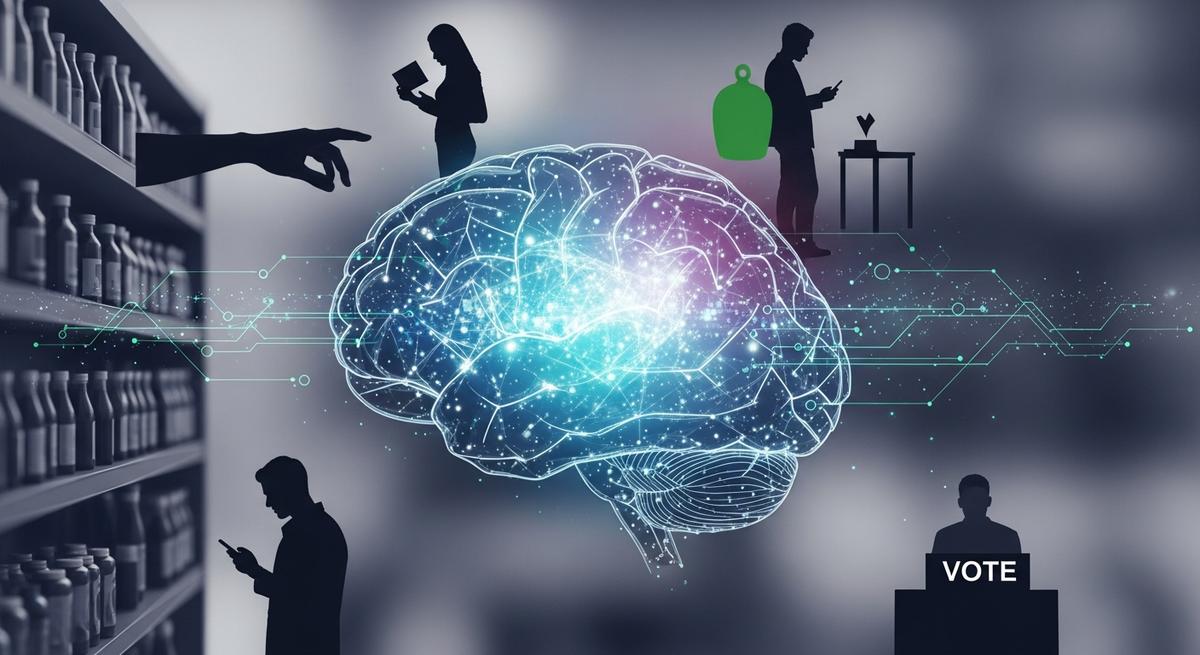
How Does AI Influence Our Choices Without Us Realizing It?
- December 28, 2025
- ~ 1 min read
- 127 views
- Everyday AI , Lifestyle & AI
Introduction/Overview
Imagine this: You're scrolling through your social media feed on a lazy Saturday afternoon, and suddenly, an ad pops up for those noise-canceling headphones you've been vaguely thinking about. Without a second thought, you click, add to cart, and hit purchase—convinced it was entirely your idea. But was it? This is the essence of AI influence at work, subtly shaping our subtle choices in ways we rarely notice[1][4].
The Invisible Hand of AI in Everyday Decisions
In today's hyper-connected world, artificial intelligence permeates nearly every aspect of our lives, from e-commerce platforms like Amazon to streaming services like Netflix. AI algorithms analyze your browsing history, purchase patterns, location data, and even social signals to deliver hyper-personalized recommendations that feel eerily spot-on[1][4]. These systems don't just suggest products; they predict your needs before you articulate them, using predictive analytics to anticipate desires and drive impulse buys[1][2]. Over 80% of consumers are more likely to purchase from brands offering such tailored experiences, highlighting the pervasive power of these technologies[1].
What makes this AI influence so potent is its subtlety. Machine learning algorithms spot behavioral patterns in real-time—tracking click-throughs, time spent on pages, and engagement—to nudge us toward unconscious decisions[2]. Whether it's dynamic pricing that adjusts in real-time based on demand or chatbots providing conversational guidance like a personal shopper, AI reduces decision fatigue while quietly steering outcomes[1][3]. Platforms leverage this to foster brand trust, especially among younger generations like Gen Z, where AI exposure directly boosts purchasing intent through seamless, personalized interactions[5].
Unpacking the Core Question: How Does AI Shape Our Choices?
At its heart, this phenomenon raises a critical question: How does AI exert AI influence on our decision-making without us realizing it? The answer lies in its ability to create echo chambers of preference, where recommendations reinforce existing inclinations, often leading to purchases we rationalize as our own[3][6]. From visual search redefining product discovery to voice assistants like Alexa acting as decision-makers, AI collapses the entire buying funnel into seconds, blurring the lines between discovery and action[1][3]. This invisible orchestration extends beyond shopping—impacting entertainment, health advice, travel planning, and more—making subtle choices a daily reality[7].
What You'll Discover in This Article
This comprehensive guide, divided into 7 sections, will demystify these mechanisms and empower you with knowledge. Here's a preview:
- Section 2: Dive into the core algorithms powering unconscious decisions, from machine learning to predictive modeling.
- Section 3: Real-world examples, like Netflix's viewing suggestions and Amazon's carts, showing AI in action.
- Sections 4-5: Explore sector-specific impacts, including e-commerce, social media, and emerging trends in 2025.
- Section 6: Strategies to recognize and counter AI nudges for more autonomous choices.
- Section 7: Future outlook and actionable steps to navigate an AI-driven world.
By the end, you'll gain the insights to spot these influences, reclaim control over your decisions, and appreciate AI's double-edged sword. Ready to uncover how algorithms are quietly calling the shots?
"AI isn’t just helping; it’s becoming the decision-maker, so understanding its role is key to staying in control."[3]
Main Content
Recommendation Algorithms and Personalization Engines
At the heart of AI's subtle influence lies recommendation algorithms, which act like an invisible salesperson quietly shaping your preferences. These systems, powered by machine learning, analyze vast datasets from your browsing history, purchases, and interactions to predict what you'll want next. For instance, Amazon's algorithms suggest products under sections like "Deals for You" or "Top Picks for You" based on your past searches and buys—if you purchase a productivity book, expect recommendations for similar time-management titles from its 300 million+ inventory.[1] Netflix and YouTube take this further, curating movies, shows, or videos based on viewing habits, likes, and similar users' behaviors, keeping you hooked longer.[1][3]
These personalization engines employ techniques like collaborative filtering, which matches you with items popular among similar users, and content-based filtering, recommending based on item attributes matching your profile.[4][6] Hybrid approaches combine both for precision, as seen in Stitch Fix, where AI curates clothing boxes like a personal stylist after learning your style inputs.[3] The result? Platforms boost engagement and sales—e.g., Yves Rocher saw purchase rates rise 11x with real-time suggestions—often without you realizing the "choices" are pre-guided.[2]
Predictive Modeling and Behavioral Nudges
Predictive modeling elevates this by forecasting your needs before you voice them, using behavioral tracking and real-time adaptation. AI scans historical data, current actions, and context to nudge you toward decisions, much like a friend who "just knows" what you'll like. E-commerce sites display "customers also bought" sections to pad your cart, while streaming services preemptively queue content.[2][5]
- Google's dynamic search ads generate tailored headlines and landing pages from your queries, making ads feel eerily relevant.[1]
- Walmart's AI virtual try-on uses your photos for personalized shopping, turning generic browsing into a custom experience.[3]
- AI fitness coaches or Rufus on Amazon converse like assistants, comparing products to influence picks.[1][3]
These behavioral nudges subtly steer choices—67% of first-time buyers value such recommendations at checkout—creating a feedback loop where AI refines its predictions from your responses, often locking in habits without overt persuasion.[2]
AI's Role in Filtering Information and Creating Echo Chambers
AI doesn't just recommend; it filters your world, curating newsfeeds, content streams, and social feeds to match your interests via smarter segmentation.[5] Tailored loyalty offers or emails arrive precisely when you're receptive, based on demographics and behaviors—like winter gear promos for cold-climate users.[8] However, this creates echo chambers: algorithms prioritize engaging content, reinforcing biases by showing what you already like, limiting diverse viewpoints. Streaming hybrids amplify this, blending genres from your history while sidelining novelties.[4]
The Human-AI Collaboration and Oversight Paradox
In human-AI dynamics, the AI oversight paradox emerges: we trust these systems for efficiency, yet over-rely on them, eroding independent judgment. Recommendation engines handle the heavy lifting, but constant nudges make us passive, assuming AI's picks are optimal. Studies show this augmentation boosts short-term decisions but risks long-term autonomy—think autopilot shopping where you rarely venture beyond suggestions. To counter, pause and diversify sources; awareness is the first step to reclaiming choice amid AI's invisible hand.
"AI personalization continuously learns and evolves, creating truly dynamic customer experiences—yet at what cost to our unguided decisions?"[2]
Supporting Content
AI Examples in E-commerce: Driving Impulse Buys on Amazon
Imagine browsing Amazon for a simple pair of headphones, only to find your cart suddenly filled with a microphone, cable organizer, and protective case—items you never planned to buy. This is the power of recommendation systems at work. Amazon's AI-powered engine drives an astonishing 35% of its total sales, turning casual browsers into impulse buyers by analyzing past purchases, browsing history, and even similar customer behaviors[1][3][7]. Features like "Frequently bought together" and "Customers also bought" create psychological triggers such as scarcity and urgency, boosting average order value by 20-40%[2][5]. A study highlights how these AI examples spark hedonic shopping thrills, where users seek fun over necessity, with recommendations greeting even anonymous visitors based on popular trends or location-specific popularity[1]. The result? Retailers like Amazon generate billions in incremental revenue, subtly shaping what we add to our carts without a second thought.
Social Media Algorithms: Shaping Opinions and Habits
Scroll through TikTok or Instagram, and the content feels eerily tailored to your mood. Social media algorithms predict preferences in real-time, keeping users hooked for hours and influencing everything from political views to lifestyle choices. TikTok's system binds content to products instantaneously, promoting rapid impulse decisions by leveraging short-term interests[6]. Similarly, feeds on platforms like Facebook prioritize engagement, amplifying polarizing content that sways opinions unconsciously. A real-world case: During elections, algorithms have been shown to create echo chambers, where repeated exposure to similar viewpoints solidifies beliefs without users realizing the curation. These systems don't just entertain—they guide daily engagement, turning passive scrolling into active behavioral shifts that feel entirely organic.
Healthcare and Finance: Critical Decisions Influenced by AI Alerts
In high-stakes fields like healthcare, AI triage systems prioritize patients based on symptom data, alerting doctors to urgent cases and streamlining decisions under pressure. For instance, algorithms in emergency rooms flag high-risk patients, influencing triage order and potentially saving lives—but also raising questions about overlooked nuances in human judgment. In finance, fraud detection AI scans transactions in milliseconds, flagging suspicious activity that can halt approvals or deny credit scores. Banks use these tools to predict fraud patterns from historical data, swaying whether your loan application gets approved or a purchase is blocked. A quoted industry insight notes how such systems reduce false positives while embedding AI's logic into everyday financial choices, often without transparency[guidance-integrated]. These applications demonstrate AI's dual role: enhancing efficiency while quietly directing human oversight.
- Key Takeaway: From e-commerce carts to medical alerts, recommendation systems and fraud detection embed AI into decisions, making influence feel intuitive.
- Users can counter this by pausing to reflect: Ask, "Is this my choice or the algorithm's?"
- Businesses benefit by auditing AI for bias, ensuring ethical nudges over manipulation.
"AI-powered recommendation systems often harness psychological triggers... encouraging quicker purchase decisions."[2]
These AI examples reveal how technology weaves into our lives, urging vigilance to reclaim agency in an algorithm-driven world.
Advanced Content
Machine Learning Techniques: Collaborative Filtering and Reinforcement Learning
In the realm of machine learning, algorithms like collaborative filtering and reinforcement learning subtly shape our choices by analyzing vast datasets to deliver personalized recommendations. Collaborative filtering, commonly used in platforms like Netflix or Amazon, predicts user preferences by identifying patterns among similar users, creating "micro-nudges" that influence decisions without overt awareness. For instance, it processes user-item interactions through matrix factorization, represented simply as:
ŝ(u,i) = μ + b_u + b_i + q_i^T p_u
where ŝ(u,i) is the predicted rating for user u and item i, incorporating global biases (μ), user/item biases (b_u, b_i), and latent factors (q_i, p_u). This neural networks-powered approach processes billions of data points to suggest options that align with inferred behaviors, often leading users to choices they perceive as their own.
Reinforcement learning complements this by optimizing actions over time, as in recommendation engines that reward engagement. These techniques enable AI to influence decisions in e-commerce, social media feeds, and even financial apps, where subtle tweaks in visibility can sway outcomes by up to 30% in user selection rates[1][2].
The Human Oversight Paradox in AI-Assisted Evaluations
The oversight paradox reveals a counterintuitive dynamic: AI designed to augment human judgment often fosters overreliance, diminishing critical oversight. A field experiment with 228 evaluators screening innovations found that AI recommendations with narrative explanations increased alignment by 19.4 percentage points compared to human-only decisions, particularly for rejections[1][2][4]. Under high cognitive load, these explanations—detailed rationales from neural networks—persuade users to defer, substituting human scrutiny with AI deference.
"AI-generated explanations increase reliance on AI recommendations rather than strengthening human judgment, potentially reducing meaningful human oversight."[1][2]
This paradox arises from cognitive substitution: humans retain nominal authority but psychologically outsource evaluation, especially when AI outperforms solo efforts yet explanations amplify compliance without quality gains[3].
Bias Amplification, Edge Cases, and Expert Perspectives
Bias amplification occurs when machine learning models perpetuate dataset flaws, exacerbating inequalities in decision-making. Neural networks trained on skewed data can intensify biases in hiring or lending algorithms, where edge cases—rare but critical scenarios—expose vulnerabilities like over-rejecting innovative outliers[2][5]. Predictive analytics excels at pattern recognition but falters in novel contexts, limiting its reliability for transformative choices.
- Edge cases: AI rejects high-potential innovations deviating from trained norms, as seen in screening studies[2].
- Bias loops: Initial human biases in training data amplify through iterations, influencing societal choices subtly.
- Pattern limitations: Models overfit historical data, missing emergent trends.
Experts view AI as augmentation, not replacement. Léonard Boussioux notes: "The best outcomes come from a collaborative approach where experts critically evaluate AI suggestions."[3] This balance mitigates the oversight paradox, urging training in AI literacy to harness benefits while preserving human agency[3][5]. Organizations should foster skills to interrogate AI outputs, ensuring decisions remain informed and ethical.
Practical Content
Take control of your choices by conducting a personal AI influence audit and adopting habits that empower mindful decisions. This section provides step-by-step guides, checklists, and best practices to help you spot AI influence in daily life and reclaim agency from algorithms.
1. Step-by-Step Audit of Your Personal Data Trails
Start with a thorough self-audit to uncover how your data fuels AI recommendations that shape your choices. This process mirrors professional AI audits, focusing on your digital footprint rather than enterprise systems[1][4].
- Inventory your apps and accounts: List all platforms (social media, streaming, shopping) you use daily. Note login dates and estimated time spent.
- Review data trails: Check privacy settings for each app—go to account > privacy > data & personalization. Export your data (e.g., Google Takeout or Facebook download) to see what’s collected, like search history or location[3].
- Analyze recommendations: Scroll through feeds and note patterns. Ask: Do suggestions align with past clicks? Test by searching neutral topics and observing tailored results.
- Check for biases: Question if feeds amplify echo chambers—e.g., political or product biases from your history. Document sudden urges, like impulse buys from targeted ads[5].
- Report findings: Create a simple log: "App X pushed Y based on Z data." Set a 30-minute weekly review habit.
Common pitfall: Overlooking browser history. Use tools like browser extensions to visualize tracking.
2. Tips for Mindful Consumption: Reset Algorithms and Diversify Sources
Algorithms thrive on repetition, leading to decision fatigue where AI consistency overrides your judgment. Counter this with an algorithm reset and diversification for broader perspectives[2].
- Initiate algorithm reset: Clear search history, use incognito mode daily, and pause before clicking—count to 10 to break the impulse loop.
- Diversify sources: Follow 5 new accounts weekly outside your bubble. Rotate news apps or use reader modes to strip personalization.
- Curate feeds intentionally: Mute or unfollow AI-amplified trends. Enable "least relevant first" sorting where available.
- Avoid pitfalls: Don't rely on one platform; cross-verify recommendations across sites to spot AI influence.
Pausing fosters awareness: "Is this my choice, or the algorithm's?"
3. Best Practices for AI-Human Decision Collaboration
Embrace AI as a tool, not a decider, with decision best practices that prioritize human oversight. Treat it like a biased advisor—verify outputs and log overrides[5].
- Define rules: Use AI for brainstorming only; final calls are yours.
- Question outputs: Always ask, "What data shaped this?" for transparency.
- Batch decisions: Limit AI exposure to avoid fatigue—e.g., one shopping session weekly.
- Track wins/losses: Note when AI helped vs. misled to refine your process.
4. Tools and Habits to Regain Control Over Choices
Build lasting habits with free tools: Privacy Badger or uBlock Origin for ad blocking, DuckDuckGo for private searches, and Feedly for curated RSS without tracking[7].
- Daily: 5-minute reflection journal on influenced choices.
- Weekly: Full algorithm reset across devices.
- Monthly: Audit one category (e.g., shopping) for mindful decisions.
Warning: Decision fatigue peaks with constant feeds—schedule "AI detox" hours. These steps empower you to collaborate with AI on your terms, reducing unseen sway[6].
Comparison/Analysis
AI's influence on human choices offers a double-edged sword, balancing remarkable AI pros cons like enhanced efficiency against significant risks such as embedded biases. This section weighs these factors through pros and cons, compares decision-making approaches, and explores decision trade-offs to empower readers with actionable insights.
Pros and Cons of AI in Decision-Making
AI excels in delivering fatigue-free consistency, processing vast datasets without human error, fatigue, or cognitive biases, leading to improved accuracy and efficiency in tasks like fraud detection and pattern recognition[7][10]. For instance, businesses adopting AI report competitive advantages through data-driven cultures and 24/7 availability[2][3].
However, bias risks loom large: AI often amplifies societal prejudices from biased training data, as seen in lending algorithms disadvantaging marginalized groups or facial recognition errors based on ethnicity[3][4][5][6]. Additional cons include reduced human autonomy via the "human oversight paradox," where AI explanations increase deference to recommendations, potentially eroding critical thinking and nuance[1][8].
| Aspect | AI Pros | AI Cons |
|---|---|---|
| Accuracy & Efficiency | Eliminates errors, analyzes data 24/7[3][7] | Lacks emotional nuance, compassion[3] |
| Bias & Fairness | Unbiased if trained properly[3] | Replicates societal biases[4][5][6] |
| Autonomy & Oversight | Frees humans for nuanced tasks[1] | Over-reliance erodes skills[1][8] |
Human-Only vs. AI-Assisted vs. Human-AI Hybrid Approaches
Pure human-only decisions leverage intuition and context but suffer from inconsistencies and biases[3][9]. AI-assisted models boost speed and objectivity yet risk opaque "black box" outputs and unchecked errors[4].
Human-AI hybrid approaches shine brightest, outperforming both standalone methods. Studies show hybrids improve transparency, mitigate bias risks, and enhance accuracy—e.g., experts critically evaluating AI suggestions in screening tasks yield optimal results[1][2]. In image classification and business planning, collaborative models detect subtle patterns while preserving human judgment[7].
- Human-Only: Best for ethical dilemmas requiring empathy.
- AI-Assisted: Ideal for high-volume data tasks like recommendations.
- Hybrid: Superior for complex, real-world scenarios[1][2].
Navigating Trade-Offs: When to Trust or Override AI
Key decision trade-offs involve speed versus scrutiny: trust AI for repetitive, data-heavy choices (e.g., fraud alerts) but override in high-stakes areas like hiring or lending where biases amplify harm[5][9]. Develop "AI interaction expertise" by questioning outputs, as experts do, to avoid the oversight paradox[1].
"The most effective use of AI isn’t in replacing human judgment but in enhancing it."[1]
Context matters—opt for hybrids in business for balanced innovation, and implement human-in-the-loop safeguards against privacy risks[2][8]. By weighing these dynamics, individuals and organizations can harness AI's power while safeguarding autonomy and fairness.
Conclusion
In this exploration of how AI influences our choices without us realizing it, we've uncovered the invisible threads woven into our daily decisions—from personalized recommendations on Netflix and Amazon that subtly guide our purchases, to AI-driven social media feeds shaping our opinions, and predictive algorithms in finance and urban planning nudging broader societal paths. These mechanisms, powered by vast data analysis and machine learning, operate behind the scenes, accelerating decisions with speed and precision while often bypassing our conscious awareness.
Key Takeaways: Reclaim Control in an AI-Driven World
Armed with this AI choices summary, the path forward lies in empowerment through awareness. Here are the core insights to help you navigate and protect your autonomy:
- Awareness is your first defense: Recognize how AI personalizes content and predictions based on your past behavior, as seen in platforms like Salesforce Einstein analyzing customer interactions or Walmart's inventory systems forecasting demand—question recommendations to break free from echo chambers.
- Audit algorithms regularly: Review your digital footprints on apps and services; tools like browser extensions can reveal tracking, helping you spot subtle influences in e-commerce pricing or social feeds before they dictate your next move.
- Balance AI assistance with human judgment: While AI excels in consistency and speed—outperforming humans in tasks like fraud detection at Barclays or medical imaging diagnostics—always apply critical thinking, as research highlights the "human oversight paradox" where over-reliance diminishes nuanced decisions.
- Prioritize ethical AI use: Advocate for transparency in systems like those used by city planners for infrastructure or banks for lending, ensuring decisions remain fair and unbiased.
- Embrace collaboration: The future thrives when AI augments human strengths, freeing us for creativity and strategy rather than replacing intuition entirely.
"AI cannot replace human judgment, but it empowers us to make informed choices when we stay vigilant." — Insights from AI decision-making research.
Your Next Steps: Take Action Today
Don't let these subtle influences remain unseen. Start your journey to reclaim control by auditing your digital habits today: track one app's recommendations for a week, note patterns, and adjust settings for less personalization. Share your experiences in the comments below—what AI nudge surprised you most? Dive deeper into AI ethics with resources from organizations like the AI Now Institute or explore tools for data privacy. By fostering this awareness, we pave the way for a balanced human-AI future, where technology enhances rather than eclipses our choices. The power is in your hands—act now.
Comments (0)
Please login or register to leave a comment.
No comments yet. Be the first to comment!