
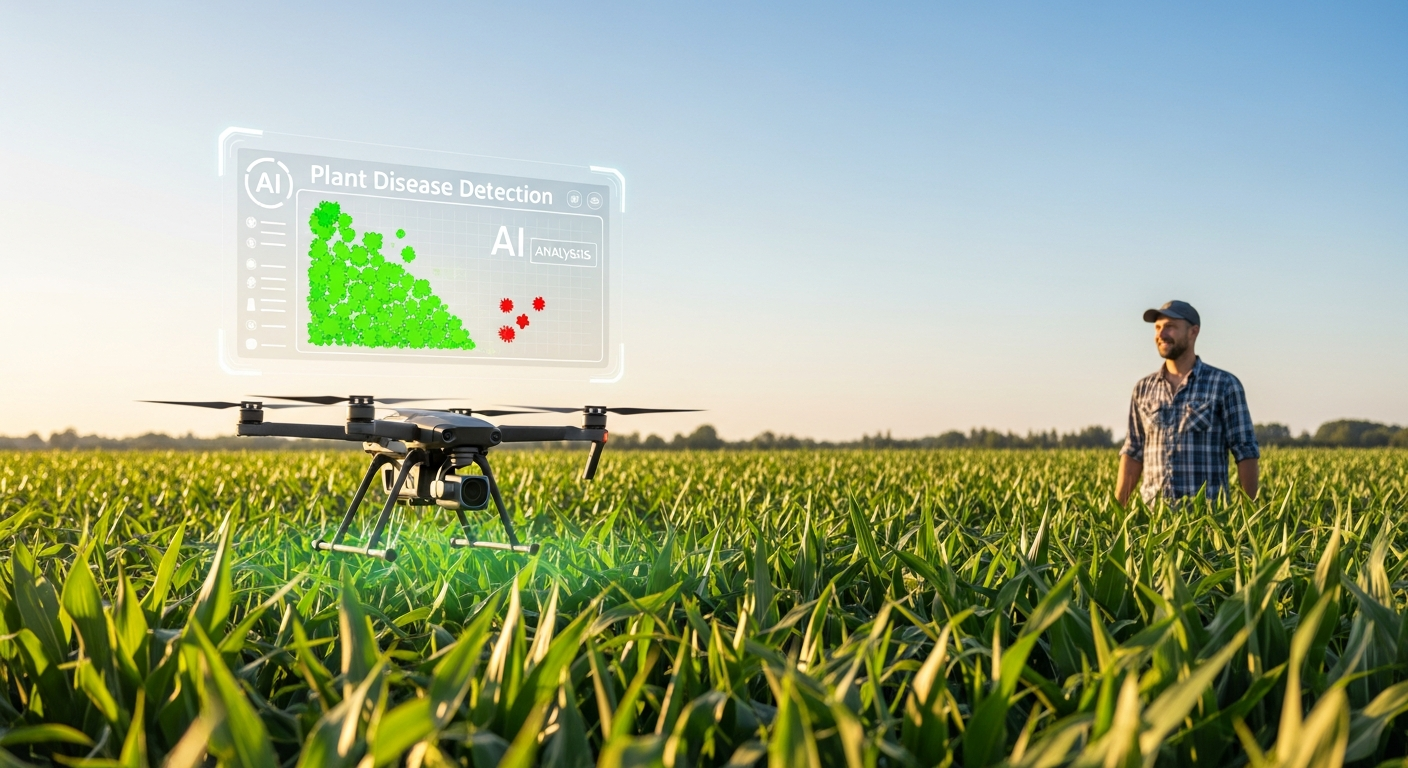
How AI supports farmers by detecting plant diseases and improving crop yields.
- November 20, 2025
- ~ 1 min read
- 580 views
- AI in Agriculture , Edge AI
Introduction: Cultivating the Future - How AI is Revolutionizing Agriculture
Imagine the challenge: feeding a global population projected to reach nearly 10 billion by 2050, all while grappling with the unpredictable impacts of climate change, dwindling arable land, and the constant threat of crop-devastating diseases. Farmers worldwide lose an estimated 20-40% of their potential harvest annually due to pests and diseases, costing the global economy hundreds of billions of dollars and directly compromising global food security. The traditional methods, while foundational, are increasingly strained by these immense pressures, highlighting an urgent need for more efficient, resilient, and sustainable agriculture practices.
But what if there was a powerful ally capable of transforming these challenges into opportunities? Enter Artificial Intelligence (AI). Far from being a futuristic concept, AI in agriculture is rapidly emerging as a pivotal technology, ushering in an era of unprecedented precision and productivity. It's moving farming beyond intuition and manual labor towards a data-driven, intelligent approach often termed smart farming, where every decision is informed by real-time insights.
This article series will explore how AI is fundamentally revolutionizing modern agriculture by tackling two of its most critical pain points: the early and accurate detection of plant diseases, and the intelligent optimization of crop yields. By leveraging advanced machine learning algorithms, computer vision, and predictive analytics, AI systems can monitor plant health with incredible detail, identify potential threats long before they become widespread, and guide farmers in making precise interventions. Furthermore, AI's capability in sophisticated crop management allows for the optimization of resources like water and nutrients, ensuring every plant thrives and contributes to maximum yield.
Throughout this comprehensive guide, you will discover the practical applications, tangible benefits, and profound impact of AI on various farming operations – from small family farms to large-scale agricultural enterprises. Prepare to learn how AI isn't just a technological marvel, but a vital partner in cultivating a more efficient, resilient, and productive future for agriculture, ensuring better harvests and a healthier planet.
Main Content: AI's Core Contributions to Precision Agriculture
The agricultural sector, a cornerstone of global food security, faces persistent challenges that threaten productivity and sustainability. Among the most critical are plant diseases, which can decimate entire harvests if not addressed swiftly and accurately. Historically, farmers have battled these threats with varying degrees of success, often limited by the tools and knowledge available. This section delves into how Artificial Intelligence is fundamentally transforming this landscape, providing unprecedented capabilities for disease detection and significant crop yield improvement through precision agriculture.
The Pervasive Threat of Plant Diseases and Traditional Limitations
Plant diseases, caused by fungi, bacteria, viruses, and nematodes, represent a formidable adversary for farmers worldwide. From blights and rusts to wilts and mildews, these pathogens can lead to staggering economic losses, impacting farmers' livelihoods and threatening food supplies. Annually, an estimated 10-40% of global crop yields are lost to pests and diseases, a figure that underscores the urgency for more effective management strategies. Traditionally, disease detection has relied heavily on manual inspection. Farmers or agronomists walk the fields, visually scanning for symptoms. This method, while foundational, is inherently labor-intensive, time-consuming, and often subjective. On large farms, it's practically impossible to inspect every plant, leading to delayed detection and the rapid spread of diseases. By the time symptoms are visible to the human eye, the infection might be well-established, making treatment less effective and often necessitating broad-spectrum chemical applications, which carry environmental risks.
The limitations of these conventional approaches highlight a critical need for systems that can provide earlier, more accurate, and localized diagnoses – a gap perfectly filled by AI.
AI's Breakthrough in Disease Detection: Computer Vision and Deep Learning
The core of AI's power in plant disease detection lies in its ability to "see" and interpret visual information with unparalleled speed and accuracy. This capability is powered by advanced computer vision technologies, working in tandem with machine learning in farming and deep learning agriculture algorithms.
- Computer Vision: This field of AI enables computers to derive meaningful information from digital images, videos, and other visual inputs. For plants, AI models are trained to analyze images of leaves, stems, and fruits, looking for subtle changes in color, texture, shape, and patterns that are indicative of specific diseases.
- Machine Learning (ML): At its heart, ML involves training algorithms on vast datasets. In the context of disease detection, ML models are fed thousands of images of both healthy and diseased plants, often meticulously labeled by human experts. The algorithms learn to identify patterns and features associated with various pathogens. For example, an ML model can learn to distinguish the distinct spots of a fungal infection from nutrient deficiencies based on subtle visual cues.
- Deep Learning (DL) with Convolutional Neural Networks (CNNs): A specialized subset of ML, deep learning, particularly using Convolutional Neural Networks (CNNs), has revolutionized image analysis. Imagine a sophisticated digital magnifying glass that not only sees individual pixels but understands how they combine to form complex features. CNNs automatically extract hierarchical features from images – starting from basic edges and colors to more complex textures and shapes. For disease detection, a CNN can identify the specific necrotic lesions, discoloration patterns, or deformities on a leaf that characterize an early-stage infection, often long before a human observer would notice. This automated feature extraction makes DL incredibly powerful for accurate and early AI plant disease detection.
Intelligent Data Collection for Robust AI Models
The effectiveness of AI systems is directly tied to the quality and quantity of data they process. For agricultural AI, this data comes from a variety of sources, each offering unique advantages:
- Drones (UAVs): Equipped with multispectral or hyperspectral cameras, drones can rapidly scan vast expanses of farmland. These cameras capture light wavelengths beyond the human visual spectrum, revealing physiological changes in plants – such as reduced chlorophyll content or altered water stress – that indicate disease or stress before visible symptoms appear.
- Ground-Based Sensors: Strategically placed throughout fields, these sensors monitor environmental conditions like soil moisture, temperature, humidity, and nutrient levels. Some also integrate high-resolution cameras that provide continuous, hyper-localized data on individual plants or small plots.
- Satellite Imagery: While offering lower resolution than drones, satellite data provides broad-acre coverage, making it suitable for monitoring very large farms, regional trends, and large-scale disease outbreaks.
- On-Farm Cameras: Fixed cameras in greenhouses or open fields offer continuous, close-up monitoring, providing a constant stream of high-resolution images for AI analysis.
The data collected from these sources – be it images, spectral data, or environmental readings – is then used to train and validate AI models, creating a powerful feedback loop that constantly refines detection capabilities.
Optimizing Crop Yields with AI-Powered Predictive Analytics
Beyond disease detection, AI extends its transformative impact to nearly every aspect of farming through predictive analytics, fundamentally enabling precision agriculture. By analyzing historical data (weather patterns, soil composition, past yields, disease incidence) combined with real-time sensor data, AI offers actionable insights for significant crop yield improvement:
- Optimized Planting Schedules: AI models can recommend the ideal planting times for specific crop varieties, factoring in local climate forecasts, soil conditions, and historical productivity data to maximize germination rates and growth.
- Smart Irrigation Management: By processing data from soil moisture sensors and hyper-local weather predictions, AI systems determine the precise water needs of crops. This prevents both over-watering (which can lead to root rot and nutrient leaching) and under-watering, conserving precious water resources and ensuring optimal plant hydration.
- Precision Nutrient Application: AI analyzes soil nutrient maps, plant growth stages, and even subtle changes in plant health (detected by spectral imaging) to predict nutrient deficiencies. This allows for variable rate application of fertilizers, applying specific nutrients exactly where and when they are needed, reducing waste, minimizing environmental runoff, and enhancing nutrient uptake.
- Proactive Pest and Weed Management: Similar to disease detection, AI can identify early signs of pest infestations or differentiate between crops and weeds. This enables highly targeted intervention – whether it's the precise application of pesticides only to affected areas, or robotic weeding – drastically reducing chemical use and promoting healthier ecosystems.
In essence, AI shifts agriculture from a reactive, generalized approach to a proactive, highly targeted one. Farmers can move away from blanket treatments and guesswork, instead making data-driven decisions that save resources, protect the environment, and ultimately lead to healthier, more abundant harvests.
Supporting Content: Real-World Applications and Success Stories
The promise of Artificial Intelligence in agriculture isn't merely theoretical; it's actively transforming farms across the globe, delivering tangible benefits and revolutionizing age-old practices. From sprawling vineyards in Europe to vast potato fields in North America, agri-tech solutions powered by AI are proving indispensable. These real-world applications highlight how AI supports farmers, leading to reduced losses, optimized resource use, and more sustainable operations.
AI for Early Disease Detection and Intervention
One of the most impactful applications of AI lies in its ability to detect plant diseases with *unprecedented accuracy* and speed, often long before symptoms are visible to the human eye. Consider the challenge of powdery mildew in grape vineyards, a fungal disease that can devastate entire harvests. Traditionally, detection relied on manual inspection, which is time-consuming and prone to human error.
Today, vineyards are deploying **agricultural drones** equipped with hyperspectral and multispectral cameras. These drones fly autonomously over vast areas, collecting detailed imagery. AI algorithms, trained on extensive datasets of healthy and diseased plants, analyze this imagery in real-time. They can pinpoint the exact location and severity of early mildew infections, flagging individual vines or even specific parts of a vine. This enables farmers to implement **precision spraying**, applying fungicides only to affected areas rather than blanket treatments across the entire field. The result? Significantly reduced fungicide use, lower operational costs, minimized environmental impact, and critically, salvaging crops that would otherwise be lost.
Similarly, for crucial staple crops like potatoes, early detection of blight can be a game-changer. AI-powered **crop monitoring** systems, combining satellite data, drone imagery, and ground sensors, continuously watch for the subtle indicators of blight. Rapid alerts allow farmers to take immediate, targeted action, preventing the rapid spread of the disease and safeguarding yields, demonstrating clear smart farming examples in action.
Optimizing Resources: Precision Irrigation and Nutrient Management
Beyond disease detection, AI is revolutionizing how farms manage their most vital resources: water and nutrients. Traditional irrigation often relies on scheduled watering or farmer intuition, leading to inefficient water use, especially in drought-prone regions. AI-driven precision irrigation systems have emerged as a powerful solution.
These systems integrate a network of soil moisture sensors, hyper-local weather station data, and predictive AI models that understand specific crop water requirements at different growth stages. The AI processes this real-time information to determine precisely when and how much water each section of a field needs. This can involve varying water pressure in pivot irrigation systems or controlling individual drip emitters. The outcome is *significant cost savings* through reduced water consumption (often by 20-40%) and healthier crops due to optimal moisture levels. This level of precise control exemplifies the efficacy of advanced agri-tech solutions.
Nutrient management also benefits immensely from AI. By analyzing soil composition data, past yield performance, and real-time plant health indicators from spectral imagery, AI algorithms can formulate customized fertilizer recommendations. Instead of applying uniform amounts, AI guides variable-rate spreaders to deliver precise nutrient doses to specific zones within a field. This optimizes fertilizer uptake by plants, reduces waste, minimizes nutrient runoff into waterways, and contributes to more sustainable practices and healthier soil ecosystems.
Advanced Pest Control and Environmental Stewardship
Pest infestations pose a constant threat to crop yields and quality. AI offers a smarter, more environmentally friendly approach to pest control than broad-spectrum chemical applications. AI systems utilize computer vision to identify specific pests from images captured by drone-mounted cameras or static traps positioned in fields. These systems can not only identify the type of pest but also estimate population densities and track their movement patterns. This is particularly valuable in specialty agriculture and **AI in horticulture** where specific pests can target high-value crops.
Based on this intelligence, AI can then recommend targeted interventions. This might involve guiding the release of beneficial insects (biological control) to areas with identified pest hotspots or advising highly localized chemical treatments via robotic or **precision spraying** systems. By precisely targeting pests, farmers can dramatically reduce the overall amount of pesticides used, lowering environmental impact, protecting beneficial insects, and ensuring safer food production. This intelligent approach minimizes ecological disruption while maximizing crop protection.
Advanced Content: The Technical Backbone of Agricultural AI
The transformation of agriculture through Artificial Intelligence isn't merely about deploying smart tools; it's underpinned by sophisticated computational models and intricate data strategies. Delving deeper, the efficacy of AI in detecting plant diseases and optimizing yields stems from a powerful blend of advanced machine learning techniques, robust data handling, and intelligent deployment architectures.
AI Models for Precision Agriculture
At the heart of AI's capability in agriculture are specialized deep learning architectures. For precise identification of plant diseases, Convolutional Neural Networks (CNNs) are paramount. These networks excel at image recognition, meticulously analyzing visual data from leaves, stems, and fruits captured by cameras on drones, robots, or smartphones. CNNs learn hierarchical features, from basic edges and textures in initial layers to complex patterns indicative of specific diseases like blight, rust, or powdery mildew in deeper layers. This enables them to classify diseases with remarkable accuracy, often outperforming the human eye in early-stage detection. For example, a CNN trained on thousands of diseased plant images can learn subtle discoloration patterns or necrotic lesions that signal an impending problem long before it's visible to a farmer.
Beyond visual diagnosis, predicting crop yields and growth patterns requires understanding temporal dynamics. This is where Recurrent Neural Networks (RNNs) and particularly Long Short-Term Memory (LSTM) networks come into play. LSTMs are adept at processing time-series data, making them ideal for predictive modeling in agriculture. They can learn from sequences of environmental factors (weather patterns, soil moisture, temperature fluctuations) and plant growth stages over time, forecasting future yields or identifying optimal planting/harvesting windows. By remembering past conditions and their impact, LSTMs can build highly accurate models that account for the cumulative effects of various agricultural inputs and environmental variables.
Optimizing AI Training and Deployment
Developing these high-performing AI models for agriculture faces a significant challenge: the scarcity of large, labeled datasets specific to diverse crops and local disease variations. This is where techniques like transfer learning agritech become crucial. Instead of training a CNN from scratch, which requires immense amounts of data and computational power, a model pre-trained on a massive general image dataset (like ImageNet) can be fine-tuned with a smaller, agriculture-specific dataset. This significantly reduces training time and data requirements, making AI accessible for a wider range of agricultural applications. Complementing this, data augmentation techniques—such as rotating, flipping, zooming, or adding noise to existing images—artificially expand the dataset, enhancing the model's robustness and generalization capabilities against variations in real-world agricultural imagery.
The practical application of AI in the field demands rapid insights. This is where edge AI farming and the deployment of IoT in agriculture play a transformative role. Instead of sending all raw data to distant cloud servers for processing, AI models can be deployed directly onto edge devices like smart sensors, autonomous tractors, or agricultural drones. This on-site processing drastically reduces latency, allowing for real-time decision-making – whether it's immediately identifying a disease outbreak during a drone flight or adjusting fertilizer application based on live soil nutrient readings. This decentralized approach enhances efficiency, reduces bandwidth consumption, and ensures critical insights are available precisely when and where they are needed.
Holistic Intelligence: Big Data & Explainability
The true power of AI in modern agriculture is unleashed when integrated with comprehensive agricultural big data analytics. AI systems synthesize vast datasets from myriad sources, including high-resolution satellite imagery, hyper-local weather station data, soil composition analysis, historical yield records, market prices, and even farmer input. By correlating these diverse data streams, AI can identify complex interdependencies and long-term trends, providing holistic insights for farm management. This allows for optimized irrigation schedules, precision nutrient management, and strategic crop rotation, moving beyond reactive measures to proactive, data-driven farming. The synergy of these data points creates an intelligent ecosystem for sustainable growth.
Finally, for AI to be truly accepted and trusted by farmers, particularly when making critical decisions, explainability is paramount. Explainable AI (XAI) addresses the "black box" problem of deep learning models by providing insights into *how* an AI arrived at a specific conclusion. For instance, when an AI diagnoses a disease, XAI techniques can highlight the specific regions of a leaf image that led to that diagnosis, building farmer confidence and aiding compliance with agricultural regulations. Understanding the rationale behind AI recommendations is crucial for adoption and responsible implementation, empowering farmers to not just follow instructions but also to learn and adapt their own practices based on transparent AI insights.
Practical Content: Adopting AI - A Farmer's Implementation Guide
1. Paving the Way: Assessing Readiness and Choosing Solutions
Embarking on the journey of AI adoption in agriculture begins not with technology, but with introspection. Before investing in any system, a farmer must first assess their specific needs and pain points. Where does your operation face the most significant challenges? Is it persistent disease outbreaks impacting specific crops, chronic water scarcity, or increasing labor shortages that threaten your yields and profitability? Identifying these core issues is the crucial first step, as it allows you to pinpoint where AI farm implementation can offer the most targeted and valuable solutions.
Once your challenges are clear, the next step involves navigating the diverse landscape of available AI solutions. This means considering both hardware and software. On the hardware front, options range from autonomous drones equipped with hyperspectral cameras for early disease detection and crop health monitoring, to ground-based sensors that meticulously track soil moisture, nutrient levels, and microclimates. Robotic systems, while a larger investment, can automate tasks like precision spraying, weeding, and even harvesting, directly addressing labor gaps. For software, look for robust agricultural software platforms that integrate AI for predictive analytics, resource optimization, and comprehensive farm management. Many systems now offer AI modules specifically for disease identification based on visual data, providing actionable insights directly to your device. When choosing, prioritize solutions that are scalable, compatible with your existing equipment (if any), and backed by strong vendor support. Aligning the chosen technology precisely with your identified pain points is key to a successful smart farm setup.
2. Building the Foundation: Data, Infrastructure, and Integration
Successful AI relies heavily on high-quality data. Therefore, establishing a reliable data collection and infrastructure setup is paramount. For sensor deployment, consider strategic placement that provides comprehensive coverage without redundancy. Learn the basics of sensor calibration to ensure accuracy. Setting up data pipelines, which dictate how information flows from your sensors, drones, or manual inputs to your chosen AI software, needs careful planning. Many agritech providers offer integrated solutions that simplify this. A common hurdle in rural areas is connectivity. Explore options like satellite internet, dedicated long-range wide-area network (LoRaWAN) systems for sensor data, or cellular boosters to ensure uninterrupted data flow. Remember, the consistency and quality of your data directly impact the accuracy and usefulness of AI insights; aim for reliable data collection from day one.
Integrating new AI tools into daily operations requires not just technical setup but also a shift in farm management. This is where training and collaboration become vital. Seek out workshops, online tutorials, and peer networks that facilitate farmer adoption of these new technologies. Many agritech companies offer dedicated training programs, often included in the initial purchase or subscription. Don't hesitate to work closely with agritech providers or agricultural consultants during the setup phase and for ongoing support. Their expertise can help customize solutions to your farm's unique conditions and provide troubleshooting. Embracing data-driven farming practices means empowering your team with the knowledge to interpret AI outputs and make informed decisions, transforming potential into tangible results.
3. Navigating the Path: Overcoming Challenges for Sustainable Growth
Adopting cutting-edge technology inevitably comes with its own set of challenges, but understanding and preparing for them can smooth the transition. One primary concern is data privacy and security. Before committing, carefully review data ownership agreements with your agritech providers and ensure robust security protocols are in place to protect your valuable farm data. Initial investment costs can also be a barrier. Explore government grants, agricultural subsidies, or financing options specifically designed for sustainable farming and technological upgrades. Consider a phased implementation, starting with a smaller, manageable AI project to demonstrate ROI before scaling up. This strategic agritech investment can mitigate financial risk.
Finally, there's the inevitable learning curve. AI technologies, while designed for user-friendliness, still require a commitment to continuous learning and adaptation. Be patient with yourself and your team. Leverage the support systems offered by providers and collaborate with other farmers who have adopted similar technologies. While challenges like connectivity, cost, and the learning curve are real, the long-term sustainability benefits—from increased yields and reduced resource waste to improved efficiency and profitability—make the effort truly worthwhile. By proactively addressing these hurdles, farmers can successfully integrate AI and cultivate a more resilient, productive future.
Comparison & Analysis: AI vs. Traditional Farming - The Path Forward
The agricultural sector stands at a pivotal juncture, where ancient practices meet cutting-edge innovation. Understanding the nuances between traditional farming vs AI-driven approaches is crucial for charting a sustainable and productive future. This section delves into a comparative analysis, highlighting the strengths and weaknesses of each, and ultimately proposing a synergistic path forward for modern agriculture.
AI vs. Traditional Methods: A Head-to-Head Look
For centuries, farming has relied on human observation, experience, and labor-intensive methods. While effective for their time, these approaches often suffer from limitations in scale, precision, and reactivity. AI, conversely, introduces unprecedented levels of data-driven insight and automation.
- Disease Detection: In traditional farming, detecting plant diseases often involves manual field scouting, visual inspection, and sending samples to labs for diagnosis. This process is time-consuming, labor-intensive, and reactive, meaning diseases might be widespread before identification. AI-powered systems, utilizing drones, ground-based sensors, and image recognition algorithms, can scan vast fields rapidly, identify subtle symptoms in real-time, and even predict potential outbreaks based on environmental data. This proactive, highly accurate detection minimizes crop loss significantly.
- Yield Monitoring & Prediction: Traditional yield assessment relies on historical data, small-scale sampling, and farmer intuition. While valuable, it lacks the granularity for precision management. AI integrates data from satellite imagery, IoT sensors, weather forecasts, and soil analyses to provide highly accurate, real-time yield predictions and identify variability within fields. This granular data empowers farmers to optimize inputs and anticipate harvests with greater certainty, leading to improved farming efficiency.
- Resource Management: Traditional approaches to irrigation and pesticide application often involve uniform distribution across fields, based on general guidelines or experience. This can lead to overuse, waste, and environmental strain. AI-driven precision agriculture, facilitated by variable rate technology and autonomous systems, applies water, fertilizers, and pesticides only where and when needed, minimizing resource consumption and contributing significantly to sustainable farming technologies.
The Advantages and Hurdles of Agritech Integration
The transition to a more digital form of agriculture brings a host of compelling advantages, but it is not without its challenges.
Pros of AI in Agriculture:
- Increased Accuracy & Speed: AI systems can process vast amounts of data almost instantly, identifying issues like pests, diseases, or nutrient deficiencies with far greater precision and speed than human observation alone.
- Scalability & Automation: AI allows for efficient monitoring and management of large agricultural areas with fewer human resources, automating repetitive tasks and freeing up farmers for strategic decision-making.
- Optimized Resource Use: Precision application of water, fertilizers, and pesticides, guided by AI, drastically reduces waste, lowers operational costs, and minimizes environmental impact. These are direct benefits of AI in agriculture.
- Data-Driven Insights: AI provides predictive analytics, offering farmers actionable insights into future crop health, market trends, and optimal planting/harvesting times, leading to smarter, more profitable decisions.
Cons and Challenges of Agritech:
- Initial Capital Investment: Implementing AI solutions, including sensors, drones, and specialized software, often requires a significant upfront financial outlay, which can be a barrier for smaller farms.
- Technical Expertise: Operating and maintaining sophisticated AI systems demands a certain level of technical knowledge and digital literacy, which might not be readily available in all farming communities.
- Digital Divide & Infrastructure: Reliable internet connectivity and access to necessary hardware remain significant challenges of agritech, especially in rural or remote areas.
- Data Privacy & Security: As farms generate and rely more on data, concerns about data ownership, privacy, and cybersecurity become paramount.
- Potential Job Displacement: Automation can lead to concerns about the future of manual labor jobs in agriculture, though it also creates new roles in technology and data management.
Towards a Synergistic Future: AI Empowering Farmers
It's vital to recognize that AI is not a replacement for the farmer; rather, it is a powerful augmentation. The most effective path forward involves a synergistic approach where AI technologies empower farmers by providing superior tools for decision-making and execution. The invaluable experiential knowledge of farmers, honed over generations, combined with AI's analytical power, creates a formidable force for productivity and sustainability. Digital agriculture thrives when human ingenuity and technological innovation work hand-in-hand. This integration ensures that AI serves to enhance human capabilities, making farming more efficient, resilient, and environmentally responsible, securing a brighter future for global food production.
Conclusion: Cultivating a Smarter, More Sustainable Tomorrow
Recapping AI’s Transformative Impact
As we’ve explored, Artificial Intelligence is revolutionizing agriculture by empowering farmers to detect plant diseases with unprecedented accuracy and optimize crop yields through data-driven decisions. From satellite imagery analysis to real-time disease prediction models, AI tools are bridging the gap between traditional farming practices and smart farming innovations. These technologies not only reduce crop losses but also enhance productivity, ensuring food security in an era of climate uncertainty. The integration of AI into agriculture is no longer a futuristic concept—it’s a critical enabler of modern, sustainable farming.
Key Takeaways for a Resilient Future
The benefits of AI in agriculture are clear. For farmers, AI-powered tools reduce labor costs, minimize chemical usage, and improve harvest efficiency. For the planet, these technologies promote AI sustainability by conserving water, reducing waste, and lowering carbon footprints. Additionally, AI fosters food security by enabling early intervention against crop threats, ensuring stable yields even in challenging conditions. As global populations grow, the role of AI in safeguarding our food systems becomes increasingly vital.
- Efficiency: AI streamlines farm operations with predictive analytics and automation.
- Sustainability: Precision agriculture reduces environmental impact.
- Resilience: Early disease detection mitigates economic and ecological risks.
Call to Action: Embrace the Agritech Revolution
The future of agriculture hinges on our willingness to adopt smart farming solutions. Farmers, agricultural consultants, and investors must collaborate to integrate AI technologies into their practices. Policymakers, too, have a role to play by supporting research funding and creating incentives for agritech adoption. Whether you’re a smallholder farmer or an agritech investor, now is the time to explore AI-driven tools that align with your operational goals. Start by evaluating AI platforms tailored to your needs, or partner with agritech startups to co-develop scalable solutions.
“The future of agriculture isn’t just about growing more—it’s about growing smarter.”
Final Thoughts: A Vision of Collaboration and Innovation
As we look ahead, the agritech future promises a world where human ingenuity and AI work in harmony. Imagine a global food system where machine learning models predict droughts before they strike, autonomous drones monitor crop health, and AI-guided irrigation systems conserve every drop of water. This vision is achievable—but only if we act now. By embracing AI, we’re not just improving yields; we’re building a legacy of sustainability for future generations. Together, farmers and technologists can cultivate a smarter, more resilient agricultural ecosystem, ensuring prosperity for communities and the planet alike.



Comments (0)
Please login or register to leave a comment.
No comments yet. Be the first to comment!