How AI is changing the way we learn and study
- November 20, 2025
- ~ 1 min read
- 159 views
- AI in Education
Introduction to AI in Education
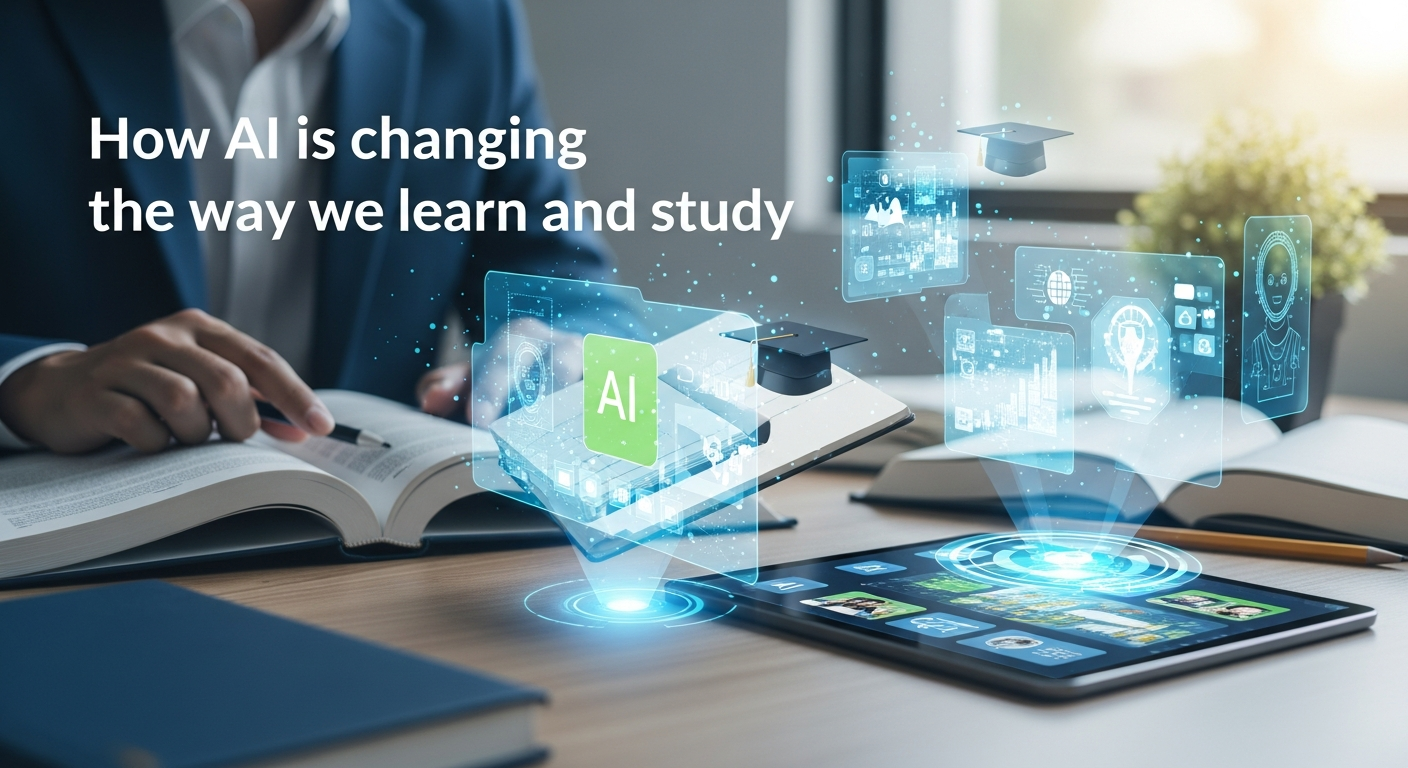
The integration of Artificial Intelligence (AI) in education is revolutionizing the way we learn and study. With AI-powered tools and systems being increasingly adopted in educational institutions, it's essential to understand the significance of this technology in shaping the future of learning. According to a report by McKinsey, the education sector is expected to witness a significant transformation, with AI-driven solutions improving student outcomes by up to 15%. As we delve into the world of AI in education, it's crucial to recognize the potential of this technology to enhance the educational experience and improve outcomes.
Understanding the Growing Presence of AI in Education
In recent years, AI has been gaining traction in the education sector, with many institutions investing heavily in AI-powered solutions. From intelligent tutoring systems to adaptive learning platforms, AI is being used to personalize learning, improve student engagement, and increase efficiency. For instance, AI-powered chatbots are being used to provide students with instant feedback and support, while machine learning algorithms are being used to analyze student data and identify areas where they need extra support.
The Importance of Understanding AI's Impact on Learning and Studying
As AI continues to transform the education landscape, it's essential to understand the impact of this technology on learning and studying. AI has the potential to enhance the educational experience by providing personalized learning pathways, automating administrative tasks, and improving student outcomes. However, it's also important to recognize the potential challenges and limitations of AI in education, such as bias in algorithms and the need for teacher training. By understanding the benefits and challenges of AI in education, we can harness the potential of this technology to create a more effective and efficient learning environment.
Preview of the Article's Main Topics and Key Takeaways
In this article, we'll explore the various ways in which AI is changing the way we learn and study. We'll delve into topics such as the use of AI in personalized learning, the role of AI in assessment and feedback, and the potential of AI to improve student outcomes. We'll also examine the challenges and limitations of AI in education and discuss the importance of responsible AI development in the education sector. By the end of this article, readers will have a comprehensive understanding of the impact of AI on education and will be equipped with the knowledge and insights needed to harness the potential of this technology to enhance the educational experience.
- Understand the growing presence of AI in education and its potential to enhance the educational experience
- Recognize the importance of understanding AI's impact on learning and studying
- Explore the various ways in which AI is being used in education, including personalized learning and assessment and feedback
As we embark on this journey to explore the impact of AI on education, it's essential to keep in mind the potential of this technology to transform the way we learn and study. With its ability to personalize learning, improve student outcomes, and increase efficiency, AI is poised to revolutionize the education sector. In the following sections, we'll delve deeper into the world of AI in education and explore the various ways in which this technology is changing the face of learning.
The Role of AI in Modern Education
The integration of Artificial Intelligence (AI) in education has revolutionized the way we learn and study. AI-powered learning tools and platforms have become increasingly popular, offering a range of benefits for students, teachers, and educators. One of the key advantages of AI in education is its ability to provide adaptive learning experiences, which can be tailored to individual students' needs and abilities. This approach enables students to learn at their own pace, accelerating their progress and improving their overall performance.
Adaptive Learning and Personalized Education
Personalized education is another significant aspect of AI in modern education. By leveraging AI algorithms and machine learning techniques, educational institutions can create customized learning plans that cater to the unique needs and preferences of each student. This approach helps to increase student engagement, motivation, and satisfaction, leading to better learning outcomes and higher academic achievement. For instance, AI-powered adaptive learning systems can adjust the difficulty level of course materials, provide real-time feedback, and offer additional support to students who require it.
The use of AI-driven adaptive learning has been shown to have a positive impact on student performance, particularly in subjects such as mathematics and reading. By providing personalized feedback and guidance, AI-powered systems can help students to identify areas where they need improvement, allowing them to focus their efforts on specific skills or concepts. This targeted approach can lead to significant gains in student achievement, as well as improved teacher effectiveness and reduced workload.
Supporting Teachers and Instructors
AI can also play a vital role in supporting teachers and instructors, helping them to streamline their workload, enhance their teaching practices, and improve student outcomes. For example, AI-powered tools can assist with grading, data analysis, and lesson planning, freeing up teachers to focus on more critical aspects of their role. Additionally, AI-driven systems can provide teachers with valuable insights into student performance, enabling them to identify areas where students may require extra support or enrichment.
Some examples of AI-based educational resources and materials include interactive simulations, virtual labs, and intelligent tutoring systems. These resources can provide students with immersive, interactive learning experiences that simulate real-world scenarios, making complex concepts more engaging and accessible. Furthermore, AI-powered educational platforms can offer a range of accessible and inclusive features, such as text-to-speech functionality, closed captions, and translation tools, which can help to support students with diverse needs and abilities.
Examples of AI-Based Educational Resources
There are many examples of AI-based educational resources and materials that are currently being used in schools and universities around the world. Some notable examples include:
- AI-powered virtual teaching assistants, which can provide students with personalized support and guidance
- Intelligent tutoring systems, which can offer real-time feedback and assessment
- AI-driven educational games, which can make learning more engaging and fun
- Virtual reality and augmented reality platforms, which can provide immersive, interactive learning experiences
The integration of AI in education has the potential to revolutionize the way we learn and teach, providing personalized, adaptive, and inclusive learning experiences that can improve student outcomes and increase academic achievement.
In conclusion, the role of AI in modern education is multifaceted and far-reaching. By providing adaptive learning experiences, personalized education, and AI-driven support for teachers, AI can help to improve learning outcomes, increase student engagement, and make education more accessible and effective. As the education sector continues to evolve, it is likely that we will see even more innovative applications of AI in the future, transforming the way we learn and teach in profound and lasting ways.
Real-World Examples of AI in Education
The integration of AI in Education is transforming the way we learn and study. From AI-powered learning platforms to intelligent tutoring systems, there are numerous examples of AI in action in educational settings. In this section, we will explore some real-world examples of AI in education, including case studies of schools and institutions that have successfully implemented AI, and discuss the benefits and challenges of AI adoption.
AI-Powered Learning Platforms and Tools
One of the most significant applications of AI in education is the development of AI-powered learning platforms. These platforms use machine learning algorithms to provide personalized learning experiences for students. For example, platforms like DreamBox Learning and Curriculum Associates use AI to offer real-time feedback and assessment to students. These platforms have been shown to improve student outcomes, with a study by the RAND Corporation finding that students who used DreamBox Learning showed a 5.5% increase in math scores compared to those who did not use the platform.
Other examples of AI-powered learning tools include virtual teaching assistants, such as IBM's Watson Tutor, which can help teachers with tasks like grading and lesson planning. Additionally, intelligent tutoring systems like Carnegie Learning's MATHia use AI to provide one-on-one support to students, offering real-time feedback and guidance.
Case Studies of Successful AI Implementation
There are several case studies of schools and institutions that have successfully implemented AI in their educational settings. For example, the Arizona State University has implemented an AI-powered chatbot to help students with tasks like course selection and financial aid. The chatbot, which is powered by IBM's Watson, has been shown to improve student engagement and reduce the workload of university staff.
Another example is the Denver Public Schools, which has implemented an AI-powered platform to help teachers with tasks like lesson planning and grading. The platform, which is powered by the company CK-12, uses AI to provide teachers with real-time feedback and support, helping them to improve student outcomes.
Benefits and Challenges of AI Adoption
The adoption of AI in education has several benefits, including improved student outcomes, increased efficiency, and enhanced personalization. However, there are also several challenges, including the need for significant investment in infrastructure and training, as well as concerns about data privacy and security. Additionally, there is a risk that AI could exacerbate existing inequalities in education, particularly if certain groups of students do not have access to AI-powered learning tools.
According to a report by the Brookings Institution, the successful implementation of AI in education requires a comprehensive approach that takes into account the needs of all stakeholders, including teachers, students, and administrators. The report highlights the importance of providing teachers with training and support to help them effectively integrate AI into their teaching practices.
The key to successful AI adoption in education is to focus on the needs of the students and teachers, rather than just the technology itself. By taking a comprehensive approach that prioritizes equity, accessibility, and effectiveness, we can ensure that AI is used to improve education for all. - Andrew Ng, AI Expert
In conclusion, the integration of AI in education has the potential to transform the way we learn and study. By providing personalized learning experiences, improving efficiency, and enhancing student outcomes, AI-powered learning platforms and tools are revolutionizing the education sector. However, it is essential to address the challenges and limitations of AI adoption, including concerns about data privacy and security, and ensure that AI is used to improve education for all.
Advanced Concepts and Technical Details
The integration of Artificial Intelligence (AI) in education has led to the development of sophisticated learning systems that leverage AI algorithms and machine learning models to personalize learning experiences. These systems rely on complex mathematical formulas and statistical techniques to analyze vast amounts of data, identify patterns, and make predictions. For instance, natural language processing (NLP) is used to analyze student responses, assess their understanding, and provide feedback. Similarly, computer vision is used to analyze visual data, such as images and videos, to create interactive and immersive learning experiences.
Technical Explanation of AI Algorithms and Machine Learning Models
AI algorithms and machine learning models are the backbone of AI-powered learning systems. These algorithms and models are designed to learn from data, identify patterns, and make predictions. For example, decision trees, random forests, and support vector machines are commonly used machine learning models in education. These models are trained on large datasets, which enables them to make accurate predictions and recommendations. Deep learning techniques, such as convolutional neural networks (CNNs) and recurrent neural networks (RNNs), are also used to analyze complex data, such as images, videos, and text.
The Role of Data Analytics and Visualization in AI-Powered Learning
Data analytics and visualization play a critical role in AI-powered learning. Data analytics is used to analyze student performance, identify areas of improvement, and track progress. Data visualization is used to present complex data in a clear and concise manner, enabling educators and administrators to make informed decisions. For instance, dashboards and reports can be used to visualize student performance, providing insights into areas such as attendance, engagement, and academic achievement. Real-time analytics can also be used to monitor student activity, providing immediate feedback and support.
Explainability and Transparency in AI Decision-Making
As AI-powered learning systems become more prevalent, there is a growing need for explainability and transparency in AI decision-making. This is particularly important in education, where decisions can have a significant impact on student outcomes. Explainable AI techniques, such as feature attribution and model interpretability, can be used to provide insights into AI decision-making processes. This enables educators and administrators to understand how AI systems arrive at their decisions, ensuring that they are fair, unbiased, and transparent. Additionally, transparency is essential for building trust in AI-powered learning systems, enabling stakeholders to understand how data is being used and how decisions are being made.
In conclusion, the technical aspects of AI-powered learning are complex and multifaceted. Understanding AI algorithms, machine learning models, and natural language processing is essential for educators and administrators who want to leverage the full potential of AI in education. By providing insights into the technical details of AI-powered learning, we can ensure that these systems are used effectively and efficiently, ultimately improving student outcomes and transforming the education sector.
- Key technical concepts in AI-powered learning include machine learning models, natural language processing, and computer vision.
- Data analytics and data visualization are critical components of AI-powered learning systems.
- Explainability and transparency are essential for building trust in AI-powered learning systems and ensuring that decisions are fair and unbiased.
The effective integration of AI in education requires a deep understanding of the technical aspects of AI-powered learning. By leveraging AI algorithms, machine learning models, and natural language processing, we can create personalized learning experiences that improve student outcomes and transform the education sector.
Implementing AI in Educational Settings
As educators and administrators, implementing AI-powered learning tools and platforms can seem like a daunting task. However, with a structured approach and a focus on best practices, institutions can harness the power of AI to enhance student learning outcomes. In this section, we will provide a step-by-step guide to getting started with AI implementation, discuss the importance of teacher training and support, and highlight the need for data-driven decision-making and ongoing evaluation.
Step-by-Step Guide to AI Implementation
To implement AI-powered learning tools and platforms, follow these steps:
- Conduct a needs assessment to identify areas where AI can enhance student learning outcomes
- Research and select AI-powered learning tools and platforms that align with your institution's goals and objectives
- Develop a comprehensive implementation plan, including timelines, budgets, and resource allocation
- Provide teacher training and support to ensure educators are equipped to effectively integrate AI into their teaching practices
- Monitor and evaluate the effectiveness of AI implementation, using data-driven decision-making to inform future decisions
The Importance of Teacher Training and Support
Effective teacher training and support are critical to the successful implementation of AI-powered learning tools and platforms. Teachers need to understand how to integrate AI into their teaching practices, how to use AI-powered tools to enhance student learning outcomes, and how to address potential challenges and limitations. Institutions should provide ongoing professional development opportunities, including workshops, training sessions, and coaching, to ensure teachers are equipped to effectively use AI in their classrooms.
Successful AI Implementation Strategies and Models
There are several successful AI implementation strategies and models that institutions can draw upon. For example, some institutions have implemented AI-powered adaptive learning systems, which use machine learning algorithms to personalize student learning experiences. Others have used AI-powered chatbots to provide students with personalized support and feedback.
By leveraging these strategies and models, institutions can create a more effective and efficient learning environment, and improve student learning outcomes.Additionally, institutions can learn from real-world examples and case studies, such as the use of AI-powered learning platforms in higher education and K-12 schools, to inform their own AI implementation efforts.
In conclusion, implementing AI in educational settings requires a structured approach, a focus on best practices, and a commitment to data-driven decision-making and ongoing evaluation. By following the steps outlined in this section, and by providing teacher training and support, institutions can harness the power of AI to enhance student learning outcomes and create a more effective and efficient learning environment.
Comparison and Analysis of AI-Powered Learning Tools
The education sector has witnessed a significant surge in the development and implementation of AI-Powered Learning Tools, each with its unique features, benefits, and drawbacks. As educators and administrators, it is essential to conduct a thorough comparison and evaluation of these tools to determine their effectiveness and impact on the learning process. In this section, we will delve into the different types of AI-powered learning tools and platforms, highlighting their pros and cons, and discussing the importance of assessing their effectiveness based on specific needs and goals.
Overview of AI-Powered Learning Tools and Platforms
There are various AI-Powered Learning Tools available, catering to different aspects of the learning process. These include adaptive learning systems, intelligent tutoring systems, learning management systems, and natural language processing tools. Each of these tools has its strengths and weaknesses, and understanding their features and benefits is crucial for making informed decisions. For instance, adaptive learning systems use AI to adjust the difficulty level of course materials based on individual students' performance, while intelligent tutoring systems provide personalized feedback and guidance to students.
Comparison of Features, Benefits, and Drawbacks
A comprehensive comparison of AI-Powered Learning Tools reveals that each option has its advantages and disadvantages. The following table illustrates a comparison of some popular AI-powered learning tools:
| Tool | Features | Benefits | Drawbacks |
|---|---|---|---|
| Adaptive Learning System | Personalized learning paths, real-time feedback | Improved student outcomes, increased engagement | High implementation costs, limited content availability |
| Intelligent Tutoring System | One-on-one feedback, adaptive assessments | Enhanced student understanding, reduced teacher workload | Limited subject coverage, technical issues |
| Natural Language Processing Tool | Automated grading, language analysis | Increased grading efficiency, improved language skills | Limited accuracy, dependence on high-quality input |
As seen in the table, each tool has its unique features, benefits, and drawbacks. It is essential to evaluate these tools based on specific needs and goals, considering factors such as implementation costs, content availability, and technical requirements.
Evaluating AI Tools Based on Specific Needs and Goals
When selecting AI-Powered Learning Tools, it is crucial to assess their effectiveness in achieving specific learning objectives. This involves considering factors such as:
- Learning outcomes: How will the tool impact student performance and understanding?
- Implementation costs: What are the upfront and ongoing costs associated with the tool?
- Technical requirements: What infrastructure and support are needed to ensure seamless integration?
- Teacher support: How will the tool impact teacher workload and professional development?
By conducting a thorough evaluation of AI-Powered Learning Tools, educators and administrators can make informed decisions that align with their specific needs and goals. As emphasized earlier, it is essential to consider the effectiveness of these tools in achieving desired learning outcomes, rather than simply adopting them for their novelty or popularity.
The key to successful implementation of AI-Powered Learning Tools lies in careful planning, thorough evaluation, and ongoing assessment of their impact on the learning process.
In conclusion, the comparison and analysis of AI-Powered Learning Tools reveal that each option has its strengths and weaknesses. By understanding these features, benefits, and drawbacks, and evaluating them based on specific needs and goals, educators and administrators can make informed decisions that enhance the learning experience and improve student outcomes. Ultimately, the effective integration of AI-Powered Learning Tools has the potential to revolutionize the education sector, providing personalized, efficient, and effective learning solutions for students of all ages and abilities.
Conclusion and Future Directions
In conclusion, the impact of AI in Education has been profound, transforming the way we learn and study. Throughout this article, we have explored the various ways in which AI is being used to enhance education, from personalized learning platforms to intelligent tutoring systems. The key takeaways from our discussion include the potential of AI to increase accessibility, improve student outcomes, and enhance the overall learning experience.
Summary of Main Points
A summary of the main points highlights the significance of AI adoption in educational settings. We have seen how AI-powered tools can help teachers with grading, lesson planning, and student assessment, freeing up time for more critical tasks. Additionally, AI-driven systems can provide real-time feedback, helping students to identify areas where they need improvement. The use of AI in Education also enables the creation of customized learning paths, tailored to individual students' needs and abilities.
Future Potential and Challenges
As we look to the future, it is clear that AI in Education has tremendous potential to continue shaping the learning landscape. However, there are also challenges that must be addressed, including concerns around bias, equity, and access. Ensuring that AI systems are fair and transparent will be crucial in building trust and confidence in their use. Furthermore, investing in teacher training and support will be essential in helping educators to effectively integrate AI-powered tools into their teaching practices.
Call to Action
So, what can be done to support the continued development and adoption of AI in Education? We urge educators, administrators, and policymakers to work together to harness the power of AI and improve learning outcomes. This can involve providing funding and resources for AI-related research and development, as well as creating policies and guidelines that support the effective use of AI in educational settings. By taking these steps, we can unlock the full potential of AI in Education and create a brighter future for learners of all ages.
As a next step, we recommend that readers explore the many resources available online, including research papers, webinars, and conferences, to learn more about the future directions of AI in education. By staying informed and engaged, we can all play a role in shaping the future of learning and ensuring that AI adoption is equitable, effective, and beneficial for all.
The future of education is exciting and full of possibilities, and we believe that AI in Education will be a key driver of innovation and progress in the years to come.
In final thoughts, the importance of continued innovation, investment, and support for AI in Education cannot be overstated. By working together and embracing the potential of AI, we can create a more inclusive, effective, and inspiring learning experience for all. We encourage readers to join the conversation and share their thoughts on the future directions of AI in education, and to take the first step towards creating a brighter, more AI-driven future for learners everywhere.

Comments (0)
Please login or register to leave a comment.
No comments yet. Be the first to comment!