
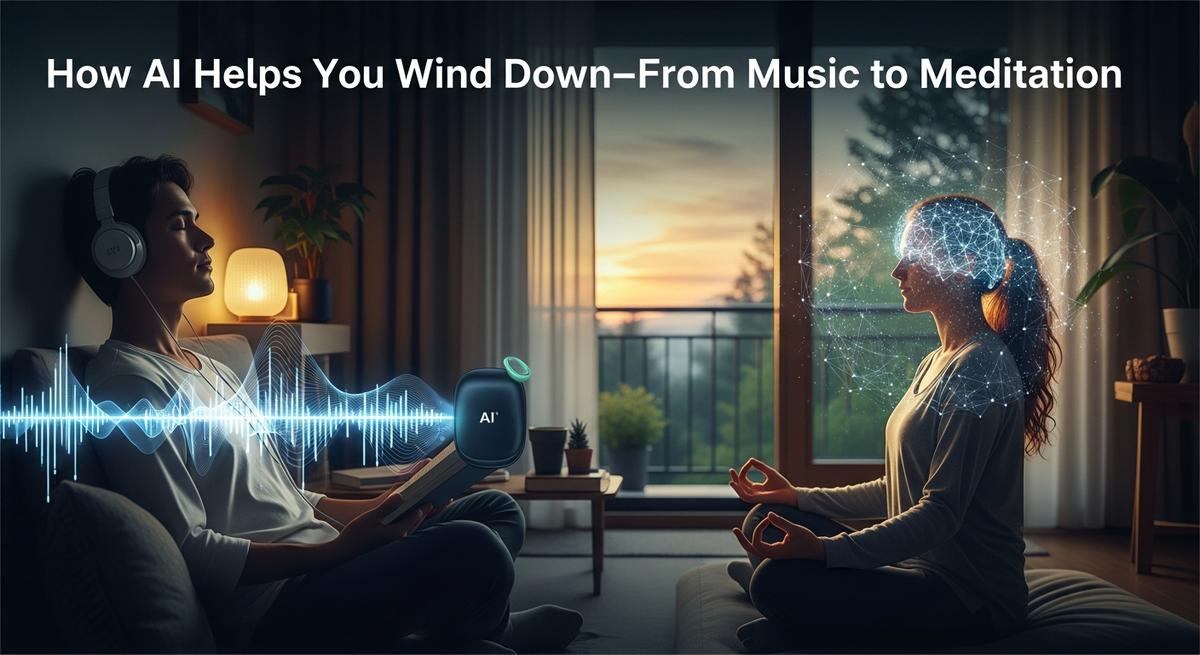
How AI Helps You Wind Down—From Music to Meditation
- December 01, 2025
- ~ 1 min read
- 213 views
- Lifestyle & AI , Everyday AI
Introduction/Overview
Imagine coming home after a hectic day filled with endless meetings, notifications, and mental clutter, desperately seeking a way to wind down and reclaim your calm. In today’s fast-paced world, the need for effective relaxation has never been more critical. Traditional methods like reading a book or listening to music are evolving, as innovative technologies step in to offer smarter, more personalized ways to relax. Among these, AI relaxation tools are rapidly gaining popularity, transforming how we approach meditation and soothing soundscapes.
The Rising Trend of AI in Wellness and Relaxation
Artificial intelligence is no longer confined to complex industrial applications; it has become an integral part of our daily wellness routines. From apps that generate custom meditation music to AI-powered soundscapes that adapt in real time to your mood and environment, technology is reshaping relaxation experiences. AI’s ability to analyze personal preferences, stress levels, and even biometric data allows it to craft uniquely tailored sessions that traditional methods simply cannot match. This trend is particularly appealing to tech-savvy individuals, wellness enthusiasts, and meditation practitioners who seek both convenience and effectiveness in their self-care rituals.
Why Winding Down Matters More Than Ever
In an era dominated by constant connectivity and information overload, the simple act of winding down is essential for mental and physical health. Chronic stress can lead to burnout, sleep disturbances, and decreased productivity. Prioritizing relaxation through meditation and calming music is proven to reduce anxiety, improve focus, and enhance overall well-being. However, busy schedules often make it difficult to find the right time or method to relax. This is where AI steps in, offering on-demand, personalized relaxation solutions that fit seamlessly into even the busiest lifestyles.
What to Expect in This Article
This article will take you on a deep dive into how AI is revolutionizing the way we relax and meditate. You’ll discover how AI-driven platforms create immersive meditation music and adaptive soundscapes that respond to your unique needs. We will explore practical applications, from AI-generated playlists that enhance mindfulness to virtual meditation guides that evolve with your progress. Whether you’re a content creator looking to enrich your wellness offerings or an individual seeking smarter ways to unwind, you’ll gain valuable insights into the future of AI-powered relaxation.
“With AI, relaxation is no longer one-size-fits-all. It’s a personalized journey tailored just for you.”
Main Content
Artificial intelligence is revolutionizing the way we relax and meditate, offering personalized soundscapes that adapt to our unique needs. At the heart of this transformation are AI algorithms that analyze vast libraries of music and sound to identify patterns associated with calm and focus. These algorithms don’t just copy existing tracks—they learn the underlying structures of relaxing music and generate new compositions that are both original and deeply soothing.
How AI Creates Relaxing Music
AI music generators use machine learning to study the elements that make music calming: slow tempos, gentle melodies, and harmonious progressions. When you input a prompt—such as “peaceful piano with ambient nature sounds”—the AI interprets your request and crafts a track that matches your description. The system can blend instruments, adjust rhythms, and layer ambient effects to create a soundscape tailored to your mood. This process is similar to how a composer might write music, but AI can do it in seconds, offering endless variety and customization.
The Science of Sound Frequencies and Brainwave Entrainment
One of the most fascinating aspects of AI-generated relaxation music is its ability to incorporate specific sound frequencies known to promote calm. For example, alpha and theta waves are brainwave patterns associated with relaxation and meditation. AI can generate music that subtly embeds these frequencies, helping to guide your brain into a more peaceful state. This technique, known as brainwave entrainment, has been studied for its potential to reduce stress and enhance mindfulness. By aligning music with these natural rhythms, AI tools can create a more immersive and effective relaxation experience.
Research shows that AI-generated music, especially when tailored to environmental context and user stress levels, can offer greater potential for stress relief compared to traditional relaxing music.
Endless, Non-Repetitive Soundscapes
Unlike pre-recorded tracks, AI can generate endless, non-repetitive soundscapes. This means you never hear the same sequence twice, which helps maintain a sense of novelty and immersion. Whether you’re meditating, studying, or winding down after a long day, AI ensures your soundtrack remains fresh and engaging. This is particularly valuable for meditation practitioners who seek deeper focus and relaxation without the distraction of repetitive loops.
Bioacoustics and Generative Algorithms
Modern AI music generators also integrate principles of bioacoustics—the study of how sound interacts with living organisms. By analyzing how different sounds affect the human body and mind, these systems can create music that feels natural and organic. Generative algorithms further enhance this by simulating the subtle variations found in live performances, making AI-generated tracks sound more authentic and less mechanical.
In summary, AI is not just automating music creation—it’s enhancing our ability to relax and meditate by delivering personalized, scientifically-backed soundscapes that adapt to our needs and environment.
Examples and Use Cases
Artificial intelligence is rapidly transforming the way we approach relaxation and meditation, offering accessible, customizable, and deeply personal experiences. From professional wellness practitioners to everyday users, AI-powered music platforms are making it easier than ever to create and enjoy therapeutic soundscapes tailored to individual needs.
Leading Platforms in AI Meditation Music
Platforms like Soundverse AI and AIMusic are at the forefront of this revolution. These tools allow users to generate meditation tracks with just a few descriptive prompts. For example, Soundverse AI enables creators to request a “calm meditation track with a slow tempo, resonant vocal tones, and nature sounds like gentle ocean waves and soft wind.” The platform’s intuitive interface and advanced customization options—such as real-time adaptation, stem separation, and lyric generation—empower users to craft music that aligns perfectly with their relaxation goals.
AIMusic offers similar capabilities, letting users blend genres, adjust tempos, and layer ambient sounds to create unique soundscapes. Both platforms support a wide range of use cases, from solo meditation to guided sessions, and are ideal for anyone seeking personalized relaxation experiences.
AI in Professional Wellness Practices
Therapists and yoga instructors are increasingly integrating AI-generated music into their practices. For instance, a mindfulness coach might use Soundverse AI to create a bespoke track for a client’s anxiety reduction session, specifying a “gentle forest soundscape with soft piano.” The ability to tailor music in real-time ensures that each session is uniquely suited to the client’s emotional state and therapeutic goals.
Yoga studios are also leveraging these tools to enhance their classes. By generating ambient tracks that match the pace and mood of each session, instructors can create a more immersive and effective experience for their students. This level of customization is not only convenient but also significantly improves the overall impact of the practice.
Content Creation and Personal Stories
Content creators are finding AI music invaluable for producing royalty-free meditation videos. With platforms like Soundverse AI, they can quickly generate soothing soundscapes for YouTube, podcasts, or wellness apps, ensuring their content remains original and engaging. One creator shared, “Using AI music has allowed me to focus on my message without worrying about copyright issues or expensive licensing fees.”
Personal testimonials further highlight the benefits of AI relaxation tools. A user described how daily meditation with AI-generated tracks helped them manage stress and improve sleep: “I used to struggle with anxiety, but now I start each day with a custom meditation track. It’s made a huge difference in my mental health.”
“AI music has transformed my approach to wellness. I can create exactly the atmosphere I need, whether it’s for meditation, therapy, or simply unwinding after a long day.”
These real-world applications demonstrate the versatility and impact of AI in promoting relaxation and mental well-being. Whether you’re a professional, a content creator, or someone seeking personal peace, AI-powered music platforms offer powerful tools to enhance your daily routine.
Advanced Concepts and Deep Dive
Biometric Feedback for Real-Time Music Adaptation
One of the most sophisticated applications of AI in relaxation and meditation is the integration of biometric feedback to dynamically tailor music in real time. By continuously monitoring physiological signals such as heart rate, brainwaves, and skin conductance, AI systems can infer a user’s current emotional and cognitive state. This data is then processed through advanced machine learning models—often combining recurrent neural networks (RNNs), generative adversarial networks (GANs), and sentiment analysis algorithms—to generate or modify music that aligns with the user's physiological needs.
For example, if a wearable sensor detects elevated heart rate and stress indicators, the AI can respond by lowering tempo, simplifying harmonic structure, or introducing calming soundscapes to promote relaxation. Conversely, during meditation sessions, the system might gradually shift musical elements to deepen states of calm or focus. This neuro-musical feedback loop creates a highly personalized and immersive experience that evolves with the listener’s moment-to-moment state, far surpassing static playlists or pre-recorded tracks.
Such systems rely on multimodal AI frameworks that fuse biometric inputs with contextual data (time of day, activity level) to optimize therapeutic outcomes. The challenge lies in accurately interpreting noisy biometric signals and mapping them to meaningful musical parameters, but ongoing advances in physiological computing and brain-computer interfaces (BCIs) are rapidly improving this capability.
Binaural Beats and Brainwave Synchronization
Binaural beats represent a scientifically grounded technique used in AI-generated music to facilitate brainwave entrainment—a process where auditory stimuli encourage the brain to synchronize its electrical activity to specific frequency patterns. When two slightly different frequencies are presented separately to each ear, the brain perceives a third tone, the binaural beat, which corresponds to the frequency difference.
This auditory phenomenon can influence brainwave states associated with various cognitive and emotional conditions, including relaxation, focus, and sleep. For example, binaural beats in the delta (0.5–4 Hz) or theta (4–8 Hz) ranges are often used to promote deep relaxation and meditative states. AI systems incorporate binaural beats seamlessly into soundscapes, adjusting parameters like beat frequency and amplitude in real time based on biometric feedback to optimize the listener’s state.
By combining binaural beats with other musical elements, AI can subtly guide the brain toward desired neural patterns, enhancing the efficacy of meditation and relaxation practices. However, precise calibration is crucial, as individual responses to binaural beats vary, making adaptive AI-driven personalization essential for maximizing benefits.
Integration of Nature Sounds and Instrumental Elements in AI Compositions
Another key element in AI-driven relaxation music is the sophisticated blending of nature sounds with instrumental layers to create rich, immersive soundscapes. Nature sounds—such as flowing water, rustling leaves, bird songs, and ocean waves—are well-documented to evoke calm and reduce stress by triggering innate biophilic responses.
AI algorithms analyze extensive libraries of natural sound recordings and instrumental samples, using generative models to compose harmonious arrangements that balance these elements. Techniques such as style transfer and dynamic mixing allow AI to tailor the complexity, texture, and spatialization of sounds based on user preferences and biometric inputs.
This integration not only enhances the sensory depth of meditation music but also supports the creation of unique, evolving sound environments that adapt in real time. For example, the AI might amplify gentle rain sounds as a user’s relaxation deepens or introduce soft instrumental melodies to maintain engagement without disrupting tranquility.
The challenge for AI lies in achieving seamless transitions and maintaining musical coherence, especially when adapting to fluctuating physiological states. Future developments aim to refine these compositional techniques to provide increasingly naturalistic and emotionally resonant experiences.
Personalized Meditation Experiences Powered by AI
At the forefront of AI-driven wellness is the ability to craft personalized meditation experiences that reflect an individual’s unique preferences, physiological responses, and progress over time. By leveraging biometric feedback, AI can continuously learn from a user’s reactions to different musical and soundscape elements, fine-tuning the auditory environment to optimize relaxation and mindfulness outcomes.
Such personalization extends beyond music selection to include adaptive pacing, intensity modulation, and the incorporation of specific auditory cues like binaural beats or nature sounds tailored to the user’s current mental state. AI platforms often employ a two-stage training approach: a foundational model trained on a broad dataset of physiological responses to various sounds, followed by individualized tuning that hones the system to the user’s distinct patterns.
This capability enables a deeply embodied meditation practice where the soundscape acts as a responsive companion, guiding the user through stages of relaxation, focus, and emotional processing. As biometric sensors become more accessible and sophisticated, the potential for AI to deliver truly customized meditative journeys grows exponentially.
However, challenges remain in ensuring privacy, interpreting complex biometric signals accurately, and maintaining the human touch essential for emotional resonance. Nonetheless, the convergence of AI, biometric feedback, and sound design heralds a new era of personalized wellness technologies that empower users to wind down more effectively than ever before.
Implementation Guide and Best Practices
Integrating AI music platforms into your relaxation routine doesn't require technical expertise—these tools are designed for accessibility and ease of use. Whether you're a meditation practitioner, content creator, or wellness enthusiast, understanding how to effectively leverage AI-generated meditation music can significantly enhance your daily wind-down practices. This section provides a comprehensive step-by-step guide to help you navigate popular AI music generators, select the right platform for your needs, and implement best practices that maximize the therapeutic benefits of AI-generated soundscapes.
Getting Started: A Step-by-Step Guide to Generating AI Meditation Music
Most AI music platforms follow a similar workflow that prioritizes simplicity and speed. Here's how to generate your first meditation track:
Step 1: Access Your Chosen Platform
Begin by creating a free account on your selected AI music generator. Popular options include Mubert, TopMediai, SUNO AI, and Wondercraft. Most platforms offer free tiers with generous features, allowing you to experiment before committing to premium subscriptions.
Step 2: Craft Your Descriptive Prompt
The quality of your AI-generated music depends heavily on prompt specificity. Rather than simply typing "meditation music," provide detailed descriptions that include genre, tempo, instruments, and mood. For example: "Ambient, slow tempo, soothing piano with soft background strings for relaxation and sleep." This level of detail ensures the AI generates tracks that precisely match your vision. Be descriptive about elements like instrumental preferences (synth pads, nature sounds, wind chimes), desired vibes (calming, healing, peaceful), and overall atmosphere (immersive, dreamy, spiritual).
Step 3: Configure Your Parameters
Set the track duration to match your intended use—whether that's a 10-minute sleep routine, a 20-minute yoga session, or a 30-minute deep meditation journey. Toggle additional settings such as instrumental-only options if you prefer music without vocals, and select any specific effects or enhancements available on your platform.
Step 4: Generate and Review
Click the generate button and allow the AI a few minutes to create your track. Most platforms produce multiple versions based on your prompt, giving you options to choose from. Listen to the entire piece to ensure sound quality, flow, and consistency meet your expectations. Pay attention to transitions between sections and whether instrumental tones align with the overall mood you're seeking.
Step 5: Download and Integrate
Once satisfied with your track, download it in MP3 format. The beauty of AI-generated meditation music is its versatility—you can integrate these tracks into guided meditation videos, virtual yoga classes, mindfulness apps, spa playlists, or personal relaxation routines.
Selecting the Right Platform and Features for Your Needs
Not all AI music platforms are created equal, and choosing the right one depends on your specific requirements. Consider these factors when evaluating options:
Ease of Use and Interface Design: TopMediai and Mubert excel in user-friendly interfaces that make the generation process intuitive, even for non-technical users. If you prioritize simplicity, these platforms offer robust functionality without overwhelming complexity.
Customization and Control: SUNO AI provides advanced customization options, allowing you to fine-tune instrumental styles, tempos, and moods with precision. If you have specific artistic visions, platforms offering granular control deliver better results.
Guided Content Creation: Wondercraft specializes in creating guided meditations with AI-generated voiceovers and background music, making it ideal if you want to produce complete meditation experiences rather than just instrumental tracks. The platform includes access to hyper-realistic relaxing voices and royalty-free sound effects.
Commercial Rights and Licensing: Verify the licensing terms before using generated music commercially. Platforms like Mubert and SOUNDRAW offer royalty-free music suitable for YouTube videos, apps, and professional projects. Note that some platforms reserve commercial rights to free-tier content, so check terms carefully if monetization is your goal.
Library and Preset Options: Platforms like Loudly offer diverse libraries featuring presets and instruments, allowing you to mix structures, tempos, genres, and energy levels. This variety is valuable if you want to create multiple tracks with different characteristics.
Best Practices for Maximizing AI-Generated Meditation Music
To truly harness the power of AI in your relaxation routine, follow these best practices:
Build Cohesive Playlists: Rather than relying on single tracks, create playlists that flow seamlessly from one piece to the next. Generate multiple tracks with complementary prompts—perhaps starting with an energizing ambient piece, transitioning to deeper meditation music, and concluding with gentle sleep-focused soundscapes. This progression guides listeners through a complete relaxation journey.
Experiment with Healing Frequencies: Many AI platforms support prompts incorporating specific frequencies like 432 Hz or 528 Hz, traditionally associated with healing and tranquility. Experiment with these elements to discover what resonates most with your practice.
Incorporate Nature Elements: Prompts featuring nature sounds—rainfall, forest ambience, ocean waves—often produce more immersive experiences. These elements add depth and authenticity to AI-generated tracks, making them feel less synthetic and more organic.
Leverage Spiritual and Cultural Elements: If you practice specific meditation traditions, include relevant details in your prompts. For example, request sacred mantras, specific instruments from your tradition, or spiritual vibes to create culturally resonant music that enhances your practice authentically.
Maintain Consistent Quality Control: Always listen to generated tracks in full before integrating them into your routine. Sound quality and flow consistency matter—if transitions feel abrupt or instrumental tones don't align with your goals, regenerate with refined prompts rather than settling for suboptimal results.
Common Pitfalls to Avoid
Understanding what to avoid helps you generate superior meditation music on your first attempts:
Vague Prompts: Generic requests like "relaxing music" produce generic results. Always include specific details about genre, tempo, instruments, and mood. Specificity directly correlates with satisfaction.
Ignoring Licensing Terms: Before using AI-generated music commercially or uploading to platforms like YouTube or Spotify, verify you have appropriate rights. Free-tier music from some platforms cannot be monetized, so understand the restrictions before investing time in content creation.
Neglecting Quality Review: Don't assume every generated track is production-ready. Listen critically for jarring loops, abrupt transitions, or instrumental choices that don't serve your relaxation goals. Regenerate when necessary.
Over-Relying on Single Tracks: Meditation benefits from variety. Creating diverse playlists prevents listener fatigue and maintains engagement with your relaxation practice over time.
Ignoring Personal Preference: While AI generates impressive results, your subjective experience matters most. If a track doesn't resonate emotionally, regenerate with different parameters. The goal is creating music that genuinely supports your wellness journey, not simply showcasing AI capabilities.
By following this implementation guide and adhering to these best practices, you'll effectively harness AI music platforms to create personalized meditation experiences that genuinely enhance your daily relaxation routines.
Comparison and Analysis
AI vs Traditional Meditation Music
When it comes to winding down, the choice between AI-generated and traditional meditation music is more than just a matter of preference—it’s a decision that shapes the quality and authenticity of your relaxation experience. AI vs traditional music presents a clear contrast: AI tools can generate tracks in seconds, offering endless variety and real-time adaptation, while traditional music is crafted by human composers who infuse their work with personal emotion, intention, and lived experience.
AI-generated music excels in efficiency and scalability. Platforms like Soundful and Copacabana Tidal allow users to create custom soundscapes tailored to specific moods, from gentle bossa nova to ambient western instrumentals. These tracks are often consistent in tone, making them ideal for background relaxation or focus. In contrast, traditional meditation music—such as compositions by artists like Deuter or Debra Crystal—carries a depth of feeling that comes from years of practice, cultural heritage, and emotional resonance.
Advantages of AI: Personalization and Variety
One of the standout benefits of AI music is its ability to deliver personalization at scale. Whether you need a playlist for deep sleep, gentle focus, or creative inspiration, AI tools can analyze your preferences and generate music that matches your unique needs. This level of customization is difficult to achieve with traditional music, which is typically fixed and not easily adapted to individual moods or environments.
Moreover, AI offers unparalleled variety. With access to vast datasets, AI can blend genres, experiment with unconventional soundscapes, and produce tracks that cater to niche relaxation styles. This makes it a powerful tool for content creators, wellness practitioners, and anyone seeking fresh, innovative ways to unwind.
Limitations and Drawbacks of AI Music
Despite its advantages, AI music is not without limitations. The most notable is the lack of human touch—AI-generated tracks may lack the emotional depth and authenticity that come from a composer’s lived experience. As one expert notes, “AI can mimic styles, but it cannot truly capture the heartbreak of a Beethoven sonata or the soaring aspiration of a John Williams score.”
There are also legal and ethical concerns. Some AI music platforms may inadvertently use copyrighted material in their training data, exposing users to potential legal risks. Additionally, the transparency of AI music’s origins is often unclear, raising questions about fairness and authenticity in the wellness space.
Alternative Methods and Their Effectiveness
While AI music offers exciting possibilities, traditional methods—such as live music, guided meditation with human instructors, or nature sounds—remain highly effective for many people. These alternative methods provide a sense of connection and presence that AI cannot replicate. For example, a live meditation session with a skilled instructor can offer real-time feedback and emotional support, while nature sounds can evoke a deep sense of calm and grounding.
In summary, both AI and traditional approaches have their place in the world of relaxation and meditation. The best choice depends on your personal preferences, goals, and values. For those seeking efficiency and variety, AI music is a powerful tool. For those prioritizing authenticity and emotional depth, traditional methods may be preferable.
Conclusion and Key Takeaways
Summarizing the AI Benefits in Relaxation and Meditation
Artificial intelligence is reshaping the way we approach relaxation and mindfulness, making these practices more accessible, personalized, and effective than ever before. From AI-curated music playlists to adaptive meditation sessions, technology is helping individuals create tailored experiences that align with their unique needs and preferences. The AI benefits are clear: enhanced personalization, real-time feedback, improved engagement, and greater consistency in practice. Whether you're winding down after a long day or seeking deeper mindfulness, AI-powered tools can guide you toward a calmer, more balanced state of mind.
The Importance of Winding Down in Modern Life
In today's fast-paced world, taking time to unwind is not just a luxury—it's a necessity for mental and physical well-being. Chronic stress, information overload, and constant connectivity can take a toll on our health, making it crucial to prioritize moments of relaxation. Mindfulness and meditation, supported by AI, offer powerful ways to reset, recharge, and cultivate resilience. By integrating these practices into your daily routine, you can foster greater self-awareness, emotional regulation, and overall wellness.
Next Steps: Embrace Your Wellness Journey
Now that you understand how AI can enhance your relaxation and meditation experience, it's time to take action. Explore the growing range of AI-powered apps, music platforms, and meditation tools designed to support your wellness journey. Whether you're a beginner or a seasoned practitioner, these technologies can help you deepen your practice and achieve your mindfulness goals. Don't hesitate to experiment with different features—personalized soundscapes, adaptive guidance, and real-time feedback—to find what works best for you.
"Mindfulness is not about escaping life, but about engaging with it more fully. With AI as your ally, you can unlock new levels of calm, clarity, and connection."
Start small, stay consistent, and be open to the possibilities. Share your experiences with others, and encourage your community to explore the transformative potential of AI in wellness. Remember, every step you take toward mindfulness is a step toward a healthier, happier you. Embrace the future of relaxation—your mindfulness journey begins now.
- Explore AI-powered meditation and music apps
- Experiment with personalized soundscapes and adaptive sessions
- Share your journey and inspire others to prioritize relaxation

Comments (0)
Please login or register to leave a comment.
No comments yet. Be the first to comment!