
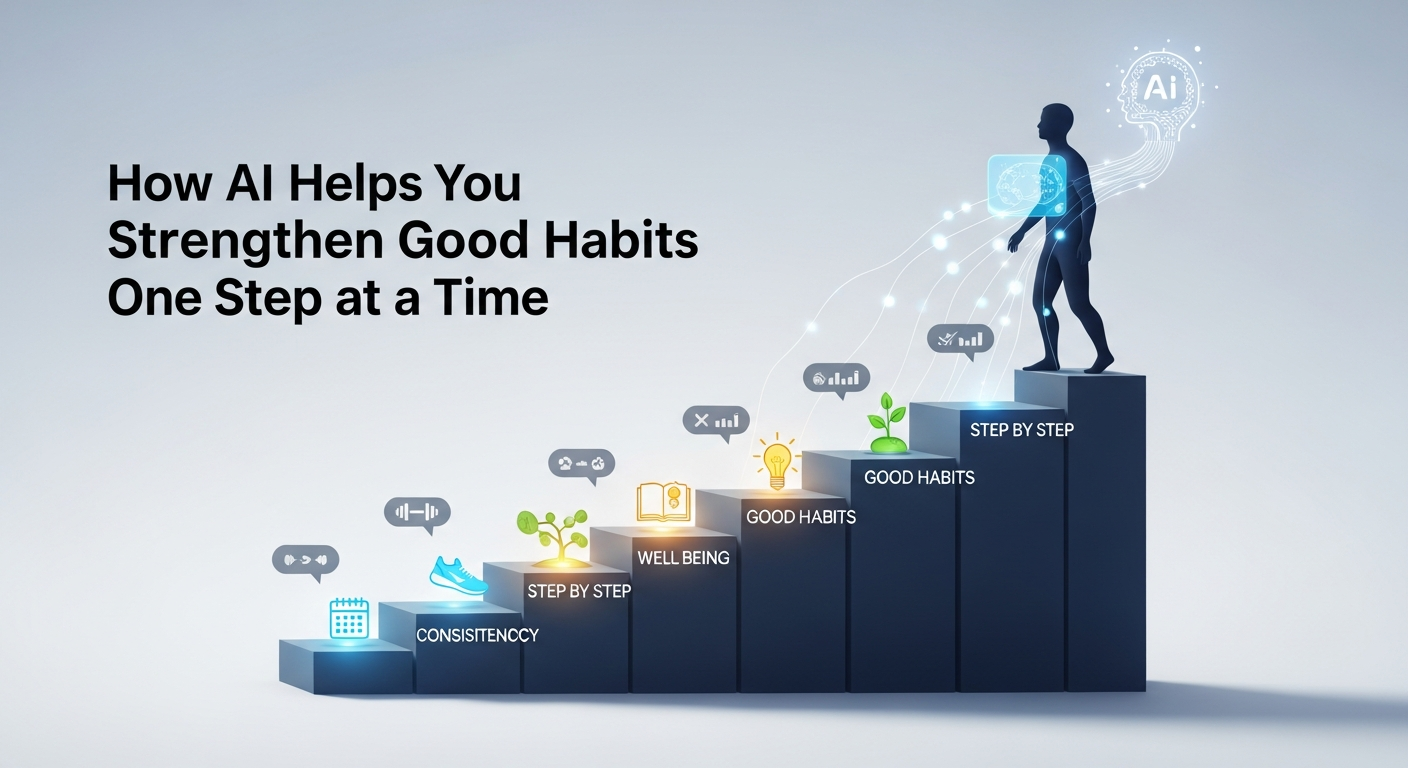
How AI Helps You Strengthen Good Habits One Step at a Time
- November 21, 2025
- ~ 1 min read
- 122 views
- Everyday AI , Lifestyle & AI
Introduction to AI-Driven Habit Formation
Developing good habits is a crucial aspect of personal development, as it enables individuals to achieve their goals and improve their overall well-being. Good habits, such as regular exercise, healthy eating, and consistent learning, can have a significant impact on one's life, leading to increased productivity, better health, and a greater sense of fulfillment. However, forming and maintaining these habits can be a challenging task, requiring dedication, motivation, and the right support system.
The Importance of Consistency in Habit Formation
One of the main obstacles to habit formation is maintaining consistency. It is easy to start a new habit, but it is much harder to stick to it over time. Research has shown that it takes an average of 66 days for a new habit to become automatic, but this process can be derailed by various factors, such as lack of motivation, busy schedules, and unexpected events. To overcome these challenges, individuals need a system that can provide them with the necessary support and guidance to stay on track.
The Role of AI in Supporting Habit Formation
This is where AI comes in – a technology that has the potential to revolutionize the way we approach habit formation. By leveraging AI, individuals can receive personalized feedback and adaptive learning strategies that cater to their unique needs and goals. For example, an AI-powered habit tracker can analyze an individual's behavior and provide them with tailored recommendations to help them stay on track. Moreover, AI-driven chatbots can offer motivational support and guidance, helping individuals to overcome obstacles and stay motivated.
The use of AI in habit formation is not limited to tracking and motivation. It can also be used to identify patterns and trends in an individual's behavior, providing valuable insights that can inform their personal development strategy. By combining AI with technology, individuals can create a powerful system that supports them in achieving their goals and improving their overall well-being. As we will explore in the following sections, the potential of AI in habit formation is vast, and its applications are diverse and exciting.
The key to successful habit formation is to create a system that is tailored to an individual's unique needs and goals. With the help of AI and technology, individuals can overcome the challenges of consistency and achieve their desired outcomes.
Understanding How AI Supports Habit Strengthening
The integration of Artificial Intelligence (AI) in habit formation has revolutionized the way individuals approach personal development. At the core of this technology are machine learning algorithms that learn from user data to offer tailored advice and guidance. These algorithms, combined with natural language processing, enable AI systems to understand and interpret human behavior, providing personalized feedback that is both relevant and effective.
AI Technologies in Habit Formation
The use of AI technologies in habit formation is multifaceted, involving a range of tools and techniques designed to support individuals in their personal development journeys. Machine learning, for instance, plays a crucial role in analyzing user behavior, identifying patterns, and predicting outcomes. This information is then used to provide users with actionable insights and recommendations, helping them to refine their habits and achieve their goals. Additionally, natural language processing enables AI systems to communicate with users in a more human-like way, making the interaction feel more personal and engaging.
Other AI technologies used in habit formation include predictive analytics, which helps to forecast user behavior and identify potential obstacles, and decision support systems, which provide users with data-driven recommendations and guidance. These technologies, when combined, create a powerful toolkit for habit strengthening, one that is both intelligent and adaptive.
Analysis and Feedback: The Core of AI-Supported Habit Strengthening
The process of analyzing user behavior and providing personalized feedback is at the heart of AI-supported habit strengthening. AI systems monitor user progress, identifying areas of strength and weakness, and adjust their support strategies accordingly. This might involve sending reminders or notifications to help users stay on track, or providing motivational messages and encouragement to help them overcome obstacles. The goal is to create a supportive environment that fosters growth and development, helping individuals to build positive habits and achieve their goals.
The analysis process typically involves the following steps:
- Data collection: Gathering information about user behavior and habits.
- Data analysis: Interpreting the data to identify patterns and trends.
- Pattern recognition: Identifying areas of strength and weakness.
- Recommendation generation: Providing users with personalized advice and guidance.
Setting and Achieving Habit-Related Goals with AI
The role of AI in setting and achieving habit-related goals is significant, as it provides individuals with a clear roadmap for success. By analyzing user behavior and providing personalized feedback, AI systems help individuals to set realistic goals and develop strategies for achieving them. This might involve breaking down larger goals into smaller, more manageable tasks, or identifying potential obstacles and developing plans to overcome them. The goal is to create a pathway to success that is both achievable and sustainable, helping individuals to build positive habits and achieve their goals.
As individuals work towards their goals, AI systems continue to provide support and guidance, helping them to stay on track and overcome obstacles. This might involve sending reminders or notifications, or providing motivational messages and encouragement. The result is a powerful partnership between the individual and the AI system, one that is designed to help individuals achieve their goals and build positive habits that last a lifetime.
The integration of AI in habit formation has the potential to revolutionize the way we approach personal development, providing individuals with the tools and support they need to build positive habits and achieve their goals.
Real-World Examples of AI in Habit Formation
The integration of AI-powered apps into daily life has revolutionized the way individuals approach habit formation. These apps utilize machine learning algorithms to track and analyze user behavior, providing personalized recommendations for improvement. For instance, apps like Habitica and Fabulous use AI-powered habit tracking to gamify the habit formation process, making it more engaging and fun. By leveraging these tools, individuals can set and achieve goals more effectively, whether it's developing a consistent exercise routine or improving productivity.
Success Stories of AI-Driven Habit Formation
There are numerous success stories of individuals who have used AI to overcome challenges and achieve their goals. For example, a study published in the Journal of Medical Internet Research found that an AI-powered app helped individuals with depression develop healthier habits, such as regular exercise and socialization. Another case study highlighted the story of a busy professional who used an AI-driven habit tracking app to develop a consistent meditation practice, resulting in reduced stress and improved focus. These stories demonstrate the effectiveness of AI in habit formation and provide inspiration for those looking to make positive changes in their lives.
Integrating AI into Daily Life for Habit Strengthening
One of the key benefits of AI in habit formation is its ability to be seamlessly integrated into daily routines. Through mobile apps, voice assistants, or wearable devices, individuals can access AI-powered tools anywhere, anytime. For example, a person can use a voice assistant to set reminders and track progress towards their goals, while a wearable device can provide real-time feedback on physical activity and sleep patterns. By leveraging these technologies, individuals can create a supportive environment that fosters habit strengthening and long-term success.
To get started with AI-powered habit formation, individuals can explore the following options:
- Download AI-powered habit tracking apps like Habitica or Fabulous
- Use voice assistants like Alexa or Google Assistant to set reminders and track progress
- Invest in wearable devices like fitness trackers or smartwatches to monitor physical activity and sleep patterns
The key to successful habit formation is consistency and persistence. By leveraging AI-powered tools and integrating them into daily life, individuals can create a sustainable framework for habit strengthening and long-term success.
Advanced Concepts in AI-Driven Habit Formation
As we delve deeper into the realm of AI-driven habit formation, it becomes essential to explore the advanced AI algorithms that power these systems. These sophisticated algorithms are capable of habit prediction, enabling them to forecast an individual's likelihood of adhering to a particular habit. By leveraging machine learning and natural language processing, these algorithms can analyze vast amounts of data, including user behavior, preferences, and environmental factors, to provide personalized coaching and guidance.
Sophisticated AI Algorithms for Habit Prediction
One of the key challenges in AI-driven habit formation is developing algorithms that can accurately predict habit adherence. To address this, researchers have turned to advanced AI algorithms such as deep learning and reinforcement learning. These algorithms can learn from complex patterns in data and adapt to changing user behavior, enabling them to provide more effective coaching and support. For example, a deep learning algorithm might analyze a user's daily activity patterns to identify the optimal time for a workout or meditation session, while a reinforcement learning algorithm might provide personalized rewards and incentives to motivate the user to stick to their habits.
Some of the most promising advanced AI algorithms for habit prediction include:
- Long Short-Term Memory (LSTM) networks, which can learn from sequential data and predict future behavior
- Graph Convolutional Networks (GCNs), which can model complex relationships between users, habits, and environmental factors
- Transformers, which can analyze natural language data and provide personalized coaching and guidance
Edge Cases and Challenges in AI-Driven Habit Formation
While AI-driven habit formation holds tremendous promise, there are several edge cases and challenges that must be addressed. One of the primary concerns is data privacy, as AI systems require access to sensitive user data to function effectively. Additionally, there is a need for human oversight to ensure that AI systems are providing accurate and effective coaching, rather than simply reinforcing existing biases or habits. Other challenges include:
- Algorithmic bias, which can result in unfair or discriminatory treatment of certain users
- Lack of transparency, which can make it difficult for users to understand how AI systems are making decisions
- Dependence on high-quality data, which can be difficult to obtain, especially in cases where users are reluctant to share personal information
Expert Insights into the Future of AI in Personal Development
As we look to the future of AI in personal development, it is clear that there are many exciting breakthroughs and innovations on the horizon. According to experts in the field, one of the most significant areas of development will be the integration of AI-driven habit formation with other technologies, such as wearable devices and virtual reality. This will enable AI systems to provide even more personalized and immersive coaching experiences, helping users to develop healthy habits and achieve their goals more effectively.
The future of AI in personal development is all about creating more seamless and intuitive interfaces between humans and machines. By leveraging advanced AI algorithms and integrating them with other technologies, we can create systems that are not only more effective but also more enjoyable and engaging to use.
Overall, the future of AI-driven habit formation is bright, with many opportunities for innovation and growth. As researchers and developers continue to push the boundaries of what is possible with AI algorithms and habit prediction, we can expect to see even more sophisticated and effective systems for developing healthy habits and achieving personal goals. By addressing the edge cases and challenges associated with AI-driven habit formation, we can create systems that are not only more effective but also more fair, transparent, and enjoyable to use.
Practical Guide to Implementing AI for Habit Strengthening
To effectively utilize AI in strengthening good habits, it's essential to have a practical guide that outlines the steps to select, use, and integrate AI-powered tools into your daily routine. This section will walk you through a step-by-step process to implement AI for habit strengthening, ensuring you make the most out of this technology.
Step-by-Step Guide to Selecting and Using AI-Powered Habit Formation Tools
The first step in leveraging AI for habit formation is to choose the right AI-powered tools. With numerous options available, it's crucial to select tools that align with your goals and preferences. Start by researching different platforms and reading reviews to understand their features and user experiences. Once you've selected a tool, follow these steps:
- Sign up for the tool and complete any initial setup, which may include answering questions about your habits and goals.
- Explore the tool's features, such as habit tracking, reminders, and feedback mechanisms, to understand how it can support your habit formation journey.
- Set up your personalized habit tracking system, ensuring it covers all the habits you wish to strengthen or form.
- Regularly interact with the tool, providing it with the data it needs to offer insightful feedback and guidance.
Tips for Effectively Integrating AI Feedback into Daily Habit Routines
Integrating AI feedback into your daily routine is key to making consistent progress in habit strengthening. Here are some tips to help you make the most out of AI insights:
- Set aside time each day to review AI-generated feedback, reflecting on what it reveals about your habits and identifying areas for improvement.
- Use actionable tips provided by the AI tool to adjust your habits, ensuring you're always moving towards your goals.
- Combine AI feedback with self-reflection, considering your feelings and thoughts about your habits to deepen your understanding and motivation.
- Be consistent and patient, as habit formation is a process that takes time and effort to yield lasting results.
Best Practices for Overcoming Common Obstacles to Habit Consistency with AI Support
Despite the benefits of AI in habit strengthening, individuals may face obstacles such as lack of motivation, inconsistent tracking, or difficulty in interpreting AI feedback. To overcome these challenges, follow these best practices:
Firstly, acknowledge that setbacks are a normal part of the habit formation process and don't discourage you from your long-term goals. Secondly, ensure you're using the AI tool correctly, following its guidelines and recommendations. Lastly, maintain consistency in your interactions with the AI tool, as regular engagement is crucial for receiving meaningful feedback and support.
Remember, the key to successfully strengthening good habits with AI is to approach the process with an open mind, a willingness to learn, and a commitment to consistency and self-reflection.
By following this practical guide and adhering to the outlined best practices, you can effectively leverage AI to support your habit strengthening journey. Whether you're looking to form new habits or reinforce existing ones, AI-powered tools can provide the insights and motivation you need to achieve your goals, one step at a time.
Comparison and Analysis of AI-Driven Habit Formation Approaches
As we delve into the world of AI-driven habit formation, it's essential to compare and analyze the various AI technologies used in this field. Two prominent approaches are chatbots and machine learning models. Chatbots are designed to interact with users, providing personalized guidance and support, while machine learning models focus on analyzing user data to identify patterns and predict behavior. Both approaches have their pros and cons, and understanding these differences is crucial for effective habit strengthening.
Evaluating the Effectiveness of AI-Driven Approaches
On the one hand, relying solely on AI for habit strengthening can be beneficial in terms of convenience and scalability. AI-powered systems can handle a large volume of users, providing consistent support and guidance. However, over-reliance on AI can lead to a lack of human connection and autonomy, which are essential for sustainable habit formation. Moreover, AI systems may not be able to fully understand the complexities of human emotions and motivations, potentially leading to inadequate support during challenging times.
A closer examination of the pros and cons of AI-driven approaches reveals that while they offer personalized guidance and support, they may also lack the emotional intelligence and empathy that human coaches or traditional habit formation techniques provide. For instance, AI systems may struggle to understand the nuances of human behavior, leading to inaccurate predictions or ineffective interventions. On the other hand, human coaches can provide emotional support, accountability, and motivation, which are essential for overcoming obstacles and achieving long-term success.
Alternative Approaches to Habit Formation
In addition to AI-driven approaches, there are alternative methods that can be effective in habit formation. Traditional habit formation techniques, such as setting clear goals and tracking progress, can be highly effective when combined with human coaching or support groups. These approaches provide a sense of community and accountability, which can be missing in AI-driven systems. Furthermore, mindfulness practices and cognitive-behavioral therapy can help individuals develop a deeper understanding of their thoughts and behaviors, leading to more sustainable habit formation.
Some of the key alternative approaches to habit formation include:
- Human coaching: provides emotional support, accountability, and motivation
- Traditional habit formation techniques: setting clear goals, tracking progress, and creating an environment conducive to habit formation
- Mindfulness practices: helps individuals develop a deeper understanding of their thoughts and behaviors
- Cognitive-behavioral therapy: helps individuals identify and change negative thought patterns and behaviors
A Holistic Approach to Habit Formation
In conclusion, while AI-driven approaches can be highly effective in habit formation, it's essential to consider a holistic approach that combines AI technologies with alternative methods. By leveraging the strengths of both AI and human-centered approaches, individuals can create a comprehensive habit formation strategy that addresses their unique needs and goals. As
the key to successful habit formation lies in finding a balance between technology and human connection, it's crucial to weigh the pros and cons of each approach and create a personalized plan that fosters sustainable growth and development.
By adopting a holistic approach, individuals can harness the power of AI to analyze their behavior, identify patterns, and predict outcomes, while also leveraging human coaching, traditional habit formation techniques, and mindfulness practices to develop a deeper understanding of their thoughts and behaviors. Ultimately, this integrated approach can lead to more effective and sustainable habit formation, empowering individuals to achieve their goals and improve their overall well-being.
Conclusion and Next Steps in AI-Driven Habit Formation
In conclusion, our journey through the realm of AI-driven habit formation has revealed the profound impact that artificial intelligence can have on our daily lives. From personalized coaching to predictive analytics, AI has the potential to revolutionize the way we approach habit formation. The key takeaways from this article are clear: AI can help us identify areas for improvement, provide tailored guidance, and offer real-time feedback to ensure we stay on track.
Final Thoughts on AI Potential
As we look to the future, it's essential to recognize the AI potential to transform not just habit formation, but the broader landscape of personal development. By embracing technology and innovation, we can unlock new levels of human potential and achieve greater consistency in our habits. The integration of AI in habit formation is not just about using tools; it's about enhancing our capabilities and becoming the best version of ourselves.
Call to Action and Next Steps
So, what's the next step? We encourage you to take the first step in your AI-driven habit strengthening journey. Explore the various AI-powered tools and platforms designed to help you form and maintain good habits. Whether it's a mobile app, a wearable device, or a web-based service, there are numerous resources available to support your goals. For those eager to learn more, we recommend checking out the following resources:
- AI-powered habit tracking apps like Habitica or HabitBull
- Online courses on AI and personal development, such as those offered on Coursera or Udemy
- Books on the intersection of AI and human behavior, like "Life 3.0" by Max Tegmark
Remember, the call to action is not just about adopting new tools, but about embracing a mindset shift. By leveraging AI potential and committing to consistent practice, you can cultivate stronger, more resilient habits that will serve you well in all areas of life. Start your journey today, and discover the transformative power of AI-driven habit formation for yourself.
The future of personal development is not just about human potential, but about how we choose to augment and enhance it with technology.
In the end, the decision to embark on an AI-driven habit strengthening journey is a personal one. However, with the right tools, mindset, and support, you can unlock a brighter, more consistent future. Take the first step, and let the power of AI guide you towards a life of greater purpose, productivity, and fulfillment.

Comments (0)
Please login or register to leave a comment.
No comments yet. Be the first to comment!