
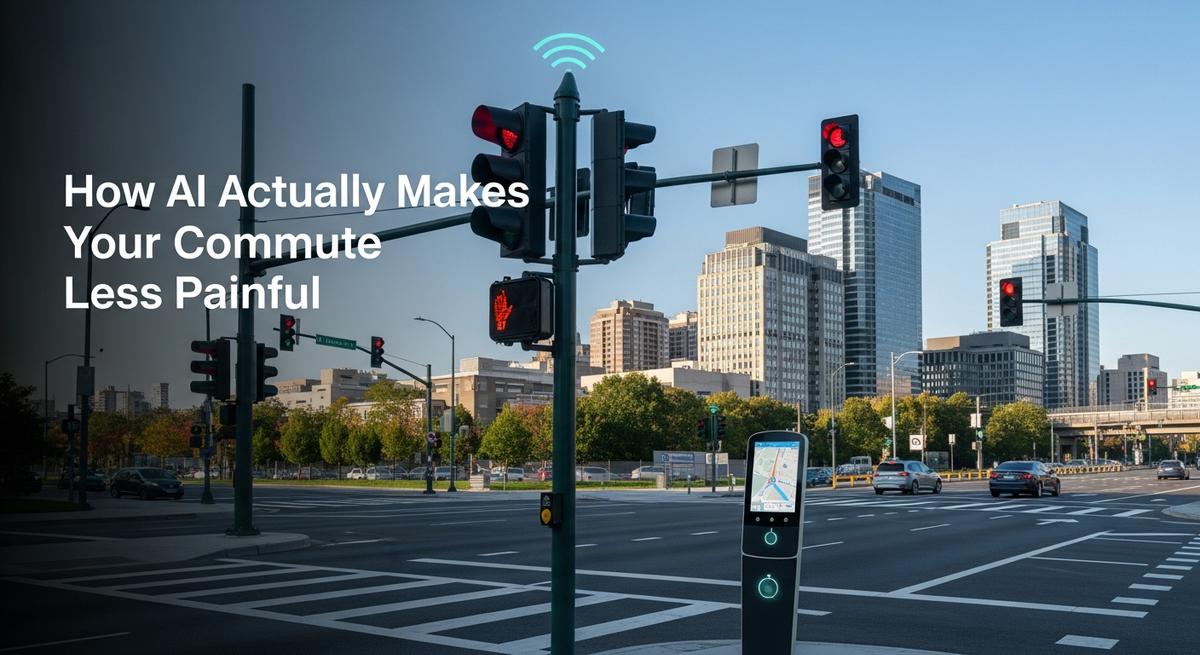
How AI Actually Makes Your Commute Less Painful
- November 26, 2025
- ~ 1 min read
- 208 views
- Everyday AI , Smart Cities , Lifestyle & AI
Introduction to AI’s Role in Modern Commutes
Common Commuting Frustrations: The Daily Grind
For millions of commuters worldwide, daily travel often means battling traffic congestion, unpredictable delays, and mounting stress. Whether stuck in bumper-to-bumper traffic, waiting on overcrowded public transit, or navigating complex routes, the commute can feel like a frustrating, time-consuming ordeal. These challenges not only reduce productivity but also negatively impact mental well-being and overall quality of life. As urban populations swell and transportation demands increase, traditional approaches to managing traffic and transit are proving insufficient.
AI: A Quiet Revolution in How We Travel
Enter artificial intelligence (AI)—a transformative technology that is quietly reshaping the landscape of modern commuting. By leveraging vast amounts of data, real-time analytics, and predictive algorithms, AI is enabling smarter, more efficient transportation systems. From optimizing traffic flow and dynamically adjusting routes to personalizing travel experiences, AI-driven solutions are tackling the root causes of commuting pain points. This shift toward smart commuting is not just a futuristic concept but an emerging reality that benefits daily travelers, urban planners, and transportation professionals alike.
What to Expect in This Blog
In this article, we will explore how AI commute improvements are making a tangible difference in reducing congestion and enhancing travel efficiency. You’ll learn about the key AI technologies powering these changes, including predictive traffic management, real-time route optimization, and intelligent transit systems. We will also highlight practical examples of AI applications that improve your daily commute, from AI-powered public transit scheduling to smart navigation tools. By the end, you’ll have a clear understanding of how AI is transforming commuting into a smoother, less stressful experience for everyone.
Core AI Technologies Enhancing Commutes
Adaptive Traffic Signals and Real-Time Optimization
One of the most impactful AI applications in daily commuting is the use of adaptive traffic signals. Unlike traditional traffic lights that follow fixed timing cycles, these smart signals dynamically adjust their phases based on real-time traffic conditions. Using data from sensors, cameras, and radar, AI algorithms analyze vehicle flow, pedestrian movements, and unexpected events such as accidents or roadworks to optimize signal timing instantly. This approach reduces unnecessary stops, minimizes congestion, and creates smoother traffic flow, often referred to as the “green wave” effect, where vehicles encounter consecutive green lights along a corridor.
For example, systems like Surtrac and Miovision Adaptive treat intersections as interconnected nodes, coordinating signal timing across multiple junctions to optimize traffic across entire urban grids. This decentralized, second-by-second adjustment helps reduce wait times, vehicle emissions, and driver frustration, while also improving safety for all road users, including pedestrians and cyclists. By continuously learning and adapting, these AI-powered traffic lights respond effectively to fluctuating traffic volumes and patterns throughout the day, making commutes more efficient and less stressful.
Real-Time Traffic Data Collection and Predictive Traffic Analytics
AI’s ability to enhance commutes relies heavily on collecting and analyzing vast amounts of real-time traffic data. Sensors embedded in roads, video cameras, GPS devices, and connected vehicles feed continuous streams of information into AI systems. These data points include vehicle counts, speeds, queue lengths, and travel times, which AI models process to understand current traffic states and predict future conditions.
Predictive traffic analytics use machine learning to forecast congestion before it happens by identifying patterns from historical and live data. For instance, AI can anticipate rush-hour bottlenecks, special event impacts, or sudden disruptions, enabling traffic management systems to proactively adjust signal timings or suggest alternate routes. This predictive capability not only improves traffic flow but also supports urban planners in designing more resilient transportation networks and allocating resources efficiently.
AI-Driven Route Optimization and Navigation Systems
Beyond traffic signals, AI powers advanced navigation apps that provide commuters with AI route optimization. These systems analyze real-time traffic data, road closures, accidents, and even weather conditions to recommend the fastest, safest, or most fuel-efficient routes. Unlike static GPS directions, AI-driven navigation continuously updates routes during the journey, helping drivers avoid congestion and reduce travel time.
Such route optimization benefits not only individual commuters but also delivery fleets and public transit systems by improving punctuality and reducing operational costs. The integration of AI with connected vehicle data further enhances route planning by allowing vehicles to communicate with infrastructure and each other, enabling smarter, coordinated travel decisions.
Autonomous Vehicles and Advanced Driver Assistance Systems (ADAS)
Looking ahead, AI’s role in commuting extends to the development of autonomous vehicles and Advanced Driver Assistance Systems (ADAS). These technologies use AI to interpret sensor inputs—such as cameras, lidar, and radar—to assist or fully control driving tasks. ADAS features like adaptive cruise control, lane-keeping assist, and collision avoidance improve safety and reduce driver stress during commutes.
Fully autonomous vehicles promise to transform commuting by optimizing driving patterns, reducing human error, and enabling vehicle-to-infrastructure communication. This interconnected ecosystem will enhance traffic efficiency and safety, potentially reducing congestion on a larger scale. While widespread adoption is still emerging, AI-driven autonomous technologies represent a future-forward leap in making daily commutes less painful and more predictable.
Real-World AI Applications in Traffic and Commutes
AI-Powered Traffic Signal Management in North Carolina
One of the most significant AI traffic management case studies comes from North Carolina, where the Department of Transportation (NCDOT) has deployed an advanced AI-powered traffic signal management system across 2,500 intersections statewide. Developed by Flow Labs, this software leverages machine learning and GPS data from connected vehicles to continuously monitor and optimize signal timing without requiring new hardware installations. This approach allows traffic engineers to improve flow and reduce delays by analyzing real-time traffic patterns, vehicle queue lengths, and idling times, all from a centralized platform.
By enabling data-driven decisions, NCDOT can prioritize interventions and enhance infrastructure planning more efficiently than traditional methods. The deployment is currently the largest live statewide AI traffic signal system in the United States, demonstrating how scalable AI solutions can modernize traffic operations rapidly and cost-effectively. The system also helps reduce emissions by minimizing unnecessary vehicle idling at red lights, contributing to environmental benefits alongside commute improvements.
Popular AI Traffic Optimization Tools: Inrix IQ and Google DeepMind
Beyond state-level projects, several AI-powered platforms have gained prominence for their role in traffic optimization. Inrix IQ is a widely used tool that aggregates and analyzes vast amounts of traffic data to provide real-time insights on congestion, travel times, and incident impacts. It integrates data from connected vehicles, road sensors, and GPS devices, enabling transportation agencies and commuters to make informed routing decisions.
Similarly, Google DeepMind traffic AI employs deep learning and reinforcement learning algorithms to predict traffic flow and optimize signal timings dynamically. By processing historical and live traffic data, it can anticipate congestion points and suggest alternative routes or signal adjustments to smooth traffic patterns. These tools exemplify how AI is transforming traffic management from reactive to predictive, enhancing the daily commuting experience.
Success Stories from Pittsburgh and Seattle Using Traffic Calming AI
Cities like Pittsburgh and Seattle have embraced traffic calming AI technologies to address chronic congestion and improve safety. In Pittsburgh, AI-driven adaptive traffic signals adjust in real-time to traffic volumes, reducing wait times and smoothing vehicle flow on busy corridors. This has led to measurable reductions in commute times and fewer stops, which also lowers vehicle emissions.
Seattle’s deployment of AI-based traffic calming measures includes predictive analytics that help manage pedestrian crossings and bicycle traffic alongside vehicles, increasing safety for all road users. These applications demonstrate how AI can tailor traffic control not only to vehicles but also to vulnerable road users, creating a more balanced and efficient urban transportation environment.
Impact on Commute Times, Idling, and Emissions
The practical outcomes of these AI implementations are clear: commuters experience shorter travel times, less time spent idling at intersections, and smoother journeys overall. By optimizing signal timings and providing accurate traffic predictions, AI reduces stop-and-go conditions that typically cause congestion and increased fuel consumption.
Moreover, reducing idling times directly lowers greenhouse gas emissions, benefiting urban air quality. The North Carolina case, for example, highlights how AI can quantify emissions wasted at delayed signals, allowing agencies to target improvements that simultaneously enhance traffic flow and environmental sustainability.
In summary, real-world applications of AI in traffic and commutes—from statewide signal management to city-level traffic calming and advanced optimization tools—are delivering tangible benefits that make daily travel less painful, more efficient, and environmentally responsible.
Advanced AI Concepts and Technical Insights
Machine Learning Models for Traffic Prediction
One of the core technologies enabling smarter commutes is machine learning traffic prediction. These models analyze vast amounts of historical and real-time data—such as traffic flow, weather conditions, time of day, and road characteristics—to forecast congestion and travel times with high accuracy. Traditional statistical models like ARIMA laid the groundwork by modeling temporal patterns, but modern approaches leverage advanced machine learning algorithms such as random forests, support vector regression (SVR), and deep neural networks to capture complex nonlinear relationships in traffic data. For example, random forest models combine multiple decision trees to improve prediction accuracy, often reaching above 85%, while SVR with radial basis function kernels can adapt to varying traffic patterns, achieving similar or better results[1][2][4]. Deep learning models, particularly recurrent neural networks (RNNs) and convolutional neural networks (CNNs), further enhance performance by learning temporal and spatial dependencies, often exceeding 90% accuracy in short-term traffic flow forecasting[2][3][6]. These predictive capabilities allow traffic management systems to anticipate congestion and dynamically adjust controls to reduce delays.
Sensor Fusion: Combining Cameras, Radar, and IoT Data
Effective traffic monitoring relies on sensor fusion AI, which integrates data from heterogeneous sources such as cameras, radar sensors, and Internet of Things (IoT) devices embedded in infrastructure and vehicles. Cameras provide visual information for vehicle counting and classification, radar offers precise speed and distance measurements even in adverse weather, and IoT sensors supply environmental and road condition data. By fusing these inputs, AI systems generate a comprehensive, real-time traffic picture that is more accurate and resilient than any single sensor alone. Advanced algorithms process this multi-modal data to detect traffic anomalies, identify incidents, and estimate vehicle density with high confidence. This fusion approach not only improves traffic state estimation but also supports downstream applications like autonomous vehicle navigation and adaptive signal control[3]. The integration of sensor fusion enhances situational awareness and enables proactive traffic management strategies.
Cloud-Based AI Platforms for Real-Time Traffic Control
Cloud-based traffic AI platforms play a pivotal role in orchestrating real-time traffic control and coordination across urban networks. These platforms aggregate data streams from distributed sensors and connected vehicles, then apply machine learning models and optimization algorithms to dynamically adjust traffic signals, ramp meters, and variable message signs. The cloud infrastructure enables scalable processing power and low-latency communication, essential for handling the volume and velocity of transportation data. Furthermore, cloud AI facilitates coordination between adjacent intersections and corridors, optimizing traffic flow on a city-wide scale rather than isolated segments. This connectivity supports adaptive traffic signal timing that responds to fluctuating demand, incidents, and special events, ultimately reducing congestion and commute times[3][5]. The cloud also provides a foundation for continuous learning and model updates, ensuring the system adapts to evolving traffic patterns.
Self-Learning Adaptive Systems and Scalability Challenges
Modern AI traffic systems increasingly incorporate self-learning adaptive capabilities, allowing models to improve over time by continuously ingesting new data and adjusting predictions without manual intervention. These adaptive systems employ reinforcement learning and online learning techniques to optimize traffic signal policies and route recommendations based on real-time feedback. However, scaling such systems to large metropolitan areas introduces challenges including computational complexity, data heterogeneity, and latency constraints. Ensuring robustness against noisy or incomplete data and maintaining privacy compliance when handling sensitive vehicle and user information are additional hurdles. Moreover, balancing local intersection optimization with global network performance requires sophisticated coordination algorithms. Addressing these scalability challenges is critical to deploying AI-driven traffic management at city or regional scales while preserving system responsiveness and reliability[3][5].
Integration with Connected Vehicles and Basic Safety Messages (BSMs)
The integration of AI with connected vehicles and their communication protocols, particularly Basic Safety Messages (BSMs), represents a transformative advancement in traffic systems. BSMs are standardized data packets broadcast by vehicles containing real-time information such as position, speed, acceleration, and heading. AI systems leverage this rich data to enhance situational awareness beyond what roadside sensors can capture, enabling predictive analytics for collision avoidance, traffic flow optimization, and incident detection. Vehicle-to-infrastructure (V2I) communication allows traffic signals and control centers to receive BSM data, facilitating dynamic adjustments to signal timing and routing recommendations tailored to current traffic conditions. This bidirectional exchange supports a cooperative ecosystem where vehicles and infrastructure collaboratively improve safety and efficiency[3]. The fusion of connected vehicle data with traditional sensor inputs empowers AI to deliver more precise and timely traffic interventions, ultimately making daily commutes smoother and safer.
Implementing AI Solutions for a Smoother Commute
Steps Cities Take to Deploy AI-Powered Traffic Signal Management
Deploying AI traffic deployment in urban environments begins with a strategic approach to data collection and system integration. Cities typically start by installing sensors such as cameras, lidar, and IoT devices at key intersections to capture real-time traffic density and flow data. This data is then fed into AI algorithms that analyze vehicle counts, speeds, and congestion patterns to dynamically adjust traffic signal timings. For example, AI can extend green light durations on heavily congested roads while shortening wait times on less busy routes, improving overall traffic throughput by up to 30% or more.
The deployment process generally includes:
- Installing and calibrating sensors to monitor traffic volume and pedestrian activity.
- Integrating collected data into AI-powered traffic management platforms that use machine learning to predict and respond to traffic conditions.
- Implementing adaptive signal control systems that continuously optimize signal phases in real time based on live data.
- Regularly reviewing system performance and making adjustments as needed to improve efficiency and safety.
Such AI-driven systems have demonstrated significant benefits, including reducing vehicle stops and travel times, lowering emissions, and enhancing commuter satisfaction.
Best Practices for Integrating AI with Existing Traffic Infrastructure
Successful traffic infrastructure AI integration requires thoughtful planning to ensure compatibility and scalability. Municipal planners and technologists should follow these best practices:
- Leverage existing hardware: Many AI traffic solutions can operate with current traffic signal controllers and cameras, reducing costs and installation time.
- Ensure robust data connectivity: Reliable communication networks are essential for real-time data transmission between sensors, AI systems, and traffic signals.
- Implement modular AI systems: Choose platforms that allow incremental upgrades, enabling gradual expansion without major disruptions.
- Collaborate with traffic engineers and stakeholders: Engage local transportation experts early to align AI deployment with city policies and traffic goals.
- Prioritize data accuracy and privacy: Use validated sensors and secure data handling practices to maintain system integrity and public trust.
By following these guidelines, cities can maximize the effectiveness of AI while minimizing implementation challenges and costs.
Tips for Commuters to Leverage AI-Based Navigation and Traffic Apps
Commuters can significantly improve their daily travel experience by using commuter AI apps designed to optimize routes and reduce delays. Here are practical tips to get the most out of these tools:
- Use apps with real-time traffic updates: Select navigation apps that incorporate AI-driven traffic predictions and live signal timing to avoid congestion hotspots.
- Enable route optimization features: Allow apps to dynamically reroute based on changing traffic conditions rather than sticking to fixed paths.
- Integrate multimodal options: Some AI apps suggest combining driving with public transit or biking, optimizing overall commute time and cost.
- Customize alerts and preferences: Set notifications for incidents, construction, or preferred travel times to stay informed and flexible.
- Participate in data sharing: Opt-in to anonymous data sharing where possible, helping improve AI accuracy and community-wide traffic management.
By actively engaging with these AI-powered tools, commuters can reduce stress, save time, and contribute to smarter traffic ecosystems.
Common Pitfalls and How to Avoid Them During AI Implementation
While AI implementation best practices provide a roadmap for success, several common pitfalls can hinder projects if not addressed:
- Data quality issues: Inaccurate or incomplete sensor data can lead to suboptimal AI decisions. Mitigate this by rigorous sensor calibration and continuous data validation.
- High upfront costs: Initial investments in hardware and software can be significant. To control expenses, prioritize modular systems and leverage existing infrastructure.
- Integration complexity: Legacy traffic systems may not easily interface with new AI platforms. Engage experienced integrators and conduct thorough compatibility testing.
- Resistance to change: Stakeholders and the public may be wary of AI-driven systems. Transparent communication, pilot programs, and demonstrated benefits help build trust.
- Cybersecurity risks: AI traffic systems are vulnerable to cyber threats. Implement strong security protocols and regular audits to protect system integrity.
Addressing these challenges proactively ensures smoother deployment and maximizes the positive impact of AI on urban commuting.
Comparing AI Traffic Solutions and Traditional Methods
When it comes to managing urban traffic, the shift from traditional fixed-timing systems to AI-driven adaptive traffic signals marks a significant leap in efficiency and responsiveness. Understanding the differences between these approaches is crucial for commuters, city planners, and anyone interested in the future of urban mobility.
Adaptive AI Signals vs. Fixed-Timing Systems
Traditional fixed-timing traffic lights operate on pre-set schedules, regardless of real-time traffic conditions. This means that even during low-traffic periods, lights may cycle through red and green phases, causing unnecessary delays and congestion. In contrast, adaptive traffic signals use sensors, cameras, and AI algorithms to continuously monitor and respond to live traffic data. These systems dynamically adjust signal timings based on vehicle counts, queue lengths, and traffic density, ensuring smoother flow and reduced wait times.
For example, during rush hour, adaptive signals can extend green lights for busy roads and shorten them for less-traveled ones, creating a more efficient traffic pattern. This level of adaptability is something fixed-timing systems simply cannot match.
Cost, Scalability, and Maintenance
While AI traffic vs traditional systems offer clear advantages in performance, there are trade-offs to consider. Adaptive systems typically require a higher initial investment due to the need for advanced sensors, data processing infrastructure, and ongoing software maintenance. However, the long-term benefits often outweigh these costs, as cities report significant reductions in congestion and improved commuter satisfaction.
Scalability is another factor. Fixed-timing systems are easier to deploy and maintain in smaller or less complex networks, but they struggle to keep up with the dynamic demands of growing urban areas. Adaptive systems, on the other hand, are designed to scale with the city, integrating seamlessly into larger networks and adapting to changing traffic patterns over time.
Reliability and Environmental Impact
Adaptive traffic signals excel in reliability and responsiveness, especially during unexpected events like accidents or special events. Their ability to react in real-time minimizes bottlenecks and keeps traffic moving smoothly. This not only enhances commuter satisfaction but also has a positive environmental impact by reducing idle times and lowering emissions.
Studies have shown that cities implementing adaptive systems experience up to 40% shorter wait times and millions of driver hours saved annually. These improvements translate to fewer vehicles idling at intersections, which in turn leads to reduced fuel consumption and lower greenhouse gas emissions.
Adaptive traffic signals are not just about convenience—they represent a smarter, more sustainable approach to urban traffic management.
Despite these benefits, it's important to acknowledge that adaptive systems are not without limitations. They require robust data infrastructure and ongoing technical support, and their effectiveness depends on the quality and coverage of sensor networks. Nevertheless, the trade-offs are generally favorable, especially in densely populated urban environments where traffic congestion is a persistent challenge.
In summary, while traditional fixed-timing systems have their place, adaptive traffic signals benefits in terms of efficiency, scalability, and environmental impact make them a compelling choice for modern cities. As technology continues to evolve, the gap between AI-driven solutions and traditional methods will only widen, paving the way for smoother, more enjoyable commutes for everyone.
Conclusion and Future Outlook for AI in Commuting
Artificial intelligence has already begun to transform daily commuting by addressing some of the most persistent pain points such as traffic congestion, inefficient routing, and unpredictable travel times. Through real-time data analysis and predictive algorithms, AI commute benefits are evident in smoother traffic flows, personalized route optimization, and enhanced public transit reliability. These advances not only reduce stress for commuters but also improve overall travel efficiency and safety.
Summary of Key AI Benefits in Commuting
AI's impact on commuting is multifaceted:
- Traffic congestion reduction: AI-driven traffic management systems dynamically adjust signals and recommend alternate routes to minimize delays.
- Route optimization: Machine learning algorithms analyze historical and real-time data to suggest the fastest and most efficient paths tailored to individual commuters.
- Enhanced transit services: AI enables predictive scheduling and demand forecasting, reducing wait times and overcrowding on public transportation.
- Improved commuter experience: Virtual assistants and AI-powered apps provide personalized travel information and support seamless trip planning.
Advancements and Emerging Trends Shaping the Future of AI Traffic
The future of AI in transportation promises even greater innovation and integration:
- Autonomous vehicles: Wider adoption of self-driving cars and buses will revolutionize urban mobility by improving safety and reducing human error.
- Smarter urban mobility networks: Integration of AI with 5G and IoT will enable real-time communication between vehicles, infrastructure, and commuters, fostering adaptive traffic systems.
- AI-powered mobility forecasting: Advanced predictive models will help cities adapt to changing travel patterns, including the effects of hybrid work and on-demand transit.
- Environmentally conscious solutions: AI will support cleaner transportation options, such as drone taxis and optimized fleet management, reducing emissions and fuel consumption.
Call to Action: Embrace Smart Commuting Tools and Support Innovation
As AI continues to evolve, staying informed and adopting smart commuting tools can significantly enhance your daily travel experience. Whether through AI-enabled navigation apps, real-time transit updates, or participating in community initiatives for smart city development, your engagement helps accelerate the transition toward more efficient and sustainable urban transportation.
Explore AI-powered commuting solutions today and advocate for investments in intelligent infrastructure that will shape the future of AI traffic. Together, we can make commuting less painful and more productive for everyone.
Comments (0)
Please login or register to leave a comment.
No comments yet. Be the first to comment!