AI and Your Sleep: Small Devices Making a Big Difference
- November 26, 2025
- ~ 1 min read
- 247 views
- AI & Healthcare , Lifestyle & AI , Everyday AI
Introduction/Overview
The Sleep Crisis and Why Traditional Monitoring Falls Short
Over one-third of adults fail to get the recommended seven to nine hours of sleep each night, and the consequences extend far beyond feeling groggy at morning meetings. Sleep deprivation has been linked to increased risk of cardiovascular disease, metabolic disorders, weakened immune function, and cognitive decline. Yet despite knowing sleep matters, most people remain in the dark about what's actually happening during their eight hours in bed. Traditional approaches to sleep monitoring—keeping a sleep diary, relying on subjective feelings, or undergoing expensive clinical sleep studies—have left a massive gap in how people understand and optimize their sleep health.
This is where the revolution begins. AI sleep tracking technology is fundamentally changing how we monitor and understand our nighttime patterns, transforming the way individuals approach sleep health optimization.
From Basic Movement Tracking to Intelligent Sleep Intelligence
The evolution of sleep monitoring devices has been remarkable. Just a decade ago, fitness trackers relied on crude wrist movement detection to estimate sleep duration—a method that was often wildly inaccurate. Today's wearable sleep technology represents a quantum leap forward, powered by sophisticated artificial intelligence and multi-sensor fusion technology.
Modern devices now combine heart rate monitoring, body temperature tracking, movement detection, blood oxygen saturation measurement, and even brain activity monitoring through advanced sensors. But the real magic happens behind the scenes: artificial intelligence health algorithms process this raw data through machine learning models trained on thousands of nights of validated sleep data. These systems don't just record metrics—they interpret them, identifying sleep stages with impressive accuracy, detecting subtle patterns that reveal your true sleep quality, and providing personalized insights that traditional monitoring could never deliver.
The Paradox of Small Devices, Big Intelligence
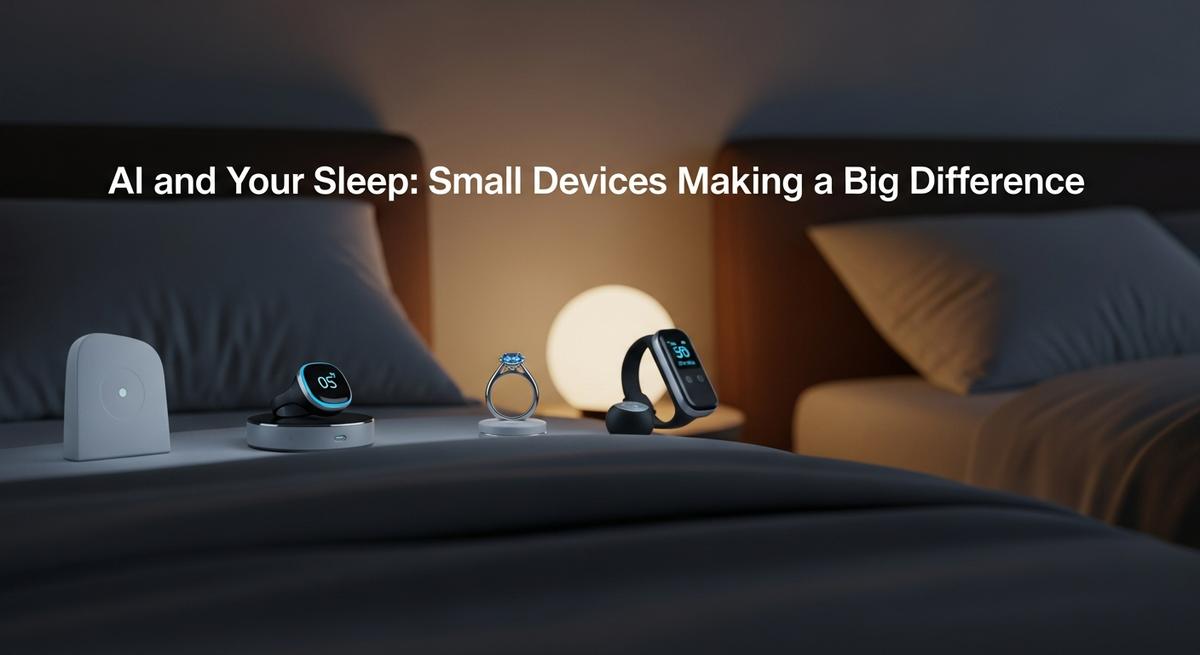
Here's the fascinating paradox at the heart of sleep health innovation: the smallest devices often deliver the most sophisticated insights. A ring barely larger than a piece of jewelry can now track 18 different sensor pathways. A sleep pad that slides invisibly under your mattress can detect breathing disturbances and flag potential sleep apnea risks. A bedside display using low-energy radar can measure your breathing rate and movement without any physical contact.
This miniaturization isn't just about convenience—it's about accessibility. By democratizing sleep health monitoring through compact, affordable devices, AI sleep tracking has moved from the realm of sleep clinics and research laboratories into the hands of everyday people who want to understand and improve their sleep. The technology that once required a night in a clinical setting with electrodes covering your head can now happen passively, night after night, in your own bedroom.
Why Understanding AI-Driven Sleep Tracking Matters Now
The timing couldn't be more critical. As sleep disorders become increasingly prevalent and the connection between sleep quality and overall health becomes undeniable, having access to accurate, personalized sleep data has shifted from being a luxury to becoming a practical necessity for health optimization. The devices available today represent a genuine breakthrough in personal health technology—they're accurate enough to provide meaningful trends, sophisticated enough to catch potential health issues, and accessible enough for anyone to use.
In this article, you'll discover how these remarkable devices work, which technologies deliver the most reliable insights, and how to choose the right wearable sleep technology for your specific needs. Whether you're a biohacker obsessed with optimizing every metric or simply someone tired of feeling tired, understanding the landscape of AI-powered sleep monitoring will empower you to make informed decisions about your sleep health.