
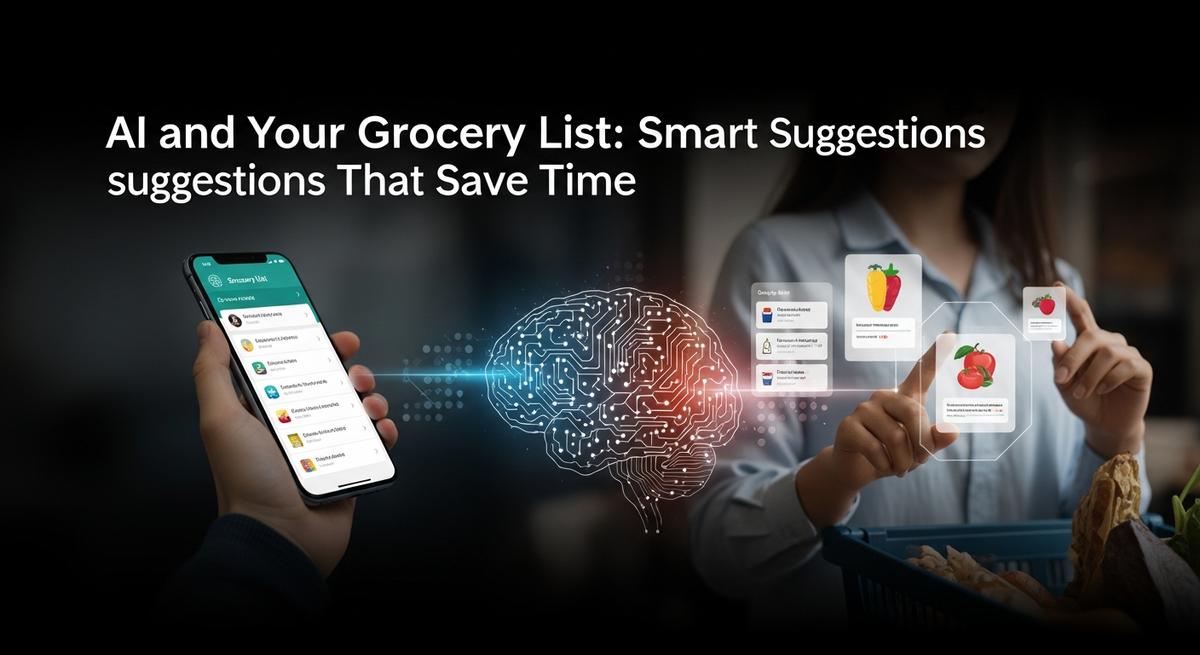
AI and Your Grocery List: Smart Suggestions That Save Time
- November 24, 2025
- ~ 1 min read
- 220 views
- Everyday AI , Lifestyle & AI
Introduction/Overview
The Frustration of Traditional Grocery Lists and Meal Planning
Anyone who has ever stood in a grocery store aisle only to realize they forgot a key ingredient knows the frustration of traditional grocery lists. Juggling meal planning, managing pantry inventory, and remembering every item needed for the week can quickly become overwhelming—especially for busy professionals and families with tight schedules. Paper lists get lost, mental notes slip away, and last-minute store runs become a common inconvenience.
The Rise of AI in Everyday Life and Shopping
In recent years, AI grocery list apps have emerged as powerful tools that transform this experience. Leveraging artificial intelligence, these apps analyze your past purchases, dietary preferences, and even pantry inventory to generate smart suggestions tailored to your needs. From personalized meal planning to dynamic grocery lists that update in real time, AI is increasingly integrated into the way we shop and cook, making the process more intuitive and efficient.
How AI-Powered Grocery Lists Save Time and Reduce Stress
By automating list creation and anticipating what you need before you even realize it, AI-powered grocery lists help you save time and reduce the stress of meal preparation. These apps can suggest recipes based on what’s available, optimize shopping routes, and even sync lists across devices for seamless collaboration among family members. With voice assistant integration and smart notifications, managing your grocery needs becomes effortless—freeing you to focus on what truly matters.
Imagine never having to worry about forgetting an ingredient again or spending extra time wandering the aisles—AI grocery list apps are making that a reality.
In this article, we will explore how these intelligent tools work, their key features, and why adopting AI-powered grocery lists is a game-changer for anyone looking to streamline their shopping and meal planning routine.
Main Content
How AI Analyzes User Habits and Preferences
Modern AI-powered grocery list apps leverage advanced machine learning algorithms to analyze your shopping habits and personal preferences. By tracking past purchases, frequently bought items, and even seasonal trends, these apps develop a detailed understanding of your unique grocery needs. This continuous learning process enables the AI to predict what you might need before you manually add items, reducing the time spent on list creation and helping prevent forgotten essentials.
Additionally, many apps incorporate user profiles and dietary restrictions, tailoring suggestions accordingly. For example, if you consistently buy gluten-free products or prefer quick-prep meals, the AI adapts its recommendations to fit those preferences, making your grocery planning more personalized and efficient.
Automated List Generation and Smart Categorization
One of the most powerful features of automated list generation in grocery apps is the ability to create comprehensive shopping lists from minimal input. When you plan meals or select recipes, the app automatically compiles all necessary ingredients into a single, organized list. This eliminates tedious manual entry and reduces errors such as missing items or duplicate purchases.
Moreover, these apps use smart categorization to sort items by store sections or product types, such as produce, dairy, or frozen foods. This intelligent sorting streamlines your shopping route, saving valuable time by minimizing backtracking in the store. Some apps even allow customization of categories based on your preferred grocery store layout, further enhancing efficiency.
Integration with Meal Planning and Recipe Databases
Seamless meal planning integration is a hallmark of today’s AI grocery list apps. They connect with extensive recipe databases to help you discover new dishes and effortlessly plan your weekly meals. Once you select recipes, the app extracts ingredients and adds them to your grocery list, ensuring all components are accounted for.
These integrations often feature dynamic adjustments, such as scaling ingredient quantities based on the number of servings or substituting items based on dietary needs. This synergy between meal planning and grocery list creation not only saves time but also reduces food waste by encouraging smarter shopping aligned with your actual meal plans.
Real-Time Updates and Collaborative Features
Another key advantage of AI-powered grocery list apps is their ability to provide real-time updates and support collaborative shopping. Changes made by one family member or roommate instantly sync across devices, allowing everyone to stay on the same page and avoid duplicate purchases or missed items.
Some apps also offer location-based reminders and notifications, alerting you when you are near a store that carries items on your list or when special deals are available. This proactive assistance further streamlines the shopping experience, making it more convenient and cost-effective.
By combining habit analysis, automated list creation, meal planning integration, and real-time collaboration, AI-powered grocery apps transform shopping from a chore into a streamlined, efficient process.
Examples and Use Cases
Busy Families Using Shared Lists for Coordinated Shopping
For busy families juggling multiple schedules, shared grocery lists powered by AI offer a seamless solution to coordinate shopping efforts. Family members can update the list in real time from their smartphones, ensuring everyone stays informed about what’s needed without duplication or forgotten items. For example, parents can add ingredients for dinner plans while kids update snacks or household essentials. This collaborative approach reduces trips to the store and minimizes last-minute runs, saving precious time during hectic weekdays. AI further enhances this experience by suggesting commonly purchased items based on past shopping behavior, making list updates faster and smarter.
Meal Preppers Leveraging AI for Bulk Ingredient Planning
Meal preppers, who prepare meals in advance for the week, benefit significantly from AI-driven grocery lists that optimize bulk ingredient planning. AI algorithms analyze meal plans to generate precise quantities of ingredients needed, preventing both shortages and waste. For instance, a meal prepper planning lunches and dinners can rely on the app to automatically group ingredients by category and calculate the total amounts required for multiple recipes. This streamlines shopping trips and ensures efficient use of ingredients. Additionally, AI can suggest ingredient substitutions or bulk-buy deals, helping users save money while sticking to their meal prep goals.
Health-Conscious Users Tracking Nutrition and Dietary Needs
Health-focused shoppers use AI grocery apps to maintain strict control over their nutrition by integrating nutrition tracking directly into their shopping experience. These tools analyze dietary preferences, allergies, and calorie goals to recommend suitable products and portion sizes. For example, a user following a low-carb or gluten-free diet can receive AI-generated suggestions for alternative ingredients or snacks that fit their nutritional profile. Detailed nutrition summaries linked to grocery items help users make informed decisions, turning grocery shopping into an extension of their wellness routine. This personalized approach supports consistent healthy eating without the stress of manual tracking.
Shoppers Using Location-Based Reminders and Smart Sorting
Location-aware AI features add another layer of convenience by providing location-based reminders and smart sorting of grocery lists. When a shopper approaches a particular store or aisle, the app can prompt them with reminders about items they need to pick up, reducing the risk of forgetting essentials. For example, if a user enters a supermarket, the app might alert them to grab milk or fresh produce they previously added to the list. Additionally, AI organizes the list by store layout or aisle order, enabling more efficient navigation through the store. This reduces shopping time and minimizes backtracking, making the entire process more streamlined and enjoyable.
Advanced Concepts and Deep Dive
AI-powered grocery list apps are more than just digital notepads—they are sophisticated systems built on advanced technologies that streamline the entire shopping experience. Behind the scenes, these apps leverage machine learning, natural language processing, and seamless integration with online platforms to deliver smart, personalized suggestions that save time and reduce effort.
Machine Learning for Habit Prediction
At the heart of AI grocery list apps are machine learning algorithms that analyze user behavior over time. By tracking purchase history, frequency, and patterns, these models can predict what items a user is likely to need next. For example, if a family consistently buys milk and bread every week, the app will automatically suggest these items as the shopping day approaches. More advanced systems use clustering and classification techniques to segment users into groups with similar habits, allowing for even more targeted recommendations. Over time, as users interact with the app, the algorithms continuously refine their predictions, making suggestions increasingly accurate and relevant.
Natural Language Processing for Recipe and Ingredient Parsing
One of the most powerful features of modern grocery list apps is their ability to parse recipes and extract ingredients using natural language processing. When a user inputs a recipe—either by typing or speaking—the app uses NLP to identify key ingredients, quantities, and even preparation steps. This process involves tokenization, part-of-speech tagging, and entity recognition to accurately interpret the text. The result is a smart shopping list that not only includes the necessary ingredients but also suggests alternatives based on dietary restrictions or pantry inventory. This level of automation transforms meal planning from a manual chore into a seamless, intuitive process.
Integration and Data Privacy
AI grocery list apps often integrate with online grocery delivery platforms, allowing users to order directly from their smart lists. This integration relies on APIs and real-time data exchange to ensure that product availability, pricing, and delivery options are always up to date. However, with the collection and analysis of personal data comes the responsibility to protect user privacy. Leading apps implement robust data privacy measures, including encryption, secure data storage, and strict access controls. They also adhere to privacy regulations such as GDPR and CCPA, ensuring that users’ information is handled transparently and securely. Trust is paramount, and apps that prioritize privacy are more likely to gain and retain user confidence.
By combining machine learning, natural language processing, and secure integration, AI grocery list apps offer a truly intelligent solution for modern shoppers.
Implementation Guide and Best Practices
Step-by-Step Guide to Setting Up an AI Grocery List App
Getting started with an AI grocery list setup is straightforward and designed to save you time from the very first use. Follow these steps to quickly integrate AI-powered smart suggestions into your shopping routine:
- Choose the right app: Select an AI grocery list app that fits your lifestyle and preferences. Look for features such as recipe integration, dietary customization, and collaborative list sharing.
- Create your profile and set preferences: Input your dietary restrictions, favorite brands, and usual grocery items. This personalization enables the AI to tailor smart suggestions based on your habits and nutritional needs.
- Import or add recipes: Upload your favorite recipes or link to recipe platforms. The app will automatically extract ingredient lists and suggest grocery items accordingly, streamlining meal planning.
- Start building your grocery list: Use the app’s AI-powered suggestions to add items efficiently. The system learns from your inputs and past purchases to recommend what you might need next.
- Enable syncing and sharing: Connect with family members or roommates by sharing your grocery lists. Real-time syncing ensures everyone stays updated, supporting collaborative shopping.
Tips for Maximizing Smart Suggestions and Automation
To get the most out of your AI grocery list app, consider these actionable tips that enhance efficiency and accuracy:
- Regularly update your preferences: Keep your dietary needs and favorite products current to improve the relevance of AI-generated suggestions.
- Leverage purchase history: Allow the app to access your past shopping data. This helps the AI identify patterns and predict items you may soon need, reducing forgotten essentials.
- Use voice commands and quick add features: Many apps support hands-free list updates, perfect for busy moments or when you’re multitasking in the kitchen.
- Set reminders and budget limits: Utilize built-in alerts for upcoming shopping trips and budget constraints. This ensures your list stays practical and cost-effective.
- Explore recipe-based suggestions: Use the AI to generate grocery lists directly from meal plans, minimizing manual entry and aligning shopping with your weekly menus.
Best Practices for Sharing and Collaborating on Lists
Effective collaborative shopping can transform grocery trips into smoother, time-saving experiences. Follow these best practices:
- Choose apps with real-time syncing: Ensure your grocery list updates instantly across all devices used by family or roommates to avoid duplicate purchases or missed items.
- Assign roles or sections: Divide the list into categories or assign shopping responsibilities to different members, streamlining the shopping process.
- Communicate through app notes: Use comment or note features to clarify preferences or substitutions, reducing confusion and improving accuracy.
- Review shared lists before shopping: Have a quick check-in to confirm the list is complete and everyone agrees on the items, preventing last-minute additions or forgotten essentials.
Common Pitfalls to Avoid
While AI grocery list apps offer many benefits, avoiding these common mistakes will help you maintain an efficient and effective system:
- Ignoring preference updates: Outdated dietary or product preferences can lead to irrelevant or unwanted suggestions, reducing the app’s usefulness.
- Over-reliance on automation: Always review AI-generated lists to ensure accuracy and relevance; automation is a tool, not a replacement for your judgment.
- Neglecting collaboration settings: Failing to properly share or sync lists can cause duplicated purchases or missed items, wasting time and money.
- Not utilizing app features fully: Many users overlook advanced functions like budget tracking, voice input, or recipe integration, which can significantly enhance the shopping experience.
Comparison and Analysis
Leading AI Grocery List Apps Overview
Today’s top AI grocery list apps are transforming how busy professionals, families, and tech-savvy shoppers approach meal planning and grocery shopping. Apps like MealFlow AI, Grocery AI, Frooty, Whisk, and AnyList each offer unique approaches to smart suggestions, integration, and collaboration. These platforms leverage artificial intelligence to automate recipe selection, generate tailored shopping lists, and even suggest substitutions based on dietary needs or pantry inventory.
Feature Comparison: AI Suggestions, Integration, and Collaboration
When comparing these apps, several key features stand out:
- MealFlow AI excels in personalized meal plans and automated grocery lists, using AI to adapt to your dietary preferences and shopping habits. It integrates with major grocery delivery services for seamless shopping.
- Grocery AI focuses on intelligent suggestions and pantry tracking, learning from your usage patterns to predict what you’ll need before you run out.
- Frooty stands out for its visual, interactive interface and strong collaboration tools, making it ideal for families or roommates who want to share and update lists in real time.
- Whisk is known for its robust recipe import feature and social sharing capabilities, allowing users to build meal plans from any website and share them with friends or family.
- AnyList offers powerful list management and a simple meal calendar, with easy recipe imports and sharing, though it lacks advanced AI meal generation.
Integration with grocery delivery services is a major differentiator, with MealFlow AI and Whisk leading the pack. Collaboration features are strongest in Frooty and AnyList, while AI-driven suggestions are most advanced in MealFlow AI and Grocery AI.
Pros and Cons of Each App
Here’s a quick breakdown of the strengths and weaknesses:
- MealFlow AI: Pros – Highly personalized, seamless delivery integration, strong AI suggestions. Cons – Premium pricing, limited free features.
- Grocery AI: Pros – Smart pantry tracking, predictive suggestions. Cons – Less intuitive UI, fewer recipe options.
- Frooty: Pros – Excellent collaboration, visual interface. Cons – Limited AI meal planning, fewer integrations.
- Whisk: Pros – Easy recipe import, social sharing, delivery integration. Cons – Basic AI suggestions, can feel cluttered.
- AnyList: Pros – Simple, collaborative, affordable. Cons – No AI meal generation, fewer curated plans.
How to Choose the Right App for Your Needs
When selecting an AI grocery list app, consider your priorities: Do you need advanced AI suggestions, seamless delivery integration, or strong collaboration tools? For busy professionals, MealFlow AI or Whisk may be best. Families might prefer Frooty or AnyList for their sharing features. Budget-conscious users should look at free or low-cost options like AnyList or Grocery AI. Ultimately, the best app is the one that aligns with your lifestyle and shopping habits.
Choosing the right app comparison and feature comparison can save you hours each week and make meal planning a breeze.
Conclusion and Key Takeaways
Summary of Key Benefits and Insights
AI-powered grocery list apps are revolutionizing the way we plan meals and shop for groceries. By leveraging advanced technologies such as computer vision, machine learning, and natural language processing, these apps offer a range of AI grocery list benefits that make shopping faster, smarter, and more efficient. From automatically recognizing items through images to predicting your recurring needs, these tools eliminate the hassle of manual list-making and help you avoid last-minute trips to the store.
Smart suggestions powered by AI not only save time but also reduce food waste by tracking what’s already in your pantry and recommending recipes that use up available ingredients. Personalized recommendations based on dietary preferences, past purchases, and health goals ensure that your shopping list is tailored to your unique lifestyle. Features like voice-enabled shopping, real-time notifications, and seamless integration with meal planning apps further enhance convenience, making grocery shopping a stress-free experience for busy professionals, families, and tech-savvy shoppers alike.
Final Thoughts on the Impact of AI on Grocery Lists
The future of grocery shopping is here, and it’s powered by artificial intelligence. AI is not just a trend—it’s a practical solution that addresses real pain points in meal planning and shopping. By automating routine tasks and providing intelligent insights, AI grocery list apps empower users to make healthier choices, stick to budgets, and shop more sustainably. As these technologies continue to evolve, we can expect even more innovative features, such as smart refrigerators that automatically update shopping lists and virtual assistants that handle grocery orders hands-free.
AI is transforming grocery lists from simple reminders into dynamic, personalized tools that adapt to your needs and preferences.
Call-to-Action: Try an AI Grocery List App Today
Ready to experience the convenience and efficiency of AI-powered grocery shopping? Take the next step and explore an AI grocery list app that fits your lifestyle. Whether you’re looking to save time, reduce food waste, or simply make meal planning easier, these apps offer a smarter way to shop. Download a leading AI grocery list app, set up your preferences, and start enjoying the benefits of intelligent suggestions and streamlined shopping. Embrace the future of grocery shopping and discover how AI can make your life easier—one smart suggestion at a time.
- Choose an AI grocery list app with features that match your needs
- Set up your dietary preferences and shopping habits
- Start using smart suggestions to save time and improve efficiency
- Share your experience and recommend the app to friends and family
Don’t wait—transform your grocery list today and see how AI can simplify your shopping routine.



Comments (0)
Please login or register to leave a comment.
No comments yet. Be the first to comment!