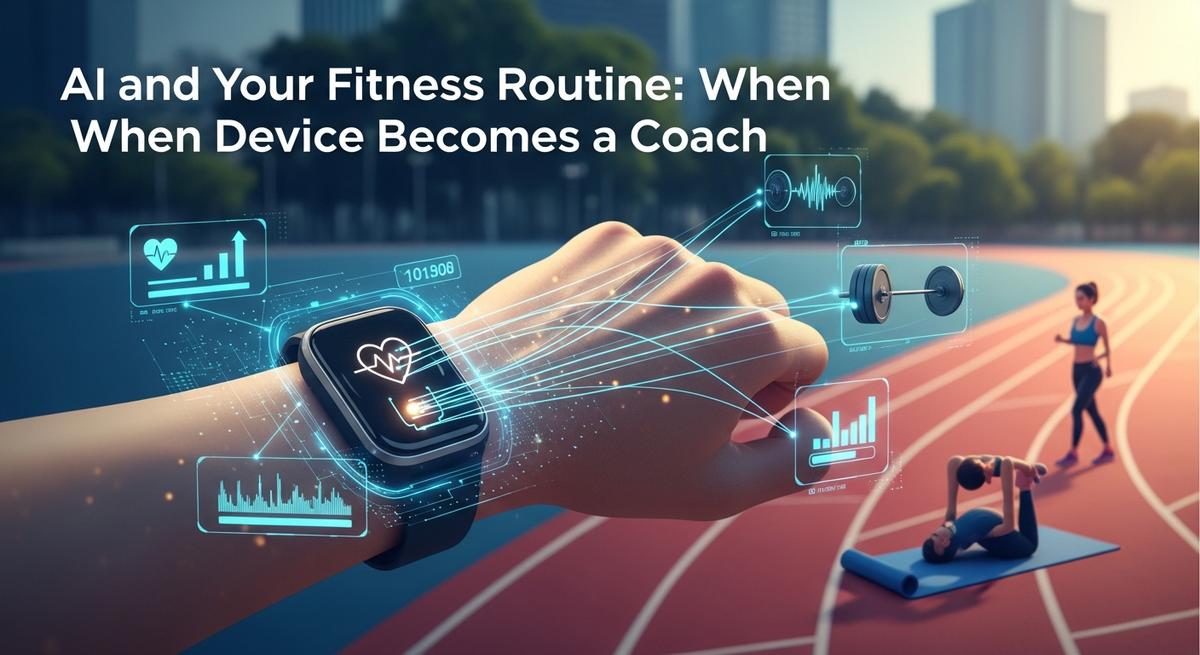
AI and Your Fitness Routine: When Your Device Becomes a Coach
- November 28, 2025
- ~ 1 min read
- 208 views
- Everyday AI , Lifestyle & AI , AI & Healthcare
Introduction/Overview
The Frustration with One-Size-Fits-All Fitness
Picture this: You've committed to getting fit, so you download a popular workout app and start following its generic routine. The program prescribes the same exercises, the same rep counts, and the same intensity for everyone—regardless of your fitness level, your goals, or how your body actually feels that day. After a few weeks, you're either bored, injured, or simply not seeing the results you expected. Sound familiar? You're not alone. Millions of fitness enthusiasts struggle with personalized coaching that actually adapts to their unique needs, which is precisely why the fitness industry is undergoing a dramatic transformation.
The Rise of AI-Powered Coaching
The fitness landscape is shifting dramatically as AI fitness technology enters the mainstream. What was once the exclusive domain of celebrity trainers and expensive personal coaching is now becoming accessible to anyone with a smartphone or smart device. Artificial intelligence is fundamentally changing how we approach fitness by enabling devices to learn about you—your strengths, weaknesses, preferences, and progress—and adapt in real-time.
Unlike traditional workout apps that deliver static routines, AI-powered coaching systems analyze your biometric data, monitor your form, track your performance trends, and adjust your workouts on the fly. These intelligent systems can detect when you're fatigued and modify intensity accordingly, correct your exercise form before injury occurs, and suggest variations based on your previous performance. Whether you're using a smart fitness device, a connected piece of gym equipment, or an AI coaching app on your phone, your device is increasingly becoming a knowledgeable partner in your fitness journey—one that knows you better than any generic program ever could.
What You'll Discover in This Article
Throughout this comprehensive guide, we'll explore how AI fitness technology is revolutionizing personal training and transforming the way people approach their health goals. You'll discover the cutting-edge devices and platforms that are redefining what it means to have a personal coach, understand the specific ways AI enhances workout effectiveness and injury prevention, and learn how these intelligent systems personalize everything from your exercise selection to your nutrition recommendations.
Whether you're a tech enthusiast curious about the latest fitness innovations, a personal trainer looking to enhance your coaching capabilities, or simply someone tired of generic workout plans, this article will equip you with the knowledge to leverage AI-powered coaching for tangible results. By the end, you'll understand not just how these technologies work, but how they can become an indispensable part of your fitness routine—delivering the personalized, adaptive coaching experience that was once only available to elite athletes and those with unlimited budgets.
Main Content
The Core Concept of AI-Powered Fitness Coaching
AI coaching in fitness refers to the use of advanced artificial intelligence technologies to act as a personal trainer, delivering highly customized workout plans and ongoing guidance. Unlike traditional static programs, AI-powered coaches continuously analyze a user's unique data—such as fitness level, goals, and performance metrics—to create and refine workout routines that evolve with the individual. This approach transforms devices and apps from mere trackers into dynamic, responsive coaches that help users optimize their fitness journeys with precision and efficiency.
Data and Algorithms: Personalizing Workouts
The foundation of personalized workouts lies in the intelligent processing of vast amounts of user data through sophisticated algorithms. AI systems collect and analyze inputs including heart rate, exercise history, recovery times, sleep quality, and even genetic factors to understand the user’s current state and potential. By leveraging machine learning and predictive modeling, these algorithms generate workout plans tailored to specific objectives—whether it's endurance, strength, weight loss, or flexibility.
As users progress, AI continuously updates these plans, adjusting intensity, volume, and exercise selection based on real-time feedback and historical trends. This ensures that workouts remain challenging yet achievable, avoiding plateaus and reducing injury risk through data-driven optimization.
Key Features: Real-Time Adjustments, Dynamic Goal Setting, and Behavioral Adaptation
One of the most powerful aspects of AI fitness coaching is its ability to make real-time adjustments. During a workout, AI monitors biometric signals—such as heart rate variability, pace, and exertion levels—to modify the session on the fly. For example, if fatigue is detected, the AI may reduce intensity or suggest active recovery, while if the user is performing well, it can increase difficulty to maximize gains.
Dynamic goal setting is another vital feature. AI systems do not rely on fixed targets; instead, they adapt goals based on ongoing performance and lifestyle changes, helping users stay motivated and aligned with realistic milestones. This adaptability fosters sustained engagement and long-term success.
Moreover, AI incorporates behavioral adaptation by learning user preferences, habits, and responsiveness to different training stimuli. This personalized behavioral insight allows the AI coach to tailor communication style, workout timing, and motivational cues to each individual, enhancing adherence and enjoyment.
Integration of AI with Wearables and Apps
The seamless integration of AI with modern wearables and fitness apps is what makes this technology truly transformative. Devices like smartwatches, fitness bands, and heart rate monitors continuously collect data during daily activities and workouts. This data feeds AI algorithms in real time, enabling continuous monitoring and instant feedback.
Fitness apps equipped with AI not only track progress but also provide insights, corrective suggestions, and personalized workout adjustments directly through the user interface. This integration creates a closed-loop system where the device acts as a constant coach, guiding users through every session and helping them make informed decisions about their training and recovery.
Ultimately, the combination of AI coaching with wearable technology empowers fitness enthusiasts and trainers alike to achieve more precise, efficient, and enjoyable fitness experiences.
Examples and Use Cases
The theoretical benefits of AI fitness coaching become tangible when you examine real-world applications across the fitness industry. From boutique studios to large-scale gym chains, organizations are leveraging AI technology to deliver personalized experiences that were previously available only to those who could afford dedicated personal trainers. These examples demonstrate how AI coaches are transforming the fitness landscape by making professional-grade guidance accessible to everyone.
AI-Powered Fitness Apps Revolutionizing Personal Training
Several innovative fitness apps have emerged as game-changers in the industry, each addressing specific gaps in the traditional fitness experience. Fitbod functions as a virtual personal trainer in your pocket, generating customized workout routines based on your fitness level, available equipment, and recovery needs[5]. The app intelligently tracks your progress and adjusts for muscle fatigue, ensuring variety in your workouts while helping you avoid plateaus and build muscle effectively.
Freeletics takes personalization further by creating what it calls a "Training Journey" tailored to your specific goals and lifestyle[5]. Users provide their AI Coach with insights about their fitness aspirations, and the system integrates workouts into their schedule, allowing them to choose when, where, and how they want to train. Similarly, Planfit offers customized workout routines powered by AI that adapt to individual goals and fitness levels, providing real-time feedback and progress updates while maintaining motivation throughout the fitness journey[5].
These applications represent a fundamental shift in how fitness guidance is delivered. Rather than requiring expensive one-on-one sessions with certified trainers, users can access sophisticated AI algorithms that continuously learn from their performance data and adjust recommendations accordingly.
Enterprise-Scale Success: Gym Chains and Fitness Centers
Large fitness organizations are achieving remarkable results by implementing AI at scale. FitLife Gym, a modern fitness center with over 2,000 members, transformed their member experience through SMS-iT's Agentic AI platform[1]. The system provides personalized workout plans, nutrition guidance, and motivational support, creating a virtual personal trainer experience for every member. Within four months, the gym achieved a 125% improvement in member retention and a 90% goal achievement rate, with members reporting fitness results 60% faster through optimized workout plans and nutrition guidance[1].
GymNation partnered with LlamaIndex to deploy multi-channel AI agents across web apps, WhatsApp, email, and phone for sales and member support[2]. Their AI-driven member onboarding process gathers information about new members' goals and builds customized fitness regimens and diet plans. The implementation tripled their human agents' productivity while enabling personalized fitness journeys at unprecedented scale[2].
Equinox, a premium fitness brand, implemented Agentforce to provide clients with a personal AI fitness concierge that tailors wellness recommendations for members and builds customized engagement strategies[8]. This approach allows the luxury brand to maintain its high-touch service standards while leveraging automation for routine interactions.
Comprehensive Health Integration: Nutrition, Recovery, and Wellness
Modern AI fitness platforms extend beyond workout planning to encompass holistic health management. These systems integrate nutrition planning and recovery protocols into a unified coaching experience. When you use an AI fitness app, the system doesn't just tell you what exercises to perform—it analyzes your workout data, recovery metrics, and nutritional intake to provide comprehensive guidance.
The AI fitness app developed by Akvelon demonstrates this integration in action[3]. The app uses computer vision technology to sync with any online workout video and track how well users mimic the coach's movements and form. By analyzing compliance and assessing workout quality based on statistics from professional trainers, the app provides real-time feedback on exercise performance while building a comprehensive profile of user progress[3].
Gymshark, the UK-based fitness apparel brand, is leveraging generative AI to incorporate intelligent assistants within its training app that record activities and provide real-time insights to help users achieve their fitness goals[4]. The company is also exploring AI-driven assistants for personalized product selection guidance, demonstrating how AI extends beyond workout coaching into the entire fitness ecosystem.
One individual's 46-day transformation illustrates the practical application of comprehensive AI coaching[6]. By allowing AI to manage training, diet, and recovery simultaneously, the user achieved significant results without hiring a personal trainer or purchasing an expensive gym membership. The AI system created a detailed questionnaire, developed a structured plan, and maintained accountability throughout the process, demonstrating that consistency combined with AI-guided optimization produces measurable outcomes.
"Our AI fitness coach provides every member with personalized guidance and motivation. It's like having a personal trainer available 24/7 for each of our 2,000+ members."
These examples collectively demonstrate that AI fitness coaching is no longer a futuristic concept—it's a present-day reality delivering quantifiable improvements in member retention, goal achievement, and overall satisfaction across diverse fitness environments.
Advanced Concepts and Deep Dive
Machine Learning and Data Analytics: The Core of AI Fitness Coaching
At the heart of AI-powered fitness coaching lies machine learning, a subset of artificial intelligence that enables devices to learn from vast amounts of user data and improve their recommendations over time. Fitness devices collect data points such as heart rate, movement patterns, workout intensity, and recovery metrics. Using sophisticated data analytics, these systems identify trends and correlations within this data to tailor workout plans that evolve with the user’s progress and goals.
Deep learning models, particularly those leveraging computer vision, analyze real-time video or sensor input to recognize exercise types, assess posture, and detect deviations that could lead to injury. This continuous feedback loop ensures that workouts are not only personalized but also dynamically adjusted to optimize performance and safety.
Predictive Analytics for Injury Prevention and Performance Optimization
One of the most transformative features in AI fitness coaching is the use of predictive analytics. By analyzing historical workout data and biomechanical signals, AI can forecast potential injury risks before they manifest. For example, subtle changes in movement efficiency or asymmetry detected through motion tracking may indicate fatigue or improper form, prompting the AI to recommend rest, corrective exercises, or modified routines.
Beyond injury prevention, predictive models estimate timelines for reaching fitness milestones based on current training load and recovery patterns. This foresight allows users to adjust intensity, volume, and rest strategically, maximizing gains while minimizing setbacks. Such advanced analytics elevate AI devices from passive trackers to proactive coaches that anticipate and mitigate risks.
The Role of Large Language Models in Conversational AI Coaching
Modern AI fitness coaches increasingly incorporate conversational AI powered by large language models (LLMs), such as GPT-based architectures. These models enable natural, context-aware interactions that mimic human coaching conversations. Users can ask questions, receive motivational support, and get detailed explanations about exercises or nutrition in an empathetic and personalized manner.
LLMs process user input to understand intent and sentiment, allowing the AI to tailor responses that feel engaging and supportive rather than mechanical. This conversational layer enhances user adherence by fostering a sense of connection and accountability, critical factors for long-term fitness success.
Multi-Modal Coaching: Integrating Audio, Video, and Live Feedback
Advanced AI coaching platforms leverage multi-modal inputs and outputs to create immersive and effective training experiences. Through a combination of:
- Audio cues: real-time voice instructions and motivational prompts
- Video analysis: live posture correction using computer vision and motion tracking
- Haptic feedback: wearable vibrations signaling form adjustments or rest periods
these systems deliver comprehensive guidance that adapts instantly to user performance. This integration ensures that coaching is not only personalized but also accessible in various environments, whether at home, the gym, or outdoors.
However, implementing multi-modal coaching poses challenges such as synchronizing data streams, minimizing latency, and ensuring the AI’s feedback is accurate and contextually relevant. Continuous advancements in sensor technology and AI algorithms are addressing these hurdles, making multi-modal coaching increasingly reliable and effective.
Data Privacy and Security: Safeguarding Personal Fitness Information
As AI fitness devices collect and process sensitive health and biometric data, data privacy and security become paramount concerns. Users must trust that their personal information is protected from unauthorized access and misuse. Leading AI fitness platforms employ end-to-end encryption, anonymization techniques, and strict data governance policies to safeguard user data.
Moreover, transparency about data collection practices and giving users control over their information are critical for ethical AI deployment. Fitness enthusiasts and professionals should prioritize devices and apps that comply with regulatory standards such as GDPR or HIPAA, ensuring that privacy is not sacrificed for convenience or innovation.
Implementation Guide and Best Practices
Integrating AI into your fitness routine can revolutionize how you train, recover, and achieve your goals. However, to get the most out of your AI fitness app or device, it’s essential to approach setup and usage with a clear strategy. This section provides a step-by-step guide, actionable tips, and best practices to help you maximize the benefits while avoiding common pitfalls.
Choosing the Right AI Fitness App or Device
Start by identifying your primary fitness goals—whether it’s strength training, weight loss, endurance, or general wellness. Research apps and devices that specialize in your area of interest. For example, Fitbod excels in strength training with adaptive programming, while JuggernautAI is ideal for powerlifters seeking advanced periodization. Consider the following factors:
- Compatibility with your equipment and workout environment
- Level of customization offered (e.g., workout plans, nutrition, recovery tracking)
- Availability of free trials or demo versions
- User reviews and expert recommendations
Test a few options to see which feels most intuitive and aligns with your training style.
Setting Up and Customizing AI Coaching Features
Once you’ve chosen your app or device, take time to set it up properly:
- Input accurate personal data (age, weight, fitness level, goals).
- Specify your available equipment and preferred workout times.
- Enable notifications for reminders, progress updates, and form feedback.
- Customize workout intensity, recovery preferences, and nutrition targets as needed.
Most apps allow you to adjust settings as your fitness evolves, so revisit these periodically for optimal results.
Best Practices for Maximizing AI Benefits
To truly leverage AI in your fitness journey:
- Consistently log your workouts, nutrition, and recovery metrics.
- Use AI-generated feedback to refine your technique and avoid plateaus.
- Combine AI insights with your own intuition—listen to your body and adjust as needed.
- Stay engaged with the app’s community or support features for motivation and accountability.
Remember, AI is a tool, not a replacement for professional guidance. Consult a trainer or healthcare provider if you have specific medical concerns or advanced goals.
Common Pitfalls to Avoid
While AI can be transformative, be mindful of these common mistakes:
- Over-reliance on technology without personal judgment or professional input.
- Ignoring signs of overtraining or injury because the app suggests pushing harder.
- Failing to update your profile as your fitness level or goals change.
- Skipping manual tracking or journaling, which can provide valuable context beyond AI data.
By following these best practices and staying aware of potential pitfalls, you’ll ensure your AI fitness app becomes a reliable, effective coach in your daily routine.
Comparison and Analysis
AI vs Human Coaches: Strengths and Weaknesses
When it comes to personal fitness, both AI coaches and human trainers offer unique advantages. AI vs human coaches is a topic that continues to evolve as technology advances. AI-powered fitness apps excel in data-driven personalization, real-time adjustments, and constant availability. These platforms track every workout, monitor recovery, and adapt routines based on your progress, effort, and feedback. This level of consistency and automated insight is unmatched by even the most dedicated human trainer.
On the other hand, human trainers bring emotional intelligence, motivation, and hands-on guidance. They can read subtle cues like body language and energy levels, offering immediate corrections and encouragement. For those new to fitness or recovering from injury, the personalized attention and accountability provided by a human coach are invaluable. While AI can send reminders and track habits, it cannot replicate the empathy and social interaction that often drive long-term commitment.
Limitations and Cost-Effectiveness of AI Solutions
Despite their many benefits, AI coaches do have limitations. They rely on pre-programmed algorithms and may struggle with complex movements or nuanced feedback. For example, AI can analyze posture using computer vision, but it cannot physically correct form or provide alternative exercises for those with specific injuries or preferences. Additionally, the lack of human interaction can make workouts feel less engaging for some users, potentially reducing motivation over time.
One of the biggest advantages of AI fitness coaching is its cost-effectiveness. Traditional personal training can be expensive, with sessions often costing hundreds or even thousands of dollars per month. AI solutions, by contrast, are typically much more affordable and accessible, making personalized fitness guidance available to a wider audience. This democratization of fitness technology allows more people to benefit from tailored routines and progress tracking, regardless of budget or location.
Hybrid Models: The Best of Both Worlds
Recognizing the strengths and weaknesses of both approaches, many fitness platforms are now exploring hybrid models that combine AI and human expertise. These models leverage AI for data analysis, habit tracking, and automated adjustments, while incorporating human coaches for motivation, accountability, and complex guidance. For example, some apps offer AI-powered workout recommendations alongside live or on-demand sessions with certified trainers. This blend ensures users receive the efficiency and scalability of technology, along with the empathy and adaptability of human support.
Hybrid models represent the future of fitness coaching, where technology and human connection work hand in hand to enhance personal wellness.
Whether you choose an AI coach, a human trainer, or a combination of both, the key is finding a solution that aligns with your goals, preferences, and lifestyle. By understanding the trade-offs and opportunities of each approach, you can make informed decisions that maximize your fitness journey.
Conclusion and Key Takeaways
As we’ve explored throughout this article, the integration of AI coaching into personal fitness routines is no longer a futuristic concept—it’s a reality that’s reshaping how we approach health, wellness, and physical performance. From dynamic workout plans to real-time feedback and adaptive nutrition guidance, AI-powered devices are becoming indispensable tools for anyone serious about their fitness journey.
Recap of AI’s Impact on Fitness
AI has transformed the way we design, track, and optimize our fitness routines. By analyzing individual data such as goals, progress, lifestyle, and even physiological responses, AI delivers a level of personalization that was previously impossible. Whether you’re a beginner or an experienced athlete, AI tools can adapt to your unique needs, helping you stay motivated, avoid injury, and achieve better results. The ability to receive instant feedback, adjust plans on the fly, and access expert guidance anytime, anywhere, makes AI a game-changer for both individuals and fitness professionals.
Why Embrace AI Coaching?
The benefits of AI in fitness are clear: increased adherence, improved safety, and more efficient progress tracking. Studies show that users of AI-guided training report higher satisfaction and better performance, with some platforms delivering up to a 221% return on investment for trainers. AI not only enhances the quality of workouts but also makes fitness more accessible and affordable for everyone. As the technology continues to evolve, the potential for even greater personalization and holistic wellness support grows.
Next Steps: Try AI and Share Your Experience
If you haven’t yet explored AI-powered fitness tools, now is the perfect time to start. Whether you’re looking to optimize your own routine or enhance your coaching services, there are countless platforms and apps designed to help you get the most out of your workouts. Experiment with different AI coaching solutions, track your progress, and see how they can elevate your fitness journey. Don’t forget to share your experiences with others—your insights could inspire someone else to take the leap into smarter, more effective fitness.
AI coaching is not just about technology; it’s about empowering you to reach your goals with greater confidence and support.
By embracing AI in your fitness routine, you’re not just keeping up with the times—you’re setting yourself up for long-term success. The future of fitness is here, and it’s smarter, more personalized, and more accessible than ever before.
Comments (0)
Please login or register to leave a comment.
No comments yet. Be the first to comment!