
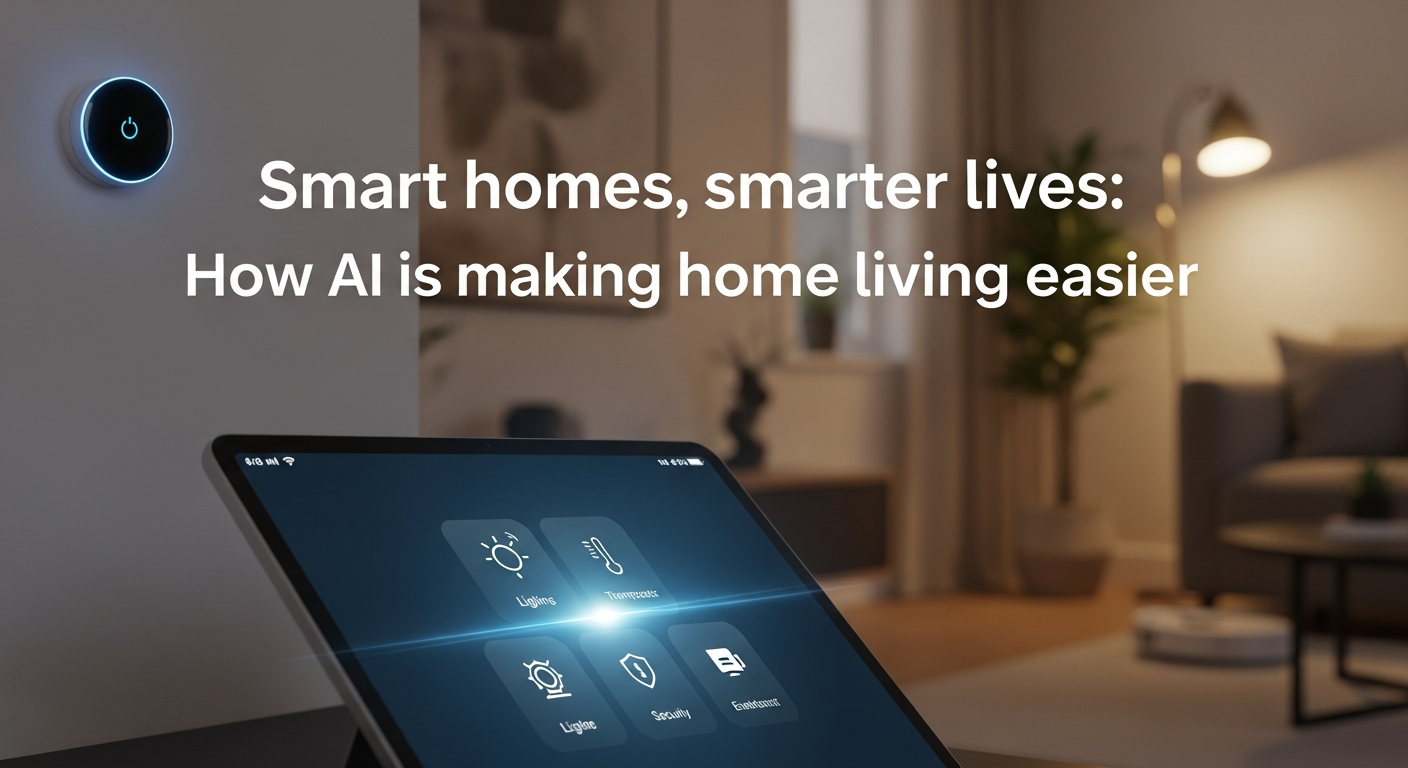
Smart homes, smarter lives: How AI is making home living easier
- November 20, 2025
- ~ 1 min read
- 143 views
- Lifestyle & AI , Smart Cities
Introduction to Smart Homes and AI
Imagine waking up to a warm and cozy home, where the lights gradually brighten to simulate a sunrise, and your favorite morning playlist starts playing softly in the background. This is not a scene from a futuristic movie, but a reality for many homeowners who have embraced smart homes and the power of Artificial Intelligence (AI). For instance, Sarah, a busy working mom, can control her home's temperature, lighting, and security systems remotely using her smartphone, thanks to home automation and the Internet of Things (IoT). This has significantly improved her daily life, giving her more time to focus on what matters most.
What are Smart Homes?
A smart home is a residence that incorporates advanced technology to provide its occupants with a more convenient, comfortable, and secure living experience. This is achieved through the integration of various devices and systems, such as thermostats, lights, security cameras, and entertainment systems, which can be controlled and monitored remotely using a smartphone or voice commands. The increasing popularity of smart homes can be attributed to the growing demand for home automation and the Internet of Things (IoT), which enable seamless communication between devices and systems.
The Role of AI in Smart Homes
Artificial Intelligence (AI) plays a vital role in enhancing the smart home experience. By analyzing data from various sensors and devices, AI can learn the occupants' preferences and habits, and make adjustments accordingly. For example, an AI-powered thermostat can learn a family's schedule and temperature preferences, and adjust the temperature to optimize energy efficiency and comfort. Machine learning algorithms enable AI to improve its performance over time, making it an essential component of smart homes. The integration of AI with IoT devices and home automation systems has the potential to revolutionize the way we live and interact with our homes.
What to Expect from this Article
In this article, we will delve into the world of smart homes and explore the practical applications and benefits of AI in enhancing the living experience. We will discuss how AI can be used to improve energy efficiency, home security, and entertainment systems, among other aspects of home living. You can expect to learn about the latest trends and innovations in smart home technology, as well as tips and advice on how to integrate AI into your own home. Whether you are a tech enthusiast, a homeowner looking to upgrade your living space, or simply someone interested in learning more about the future of home living, this article aims to provide you with a comprehensive overview of the exciting possibilities that smart homes and AI have to offer.
Some of the key benefits and applications of AI in smart homes that we will cover include:
- Improved energy efficiency and cost savings
- Enhanced home security and safety features
- Personalized entertainment and comfort systems
- Increased convenience and control through voice commands and smartphone apps
The future of home living is not just about technology; it's about creating a more comfortable, convenient, and enjoyable living experience. With smart homes and AI, the possibilities are endless, and we are excited to explore them with you.
How AI Enhances Smart Home Living
The integration of Artificial Intelligence (AI) in smart homes has revolutionized the way we live, making our lives easier, more convenient, and enjoyable. At the heart of this revolution is the ability of AI to learn and adapt to the habits and preferences of homeowners. This is achieved through machine learning algorithms that analyze data from various sources, such as sensors, devices, and user inputs, to identify patterns and make predictions. As a result, AI-powered smart homes can automatically adjust lighting, temperature, and entertainment systems to create a personalized environment that enhances the overall living experience.
AI-Powered Home Automation and Control Systems
One of the primary ways AI enhances smart home living is through home automation and control systems. These systems enable homeowners to control and monitor their smart devices remotely, using voice commands, mobile apps, or web interfaces. With AI-powered automation, homeowners can create customized scenes and routines that adjust multiple devices simultaneously, such as turning off all lights and locking doors when leaving the house. Additionally, AI-driven predictive maintenance can detect potential issues before they occur, ensuring that smart devices operate efficiently and effectively. For instance, an AI-powered thermostat can learn a homeowner's schedule and preferences to optimize heating and cooling, reducing energy consumption and saving costs.
Voice control is another significant aspect of AI-powered home automation, allowing homeowners to interact with their smart devices using natural language. Virtual assistants, such as Amazon Alexa or Google Assistant, can understand voice commands and execute actions, making it easy to control lighting, play music, or adjust temperature settings. This hands-free control enables homeowners to manage their smart devices while performing other tasks, enhancing the overall convenience and flexibility of smart home living.
Examples of AI-Driven Smart Home Devices and Their Functionalities
There are numerous examples of AI-driven smart home devices that demonstrate the power of AI-powered technology in enhancing smart home living. Some of these devices include:
- Smart thermostats that learn and adapt to a homeowner's schedule and preferences to optimize heating and cooling
- Security cameras that use AI-powered object detection to identify potential threats and alert homeowners
- Smart speakers that use natural language processing to understand voice commands and execute actions
- Smart lighting systems that adjust brightness and color based on the time of day, occupancy, and ambient light
The future of smart home living is closely tied to the development and integration of AI-powered technologies. As AI continues to evolve and improve, we can expect to see even more innovative applications of machine learning and AI-powered devices in smart homes, making our lives easier, more convenient, and enjoyable.
In conclusion, the integration of AI in smart homes has transformed the way we live, making our lives easier, more convenient, and enjoyable. By learning and adapting to homeowner preferences, AI-powered home automation and control systems, and AI-driven smart devices, AI has become an essential component of smart home living. As we continue to explore the possibilities of AI in smart homes, we can expect to see even more innovative applications of AI-powered technologies that enhance our living experiences.
Real-World Applications and Examples
The integration of AI applications in smart homes has led to numerous innovative solutions that enhance the living experience. To understand the practical implications of AI in smart homes, it's essential to explore case studies where AI has significantly improved home living. One notable example is the smart home of John, a homeowner in California, who has successfully integrated AI-powered smart home features such as security systems and energy management. According to John, "AI has revolutionized the way I live in my home. With AI-powered security systems, I can monitor my home remotely and receive alerts in case of any suspicious activity."
Case Studies of Smart Homes
Several case studies have demonstrated the effectiveness of AI in smart homes. For instance, a study by the National Association of Home Builders found that homes equipped with AI-powered energy management systems can reduce energy consumption by up to 30%. Another study by the Consumer Technology Association discovered that smart homes with AI-powered security systems can reduce the risk of break-ins by up to 50%. These studies highlight the potential of AI to transform the way we live in our homes, making them more energy-efficient, secure, and convenient.
A list of benefits of AI-powered smart homes includes:
- Improved energy efficiency through AI applications such as smart thermostats and energy management systems
- Enhanced security through smart home features such as AI-powered security cameras and doorbells
- Increased convenience through AI-powered voice assistants and home automation systems
AI-Powered Smart Home Features
AI-powered smart home features are becoming increasingly popular among homeowners. Some examples of these features include:
- Security systems that use AI-powered cameras and sensors to detect and prevent intrusions
- Energy management systems that use AI to optimize energy consumption and reduce waste
- Home automation systems that use AI-powered voice assistants to control lighting, temperature, and entertainment systems
As industry expert and CEO of a leading smart home technology company, Sarah, notes, "The future of smart homes is all about AI applications. With AI, we can create homes that are not only smart but also intelligent and intuitive."
Future Potential of AI in Smart Home Development
The future potential of AI in smart home development is vast and exciting. As AI technology continues to evolve, we can expect to see even more innovative smart home features that make our lives easier, more convenient, and more enjoyable. Some potential applications of AI in smart home development include:
For example, AI-powered smart home features could be used to create personalized living spaces that adapt to our needs and preferences. AI could also be used to improve home maintenance and repair, reducing the need for human intervention and minimizing the risk of accidents.
According to a report by the National Association of Home Builders, the use of AI in smart home development is expected to increase significantly in the next few years, with case studies and examples of successful AI-powered smart homes becoming more prevalent. As the technology continues to advance, we can expect to see even more innovative applications of AI applications in smart homes, making our lives easier, more convenient, and more enjoyable.
Advanced AI Concepts in Smart Homes
The integration of Artificial Intelligence (AI) in smart homes has revolutionized the way we live, making our lives easier and more convenient. At the heart of this revolution are advanced AI concepts such as deep learning and Natural Language Processing (NLP). These technologies enable smart homes to learn from their inhabitants' behavior, adapt to their preferences, and respond to their voice commands. In this section, we will delve into the technical details of these concepts and explore their applications in smart home contexts.
Deep Learning and NLP in Smart Homes
Deep learning is a subset of machine learning that involves the use of neural networks to analyze data. In smart homes, deep learning algorithms can be used to analyze data from various sensors and devices, such as thermostats, lights, and security cameras. This enables smart homes to learn from their inhabitants' behavior and adjust their settings accordingly. For example, a deep learning algorithm can learn a homeowner's daily routine and adjust the lighting and temperature settings to their preferences. Moreover, deep learning can also be used to detect anomalies in the home's energy consumption patterns, allowing homeowners to identify areas of inefficiency and take corrective action.
NLP, on the other hand, enables smart homes to understand and respond to voice commands. With NLP, homeowners can control their smart devices using voice assistants such as Alexa or Google Home. NLP can also be used to analyze the homeowner's speech patterns and adjust the home's settings accordingly. For example, if a homeowner says "I'm going to bed," the smart home can adjust the lighting, temperature, and entertainment systems to create a sleep-conducive environment.
Integration with Emerging Technologies
The integration of AI with other emerging technologies such as IoT and 5G has the potential to revolutionize the smart home industry. IoT enables the connection of various devices and sensors, allowing smart homes to collect and analyze vast amounts of data. 5G, on the other hand, provides the high-speed connectivity required to process and transmit this data in real-time. The combination of AI, IoT, and 5G enables smart homes to respond quickly and efficiently to their inhabitants' needs. For instance, a smart home can use IoT sensors to detect a leak in the plumbing system and use 5G connectivity to alert the homeowner and the emergency services in real-time.
Challenges and Limitations
Despite the many benefits of AI in smart homes, there are several challenges and limitations to its implementation. One of the major challenges is the AI challenges associated with data privacy and security. Smart homes collect vast amounts of personal data, which must be protected from cyber threats and data breaches. Moreover, the integration of AI with other technologies such as IoT and 5G also increases the risk of cyber attacks and data breaches. To address these challenges, smart home manufacturers must prioritize data security and implement robust security measures to protect homeowners' personal data. Some of the measures that can be taken include:
- Implementing robust encryption algorithms to protect data transmission and storage
- Conducting regular security audits and penetration testing to identify vulnerabilities
- Providing homeowners with clear guidelines on data privacy and security best practices
The future of smart homes is exciting and promising, with advanced AI concepts such as deep learning and NLP enabling homes to learn from their inhabitants and respond to their needs. However, it is crucial to address the challenges and limitations associated with AI implementation, including data privacy and security concerns.
Implementing AI in Your Smart Home
As we delve into the world of smart homes, it's essential to understand how to effectively implement AI into our daily lives. With the numerous benefits of AI-powered smart home devices, from enhanced convenience to improved energy efficiency, the process of setting up these devices can seem daunting. However, with a simple implementation guide, you can start enjoying the perks of a smarter home in no time.
Setting Up Basic AI-Powered Smart Home Devices
To get started, follow these step-by-step instructions for setting up basic AI-powered smart home devices:
- Purchase AI-compatible devices, such as smart speakers, thermostats, or security cameras, that fit your needs and budget.
- Download and install the corresponding mobile app for each device, which will serve as the central hub for controlling and monitoring your smart home.
- Connect each device to your home network, following the manufacturer's instructions for a seamless smart home setup.
- Configure the devices to work together, enabling features like voice control, automated routines, and remote access.
- Explore the various settings and options available for each device, customizing them to suit your preferences and lifestyle.
By following these simple steps, you can create a solid foundation for your AI-powered smart home, paving the way for a more convenient, efficient, and enjoyable living experience.
Choosing the Right AI-Compatible Smart Home Systems
When selecting AI-compatible smart home systems, it's crucial to consider several factors to ensure a secure and seamless experience. Here are some valuable tips to keep in mind:
- Look for devices that are compatible with your existing smart home ecosystem, ensuring a cohesive and integrated system.
- Check for AI security features, such as encryption, two-factor authentication, and regular software updates, to protect your personal data and prevent unauthorized access.
- Consider the device's learning capabilities, allowing it to adapt to your habits and preferences over time, and its ability to integrate with other smart devices.
- Read reviews and consult with experts to determine the best devices for your specific needs and budget.
By being mindful of these factors, you can make informed decisions when choosing AI-compatible smart home systems, setting yourself up for a successful and enjoyable smart home experience.
Best Practices for Securing and Maintaining AI-Driven Smart Home Technology
To ensure the long-term security and efficiency of your AI-powered smart home, it's essential to follow best practices for maintenance and upkeep. Here are some key tips to keep in mind:
Regularly updating your devices' software, monitoring system activity, and using strong passwords can significantly reduce the risk of security breaches and maintain optimal performance.
Additionally, consider the following:
- Regularly review and update your device settings to ensure they remain aligned with your changing needs and preferences.
- Use best practices for password management, such as using unique and complex passwords, and enabling two-factor authentication whenever possible.
- Stay informed about the latest developments and advancements in AI-powered smart home technology, allowing you to take advantage of new features and improvements as they become available.
By prioritizing the security and maintenance of your AI-driven smart home technology, you can enjoy a seamless and enjoyable living experience, while also protecting your personal data and preventing potential issues.
Comparing AI Smart Home Solutions
As the smart home market continues to grow, homeowners are faced with a plethora of AI solutions comparison options. From DIY solutions to fully integrated systems, each approach has its unique features, advantages, and disadvantages. In this section, we will delve into the pros and cons of different AI integration approaches, analyze their cost-effectiveness, and discuss the value proposition of AI in smart homes.
Popular AI-Powered Smart Home Systems and Devices
Some of the most popular AI-powered smart home systems and devices include Amazon Alexa, Google Home, and Apple HomeKit. These systems offer a range of features, such as voice control, automated lighting and temperature control, and home security monitoring. However, each system has its own set of pros and cons. For example, Amazon Alexa offers a wide range of compatible devices, but its voice control can be limited at times. Google Home, on the other hand, offers more advanced voice control features, but its compatibility with certain devices can be limited.
The following table provides a comparison of these popular AI-powered smart home systems and devices:
| System/Device | Features | Pros | Cons |
|---|---|---|---|
| Amazon Alexa | Voice control, automated lighting and temperature control, home security monitoring | Wide range of compatible devices, easy to use | Limited voice control, dependent on internet connection |
| Google Home | Voice control, automated lighting and temperature control, home security monitoring | Advanced voice control features, integration with Google services | Limited compatibility with certain devices, dependent on internet connection |
| Apple HomeKit | Voice control, automated lighting and temperature control, home security monitoring | Secure and private, easy to use | Limited compatibility with non-Apple devices, dependent on internet connection |
DIY Solutions vs. Fully Integrated Systems
When it comes to AI integration, homeowners have two main options: DIY solutions and fully integrated systems. DIY solutions offer a cost-effective and flexible approach to AI integration, allowing homeowners to choose and install their own devices. However, they can be time-consuming to set up and may require technical expertise. Fully integrated systems, on the other hand, offer a convenient and seamless experience, but can be more expensive and limited in terms of customization options.
The following list highlights the pros and cons of DIY solutions and fully integrated systems:
- DIY Solutions:
- Cost-effective
- Flexible and customizable
- Time-consuming to set up
- May require technical expertise
- Fully Integrated Systems:
- Convenient and seamless experience
- Easy to use
- More expensive
- Limited customization options
Cost-Effectiveness and Value Proposition
When it comes to cost-effectiveness, AI-powered smart home systems and devices can offer significant savings in the long run. For example, automated lighting and temperature control can help reduce energy consumption, while home security monitoring can help prevent costly damages. However, the initial investment in AI-powered smart home systems and devices can be significant, and homeowners must carefully consider the value proposition of these solutions.
The key to maximizing the cost-effectiveness of AI-powered smart home systems and devices is to carefully evaluate their features, pros, and cons, and choose the solution that best meets your needs and budget.
In conclusion, comparing AI smart home solutions is crucial to making an informed decision. By considering the pros and cons of different AI integration approaches, analyzing their cost-effectiveness, and discussing the value proposition of AI in smart homes, homeowners can create a smarter, more convenient, and more secure living space. Whether you choose a DIY solution or a fully integrated system, the benefits of AI-powered smart home systems and devices are undeniable, and can help you live a smarter and more convenient life.
Conclusion and Future Outlook
In conclusion, the integration of AI in smart homes has revolutionized the way we live, making our lives easier, more convenient, and more enjoyable. Throughout this article, we have explored the various ways in which AI is being used in smart homes, from voice assistants and home automation to security systems and energy management. We have seen how AI can learn our habits and preferences, anticipating our needs and making adjustments accordingly. We have also discussed the benefits of AI in smart homes, including increased comfort, energy efficiency, and enhanced security.
Reflection on the Current State and Future Potential
As we look to the future, it is clear that the future outlook for AI in smart homes is incredibly promising. With the rapid evolution of AI technology, we can expect to see even more innovative applications of AI in the home. From predictive maintenance to personalized entertainment, the possibilities are endless. As AI continues to evolve, we can expect to see smart home adoption become more widespread, with more and more homeowners embracing the benefits of AI-powered smart home technology.
Call to Action
So, what's next? If you're interested in exploring the world of AI in smart homes, we encourage you to take the first step. Start by researching the different types of AI-powered smart home devices available, and consider how they can be integrated into your own home. You can also explore online resources and tutorials to learn more about AI and its applications in the home. Whether you're a tech enthusiast or just looking to make your life easier, AI in smart homes is definitely worth exploring. So, why not start your journey today and discover the many benefits of AI in smart homes for yourself? As the AI evolution continues, one thing is certain - the future of smart home living has never looked brighter.
By embracing AI in smart homes, we can create a more comfortable, convenient, and connected living experience. So, don't wait - take the first step towards a smarter, more intelligent home today. The future outlook for AI in smart homes is exciting, and we're eager to see what the future holds. With AI by our side, the possibilities are endless, and the potential for smart home adoption has never been greater. Join the AI revolution and start enjoying the benefits of a smarter home today.


Comments (0)
Please login or register to leave a comment.
No comments yet. Be the first to comment!