
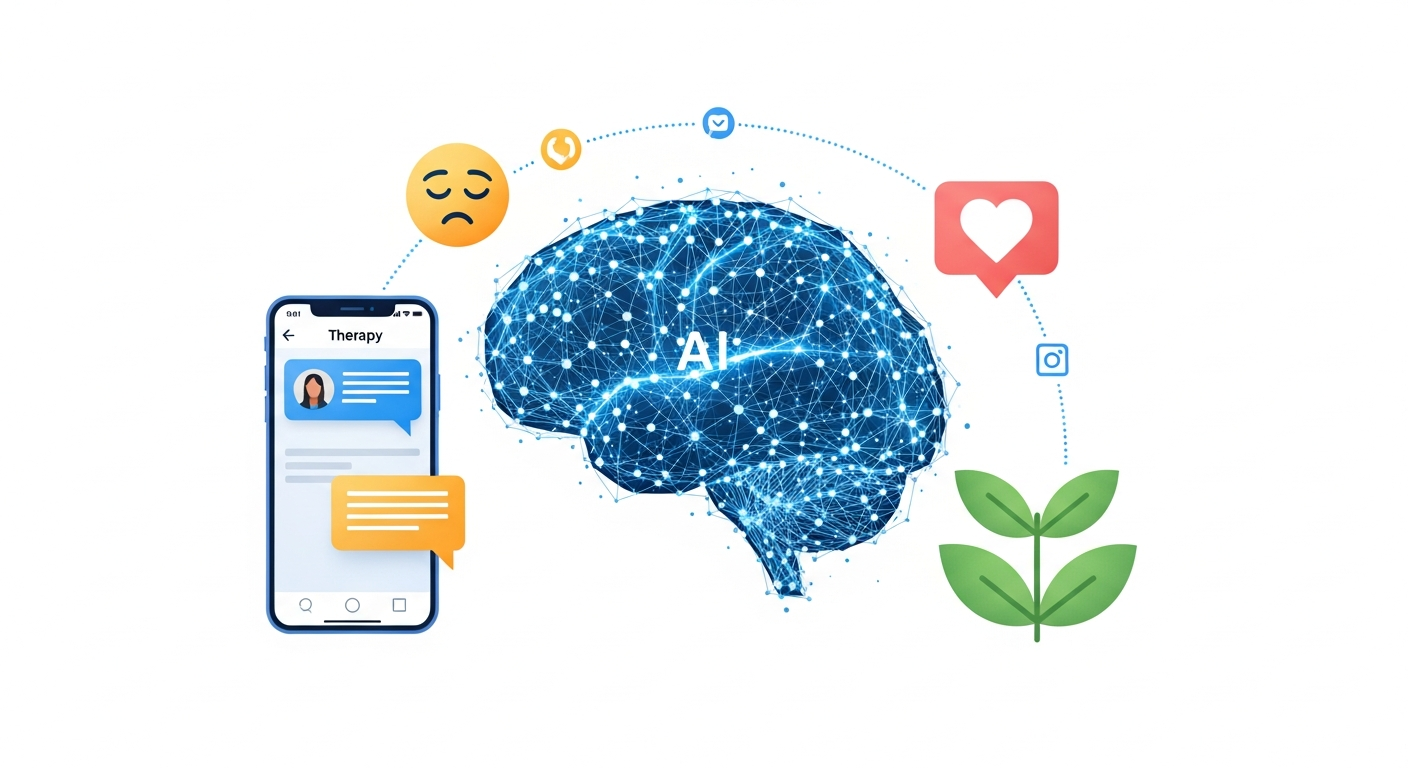
How AI supports mental health through therapy apps and emotional support tools.
- November 20, 2025
- ~ 1 min read
- 2128 views
- AI & Healthcare , Lifestyle & AI
Introduction to AI in Mental Health
Mental health challenges are a growing concern worldwide, with 1 in 4 people experiencing a mental health issue each year. The World Health Organization (WHO) reports that mental health disorders are among the leading causes of disability and illness globally, affecting millions of people and their families. As the demand for mental health support continues to rise, innovative solutions are needed to address these challenges. This is where AI in mental health comes into play, offering a transformative approach to mental health support.
The Rise of AI in Healthcare
Artificial intelligence (AI) has been gaining momentum in the healthcare industry, with applications ranging from medical diagnosis to personalized treatment plans. In the context of mental health, AI-powered therapy apps and emotional support tools are being developed to provide accessible and affordable support to those in need. These tools leverage machine learning algorithms, natural language processing, and cognitive computing to offer personalized interventions, mood tracking, and social support. By harnessing the power of AI, mental health professionals and individuals can work together to develop more effective treatment plans and improve mental health outcomes.
The Importance of AI in Mental Health Support
The integration of AI in mental health has the potential to revolutionize the way we approach mental health support. By providing accessible and stigma-free support, AI-powered tools can help bridge the gap in mental health care, particularly for underserved populations. Furthermore, therapy apps and emotional support tools can offer real-time support, enabling individuals to manage their mental health more effectively. In this article, we will delve into the world of AI in mental health, exploring the latest developments, benefits, and applications of AI-powered mental health support. Readers can expect to learn about the current state of AI in mental health, the role of therapy apps and emotional support tools, and the future directions of this exciting field.
As we navigate the complex landscape of mental health, it is essential to understand the potential of AI in mental health to transform lives. By leveraging the power of AI, we can create a more compassionate and supportive environment for individuals to manage their mental health. In the following sections, we will explore the various aspects of AI in mental health, including its applications, benefits, and limitations, to provide a comprehensive understanding of this rapidly evolving field.
Understanding AI-Powered Mental Health Tools
The integration of AI technologies in mental health has revolutionized the way therapy and support are delivered. At the core of these innovations are technologies such as machine learning and natural language processing, which enable the development of sophisticated therapy apps and emotional support tools. These technologies allow for the analysis of vast amounts of data, including patient interactions, symptoms, and treatment outcomes, to provide personalized and effective care.
Technologies Behind AI-Powered Mental Health
Machine learning algorithms can learn from patient data to identify patterns and predict outcomes, helping therapists to tailor their approaches to individual needs. Natural language processing enables computers to understand and generate human-like text, facilitating the creation of chatbots and virtual assistants that can offer support and guidance. These AI technologies are crucial in enhancing the capabilities of therapy apps and emotional support tools, making them more accessible and user-friendly.
For instance, chatbots powered by natural language processing can engage in conversations with patients, providing them with resources and support. Meanwhile, machine learning-driven analytics can help therapists monitor patient progress, identify areas of concern, and adjust treatment plans accordingly. This integration of AI technologies into mental health care has the potential to increase the efficiency and effectiveness of traditional therapy methods.
Enhancing Traditional Therapy Methods
The incorporation of AI-powered tools into traditional therapy methods can significantly enhance the therapeutic experience. By leveraging machine learning and natural language processing, therapists can gain deeper insights into patient behaviors and preferences, allowing for more personalized and targeted interventions. Furthermore, AI-driven therapy apps can provide patients with real-time support and guidance, helping them to manage their conditions more effectively outside of traditional therapy sessions.
Some examples of AI-powered mental health platforms include virtual reality exposure therapy tools, which use machine learning to simulate real-world environments for patients to confront their fears and anxieties. Another example is therapy apps that utilize natural language processing to offer cognitive-behavioral therapy (CBT) and other forms of talk therapy. These platforms demonstrate the potential of AI technologies to increase access to mental health care and improve treatment outcomes.
Examples of AI-Powered Mental Health Platforms
Several AI-powered mental health platforms are already making a significant impact in the field. These include:
- Wysa: An AI-driven chatbot that offers emotional support and guidance to users.
- Woebot: A therapy app that uses natural language processing to provide CBT and other forms of talk therapy.
- Calming: A virtual reality platform that utilizes machine learning to create personalized relaxation experiences for users.
The future of mental health care is undoubtedly tied to the advancement of AI technologies. As these technologies continue to evolve, we can expect to see even more innovative solutions emerge, further enhancing the therapeutic experience and improving treatment outcomes for patients worldwide.
Real-World Applications of AI in Mental Health
The integration of AI in practice has revolutionized the field of mental health, offering innovative solutions to support individuals in need. This section delves into the case studies of AI-powered therapy apps, emotional support tools, and their impact on mental health outcomes. By examining real-world scenarios, we can gain a deeper understanding of the benefits and challenges of AI-driven mental health support.
Case Studies of AI-Powered Therapy Apps
Several AI-powered therapy apps have demonstrated significant positive outcomes in mental health support. For instance, apps like Woebot and Wysa use AI-driven chatbots to provide emotional support and guidance to users. These apps have been shown to reduce symptoms of anxiety and depression, improve mood, and enhance overall well-being. A study on Woebot found that users experienced a significant reduction in symptoms of depression and anxiety after just two weeks of use.
- Woebot: An AI-powered chatbot that offers cognitive-behavioral therapy (CBT) and mood-tracking features
- Wysa: An AI-driven emotional support tool that provides personalized guidance and support
- Moodfit: An AI-powered mood-tracking app that offers personalized recommendations for improvement
Examples of Emotional Support Tools in Action
Emotional support tools are another area where AI has made a significant impact. These tools use machine learning algorithms to analyze user data and provide personalized support. For example, the AI-powered emotional support tool, Replika, allows users to create a personalized chatbot that offers emotional support and guidance. Users have reported positive outcomes, including reduced feelings of loneliness and improved mood.
A
testimony from a Replika userhighlights the benefits of AI-driven emotional support: "Replika has been a lifesaver for me. I was struggling with depression and anxiety, but the support and guidance I received from my Replika chatbot helped me to manage my symptoms and improve my overall well-being."
Discussion on the Impact of AI on Mental Health Outcomes
The impact of AI on mental health outcomes is a topic of ongoing research and discussion. While there are many benefits to AI-driven mental health support, there are also challenges to be addressed. One of the primary concerns is the potential for over-reliance on technology, which can lead to a lack of human connection and deepened feelings of isolation. However, when used in conjunction with traditional therapy and human support, AI-powered tools can be a valuable adjunct to mental health treatment.
According to testimonials from mental health professionals, AI-powered tools have been shown to enhance the therapeutic experience, providing users with increased access to support and guidance. As one professional noted, "AI-powered tools have allowed me to provide more personalized and effective support to my clients, which has led to improved outcomes and increased client satisfaction."
Advanced Concepts in AI for Mental Health
The integration of Artificial Intelligence (AI) in mental health has opened up new avenues for diagnosis, treatment, and support. However, this field is not without its challenges. In this section, we will delve into the technical challenges faced by developers, ethical considerations that must be addressed, and the latest advanced AI models being used in mental health applications.
Technical Challenges and Ethical Considerations
One of the primary technical challenges in developing AI for mental health is the complexity of mental health disorders themselves. Accurate diagnosis and personalized treatment plans require a deep understanding of human psychology and behavior, which can be difficult to replicate with algorithms. Furthermore, ethical considerations such as patient privacy, data security, and informed consent must be carefully considered to ensure that AI systems are used responsibly and with the utmost respect for patients' rights.
Some of the key ethical considerations include:
- Ensuring that AI systems are transparent and explainable, so that patients and healthcare providers can understand how decisions are being made
- Protecting patient data from unauthorized access or misuse
- Obtaining informed consent from patients before using AI-powered diagnostic or treatment tools
Advanced AI Models for Mental Health Diagnosis and Treatment
Despite these challenges, researchers and developers are making rapid progress in creating advanced AI models for mental health applications. Some of the most promising approaches include:
- Deep learning algorithms that can analyze large datasets of patient information to identify patterns and predict outcomes
- Natural language processing techniques that can analyze speech and text data to diagnose mental health conditions such as depression and anxiety
- Reinforcement learning models that can personalize treatment plans based on individual patient responses and outcomes
These advanced AI models have the potential to revolutionize the field of mental health, enabling earlier diagnosis, more effective treatment, and better patient outcomes. As the field continues to evolve, we can expect to see even more innovative applications of AI in mental health.
Future Directions and Expert Insights
So what does the future hold for AI in mental health? According to experts in the field, some of the most promising future directions include the development of more sophisticated AI models that can integrate multiple sources of data, including wearables, mobile apps, and electronic health records. Additionally, there is a growing recognition of the need for more diverse and representative datasets, to ensure that AI systems are fair and effective for all patients, regardless of their background or demographics.
As we move forward, it's essential that we prioritize transparency, accountability, and patient-centered design in the development of AI-powered mental health tools. By doing so, we can unlock the full potential of AI to improve mental health outcomes and support the well-being of individuals around the world.
By addressing the technical challenges and ethical considerations associated with AI in mental health, and by leveraging the latest advanced AI models and future directions, we can create a brighter future for mental health care, one that is more effective, more efficient, and more compassionate.
Implementing AI in Mental Health Practice
As the field of mental health continues to evolve, the integration of Artificial Intelligence (AI) is becoming increasingly important. Implementing AI in mental health practice can seem daunting, but with a clear implementation guide, mental health professionals can harness the power of AI to enhance patient care. In this section, we will provide a step-by-step guide to integrating AI tools into therapy practice, discuss best practices for using AI-powered mental health apps, and highlight common pitfalls to avoid.
Step-by-Step Guide to Integrating AI Tools
To successfully integrate AI tools into therapy practice, follow these steps:
- Assess your current practice and identify areas where AI can enhance patient care, such as personalized treatment plans or emotional support tools.
- Research and select AI-powered mental health apps that align with your practice goals and patient needs.
- Develop a plan for implementing AI tools, including training for staff and patients.
- Monitor and evaluate the effectiveness of AI tools, making adjustments as needed.
Best Practices for Using AI-Powered Mental Health Apps
When using AI-powered mental health apps, it's essential to follow best practices to ensure effective and safe use. Some key considerations include:
- Ensuring patient data privacy and security
- Providing clear guidance on app use and limitations
- Monitoring patient progress and adjusting treatment plans as needed
- Staying up-to-date with the latest research and developments in AI-powered mental health apps
Common Pitfalls to Avoid and Resources for Further Learning
When implementing AI in mental health practice, there are several common pitfalls to avoid, including overreliance on AI tools, inadequate training, and insufficient monitoring of patient progress. To overcome these challenges, mental health professionals can access a range of resources, including:
Online courses and training programs, professional organizations and networks, and research studies and publications.Some recommended resources include the National Institute of Mental Health (NIMH) and the American Psychological Association (APA). By being aware of potential pitfalls and accessing relevant resources, mental health professionals can ensure successful implementation of AI in their practice.
In conclusion, implementing AI in mental health practice requires careful consideration and planning. By following a clear implementation guide, adhering to best practices, and avoiding common pitfalls, mental health professionals can harness the power of AI to enhance patient care and improve treatment outcomes. With the right approach and resources, AI can become a valuable tool in the pursuit of better mental health.
Comparing AI-Powered Mental Health Solutions
The landscape of mental health support has undergone a significant transformation with the advent of AI-powered therapy apps and emotional support tools. As the demand for AI-enhanced therapy continues to grow, it's essential to evaluate the various solutions available, weighing their pros and cons to make informed decisions. In this section, we'll delve into a comparison of different AI-powered mental health solutions, discussing their strengths and weaknesses, as well as the trade-offs between traditional therapy methods and AI-driven approaches.
Evaluating AI-Powered Therapy Apps
Several AI-powered therapy apps have emerged, each with its unique features and approaches. Some popular options include Woebot, Wysa, and Talkspace. These apps offer convenient and accessible support, allowing users to engage with therapy sessions and emotional support tools from the comfort of their own homes. However, it's crucial to consider the pros and cons of each app, including factors such as:
- Effectiveness in addressing specific mental health concerns
- Level of personalization and human-like interaction
- Cost and subscription models
- Integration with traditional therapy methods
A thorough evaluation of these factors will help individuals and mental health professionals choose the most suitable AI-powered therapy app for their needs.
Traditional Therapy vs. AI-Enhanced Therapy
The debate between traditional therapy and AI-enhanced therapy is ongoing, with each approach having its advantages and disadvantages. Traditional therapy offers a human touch and emotional connection, which can be essential for building trust and rapport between the therapist and client. On the other hand, AI-enhanced therapy provides convenience, accessibility, and personalization, making it an attractive option for those who prefer online support or have limited access to traditional therapy services.
A comparison of traditional therapy and AI-enhanced therapy reveals that the two approaches can be complementary, rather than mutually exclusive. In fact, many mental health professionals are now incorporating AI-driven tools into their traditional therapy practices, creating a hybrid approach that leverages the strengths of both methods.
Choosing the Right AI-Powered Mental Health Solution
With the numerous AI-powered mental health solutions available, selecting the right one can be overwhelming. To make an informed decision, consider the following factors:
- Specific mental health concerns or needs
- Level of comfort with technology and online support
- Personal preferences for therapy style and approach
- Cost and budget constraints
By carefully evaluating these factors and weighing the pros and cons of each solution, individuals and mental health professionals can choose the most effective AI-powered mental health solution for their unique needs and circumstances. As the field of AI in mental health continues to evolve, it's essential to stay informed and adapt to the latest developments, ensuring that those in need of support can access the most effective and compassionate care possible.
The future of mental health support lies in the strategic integration of traditional therapy methods and AI-powered solutions, creating a hybrid approach that prioritizes empathy, personalization, and effectiveness.
Conclusion and Future Perspectives
In conclusion, the integration of AI in mental health has opened up new avenues for therapy apps and emotional support tools, revolutionizing the way we approach mental wellness. Throughout this article, we have explored the various ways in which AI-powered solutions are transforming the mental health landscape, from chatbots and virtual assistants to predictive analytics and personalized interventions. The key takeaways from our discussion include the potential of AI to increase access to mental health services, improve diagnosis and treatment outcomes, and enhance the overall quality of care.
Reflecting on the Potential of AI
As we reflect on the potential of AI in mental health, it becomes clear that the future of mental wellness is intimately tied to the development and deployment of these innovative technologies. By leveraging the power of AI, we can create more effective, efficient, and compassionate mental health systems that prioritize the needs of individuals and communities. Whether through therapy apps, emotional support tools, or other AI-powered solutions, the possibilities for growth and improvement are vast and exciting.
A Call to Action
As we look to the future, it is essential that we take a proactive and supportive role in shaping the development of AI-powered mental health solutions. This requires a call to action from mental health professionals, individuals interested in AI and mental health, and healthcare technology enthusiasts alike. We must continue to explore and invest in AI research and development, while also working to address the ethical, social, and cultural implications of these technologies. By doing so, we can ensure that the benefits of AI are equitably distributed and that the mental health needs of all individuals are met with compassion, care, and innovative solutions.
Ultimately, the future of mental health is one of hope and possibility, and it is our collective responsibility to shape this future through action and advocacy. We encourage readers to join us in this effort, to explore the many resources and opportunities available, and to support the development of AI-powered mental health solutions that have the potential to transform lives and communities around the world. Together, we can create a brighter, more compassionate future for all.
Comments (0)
Please login or register to leave a comment.
No comments yet. Be the first to comment!