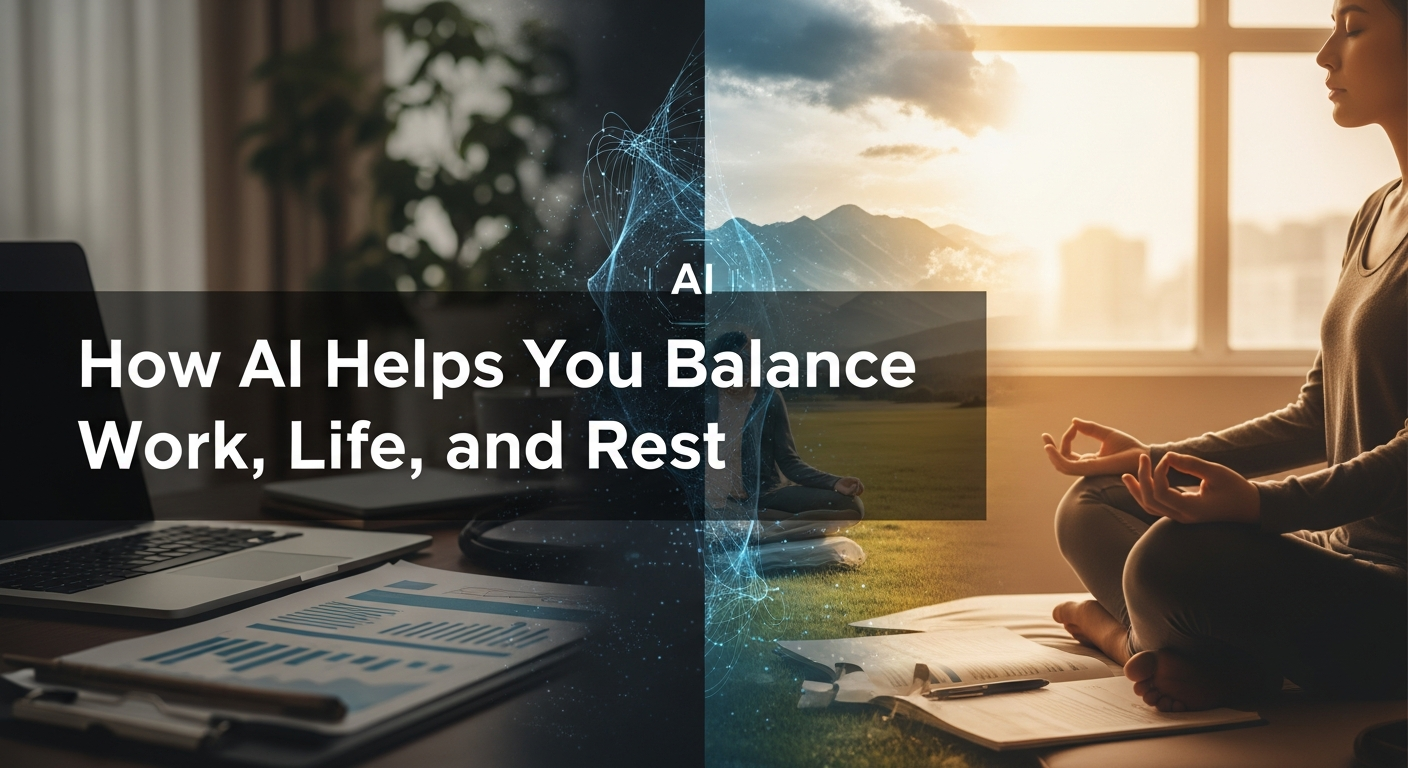
How AI Helps You Balance Work, Life, and Rest
- November 21, 2025
- ~ 1 min read
- 111 views
- Lifestyle & AI
Introduction to AI-Powered Work-Life Balance
In today's fast-paced world, achieving a harmonious work-life balance is more challenging than ever. With the constant pressure to meet deadlines, respond to emails, and keep up with the demands of modern life, it's easy to get caught up in the cycle of overwork and burnout. A staggering statistic reveals that over 60% of professionals experience stress and anxiety due to the blurring of lines between their personal and professional lives. This is where AI comes in – a game-changer in the pursuit of balance and wellness.
The Importance of Balance in Modern Times
Achieving work-life balance is crucial for maintaining physical and mental health, building strong relationships, and increasing productivity. When we neglect our personal lives, we risk experiencing decreased job satisfaction, strained relationships, and a decline in overall wellness. On the other hand, prioritizing self-care and making time for loved ones can have a profound impact on our happiness and success. By leveraging AI to streamline tasks, automate routines, and provide valuable insights, we can create a more sustainable and balanced lifestyle.
Introduction to AI and Its Growing Role
AI is no longer just a buzzword – it's a reality that's transforming the way we live and work. From virtual assistants to predictive analytics, AI is being used to enhance productivity, improve decision-making, and support personal growth. By harnessing the power of AI, we can offload mundane tasks, gain deeper insights into our habits and behaviors, and make more informed choices about how we allocate our time and energy. As we'll explore in this article, AI has the potential to revolutionize the way we approach work-life balance, enabling us to achieve greater harmony and fulfillment in all areas of our lives.
A Preview of AI-Powered Balance
So, how can AI help us achieve a better work-life balance? The possibilities are vast and exciting. With AI, we can:
- Automate repetitive tasks and focus on high-priority activities
- Gain insights into our productivity patterns and identify areas for improvement
- Receive personalized recommendations for managing stress and increasing wellness
- Enhance our decision-making capabilities with data-driven intelligence
- Streamline communication and collaboration with colleagues, friends, and family
As we delve into the world of AI-powered work-life balance, we'll explore the many ways in which technology can support our pursuit of harmony and fulfillment. From practical tips and tools to inspiring stories of transformation, this article will provide you with the insights and expertise you need to harness the power of AI and achieve a more balanced, happy, and healthy life.
Understanding AI's Role in Work-Life Balance
As we delve into the world of AI technologies and their impact on work-life balance, it's essential to understand the various tools and innovations that are driving this change. At the forefront of this revolution are machine learning and natural language processing, which enable computers to learn from data, recognize patterns, and make informed decisions. These technologies have far-reaching implications for professionals and individuals seeking to improve their work-life balance, as they can automate routine tasks, enhance productivity, and provide valuable insights into time management and organization.
Automation and Productivity
One of the primary benefits of AI technologies is their ability to automate routine tasks, freeing up time for more strategic and creative pursuits. By leveraging machine learning algorithms, individuals can automate tasks such as email management, data entry, and bookkeeping, allowing them to focus on high-priority tasks that require human intuition and expertise. This not only increases productivity but also reduces stress and anxiety, as individuals are no longer bogged down by mundane and time-consuming tasks. For instance, virtual assistants like Siri, Google Assistant, and Alexa can help individuals manage their schedules, set reminders, and make appointments, making it easier to balance work and personal life.
AI-Powered Tools for Time Management and Organization
In addition to automation, AI-powered tools can also help individuals manage their time and prioritize tasks more effectively. These tools use natural language processing to analyze an individual's schedule, habits, and preferences, providing personalized recommendations for improving time management and reducing distractions. For example, productivity tools like RescueTime and Focus@Will use machine learning to track an individual's time usage, identify areas of improvement, and provide customized suggestions for staying focused and on track. Some popular productivity tools include:
- Trello: A project management tool that uses AI to help individuals prioritize tasks and manage their workflow
- Evernote: A note-taking app that uses natural language processing to help individuals organize their thoughts and ideas
- Calendly: A scheduling tool that uses machine learning to help individuals manage their schedule and avoid conflicts
AI-Driven Wellness and Self-Care Applications
Finally, AI technologies are also being used to promote wellness and self-care, which are essential components of achieving a healthy work-life balance. AI-driven wellness applications can help individuals track their physical and mental health, providing personalized recommendations for improving their overall well-being. For example, wellness applications like Headspace and Calm use machine learning to provide guided meditation and mindfulness exercises, helping individuals reduce stress and anxiety. As
the World Health Organization notes, "wellness is a state of complete physical, mental, and social well-being,"and AI technologies are playing an increasingly important role in helping individuals achieve this state. By leveraging AI-powered tools and wellness applications, individuals can take a more proactive approach to managing their work-life balance, prioritizing their well-being, and achieving a healthier, happier life.
Real-World Examples of AI in Work-Life Balance
The integration of AI applications in daily life has revolutionized the way individuals and organizations approach work-life balance. From automating mundane tasks to providing personalized wellness recommendations, AI has proven to be a versatile tool in achieving a better balance between professional and personal life. In this section, we will explore real-world examples and case studies that demonstrate the practical applications of AI in enhancing work-life balance.
Case Studies and Success Stories
Several individuals and companies have successfully leveraged AI to improve their work-life balance. For instance, a study by a leading tech firm found that employees who used AI-powered productivity apps experienced a significant reduction in work-related stress and an increase in overall job satisfaction. One such employee, Sarah, noted:
I was able to manage my workload more efficiently and have more time for my family and hobbies. The AI-powered app helped me prioritize tasks and avoid burnout.Similarly, a case study on a remote team that used AI-driven project management tools reported a 30% increase in productivity and a 25% decrease in work hours.
AI-Powered Tools for Productivity and Wellness
There are numerous AI-powered apps and tools available that cater to different aspects of work-life balance, including productivity, time management, and wellness. Some popular examples include:
- Virtual assistants like Siri, Google Assistant, and Alexa that help with task management and scheduling
- Focus-enhancing apps like Freedom and SelfControl that use AI to block distracting websites and notifications
- Mental wellness platforms like Calm and Headspace that offer personalized meditation and mindfulness exercises
Managing Work-Related Stress and Burnout with AI
Remote work and flexible scheduling have become increasingly popular in recent years, and AI has played a significant role in facilitating this shift. By providing employees with the ability to work from anywhere and at any time, AI-powered tools have helped to reduce the burden of commuting and increase flexibility. However, this flexibility can also lead to an always-on culture, where employees feel pressured to be constantly available and responsive. AI can help mitigate this risk by providing employees with tools to manage their workload, set boundaries, and prioritize self-care. For example, AI-driven chatbots can help employees set realistic goals and deadlines, while also providing resources and support for managing stress and burnout.
In conclusion, the examples and case studies highlighted in this section demonstrate the potential of AI to transform the way we approach work-life balance. By leveraging AI applications and tools, individuals and organizations can create a more sustainable and healthy balance between work and personal life, leading to increased productivity, job satisfaction, and overall well-being. As AI continues to evolve and improve, we can expect to see even more innovative solutions emerge, further enhancing our ability to manage work-related stress and achieve a better balance between work, life, and rest.
Advanced AI Concepts for Enhanced Balance
As we delve deeper into the realm of AI and its applications in achieving work-life balance, it becomes essential to explore the advanced concepts that drive this technology. Machine learning algorithms, in particular, play a crucial role in personalized productivity and wellness. These algorithms can analyze vast amounts of data, identify patterns, and make predictions to help individuals optimize their daily routines. For instance, a study by Harvard Business Review found that machine learning can be used to predict employee burnout, allowing for proactive measures to prevent it.
Machine Learning and NLP for Enhanced Balance
The integration of NLP (Natural Language Processing) in AI-powered assistants has revolutionized the way we interact with technology. NLP enables these assistants to understand and respond to voice commands, making it easier for individuals to manage their schedules, set reminders, and prioritize tasks. Furthermore, NLP can be used to analyze sentiment analysis and detect early signs of stress or anxiety, providing personalized recommendations for relaxation and self-care. According to a report by Gartner, NLP will be a key driver of AI adoption in the workplace, with 70% of organizations expected to implement NLP-powered chatbots by 2025.
Edge Cases and Challenges in Implementing AI for Balance
While AI has the potential to significantly enhance work-life balance, there are several edge cases and challenges that need to be addressed. For example, AI systems may struggle to account for individual differences in personality, preferences, and values. Moreover, there is a risk of over-reliance on AI, leading to decreased human agency and autonomy. To mitigate these risks, it is essential to develop AI systems that are transparent, explainable, and aligned with human values. A study by MIT Sloan Management Review found that organizations that prioritize transparency and explainability in their AI systems are more likely to achieve successful outcomes.
Future Trends and Advancements in AI for Balance
As AI technology continues to evolve, we can expect to see significant advancements in the field of work-life balance. Some of the future trends to watch out for include the integration of Internet of Things (IoT) devices, which can provide real-time data on physical and mental well-being. Additionally, the development of edge AI will enable faster and more secure processing of data, reducing latency and improving overall performance. According to a report by Forrester, edge AI will become a key driver of AI adoption in the enterprise, with 60% of organizations expected to implement edge AI solutions by 2026.
Finally, it is essential to consider the ethics of using AI for personal and professional life. As AI systems become increasingly pervasive, there is a risk of bias and discrimination in decision-making. To address these concerns, it is crucial to develop AI systems that are fair, transparent, and accountable. As
Dr. Kate Darling, a leading expert in AI ethics, notes, "The key to developing ethical AI is to prioritize human values and well-being, rather than just focusing on efficiency and productivity."By doing so, we can ensure that AI is used to enhance work-life balance, rather than exacerbate existing inequalities.
- Implement AI systems that are transparent and explainable
- Prioritize human values and well-being in AI development
- Address edge cases and challenges in AI implementation
By exploring these advanced AI concepts and considering the ethical implications of AI adoption, we can unlock the full potential of AI in achieving work-life balance. As we move forward, it is essential to prioritize machine learning, NLP, and edge AI in the development of AI-powered solutions, while ensuring that these systems are fair, transparent, and aligned with human values.
Implementing AI for Better Work-Life Balance
To effectively balance work, life, and rest, it's essential to have a clear understanding of how to implement AI-powered tools into your daily routines and workflows. This section will provide a step-by-step guide on selecting and implementing the right AI tools for your needs, as well as tips for integrating them seamlessly into your life.
Step-by-Step Guide to Selecting AI-Powered Tools
The first step in implementing AI for better work-life balance is to identify the areas where you need the most assistance. This could be anything from managing your schedule and reminders to automating repetitive tasks and improving your productivity. Once you've identified these areas, you can begin researching AI tools that cater to your specific needs. Some popular options include virtual assistants like Siri, Google Assistant, and Alexa, as well as task automation tools like Zapier and IFTTT.
When selecting an AI-powered tool, consider the following factors:
- Ease of use and user interface
- Compatibility with your existing devices and software
- Customization options and flexibility
- Customer support and community resources
- Cost and pricing model
Tips for Integrating AI into Daily Routines and Workflows
Once you've selected the right AI tools for your needs, it's time to start integrating them into your daily routines and workflows. Here are a few actionable tips to get you started:
- Start small and focus on one area at a time. For example, you might begin by using a virtual assistant to manage your schedule and reminders.
- Set clear goals and expectations for what you want to achieve with AI. This will help you stay focused and ensure that you're using the tools effectively.
- Experiment and be patient. It may take some time to find the right combination of tools and workflows that work for you.
- Don't be afraid to ask for help. Many AI-powered tools come with extensive customer support and community resources that can help you get started.
By following these tips and being open to experimentation, you can start to harness the power of AI to improve your work-life balance and increase your overall productivity.
Best Practices for Using AI Assistants and Automating Tasks
As you start to integrate AI into your daily routines and workflows, it's essential to keep in mind some best practices for using AI assistants and automating tasks. Here are a few key considerations:
Remember that AI is a tool, not a replacement for human judgment and oversight. Be sure to regularly review and adjust your workflows to ensure that they're working effectively and efficiently.
Some additional best practices to keep in mind include:
- Set clear boundaries and guidelines for what tasks should be automated and what tasks require human intervention.
- Regularly monitor and update your AI-powered tools to ensure that they're running smoothly and efficiently.
- Be mindful of potential pitfalls and limitations of AI, such as bias and errors.
By following these best practices and being aware of the potential pitfalls, you can ensure that you're using AI in a way that's safe, effective, and productive.
Comparing AI Solutions for Work-Life Balance
With the numerous AI solutions available for work-life balance, selecting the most suitable one can be overwhelming. In this section, we will delve into a comprehensive comparison of popular AI-powered productivity and wellness apps, discussing their pros and cons, and analyzing the trade-offs between automation and human intervention. This will enable you to make an informed decision when choosing the ideal AI tools for your needs.
Evaluating Popular AI-Powered Productivity and Wellness Apps
A range of AI-powered apps, such as Focus@Will, Forest, and Calm, offer innovative solutions to enhance productivity and wellness. The following table provides a brief overview of these apps, highlighting their key features and benefits:
| App | Key Features | Benefits |
|---|---|---|
| Focus@Will | AI-generated music, personalized focus modes | Improved concentration, increased productivity |
| Forest | Gamified productivity, virtual forest growth | Enhanced motivation, reduced distractions |
| Calm | Meditation, sleep stories, relaxing music | Reduced stress, improved sleep quality |
When evaluating these apps, it is essential to consider your personal preferences, work style, and specific needs. For instance, if you struggle with focus, Focus@Will might be an ideal choice. On the other hand, if you need help with stress management, Calm could be a better fit.
Pros and Cons of Different AI Solutions
Each AI solution has its strengths and weaknesses. Automation can be a significant advantage, as it saves time and reduces manual effort. However, it also raises concerns about data privacy and the potential for over-reliance on technology. The following list outlines the pros and cons of different AI solutions:
- Pros:
- Increased productivity and efficiency
- Personalized recommendations and feedback
- Improved work-life balance and reduced stress
- Cons:
- Potential data privacy concerns
- Risk of over-reliance on technology
- Initial setup and learning curve
Ultimately, the key to selecting the most suitable AI tools is to weigh the pros and cons and consider your individual needs and preferences. By doing so, you can harness the power of AI solutions to achieve a better work-life balance and improve your overall well-being.
Guidance on Selecting the Most Appropriate AI Tools
To make the most of AI solutions, it is crucial to choose the tools that align with your goals and needs.
By considering your work style, preferences, and specific challenges, you can select the ideal AI-powered apps to enhance your productivity, wellness, and work-life balance.When selecting AI tools, ask yourself:
- What are my specific challenges and goals?
- What features and functionalities do I need?
- How will I integrate the AI tool into my daily routine?
By following these guidelines and considering the pros and cons of different AI solutions, you can make an informed decision and choose the most suitable AI tools to support your work-life balance and overall well-being.
Conclusion and Next Steps
In conclusion, our exploration of how AI helps balance work, life, and rest has revealed the immense potential of artificial intelligence in enhancing our overall well-being. Throughout this article, we have discussed various ways AI can assist in managing time, automating tasks, and providing insights into our daily habits and routines. The summary of key points underscores the importance of leveraging AI tools and technologies to create a healthier balance between professional and personal life.
Final Thoughts on AI's Potential
As we reflect on the impact of AI on work-life balance, it becomes clear that the technology is not just a tool, but a catalyst for change. Embracing AI solutions can lead to significant improvements in productivity, stress reduction, and personal satisfaction. Our final thoughts emphasize the need for individuals and professionals to be open to the possibilities that AI presents, and to explore how these solutions can be tailored to meet their unique needs and challenges.
Call to Action: Exploring AI Solutions
As we move forward, it is essential to take the next step by exploring and implementing AI solutions that can help achieve a better balance between work, life, and rest. This call to action encourages readers to research and experiment with various AI tools and technologies, such as virtual assistants, time management software, and wellness apps. By doing so, individuals can gain a deeper understanding of how AI can support their goals and aspirations, and make informed decisions about which solutions to integrate into their daily lives.
Ultimately, the key to harnessing the power of AI for work-life balance lies in being proactive and curious. As we continue to navigate the complexities of our personal and professional lives, we must ask ourselves: what role can AI play in helping us create a more harmonious and fulfilling existence? By embracing this question, and seeking out the answers, we can unlock the full potential of AI and discover new ways to thrive in all aspects of our lives.
The future of work-life balance is not just about managing time, but about creating a synergy between technology, humanity, and well-being. As we embark on this journey, let us remember that the true power of AI lies not in its ability to automate tasks, but in its capacity to enhance our lives and empower us to reach our full potential.
Comments (0)
Please login or register to leave a comment.
No comments yet. Be the first to comment!