
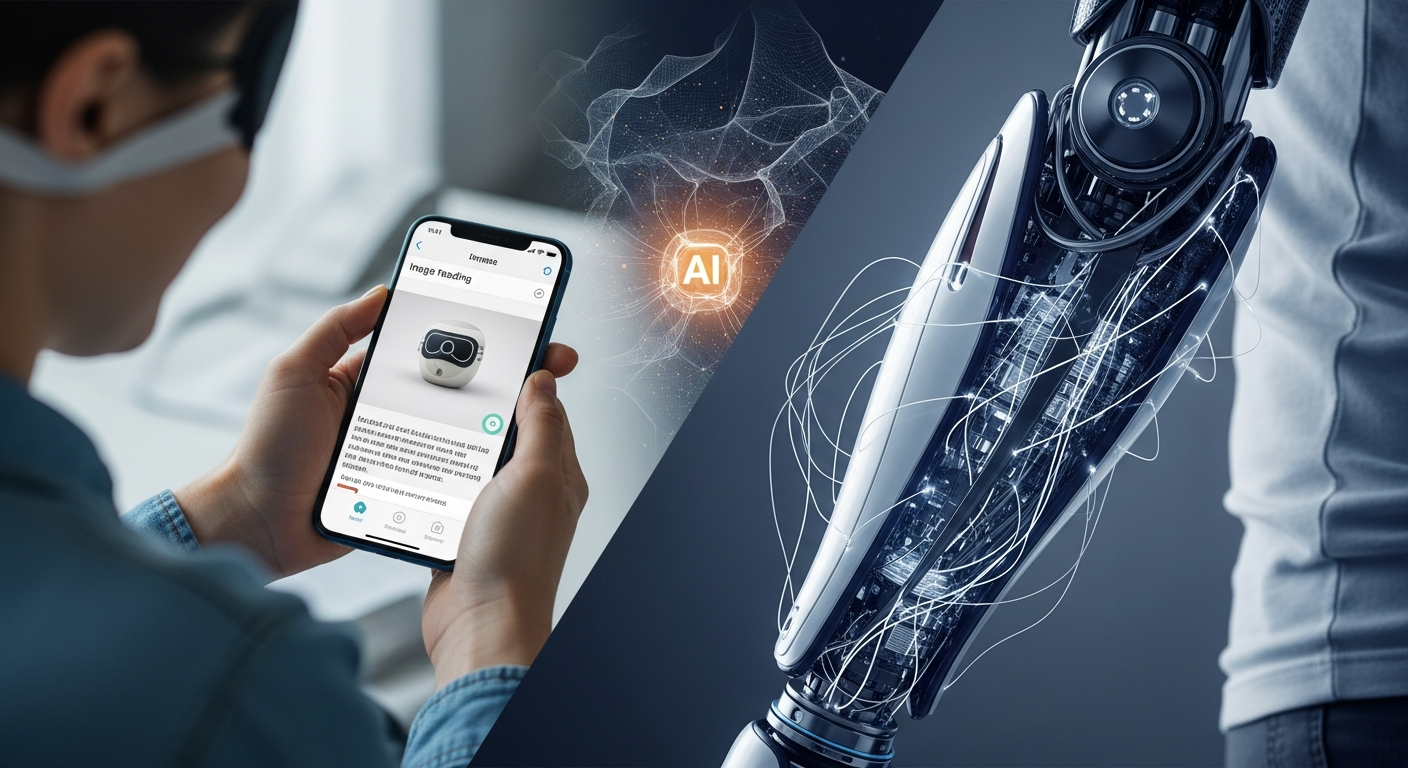
How AI assists disabled individuals with tools like image reading and smart prosthetics.
- November 20, 2025
- ~ 1 min read
- 253 views
- AI & Healthcare , Lifestyle & AI , AI Agents
Introduction to AI Assistance for Disabled Individuals
According to the World Health Organization (WHO), approximately 1 billion people worldwide live with some form of disability, and this number is expected to increase due to population growth and aging. Many individuals with disabilities face significant challenges in their daily lives, from navigating physical barriers to accessing information and communication. However, with the rapid advancement of AI technology, there is a growing potential to revolutionize disability support and improve the lives of millions of people. In this article, we will explore the exciting ways in which AI is being used to enhance accessibility and promote inclusivity for individuals with disabilities.
The Importance of Accessibility and Inclusivity
Accessibility is not just a moral imperative; it is also a fundamental human right. When individuals with disabilities have equal access to information, communication, and opportunities, they are empowered to participate fully in society and reach their full potential. AI has the potential to play a transformative role in promoting inclusivity by providing personalized support and accommodations that can help level the playing field. From image reading software that can describe visual content to smart prosthetics that can be controlled by the user's thoughts, the possibilities are vast and exciting.
Preview of AI Tools and Technologies
In the following sections, we will delve into the various AI tools and technologies that are being developed to support individuals with disabilities. These include image reading software, smart prosthetics, and other innovative solutions that are designed to promote independence and enhance quality of life. We will also explore the potential benefits and challenges of these technologies, as well as the ways in which they can be integrated into daily life. Whether you are an individual with a disability, a caregiver, or a healthcare professional, this article aims to provide you with a comprehensive overview of the exciting developments in AI disability support and inspire you to learn more about the potential of AI to improve lives and promote inclusivity.
Some of the key topics that we will cover include:
- The use of AI in image reading and other forms of assistive technology
- The development of smart prosthetics and other wearable devices
- The potential of AI to enhance communication and social interaction for individuals with disabilities
Understanding AI-Powered Tools for Disability Support
The integration of Artificial Intelligence (AI) in tools designed for disability support has revolutionized the way individuals with disabilities interact with their environment. Two notable examples of such tools are image reading technology and smart prosthetics. These innovations have not only enhanced accessibility but have also significantly improved the quality of life for many individuals. In this section, we will delve into the specifics of how AI enhances accessibility, focusing on image reading and smart prosthetics, as well as discuss other AI-powered tools for disability support.
Image Reading Technology: Enhancing Visual Accessibility
Image reading technology is a remarkable application of AI that enables individuals with visual impairments to "read" images. This technology uses machine learning algorithms to recognize and interpret visual data from images, which are then converted into text or audio descriptions. For instance, an individual with a visual impairment can use a smartphone app that employs image reading to identify objects, read signs, or even recognize faces. This not only aids in daily tasks but also significantly enhances independence by providing real-time information about the surroundings. The applications of image reading are vast, ranging from assisting with grocery shopping to navigating through unfamiliar areas.
Smart Prosthetics: Integration with AI for Enhanced Mobility
Smart prosthetics represent another frontier in AI-assisted disability support. These prosthetic devices are integrated with AI systems that can learn and adapt to the user's behavior and preferences over time. For example, a smart prosthetic limb can be controlled by the user's thoughts or muscle signals, allowing for more natural and intuitive movement. The AI component can also predict and adjust to different scenarios, such as walking on uneven surfaces or climbing stairs, thereby enhancing mobility and reducing the risk of accidents. Furthermore, smart prosthetics can provide real-time feedback to the user, helping them to better control the prosthetic and perform tasks with greater precision.
Other AI-Powered Tools for Disability Support
Beyond image reading and smart prosthetics, there are numerous other AI-powered tools designed to support individuals with disabilities. These include:
- Virtual assistants that can perform tasks and provide information through voice commands.
- AI-driven wheelchairs that can navigate through spaces autonomously or be controlled by the user's thoughts.
- Speech-to-text systems that enable individuals with speech or hearing impairments to communicate more effectively.
The future of disability support is not about overcoming disabilities, but about empowering individuals to live their lives to the fullest, with the assistance of technology that understands and adapts to their unique needs.
In conclusion, AI-powered tools such as image reading technology and smart prosthetics are at the forefront of disability support, offering unprecedented levels of accessibility and independence. As we continue to develop and integrate these technologies into daily life, we move closer to a future where every individual, regardless of their abilities, can participate fully and equally in society.
Real-World Applications and Success Stories
The integration of AI in assistive technology has led to numerous success stories and case studies that demonstrate the profound impact on the lives of disabled individuals. From enhancing daily activities to promoting independence, AI-powered tools have revolutionized the way people with disabilities interact with their environment. In this section, we will delve into the real-world applications and community impact of AI in disability support, highlighting the potential for societal benefits and inclusivity.
Empowering Individuals through AI-Powered Tools
One of the most significant advantages of AI in assistive technology is its ability to empower individuals with disabilities to perform tasks independently. For instance, AI-powered image reading software can help visually impaired individuals to read and understand written text, access information, and communicate with others more effectively. Similarly, smart prosthetics equipped with AI algorithms can learn and adapt to an individual's movements, providing a more natural and intuitive experience. These examples illustrate the practical benefits of AI-powered tools in enhancing the quality of life for disabled individuals.
Real-World Scenarios and Applications
AI integration in daily activities and tasks has been successful in various real-world scenarios. For example:
- AI-powered wheelchair navigation systems that can detect and avoid obstacles, providing a safer and more efficient mobility experience.
- Smart home automation systems that can be controlled using voice commands or gestures, enabling individuals with disabilities to manage their living environment with ease.
- AI-driven communication devices that can translate and interpret sign language, facilitating communication between individuals with hearing impairments and those without.
Broader Implications for Communities and Society
The impact of AI in disability support extends beyond individual success stories, with broader implications for communities and society as a whole. By promoting inclusivity and accessibility, AI-powered tools can help to break down social and economic barriers, enabling disabled individuals to participate fully in their communities. As
technology continues to advance and become more affordable, we can expect to see a significant increase in the adoption of AI-powered assistive technologies, leading to a more inclusive and equitable society. Furthermore, the community impact of AI in disability support can be seen in the creation of new opportunities for social interaction, education, and employment, ultimately contributing to a more societal benefits and a better quality of life for all.
Advanced AI Concepts and Future Directions
As we continue to explore the vast potential of AI in assisting disabled individuals, it's essential to delve into the technical aspects of these innovative tools. Machine learning algorithms are the backbone of AI-powered tools, enabling them to learn from data and improve their performance over time. In the context of image reading and smart prosthetics, machine learning algorithms can be fine-tuned to recognize patterns and make predictions, allowing for more accurate and efficient assistance.
Machine Learning Algorithms and Emerging Technologies
The development of emerging technologies like brain-computer interfaces (BCIs) is revolutionizing the field of disability support. BCIs enable individuals to control devices with their thoughts, using electroencephalography (EEG) or other techniques to detect brain activity. This technology has the potential to greatly enhance the quality of life for individuals with severe motor impairments, allowing them to interact with their environment in a more intuitive and natural way. For instance, BCIs can be used to control prosthetic limbs, communicate through text or speech, or even interact with virtual assistants.
Other emerging technologies, such as computer vision and natural language processing, are also being leveraged to develop more sophisticated AI-powered tools. For example, computer vision can be used to recognize and interpret visual data, enabling AI-powered tools to provide more accurate and detailed information to users. Additionally, natural language processing can be used to improve the communication capabilities of AI-powered tools, allowing them to understand and respond to user input more effectively.
Expert Insights and Future Directions
According to experts in the field, the future of AI in disability support holds great promise.
The integration of AI and machine learning has the potential to revolutionize the way we approach disability support, enabling us to develop more personalized and effective solutions that can greatly enhance the quality of life for individuals with disabilities.As we look to the future, it's likely that we'll see the development of even more sophisticated AI-powered tools, incorporating emerging technologies like BCIs, computer vision, and natural language processing.
Some potential future directions for AI in disability support include the development of more advanced brain-computer interfaces, which could enable individuals to control devices with even greater precision and accuracy. Additionally, the integration of AI and Internet of Things (IoT) technologies could enable the development of more seamless and intuitive interfaces, allowing individuals to interact with their environment in a more natural and effortless way. As we continue to explore the potential of AI in disability support, it's essential to prioritize the development of more accessible and user-friendly technologies, ensuring that these innovative tools are available to those who need them most.
To stay ahead of the curve, it's essential to stay informed about the latest developments in AI and machine learning, as well as emerging technologies like BCIs and computer vision. By doing so, we can ensure that we're harnessing the full potential of AI to enhance the lives of individuals with disabilities, and creating a more inclusive and accessible world for all. Ultimately, the future of AI in disability support holds great promise, and it's up to us to shape this future and create a world that is more equitable, accessible, and empowering for all.
Implementing AI Solutions for Disability Support
As we explore the vast potential of AI in assisting disabled individuals, it's essential to provide a comprehensive implementation guide for accessing and utilizing these innovative tools. In this section, we will delve into the practical aspects of integrating AI solutions into daily life, offering practical tips and step-by-step instructions for individuals with disabilities, caregivers, and healthcare professionals.
Accessing and Using AI-Powered Tools: A Step-by-Step Guide
To begin, it's crucial to understand the various AI-powered tools available and how to access them. The following steps will help you get started:
- Research and identify AI-powered tools that cater to your specific needs, such as image reading software or smart prosthetics.
- Visit the website of the tool provider or manufacturer to learn more about the product and its features.
- Download or purchase the tool, following the provided instructions for installation and setup.
- Familiarize yourself with the tool's interface and functionality, exploring its various features and settings.
- Reach out to the tool provider's support team or online community for assistance with any questions or concerns.
By following these steps, you can begin to unlock the potential of AI-powered tools and discover how they can enhance your daily life. Remember to always prioritize your individual needs and preferences when selecting and using these tools, as this will ensure the most effective and beneficial experience.
Tips for Caregivers and Healthcare Professionals: Integrating AI Solutions
Caregivers and healthcare professionals play a vital role in supporting individuals with disabilities, and AI solutions can be a valuable asset in this endeavor. Here are some tips for integrating AI solutions into your care strategy:
- Encourage the individual to explore various AI-powered tools and provide guidance on accessing and using these tools.
- Collaborate with the individual to identify their specific needs and preferences, tailoring the AI solutions to meet these requirements.
- Stay up-to-date with the latest developments in AI technology and its applications in disability support, attending workshops and conferences to expand your knowledge.
- Foster an open and supportive environment, where the individual feels comfortable sharing their experiences and feedback on the AI solutions.
By working together and leveraging the power of AI, caregivers and healthcare professionals can help individuals with disabilities overcome challenges and achieve greater independence. It's essential to approach each individual with a unique perspective, recognizing that their needs and preferences may differ from others.
Common Challenges and Troubleshooting Strategies
While AI solutions offer tremendous potential, they can also present challenges and obstacles. Troubleshooting is an essential aspect of implementing AI solutions, and being aware of common issues can help you overcome them. Some common challenges include:
Technical difficulties, such as software glitches or hardware compatibility issues, can be frustrating and hinder the effective use of AI-powered tools. Additionally, individuals may struggle with the learning curve associated with new technology, or experience difficulties in accessing certain features or functions.
To overcome these challenges, it's essential to have a troubleshooting strategy in place. This may involve:
- Consulting the tool provider's support resources, such as user manuals or online forums.
- Reaching out to the tool provider's support team for personalized assistance.
- Seeking guidance from other users or experts in the field, who can offer valuable insights and advice.
- Being patient and persistent, recognizing that overcoming challenges is a natural part of the learning process.
By being aware of potential challenges and having a plan in place to address them, you can ensure a smooth and effective implementation of AI solutions. Remember that troubleshooting is an ongoing process, and being proactive and adaptable will help you navigate any obstacles that arise.
Comparing AI-Powered Tools and Traditional Solutions
When it comes to assistive technologies for disabled individuals, there are various options available, including AI-powered tools and traditional solutions. In this section, we will delve into a comparison of these two types of technologies, discussing their respective pros and cons, and analyzing the trade-offs involved in choosing one over the other.
Traditional Solutions vs. AI-Powered Tools
Traditional assistive technologies, such as canes, walkers, and manual wheelchairs, have been used for decades to assist individuals with disabilities. These solutions are often simple, reliable, and cost-effective. However, they may not provide the same level of independence and autonomy as AI-powered tools. On the other hand, AI-powered tools, such as smart prosthetics and image reading software, offer advanced features and functionalities that can significantly enhance the quality of life for disabled individuals.
The following table highlights some of the key differences between traditional solutions and AI-powered tools:
| Feature | Traditional Solutions | AI-Powered Tools |
|---|---|---|
| Cost | Generally less expensive | Can be more expensive, but offers advanced features |
| Accessibility | May require manual operation or assistance | Can be controlled using voice commands, gestures, or other intuitive interfaces |
| Effectiveness | May not provide the same level of independence and autonomy | Can significantly enhance independence and autonomy, and provide real-time feedback and support |
Pros and Cons of AI-Powered Tools
AI-powered tools offer several pros, including advanced features, increased independence, and real-time feedback and support. However, they also have some cons, such as higher costs, potential technical issues, and the need for training and maintenance. The following list highlights some of the key pros and cons of AI-powered tools:
- Advanced features and functionalities
- Increased independence and autonomy
- Real-time feedback and support
- Higher costs
- Potential technical issues
- Need for training and maintenance
Trade-Offs and Considerations
When choosing between traditional solutions and AI-powered tools, it is essential to consider the trade-offs involved. For example, while AI-powered tools may offer advanced features and increased independence, they may also be more expensive and require more training and maintenance. On the other hand, traditional solutions may be less expensive and more reliable, but may not provide the same level of autonomy and independence. Ultimately, the choice between traditional solutions and AI-powered tools will depend on individual circumstances, including budget, needs, and preferences.
It is crucial to weigh the pros and cons of each option and consider the trade-offs involved in choosing one over the other. By doing so, individuals with disabilities, caregivers, and healthcare professionals can make informed decisions and choose the most suitable assistive technology for their specific needs.
In conclusion, the comparison between traditional solutions and AI-powered tools highlights the importance of considering individual circumstances and needs when choosing assistive technologies. By analyzing the pros and cons and trade-offs involved, individuals with disabilities, caregivers, and healthcare professionals can make informed decisions and choose the most suitable technology for their specific needs, ultimately enhancing independence, autonomy, and quality of life.
Conclusion and Future Outlook
In conclusion, the role of Artificial Intelligence (AI) in assisting disabled individuals has been a game-changer, offering a wide range of tools and technologies that enhance accessibility and independence. From image reading software to smart prosthetics, AI-powered solutions have improved the lives of millions of people worldwide. Throughout this article, we have explored the various ways in which AI is being used to support disabled individuals, including communication aids, mobility assistance, and cognitive support.
Summary of Key Points
A summary of the key points discussed in this article highlights the significance of AI in transforming disability support. The use of AI-powered tools such as virtual assistants, speech recognition software, and predictive analytics has enabled disabled individuals to interact with their environment in a more seamless and independent way. Furthermore, the development of smart prosthetics and exoskeletons has revolutionized the field of mobility assistance, offering new possibilities for individuals with physical disabilities.
Reflection on the Potential of AI
Reflecting on the potential of AI to transform disability support, it is clear that we are only scratching the surface of what is possible. As AI technology continues to evolve, we can expect to see even more innovative solutions that address the complex needs of disabled individuals. The future outlook is promising, with emerging technologies such as brain-computer interfaces and augmented reality holding great potential for enhancing accessibility and independence.
Call to Action
In order to realize the full potential of AI in disability support, it is essential that we prioritize inclusion and accessibility in the development of AI-powered tools. This requires a call to action for further innovation and research, as well as greater investment in the development and adoption of AI-powered solutions. We must work together to create a more inclusive and accessible world, where disabled individuals have equal opportunities to participate and contribute. By supporting further research and development, we can unlock the full potential of AI and create a brighter, more inclusive future for all.
As we look to the future, it is essential that we prioritize collaboration and knowledge-sharing in order to drive innovation and progress. By working together, we can create a world where AI-powered tools are accessible to all, and where disabled individuals have the support and resources they need to thrive. The future of disability support is exciting and full of promise, and we must continue to push the boundaries of what is possible in order to create a more inclusive and accessible world for all.

Comments (0)
Please login or register to leave a comment.
No comments yet. Be the first to comment!