
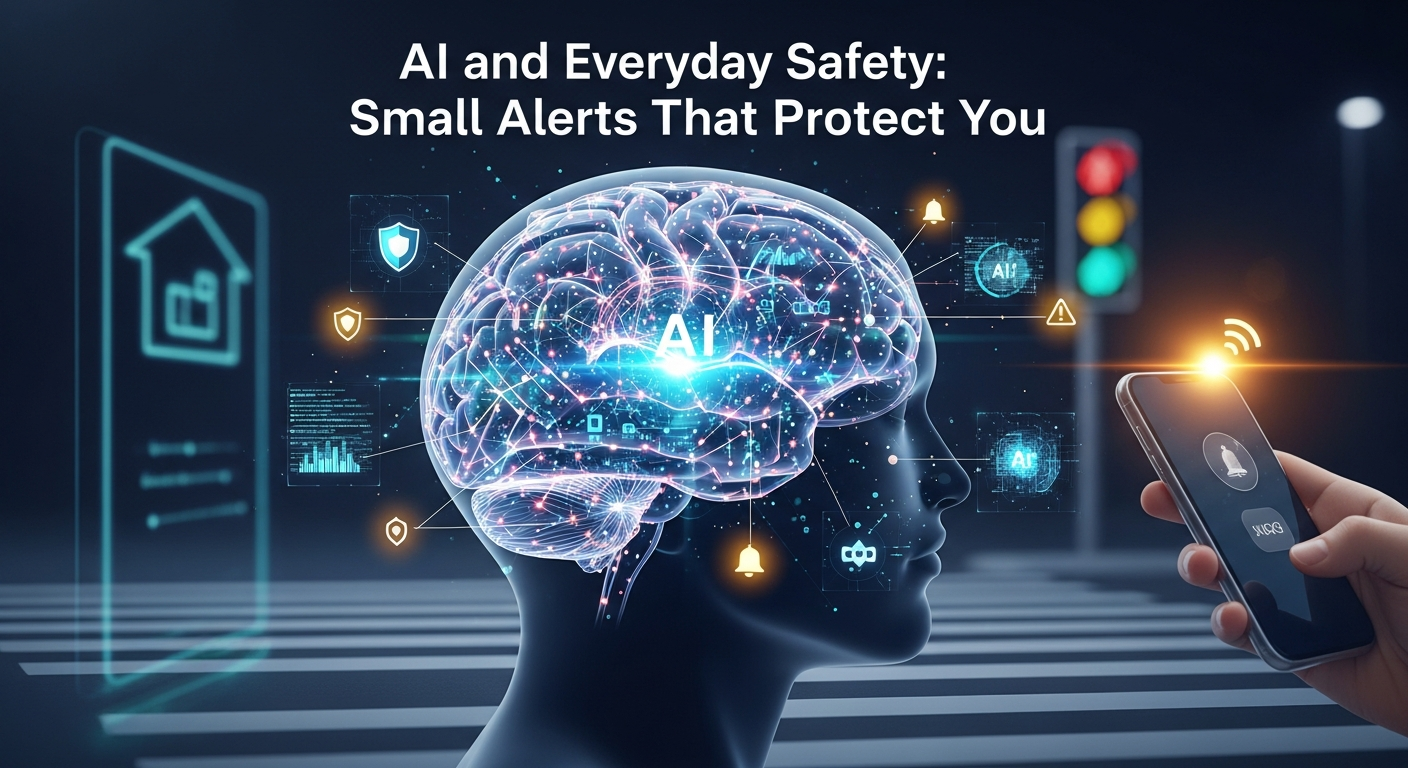
AI and Everyday Safety: Small Alerts That Protect You
- November 21, 2025
- ~ 1 min read
- 166 views
- Lifestyle & AI , AI Security
Introduction to AI-Driven Safety
Artificial Intelligence (AI) has become an integral part of our daily lives, transforming the way we live, work, and interact with one another. From virtual assistants like Siri and Alexa to self-driving cars and personalized product recommendations, AI's impact is undeniable. But one of the most significant and often overlooked applications of AI is in the realm of AI safety. According to a recent study, AI-powered safety systems can reduce accidents by up to 30%, making our everyday lives safer and more secure. In this article, we will explore the role of AI in enhancing everyday safety and how small alerts can make a significant difference in protecting us from potential hazards.
The Importance of Safety in Everyday Activities
Safety is a fundamental aspect of our daily lives, and it's essential to recognize the potential risks and hazards that surround us. From slipping on a wet floor to getting into a car accident, everyday safety is a concern that affects us all. According to the World Health Organization (WHO), approximately 3.9 million people die each year due to injuries, highlighting the need for effective safety measures. This is where AI comes in – by leveraging protective technology, we can predict and prevent safety hazards, reducing the risk of accidents and injuries.
Understanding Small Alerts and Their Protective Role
So, what are small alerts, and how do they contribute to our safety? In simple terms, small alerts refer to the subtle warnings and notifications that AI-powered systems provide to alert us of potential dangers. These alerts can be in the form of a notification on our smartphone, a voice warning from a virtual assistant, or even a visual signal from a smart home device. By processing vast amounts of data, AI can identify patterns and anomalies that may indicate a safety risk, triggering these small alerts to warn us of potential hazards. For instance, an AI-powered home security system can detect unusual activity and send a notification to your phone, allowing you to take action and prevent a potential break-in.
In this article, we will delve into the world of AI safety and explore the practical applications of AI in enhancing everyday safety. We will discuss how AI processes data to predict and prevent safety hazards, and examine the role of small alerts in protecting us from potential dangers. By the end of this article, you will have a deeper understanding of the significance of AI in safety and how it can be used to create a safer, more secure environment for everyone.
Some of the key topics we will cover include:
- The role of AI in predicting and preventing safety hazards
- The importance of small alerts in protecting us from potential dangers
- Practical applications of AI in everyday safety, including home security, transportation, and healthcare
By exploring the intersection of AI and safety, we can gain a better understanding of the potential benefits and challenges of AI-driven safety and how it can be used to create a safer, more secure world for everyone.
Understanding AI in Safety Contexts
The integration of Artificial Intelligence (AI) in safety contexts has revolutionized the way we approach and manage risks in our daily lives. At the heart of this revolution are AI algorithms, which are designed to analyze vast amounts of data and predict potential safety risks with a high degree of accuracy. These algorithms, often based on machine learning and deep learning principles, enable systems to learn from experience and improve their predictive capabilities over time.
The Role of Machine Learning in Safety Predictions
Machine learning plays a crucial role in safety predictions by allowing systems to identify patterns in data that may not be apparent to human analysts. This is particularly useful in scenarios where the volume of data is too large for manual analysis, or where the patterns are too complex for humans to discern. By leveraging machine learning, AI systems can analyze data from various sources, including IoT devices, to predict safety risks and alert individuals or authorities accordingly. For instance, in smart homes, IoT devices can collect data on temperature, humidity, and gas levels, which can then be analyzed by AI algorithms to predict and prevent fires or gas leaks.
The process involves training the AI model on a dataset that includes information about past safety incidents and their causes. The model then uses this training to make safety predictions based on new, unseen data. This approach has been shown to be highly effective in a variety of safety contexts, from predicting the likelihood of accidents on the road to identifying potential health risks in individuals.
Data Collection and Analysis for Safety
Data collection is a critical component of AI-driven safety systems. IoT devices, which are increasingly ubiquitous in our daily lives, play a key role in this process. These devices can collect a wide range of data, from environmental conditions such as temperature and humidity, to more specific data like the location and speed of vehicles. This data is then analyzed by AI algorithms to identify potential safety risks. The analysis involves complex processes, including data cleansing, feature extraction, and model training, all of which are aimed at improving the accuracy of safety predictions.
The efficiency and accuracy that AI algorithms bring to safety measures are unparalleled compared to traditional methods. Traditional safety analysis often relies on manual data collection and analysis, which can be time-consuming and prone to errors. In contrast, AI systems can analyze vast amounts of data in real-time, providing immediate insights into potential safety risks. This not only enhances safety but also reduces the costs associated with manual analysis and the consequences of missed predictions.
Examples of AI-Driven Safety Features
AI-driven safety features are becoming increasingly common in various devices and systems. For example, modern vehicles are equipped with AI-powered safety systems that can predict and prevent accidents. These systems use data from IoT devices such as cameras, sensors, and GPS to analyze the driving environment and make safety predictions. Similarly, smart home devices can use AI to predict and prevent home accidents, such as falls or fires, by analyzing data from motion sensors, smoke detectors, and other IoT devices.
In the healthcare sector, AI is used to analyze medical data and predict health risks. For instance, AI algorithms can analyze data from wearable devices and medical records to predict the likelihood of a patient experiencing a heart attack or stroke. This information can then be used to take preventive measures, such as adjusting the patient's medication or lifestyle.
The future of safety is undoubtedly tied to the development and deployment of AI technologies. As these technologies continue to evolve, we can expect to see even more sophisticated safety features that leverage machine learning, deep learning, and data from IoT devices to predict and prevent safety risks.
In conclusion, the role of AI in safety contexts is multifaceted and rapidly evolving. By understanding how AI algorithms are used in safety applications, and how data collection and analysis contribute to safety predictions, we can better appreciate the potential of AI to enhance everyday safety. As we move forward, it will be exciting to see how these technologies continue to develop and impact our lives.
Real-World Applications of AI Safety Alerts
The integration of Artificial Intelligence (AI) in safety systems has led to numerous AI case studies that demonstrate its potential in preventing accidents and enhancing response to emergencies. From home safety to vehicle safety and public safety, AI safety alerts are making a significant impact. This section will delve into real-world applications of AI safety alerts, highlighting their effectiveness and the difference they are making in people's lives.
AI in Home Safety: Preventing Accidents
In the context of home safety, AI is being used to prevent accidents such as fires, falls, and poisoning. For instance, smart home devices equipped with AI can detect anomalies in temperature, smoke levels, and other factors to alert homeowners of potential fire hazards. Additionally, AI-powered sensors can be placed in strategic locations to detect falls among the elderly or individuals with disabilities, sending alerts to emergency services or caregivers. These early warnings can be crucial in preventing severe injuries or fatalities.
A notable example is the use of AI in smart smoke detectors. These devices can differentiate between harmful smoke and harmless steam, reducing false alarms and ensuring that residents are alerted only when there is a genuine threat. This technology has been credited with saving lives in several instances, where traditional smoke detectors might have failed to alert occupants in time.
AI-Driven Safety Features in Vehicles
The automotive industry has seen a significant uptake of AI-driven safety features in vehicles. These features include lane departure warning systems, blind spot detection, and forward collision warning systems. AI algorithms process data from various sensors and cameras to detect potential hazards and alert drivers, thereby reducing the risk of accidents. Furthermore, AI can analyze driving patterns and road conditions to predict and prevent accidents, making vehicle safety a top priority.
For example, some vehicles are equipped with AI-powered emergency braking systems. These systems can detect pedestrians, cyclists, or other vehicles and automatically apply the brakes to prevent or mitigate collisions. Such features have been shown to significantly reduce the incidence of accidents and are becoming increasingly standard in new vehicles.
AI in Public Safety: Surveillance and Emergency Response
In the realm of public safety, AI is being utilized to enhance surveillance and emergency response. AI-powered surveillance systems can analyze footage from CCTV cameras to detect suspicious activity, alerting law enforcement to potential threats. Moreover, AI can be integrated into emergency response systems to quickly analyze situations and dispatch appropriate resources. This swift response can be critical in saving lives and preventing further harm.
According to various studies, the use of AI in public safety has led to a significant reduction in crime rates and emergency response times. As AI technology continues to evolve, its potential to enhance public safety will only grow.
In conclusion, the real-world applications of AI safety alerts are vast and varied, with tangible benefits in home safety, vehicle safety, and public safety. As AI continues to advance, we can expect to see even more innovative applications of this technology in enhancing everyday safety. By embracing AI safety alerts, we can create safer, more resilient communities where individuals can live without fear of accidents or harm.
Advanced AI Concepts for Enhanced Safety
The integration of Artificial Intelligence (AI) in everyday safety has revolutionized the way we approach potential threats and hazards. As we delve deeper into the realm of AI safety, it becomes apparent that edge AI plays a crucial role in real-time safety analysis. Edge AI refers to the processing and analysis of data at the edge of the network, closer to the source of the data. This enables faster and more efficient processing, reducing latency and allowing for more prompt responses to potential safety threats.
Edge AI Applications in Real-Time Safety Analysis
In the context of everyday safety, edge AI can be applied in various scenarios, such as surveillance systems, smart home devices, and autonomous vehicles. For instance, edge AI-powered surveillance systems can analyze footage in real-time, detecting potential security breaches and alerting authorities promptly. Similarly, smart home devices equipped with edge AI can detect anomalies in energy consumption patterns, indicating potential safety hazards. The benefits of edge AI in real-time safety analysis are numerous, including enhanced response times, improved accuracy, and reduced false positives.
Quantum Computing and Safety Data Analysis
The potential of quantum computing in safety data analysis is vast and promising. Quantum computing can process complex data sets at unprecedented speeds, enabling the analysis of vast amounts of safety-related data. This can lead to the identification of patterns and trends that may not be apparent through traditional computing methods. Furthermore, quantum computing can simulate complex safety scenarios, allowing for the testing and evaluation of different safety protocols and strategies. The integration of quantum computing in safety data analysis can revolutionize the field of safety, enabling the development of more effective and efficient safety measures.
Development of Sophisticated AI Safety Algorithms
The development of more sophisticated algorithms is crucial for enhancing AI safety. These algorithms can learn from complex data sets, adapting to new safety scenarios and improving their performance over time. The use of machine learning and deep learning techniques can enable the development of algorithms that can detect subtle patterns and anomalies in safety-related data. Furthermore, the integration of explainable AI techniques can provide insights into the decision-making processes of these algorithms, enhancing transparency and trust in AI safety systems. As research and development in this area continue to advance, we can expect to see the emergence of more advanced and effective safety algorithms that will shape the future of safety.
In conclusion, the integration of edge AI, quantum computing, and sophisticated algorithms has the potential to transform the field of safety. As these technologies continue to evolve, we can expect to see the development of more effective and efficient safety measures that will enhance our everyday safety. The future of safety is exciting and promising, and it will be shaped by the advancements in AI and related technologies.
The future of safety will be characterized by the widespread adoption of AI-powered safety systems, enabling the creation of safer and more secure environments for everyone.
As we look to the future, it is essential to consider the potential benefits and challenges of integrating these advanced technologies into safety systems. By doing so, we can ensure that the development of future safety measures is informed by the latest research and advancements in the field, ultimately leading to the creation of safer and more secure environments for everyone.
Implementing AI Safety Measures in Daily Life
As we continue to explore the role of AI in enhancing everyday safety, it's essential to discuss the practical aspects of implementing AI safety measures in our daily lives. In this section, we will provide a step-by-step guide to setting up smart home safety devices, offer tips for choosing and using AI-driven safety apps, and outline best practices for maintaining and updating AI safety systems. By following these guidelines, you can take control of your personal safety and stay protected with the help of AI safety technology.
Setting Up Smart Home Safety Devices
To get started with implementing AI safety measures in your home, you'll need to set up smart home safety devices. This can include devices such as security cameras, door sensors, and smoke detectors. Here's a step-by-step guide to help you get started:
- Research and choose the right devices for your home, considering factors such as compatibility, features, and price.
- Install the devices according to the manufacturer's instructions, ensuring they are properly connected to your home network.
- Configure the devices to work together seamlessly, using a central hub or app to control and monitor your smart home safety system.
- Test the devices to ensure they are working correctly and make any necessary adjustments.
By following these steps, you can create a comprehensive smart home safety system that provides you with peace of mind and enhanced protection for your home and loved ones. Remember to always follow the manufacturer's instructions and take necessary precautions when installing and using smart home safety devices.
Choosing and Using AI-Driven Safety Apps
In addition to smart home safety devices, there are many AI-driven safety apps available that can help you stay safe on-the-go. When choosing a safety app, consider the following factors:
- Features: Look for apps that offer a range of features, such as emergency alerts, location tracking, and incident reporting.
- Reviews: Check the app's reviews and ratings to ensure it is reliable and effective.
- Compatibility: Ensure the app is compatible with your device and operating system.
Once you've chosen a safety app, make sure to use it regularly and take advantage of its features. For example, you can use the app to share your location with friends and family, or to quickly alert authorities in case of an emergency. By using AI-driven safety apps, you can stay safe and connected, no matter where you are.
Maintaining and Updating AI Safety Systems
To ensure your AI safety systems continue to work effectively, it's essential to maintain and update them regularly. Here are some best practices to follow:
Regularly check for software updates and install them as soon as they become available. This will ensure you have the latest features and security patches. Additionally, make sure to test your devices and apps regularly to ensure they are working correctly. By staying informed about updates and advancements in AI safety technology, you can stay ahead of potential threats and ensure your safety systems remain effective.
By implementing AI safety measures in your daily life, you can significantly enhance your personal safety and stay protected from potential threats. Remember to stay informed, follow best practices, and take advantage of the latest AI safety technology to stay safe and secure.
Comparing AI Safety Solutions
As the demand for AI safety solutions continues to grow, the market has become flooded with various platforms and devices, each offering unique features and benefits. In this section, we will delve into a comprehensive comparison of different AI safety solutions, discussing their pros and cons, and analyzing their cost-effectiveness and user experience. This will enable readers to make informed decisions when selecting the most suitable solution for their needs and budgets.
Evaluating AI-Driven Safety Features
When evaluating AI safety solutions, it is essential to consider the pros and cons of various AI-driven safety features. For instance, some solutions offer advanced predictive analytics, which can detect potential safety hazards before they occur. However, these features may require significant computational power and data storage, increasing the overall cost of the solution. On the other hand, some solutions may offer more basic features, such as real-time alerts, which can be effective but may not provide the same level of proactive protection.
A key aspect to consider is the cost-effectiveness of each solution. Some platforms may offer a range of features at a lower cost, but may compromise on user experience or data accuracy. Others may offer more advanced features, but at a higher cost. It is crucial to weigh the benefits of each solution against its costs and consider the potential return on investment. The following are some key factors to consider when evaluating the cost-effectiveness of AI safety solutions:
- Initial investment costs, including hardware and software expenses
- Ongoing maintenance and subscription fees
- Potential cost savings from reduced safety incidents and improved efficiency
- Return on investment (ROI) and payback period
Comparative Analysis of AI Safety Platforms
A comparative analysis of AI safety platforms reveals that each solution has its strengths and weaknesses. For example, some platforms may excel in indoor safety monitoring, while others may be more suited for outdoor safety applications. Some popular AI safety platforms include:
- Nest Secure: A comprehensive home security system that integrates AI-powered cameras and sensors
- Ring: A smart doorbell with AI-driven motion detection and alert features
- August: A smart lock system that uses AI to detect and prevent potential security breaches
When selecting an AI safety solution, it is essential to consider the specific needs and requirements of the individual or organization. AI safety solutions can be tailored to suit various applications, from home security to industrial safety monitoring. By evaluating the pros and cons of each solution and considering factors such as cost-effectiveness and user experience, readers can make informed decisions and choose the most suitable AI safety solution for their needs.
The key to effective AI safety solutions lies in striking a balance between advanced features, cost-effectiveness, and user experience. By carefully evaluating the pros and cons of each solution and considering the specific needs and requirements of the individual or organization, readers can harness the power of AI to enhance everyday safety and protect against potential hazards.
Conclusion and Future of AI Safety
In conclusion, the integration of AI in everyday safety has been a significant step forward in protecting individuals and communities from potential threats. Throughout this article, we have explored the various ways in which AI safety technologies are being used to enhance safety measures, from predictive analytics to smart home security systems. The key takeaways from our discussion include the importance of AI safety in preventing accidents, the role of machine learning in improving emergency response times, and the potential of safety technologies to reduce crime rates.
Reflection on Future Developments
As we look to the future, it is exciting to consider the potential developments in AI safety future that will further improve safety measures. Advances in computer vision and natural language processing are likely to enable more sophisticated surveillance systems and emergency response protocols. Additionally, the increasing use of AI safety technologies in industries such as healthcare and transportation is expected to lead to significant reductions in accidents and injuries. As research and development in this field continue to advance, we can expect to see even more innovative applications of AI safety technologies in the years to come.
Call to Action
So, what can you do to take advantage of the benefits of AI safety technologies? We encourage you to explore the various safety technologies available, from smart home security systems to wearable devices with built-in emergency response features. By embracing these technologies, you can help to create a safer and more secure environment for yourself and those around you. As you consider the potential of AI safety to improve your daily life, remember that the future of safety is in your hands. Take the first step today by learning more about the AI safety future and how you can be a part of it. Together, we can create a safer and more secure world for everyone.
Some steps you can take to get started include:
- Researching different safety technologies and their applications
- Investing in smart home security systems or wearable devices with emergency response features
- Staying up-to-date with the latest developments in AI safety future and their potential impact on everyday safety
By taking these steps, you can help to ensure a safer and more secure future for yourself and those around you. The call to action is clear: embrace the potential of AI safety technologies and take the first step towards a safer tomorrow.


Comments (0)
Please login or register to leave a comment.
No comments yet. Be the first to comment!