
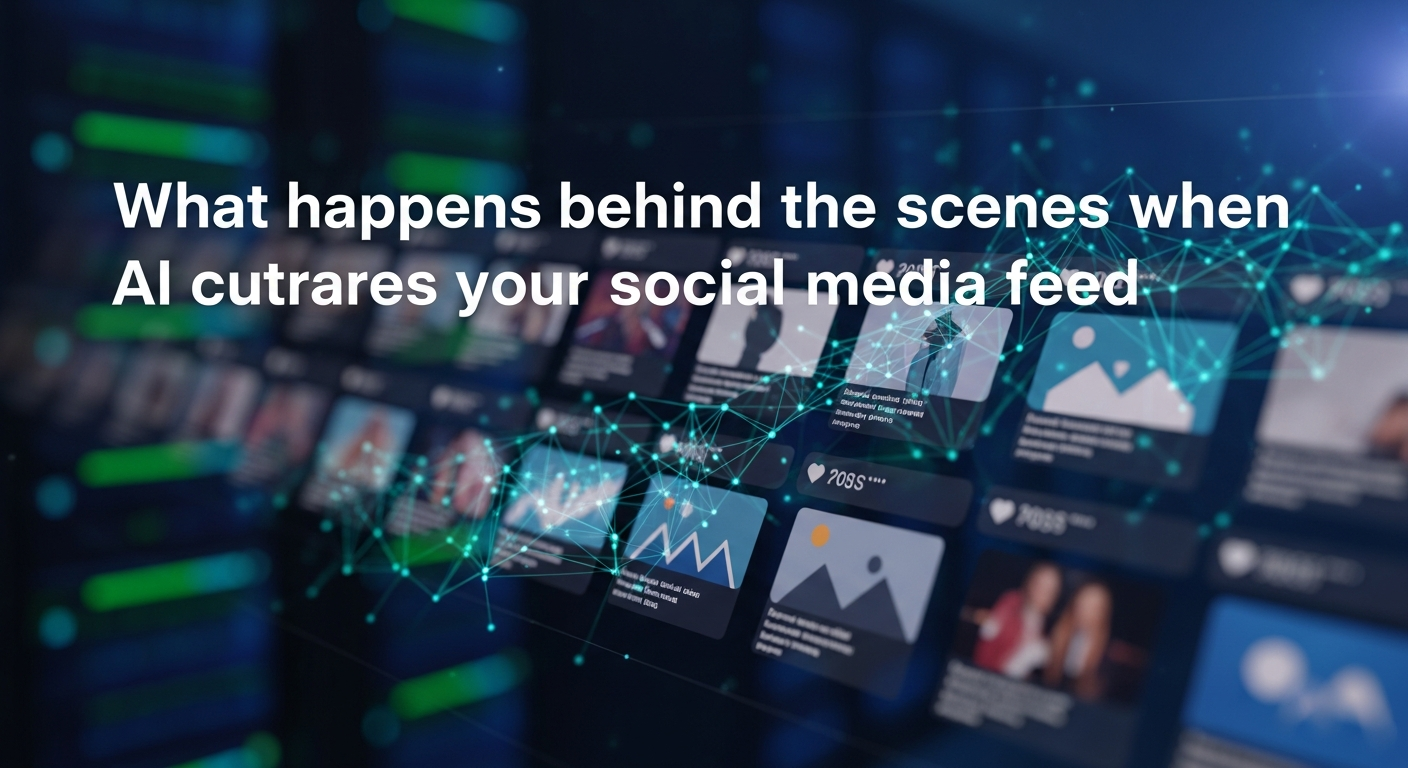
What happens behind the scenes when AI curates your social media feed
- November 20, 2025
- ~ 1 min read
- 202 views
- Lifestyle & AI , GenAI
Introduction to AI-Driven Social Media Feed Curation
Did you know that the average social media user spends around 2 hours and 25 minutes on social media platforms every day? With billions of active users, social media has become an integral part of our daily lives. But have you ever wondered what happens behind the scenes when you scroll through your social media feed? The answer lies in AI-driven feed curation, a complex process that uses algorithms to personalize your online experience. In this article, we'll delve into the world of AI-driven social media feed curation and explore its significance in shaping your online interactions.
What is Social Media Feed Curation?
Social media feed curation refers to the process of selecting and organizing content on your social media feed. This content can include posts from friends, family, and followers, as well as ads and sponsored content. The goal of feed curation is to provide users with a personalized experience, showcasing content that is most relevant and engaging to them. But what makes this process so complex? The answer lies in the sheer volume of data that social media platforms have to process. With millions of posts being shared every minute, AI plays a crucial role in filtering and ranking content to create a unique feed for each user.
The Role of AI in Feed Curation
AI is the backbone of social media feed curation. Using complex algorithms, AI systems analyze user behavior, preferences, and interactions to determine the relevance and importance of each post. This process involves natural language processing, image recognition, and machine learning, among other technologies. The result is a feed that is tailored to your interests, with content that is likely to engage and retain your attention. But how does this impact your online experience? By understanding how AI drives feed curation, you can take control of your social media interactions and make the most out of your online time.
Why Understanding AI-Driven Feed Curation Matters
As social media continues to play a larger role in our lives, it's essential to understand the mechanisms that drive our online interactions. By grasping the concepts of AI-driven feed curation, you can:
- Take control of your social media experience and customize your feed to suit your preferences
- Make informed decisions about the content you consume and the information you share
- Stay ahead of the curve and adapt to the evolving landscape of social media and AI
In the following sections, we'll dive deeper into the world of AI-driven social media feed curation, exploring the technologies and techniques that power this complex process. By the end of this article, you'll have a comprehensive understanding of how AI shapes your online experience and be equipped with the knowledge to navigate the ever-changing landscape of social media.
How AI Curates Your Social Media Feed
The process of curating a social media feed using AI algorithms is complex and involves multiple steps. At its core, the goal of these algorithms is to provide users with a personalized feed that is tailored to their interests and preferences. To achieve this, the algorithms rely on vast amounts of user data, which is collected from various sources, including user interactions, search history, and profile information.
Overview of AI Algorithms Used in Feed Curation
The AI algorithms used in social media feed curation are typically based on machine learning models, which are trained on large datasets of user behavior and preferences. These models use techniques such as natural language processing, collaborative filtering, and deep learning to analyze user data and identify patterns and trends. The algorithms are constantly learning and adapting to changes in user behavior, ensuring that the feed remains relevant and engaging.
Some of the key techniques used in AI algorithms for feed curation include:
- Collaborative filtering: This involves analyzing the behavior of similar users to identify patterns and trends.
- Content-based filtering: This involves analyzing the attributes of the content itself, such as keywords, hashtags, and engagement metrics.
- Hybrid approaches: This involves combining multiple techniques, such as collaborative filtering and content-based filtering, to achieve better results.
How User Data is Collected and Utilized
User data is collected from various sources, including user interactions, search history, and profile information. This data is then used to create a unique profile for each user, which is used to inform the curation process. The data is typically collected through tracking cookies, social media APIs, and other data collection tools. The user data is then analyzed using AI algorithms to identify patterns and trends, which are used to personalize the feed.
Some of the key types of user data that are collected and utilized include:
- Engagement metrics: Such as likes, comments, and shares.
- Search history: Including search queries and results.
- Profile information: Including demographic data, interests, and preferences.
The Process of Content Ranking and Selection
The process of content ranking and selection involves analyzing the attributes of each piece of content, such as keywords, hashtags, and engagement metrics, to determine its relevance and importance. The AI algorithms use this information to rank the content in order of relevance, with the most relevant content appearing at the top of the feed. The algorithms also use techniques such as filtering and weighting to ensure that the feed is diverse and engaging.
The process of content ranking and selection can be thought of as a competition between different pieces of content, with each piece competing for a spot in the feed. The AI algorithms use a variety of factors to determine the winner, including:
- Relevance: How well does the content match the user's interests and preferences?
- Engagement: How likely is the user to engage with the content, such as liking or commenting?
- Timeliness: How recent is the content, and is it still relevant to the user's current interests?
The goal of AI algorithms in social media feed curation is to provide users with a personalized feed that is tailored to their interests and preferences. By analyzing vast amounts of user data and using techniques such as collaborative filtering and content-based filtering, the algorithms can create a feed that is both relevant and engaging.
Real-World Examples of AI-Driven Feed Curation
As AI applications continue to evolve, social media platforms are leveraging this technology to enhance user experience through personalized feed curation. This section delves into the practical aspects of AI-driven feed curation, exploring its implementation on popular platforms, highlighting successful case studies, and discussing the challenges and limitations associated with this technology.
Successful Implementations on Social Media Platforms
Several social media platforms have successfully integrated AI-driven feed curation to improve user engagement. For instance, Facebook uses AI algorithms to prioritize posts from friends and family, ensuring that users see content that is most relevant to them. Similarly, Twitter's algorithm curates tweets based on user interactions, such as likes and retweets, to create a personalized feed. These implementations demonstrate the potential of AI in enhancing the social media experience by making it more personalized and engaging.
On Instagram, AI-powered feed curation helps users discover new content and accounts based on their interests and interactions. This feature has been particularly beneficial for businesses and influencers, as it allows them to reach a wider audience and increase their online presence. The use of AI applications in social media feed curation has thus become a key strategy for brands looking to expand their reach and engagement.
Case Studies: Brands and Individuals Benefiting from AI-Curated Feeds
There are numerous case studies that highlight the benefits of AI-curated feeds for both brands and individual users. For example, a fashion brand might use AI-driven feed curation to promote its products to users who have shown interest in similar clothing items. By leveraging AI, the brand can increase the likelihood of users engaging with its content and making a purchase. On the other hand, individual users can benefit from AI-curated feeds by discovering new content and accounts that align with their interests, thereby enhancing their overall social media experience.
- A study by a leading marketing firm found that AI-driven feed curation can increase user engagement by up to 50%.
- Another case study revealed that AI-curated feeds can lead to a 25% increase in sales for businesses, as users are more likely to interact with personalized content.
- Moreover, AI-driven feed curation can help reduce the noise on social media platforms, allowing users to focus on content that is relevant and valuable to them.
Challenges and Limitations of AI-Driven Feed Curation
While AI-driven feed curation offers numerous benefits, there are also several challenges and limitations associated with this technology. One of the primary concerns is the potential for algorithmic bias, where AI algorithms prioritize certain types of content over others, leading to an unbalanced feed. Additionally, the over-reliance on AI can result in a lack of diversity in the content users see, as the algorithm may prioritize content from the same sources or with similar perspectives.
The key to successful AI-driven feed curation is striking a balance between personalization and diversity, ensuring that users are exposed to a wide range of content while still maintaining relevance and engagement.
In conclusion, AI-driven feed curation is a powerful tool that can enhance the social media experience by providing users with personalized and engaging content. However, it is essential to acknowledge the challenges and limitations associated with this technology and work towards creating a more balanced and diverse feed curation system. By doing so, social media platforms can unlock the full potential of AI-driven feed curation and provide users with a more enjoyable and valuable experience.
Advanced Concepts in AI-Driven Feed Curation
As we delve deeper into the world of AI-driven feed curation, it becomes essential to explore the advanced technical aspects that power these systems. At the heart of these systems lie machine learning models, which enable the analysis and filtering of vast amounts of data to provide users with personalized content. These models are trained on large datasets, allowing them to learn patterns and relationships between different types of content, and make predictions about what a user is likely to engage with.
Machine Learning Models for Feed Curation
The most commonly used machine learning models in feed curation are collaborative filtering, content-based filtering, and hybrid models. Collaborative filtering models focus on the behavior of similar users, while content-based filtering models analyze the features of the content itself. Hybrid models, on the other hand, combine the strengths of both approaches to provide a more accurate and personalized experience. For instance, a hybrid model might use natural language processing to analyze the text of a post, and then combine this information with collaborative filtering to determine the likelihood of a user engaging with the content.
These models are typically trained using natural language processing techniques, which enable the analysis of text-based data. Natural language processing is a crucial component of feed curation, as it allows the system to understand the context and meaning of the content, and make informed decisions about what to display to the user. This includes tasks such as sentiment analysis, entity recognition, and topic modeling, which help to identify the tone, key entities, and underlying themes of a piece of content.
Edge Cases and Future Developments
Despite the advancements in AI-driven feed curation, there are still several edge cases where the system may struggle or require additional human oversight. For example, in cases where the content is ambiguous or context-dependent, the system may struggle to accurately determine the user's preferences. Similarly, in cases where the user's behavior is inconsistent or changes over time, the system may need to adapt and relearn the user's preferences. To address these challenges, researchers are exploring new techniques such as transfer learning and multi-task learning, which enable the system to learn from multiple sources and adapt to new situations.
In terms of future developments, we can expect to see significant advancements in the use of deep learning techniques, such as neural networks and recurrent neural networks, to improve the accuracy and personalization of feed curation. Additionally, the integration of multi-modal data, such as images and videos, will become increasingly important, as users consume more diverse types of content. As the field continues to evolve, we can expect to see more sophisticated and human-like AI systems that can understand and respond to the complex needs and preferences of users.
The future of AI-driven feed curation holds much promise, with the potential to revolutionize the way we interact with social media and consume online content. As researchers and developers, it is essential to continue pushing the boundaries of what is possible, while also addressing the challenges and limitations of these systems.
Some potential applications of these advancements include:
- Improved content recommendation systems that can adapt to changing user preferences
- Enhanced natural language processing capabilities that can better understand the nuances of human language
- Increased use of multi-modal data to provide a more comprehensive and engaging user experience
Practical Tips for Optimizing Your Social Media Feed with AI
As AI continues to play a significant role in curating social media feeds, it's essential for users to understand how to optimize their experience. By adjusting user preferences and interacting with content in specific ways, individuals can influence the algorithm and see more relevant posts. In this section, we'll explore practical tips for optimizing your social media feed with AI, including strategies for content creators to increase visibility and best practices for leveraging AI-driven insights.
Understanding and Adjusting Your User Preferences
To get the most out of AI-curated feeds, it's crucial to understand how user preferences impact the algorithm. Most social media platforms allow users to adjust their preferences by selecting topics of interest, hiding or unfollowing accounts, and indicating which types of content they prefer to see. By taking a few minutes to review and adjust these settings, users can significantly improve the relevance of their feed. For example, if you're interested in tech news, you can select this topic as a preference, and the algorithm will prioritize posts related to this subject.
Additionally, users can influence the algorithm by interacting with content in specific ways. Liking, commenting, and sharing posts can signal to the algorithm that you find this type of content valuable and increase its visibility in your feed. On the other hand, hiding or unfollowing accounts can decrease the likelihood of seeing their content in the future. By being mindful of these interactions, users can train the algorithm to show them more relevant and engaging content.
Strategies for Content Creators to Increase Visibility
For content creators, increasing visibility in AI-curated feeds can be a challenge. However, there are several strategies that can improve the likelihood of their content being featured. One approach is to post high-quality, engaging content that resonates with their target audience. This can include using relevant keywords, hashtags, and eye-catching visuals to make their posts stand out. Content creators can also use AI-driven insights to inform their content strategy, such as analyzing engagement metrics and adjusting their content accordingly.
Another strategy is to encourage engagement with their content by asking questions, requesting feedback, or hosting giveaways. This can increase the visibility of their posts and attract new followers. Content creators can also collaborate with other accounts or influencers in their niche to expand their reach and increase their chances of being featured in AI-curated feeds.
Best Practices for Leveraging AI-Driven Insights
AI-driven insights can be a powerful tool for informing social media strategy. By analyzing engagement metrics, such as likes, comments, and shares, content creators can gain a deeper understanding of what works and what doesn't. This information can be used to adjust their content strategy, such as posting more of the types of content that resonate with their audience or experimenting with new formats and topics.
One best practice is to track key performance indicators (KPIs) such as engagement rate, reach, and clicks. This can help content creators understand how their content is performing and make data-driven decisions to improve their strategy. Another approach is to use AI-driven insights to identify trends and patterns in their audience's behavior, such as peak engagement times or popular topics. By leveraging these insights, content creators can optimize their social media strategy and increase their chances of success.
By following these practical tips and strategies, users and content creators can optimize their experience with AI-curated feeds and increase their online visibility. Whether you're looking to improve the relevance of your feed or increase your reach as a content creator, understanding how to work with AI can make all the difference.
In conclusion, optimizing your social media feed with AI requires a combination of understanding user preferences, using content creation strategies, and leveraging AI-driven insights. By following these tips and best practices, users and content creators can take control of their social media experience and achieve their online goals. In the next section, we'll explore the future of AI in social media feed curation and what this means for users and content creators alike.
Comparison and Analysis of AI-Driven Feed Curation Approaches
The use of AI algorithms in social media feed curation has become a standard practice across major platforms. Each platform employs a unique approach to curate content, resulting in varying user experiences. In this section, we will delve into a comparison of the AI algorithms used by different social media platforms, discussing the pros and cons of each approach, and analyzing user preferences and satisfaction with AI-curated feeds.
AI Algorithm Comparison Across Social Media Platforms
A closer examination of the AI algorithms used by Facebook, Twitter, Instagram, and LinkedIn reveals distinct differences in their approaches. Facebook's algorithm prioritizes content from friends and family, while Twitter's algorithm focuses on real-time relevance. Instagram's algorithm, on the other hand, emphasizes visual content and engagement. LinkedIn's algorithm is geared towards professional content and networking. These differences in AI algorithms significantly impact the user experience and content visibility across platforms.
For instance, Facebook's algorithm has been criticized for creating "filter bubbles," where users are only exposed to content that aligns with their existing interests and views. In contrast, Twitter's algorithm has been praised for its ability to surface breaking news and real-time events. Understanding these differences is crucial for content creators and users alike, as it can inform their strategy for maximizing content visibility and engagement.
Pros and Cons of Each Approach
Each AI-driven feed curation approach has its strengths and weaknesses. The pros of Facebook's algorithm include its ability to prioritize content from friends and family, creating a more personalized experience. However, the cons include the potential for "filter bubbles" and limited content diversity. Twitter's algorithm, on the other hand, excels at surfacing real-time content, but can be overwhelming for users due to the high volume of tweets.
- Facebook's algorithm: prioritizes content from friends and family, but may create "filter bubbles"
- Twitter's algorithm: excels at surfacing real-time content, but can be overwhelming for users
- Instagram's algorithm: emphasizes visual content and engagement, but may favor certain types of content over others
- LinkedIn's algorithm: geared towards professional content and networking, but may lack diversity in content types
User Satisfaction and Preferences
Available data on user satisfaction with AI-curated feeds reveals interesting trends and patterns across platforms. A recent survey found that 60% of users prefer Instagram's algorithm, citing its ability to surface visually appealing content. In contrast, only 30% of users preferred Facebook's algorithm, citing concerns over "filter bubbles" and limited content diversity. It is essential to note that user preferences can vary significantly depending on individual interests and platform usage.
Understanding user preferences and satisfaction with AI-curated feeds is crucial for social media platforms, as it can inform their algorithmic decisions and improve the overall user experience.
In conclusion, the comparison and analysis of AI-driven feed curation approaches across social media platforms reveal significant differences in their strengths and weaknesses. By understanding these differences and analyzing user preferences and satisfaction, content creators and users can better navigate the complex landscape of social media feed curation. As the use of AI algorithms continues to evolve, it is essential to prioritize transparency, diversity, and user satisfaction in the development of these algorithms.
Conclusion and Future of AI-Driven Social Media Feed Curation
As we conclude our exploration of the mechanisms behind AI-driven social media feed curation, it's essential to summarize the key points discussed throughout this article. We've delved into the intricacies of how AI evolution has transformed the way social media platforms personalize and prioritize content for users. From the algorithms that analyze user behavior to the complex systems that filter and rank posts, it's clear that AI plays a pivotal role in shaping our online experiences.
Reflecting on Key Takeaways
A critical aspect of understanding AI-driven feed curation is recognizing its implications on our interaction with social media. Critical engagement with these platforms is more crucial than ever, as users need to be aware of how AI influences the content they see. The main points to take away include the personalized nature of AI-curated feeds, the potential for bias in algorithmic decision-making, and the ongoing future developments that will continue to refine and improve these systems.
Looking Ahead to Future Advancements
Speculating on the future of AI-driven social media feed curation, it's exciting to consider how advancements in AI could further enhance and personalize our social media experiences. Potential developments might include more sophisticated algorithms that can better understand user preferences, integrate more diverse sources of content, and even predict and adapt to changing user interests. Moreover, the integration of emerging technologies like machine learning and natural language processing could lead to more intuitive and responsive social media platforms.
A Call to Action for Critical Engagement
As we move forward in this era of social media dominated by AI-driven feed curation, it's imperative for users to engage critically with the content they consume. This involves being mindful of the potential biases and limitations of AI algorithms, seeking out diverse perspectives, and staying informed about the latest future developments in AI and social media. By doing so, users can harness the benefits of AI-curated feeds while maintaining a nuanced understanding of the complex forces shaping their online experiences. As the landscape of social media continues to evolve, embracing critical engagement and staying abreast of the evolving role of AI in these platforms will be key to navigating and benefiting from these technologies.
In conclusion, the future of AI-driven social media feed curation holds much promise for enhancing user experience and personalization. However, it also necessitates a thoughtful and informed approach from users. By reflecting on the key takeaways from this discussion and looking ahead to the potential advancements in AI, we can foster a more informed and critically engaged community of social media users. As we embark on this journey into the future of social media, let us prioritize critical engagement and a deep understanding of the AI evolution that is continually reshaping our online world.

Comments (0)
Please login or register to leave a comment.
No comments yet. Be the first to comment!