
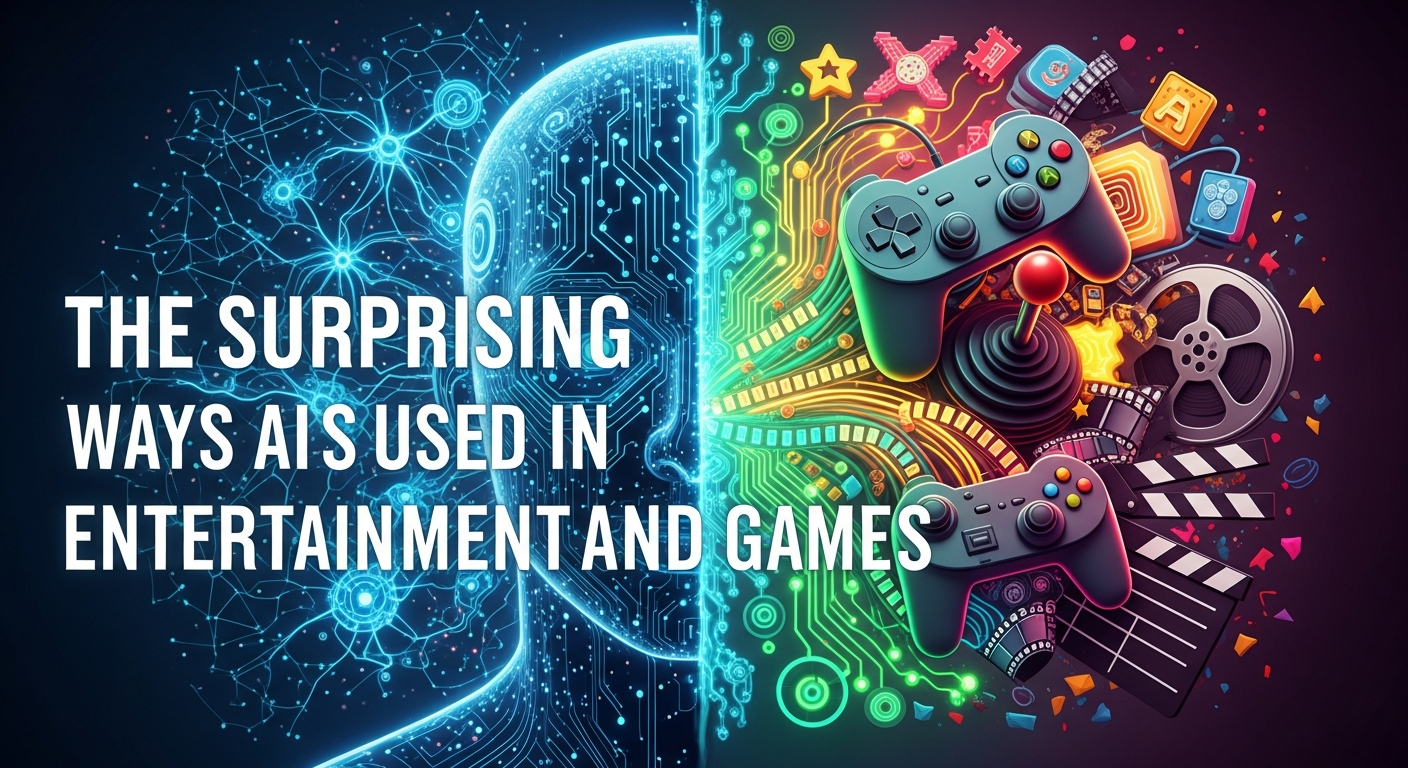
The surprising ways AI is used in entertainment and games
- November 21, 2025
- ~ 1 min read
- 154 views
- GenAI , Lifestyle & AI
Introduction to AI in Entertainment and Games
The use of AI in entertainment and games has become increasingly prevalent, transforming the way we experience and interact with media. A fascinating example of this can be seen in the popular video game series, The Last of Us, where AI-powered characters exhibit realistic behaviors, making the gameplay more immersive and engaging. This is just the tip of the iceberg, as AI is being utilized in various aspects of the entertainment and gaming industries, from scriptwriting to special effects.
The Growing Presence of AI
In recent years, technology has advanced significantly, allowing for the integration of AI in various forms of entertainment, such as movies, TV shows, and video games. The use of AI in these industries has not only enhanced the overall quality of the content but also opened up new avenues for creativity and innovation. For instance, AI-generated music and sound effects are being used in films and video games, creating a more realistic and engaging experience for the audience.
Understanding the Importance of AI in Entertainment and Games
It is essential to understand the role of AI in the entertainment and gaming industries, as it has the potential to revolutionize the way content is created, produced, and consumed. By leveraging AI, developers and creators can automate repetitive tasks, focus on more creative aspects, and produce high-quality content more efficiently. Moreover, AI can help personalize the user experience, making it more enjoyable and interactive. As the use of AI continues to grow, it is crucial for tech enthusiasts, gamers, and entertainment industry professionals to stay informed about the latest developments and trends.
A Sneak Peek into the Surprising Ways AI is Being Used
In this article, we will delve into the surprising ways AI is being used in entertainment and games, from AI-powered characters to AI-generated content. We will explore the various applications of AI in these industries, including game development, film production, and music composition. By the end of this article, readers will have a comprehensive understanding of the role of AI in entertainment and games, as well as the potential benefits and challenges associated with its use. Whether you are a gamer, a movie buff, or an industry professional, this article will provide you with valuable insights into the exciting world of AI in entertainment and games.
Some of the key topics we will cover include:
- The use of AI in game development, including game design and testing
- The application of AI in film production, including scriptwriting and special effects
- The role of AI in music composition, including music generation and sound effects
By exploring these topics and more, we will gain a deeper understanding of the significant impact AI is having on the entertainment and gaming industries, and what this means for the future of technology and entertainment.
The Role of AI in Game Development
The use of Artificial Intelligence (AI) in game development has revolutionized the way games are created, tested, and played. With the help of AI-powered tools, game developers can now create more immersive and engaging games that offer a unique experience to players. In this section, we will delve into the world of game development and explore the various ways AI is being used to create more realistic and interactive games.
AI-Powered Game Development Tools and Techniques
Game development involves a range of tasks, from designing game levels and characters to testing and quality assurance. AI-powered tools can automate many of these tasks, freeing up developers to focus on more creative aspects of game development. For example, AI can be used to generate terrain, create non-player characters (NPCs), and even compose music. These tools use machine learning algorithms to learn from data and generate content that is often indistinguishable from that created by humans.
One of the key benefits of using AI in game development is the ability to create procedural content generation. This involves using algorithms to generate game content, such as levels, terrain, and quests, on the fly. This approach allows for a virtually endless variety of game content, making each player's experience unique. Additionally, AI can be used to create dynamic difficulty adjustment, which adjusts the game's difficulty level based on the player's performance, ensuring that the game remains challenging but not frustratingly difficult.
AI-Driven Game Design and Testing
AI is also being used to drive game design and testing. For example, AI can be used to analyze player behavior and identify areas of the game that are frustrating or boring. This information can be used to make data-driven design decisions, ensuring that the game is more engaging and enjoyable for players. AI can also be used to test games, identifying bugs and glitches that human testers may miss. This approach allows for more efficient and effective testing, reducing the time and cost of game development.
Furthermore, AI can be used to create more realistic NPCs, which can interact with players in a more natural and believable way. This is achieved through the use of natural language processing and machine learning algorithms, which allow NPCs to learn from player interactions and adapt their behavior accordingly.
Examples of AI-Powered Game Development
There are many examples of AI-powered game development in popular games. For example, the game No Man's Sky uses procedural content generation to create a vast, procedurally generated universe, complete with unique planets, terrain, and flora. Another example is the game Sea of Thieves, which uses AI to create dynamic weather and ocean conditions, making the game world feel more realistic and immersive.
- Minecraft: uses procedural content generation to create unique game worlds
- Horizon Zero Dawn: uses AI to create dynamic NPC behavior and interactions
- The Last of Us: uses AI to create realistic character animations and interactions
These examples demonstrate the power of AI in game development, and how it can be used to create more immersive, engaging, and realistic games. As the use of AI in game development continues to evolve, we can expect to see even more innovative and exciting applications of this technology in the future.
The use of AI in game development is not just about automating tasks, but about creating new and innovative ways to engage players and create more immersive game worlds.
AI in Film and Video Production
The use of Artificial Intelligence (AI) in film production and video production has revolutionized the way movies and TV shows are made. From AI-powered editing tools to visual effects, sound design, and music composition, AI is being used in various ways to enhance the production process. In this section, we will explore the different ways AI is being used in film and video production, and provide examples of its application in popular movies and TV shows.
AI-Powered Video Editing Tools and Techniques
AI-powered video editing tools are being used to automate tasks such as video editing, color correction, and sound design. These tools use machine learning algorithms to analyze footage and make decisions about editing, such as detecting cuts, transitions, and audio levels. For example, AI-powered editing tools can automatically detect and remove unwanted objects or people from a scene, saving editors a significant amount of time. Additionally, AI-powered editing tools can also be used to create personalized video content, such as trailers and teasers, by analyzing viewer preferences and behavior.
Visual Effects and Animation
AI is also being used in visual effects to create realistic CGI characters, environments, and special effects. Machine learning algorithms can be used to generate detailed textures, simulate complex physics, and animate characters in a more realistic way. For instance, AI-powered visual effects can be used to create realistic water simulations, fire effects, and explosions, which can be used in movies and TV shows to enhance the visual experience. Furthermore, AI-powered animation tools can be used to create realistic character animations, such as facial expressions and body movements, which can be used in movies, TV shows, and video games.
Sound Design and Music Composition
AI is also being used in sound design and music composition to create immersive audio experiences. AI-powered sound design tools can be used to generate realistic sound effects, such as footsteps, rustling leaves, and background noise, which can be used to enhance the audio experience. Additionally, AI-powered music composition tools can be used to create personalized soundtracks for movies and TV shows, by analyzing the mood, tone, and pace of the scene. Sound design and music composition are critical components of film and video production, and AI is being used to enhance these areas in various ways.
Examples of AI-powered film and video production can be seen in popular movies and TV shows such as Avengers: Endgame, Game of Thrones, and Stranger Things. These productions have used AI-powered editing tools, visual effects, and sound design to create immersive and engaging experiences for viewers. The use of AI in film and video production has also raised questions about the role of human creators in the production process, and the potential for AI to replace human editors, visual effects artists, and sound designers. However, it is likely that AI will augment human creativity, rather than replace it, and will be used to enhance the production process, rather than replace human judgment and decision-making.
- Film production companies such as Warner Bros. and Universal Pictures are using AI-powered editing tools to automate tasks and enhance the production process.
- Video production companies such as Netflix and HBO are using AI-powered visual effects to create realistic CGI characters and environments.
- AI-powered sound design and music composition tools are being used in movies and TV shows to create immersive audio experiences.
The use of AI in film and video production is a rapidly evolving field, and it will be exciting to see how AI is used in the future to enhance the production process and create new and innovative experiences for viewers.
Advanced AI Concepts in Entertainment and Games
The integration of Artificial Intelligence (AI) in entertainment and games has led to the development of advanced AI concepts, including machine learning and deep learning. These technologies have enabled the creation of immersive and interactive experiences, such as virtual and augmented reality, that were previously unimaginable. In this section, we will delve into the world of advanced AI concepts and explore their applications in entertainment and games.
Machine Learning and Deep Learning in Entertainment
Machine learning algorithms have been widely used in entertainment to analyze user behavior, personalize recommendations, and optimize game difficulty. For instance, Netflix uses machine learning to recommend TV shows and movies based on a user's viewing history. Similarly, deep learning techniques have been employed in game development to create more realistic characters, environments, and special effects. The use of deep learning has also enabled the development of more sophisticated chatbots and virtual assistants that can engage with users in a more human-like manner.
Virtual and Augmented Reality Experiences
The application of AI in virtual reality (VR) and augmented reality (AR) has revolutionized the entertainment industry. AI-powered VR and AR experiences can simulate realistic environments, characters, and objects, providing users with a more immersive and interactive experience. For example, AI-powered VR games can adapt to a user's behavior, adjusting the difficulty level and gameplay accordingly. Similarly, AI-powered AR experiences can overlay virtual objects and information onto the real world, enabling new forms of interactive storytelling and entertainment.
AI-Powered Chatbots and Virtual Assistants
AI-powered chatbots and virtual assistants are being increasingly used in games and entertainment to provide users with a more personalized and engaging experience. These chatbots can converse with users, answer questions, and even provide recommendations based on their preferences. For instance, Amazon's Alexa can be integrated with gaming consoles to provide users with a more immersive and interactive experience. The use of AI-powered chatbots and virtual assistants has also enabled the development of more sophisticated customer support systems, enabling users to receive assistance and support in a more efficient and effective manner.
Some examples of cutting-edge AI research and development in entertainment and games include:
- The use of deep learning techniques to create more realistic characters and environments in games and movies
- The development of AI-powered chatbots that can engage with users in a more human-like manner
- The application of machine learning algorithms to analyze user behavior and personalize recommendations in entertainment and gaming platforms
However, the integration of advanced AI concepts in entertainment and games also raises several concerns and challenges. For instance, the use of AI-powered chatbots and virtual assistants raises concerns about user privacy and data security. Similarly, the development of more sophisticated AI-powered games and entertainment experiences raises concerns about addiction and social isolation. As the entertainment and gaming industries continue to evolve and integrate more advanced AI concepts, it is essential to address these concerns and challenges to ensure that these technologies are developed and used in a responsible and ethical manner.
The future of entertainment and games will be shaped by the integration of advanced AI concepts, including machine learning and deep learning. As these technologies continue to evolve, we can expect to see more immersive, interactive, and personalized experiences that will revolutionize the way we consume and interact with entertainment and games.
Practical Applications of AI in Entertainment and Games
As we've explored the various ways AI implementation is transforming the entertainment and gaming industries, it's time to dive into the practical applications of this technology. In this section, we'll provide a step-by-step guide to implementing AI in game development, offer tips and best practices for using AI in film and video production, and overview the AI-powered tools and platforms available for entertainment and games.
Implementing AI in Game Development: A Step-by-Step Guide
When it comes to game development, AI can be used to create more realistic NPCs, generate terrain, and even develop personalized gaming experiences. To get started with AI in game development, follow these steps:
- Determine the specific use case for AI in your game, such as NPC behavior or player profiling.
- Choose a suitable AI-powered tool or platform, such as Unity or Unreal Engine, that supports machine learning and AI development.
- Develop and train your AI model using datasets and algorithms relevant to your use case.
- Integrate the AI model into your game, using APIs or SDKs provided by the chosen platform.
- Test and refine the AI implementation to ensure seamless gameplay and optimal performance.
Tips and Best Practices for Using AI in Film and Video Production
In film and video production, AI can be used to automate tasks such as video editing, color correction, and even scriptwriting. To make the most of AI in film and video production, keep the following tips and best practices in mind:
- Start by automating repetitive tasks, such as data management or transcoding, to free up time for creative work.
- Use AI-powered tools to analyze footage and provide insights on pacing, tone, and audience engagement.
- Experiment with AI-generated content, such as special effects or music composition, to enhance the overall production value.
- Collaborate with AI developers and researchers to stay up-to-date with the latest advancements and innovations in AI for film and video production.
AI-Powered Tools and Platforms for Entertainment and Games
There are numerous AI-powered tools and platforms available for entertainment and games, each with its own strengths and weaknesses. Some popular options include:
Google's TensorFlow for machine learning and AI development, Amazon's SageMaker for cloud-based AI deployment, and Unity's ML-Agents for AI-powered game development. When choosing an AI-powered tool or platform, consider factors such as ease of use, scalability, and compatibility with your existing workflow.
By following these practical guidelines and leveraging the power of AI implementation, you can unlock new creative possibilities and take your entertainment and gaming projects to the next level. Remember to stay vigilant and avoid common pitfalls, such as over-reliance on AI or neglecting the human touch, to ensure a successful and engaging experience for your audience.
As the entertainment and gaming industries continue to evolve, it's essential to stay ahead of the curve and explore the vast potential of AI. By embracing AI-powered tools and platforms, you can create more immersive, interactive, and personalized experiences that captivate and inspire your audience.
Comparison of AI-Powered Entertainment and Games
The use of AI-powered games and AI-driven film production has revolutionized the entertainment industry. With various tools and platforms available, it's essential to compare and contrast their features, benefits, and drawbacks. In this section, we'll evaluate different AI-powered game development tools and platforms, assess AI-driven film and video production software, and discuss the pros and cons of using AI in entertainment and games.
Evaluation of AI-Powered Game Development Tools and Platforms
Several AI-powered game development tools and platforms are available, including Unity, Unreal Engine, and Godot. These platforms offer features like AI-powered game design, AI-driven character development, and AI-based game testing. A comparison of these platforms reveals that Unity is ideal for 2D and 3D game development, while Unreal Engine is better suited for high-performance, visually stunning games. Godot, on the other hand, is an open-source platform that offers a high degree of customizability.
When evaluating these platforms, it's crucial to consider factors like ease of use, scalability, and cost. For instance, Unity offers a user-friendly interface and a wide range of assets, but can be expensive for large-scale projects. Unreal Engine, while powerful, has a steeper learning curve and requires significant computational resources. Godot, being open-source, is free to use, but may require more development time and expertise.
Assessment of AI-Driven Film and Video Production Software
AI-driven film and video production software, such as Adobe Premiere Pro, Final Cut Pro, and DaVinci Resolve, have transformed the post-production process. These tools offer features like AI-powered video editing, AI-driven color grading, and AI-based sound design. A comparison of these software reveals that Adobe Premiere Pro is ideal for collaborative projects, while Final Cut Pro is better suited for Mac-based workflows. DaVinci Resolve, on the other hand, offers a free version with advanced features, making it an attractive option for independent filmmakers.
When assessing these software, it's essential to consider factors like compatibility, performance, and cost. For instance, Adobe Premiere Pro offers seamless integration with other Adobe tools, but can be expensive for individual users. Final Cut Pro, while exclusive to Mac, offers a user-friendly interface and high-performance capabilities. DaVinci Resolve, being cross-platform, offers a wide range of features, but may require more computational resources.
Pros and Cons of Using AI in Entertainment and Games
The use of AI in entertainment and games offers several benefits, including increased efficiency, enhanced creativity, and improved player engagement. However, it also raises concerns about job displacement, creative control, and ethical considerations. A balanced evaluation of these pros and cons reveals that AI can augment human creativity, but should not replace it. Additionally, AI can help automate repetitive tasks, but human oversight is essential to ensure quality and consistency.
Alternative approaches to AI in entertainment and games include using machine learning algorithms to create more realistic game environments, or natural language processing to develop more engaging game narratives. These approaches can offer more nuanced and human-like experiences, but require significant development time and expertise.
In conclusion, the comparison of AI-powered entertainment and games reveals a complex landscape of tools, platforms, and software. By evaluating their features, benefits, and drawbacks, developers and creators can make informed decisions about which technologies to use and how to integrate them into their workflows. As the entertainment industry continues to evolve, it's essential to consider the pros and cons of using AI and explore alternative approaches to create more engaging, immersive, and human-like experiences.
Conclusion and Future of AI in Entertainment and Games
In conclusion, the integration of AI in entertainment and games has revolutionized the industry, offering unparalleled experiences for audiences worldwide. Throughout this article, we have explored the various ways AI is being utilized, from generating immersive storylines to creating realistic characters and environments. The key takeaways from our discussion include the ability of AI to enhance player engagement, improve game development efficiency, and enable the creation of dynamic, adaptive content.
Summary of Key Points
A summary of the main points discussed in this article highlights the significant impact of AI on the entertainment and games industry. We have seen how AI can be used to:
- Generate music and sound effects that adapt to the game environment
- Create realistic non-player characters (NPCs) that can interact with players in a more human-like way
- Develop personalized game recommendations based on player preferences and behavior
- Enable the creation of virtual reality (VR) and augmented reality (AR) experiences that simulate real-world environments
Future of AI in Entertainment and Games
As we look to the future of AI in entertainment and games, it is clear that the technology will continue to play a major role in shaping the industry. We can expect to see even more sophisticated applications of AI, such as the use of machine learning algorithms to create more realistic game environments and characters. The potential for AI to enhance the entertainment and games industry is vast, and it will be exciting to see how the technology evolves in the coming years.
Call to Action
If you are interested in learning more about AI-powered entertainment and games, we encourage you to explore the many resources available online. From online courses and tutorials to industry events and conferences, there are many ways to stay up-to-date with the latest developments in the field. Whether you are a gamer, a developer, or simply someone who is interested in the future of entertainment and games, we hope that this article has provided you with a useful introduction to the many surprising ways that AI is being used in the industry. As the future of AI in entertainment and games continues to unfold, one thing is certain: it will be an exciting and transformative journey.
The future of AI in entertainment and games is full of possibilities, and we are eager to see how the technology will continue to evolve and improve in the years to come.

Comments (0)
Please login or register to leave a comment.
No comments yet. Be the first to comment!