
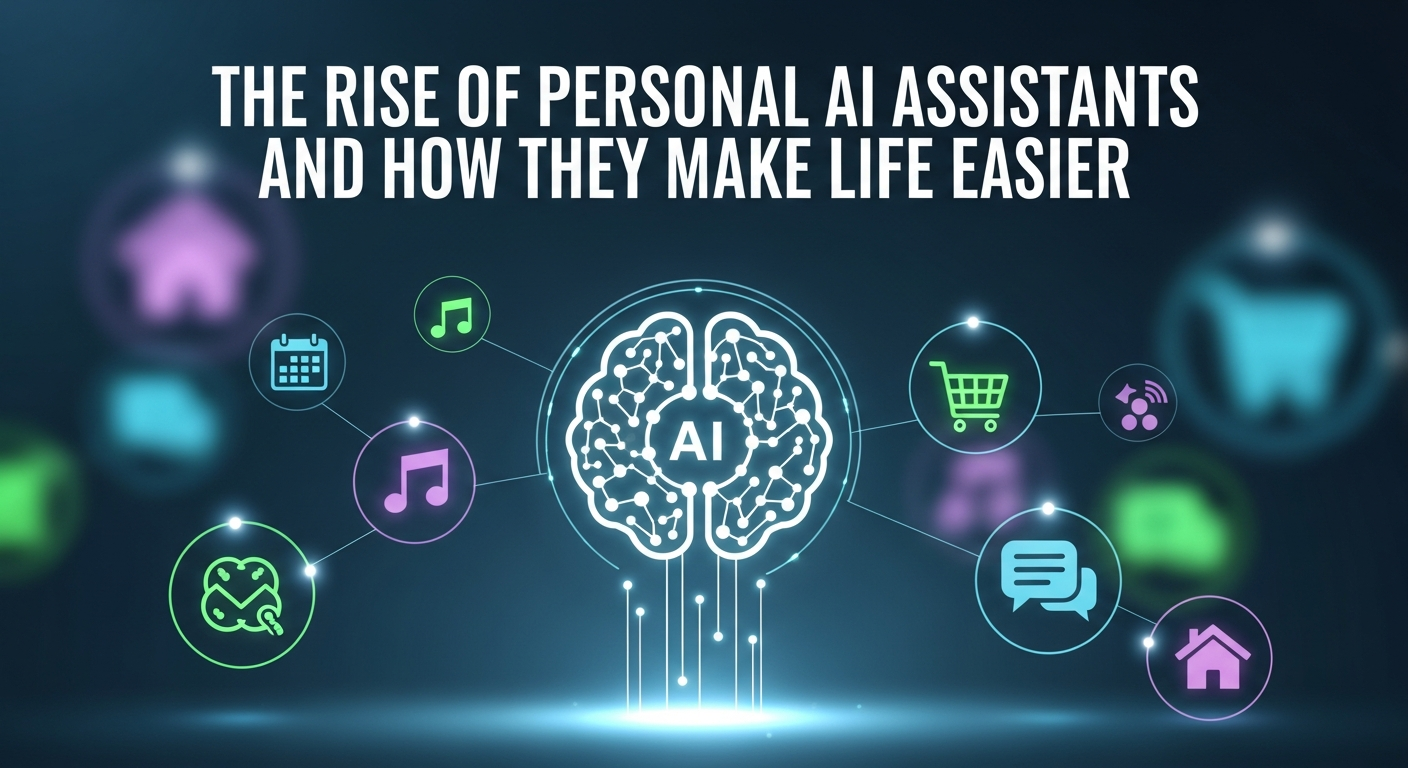
The Rise of Personal AI Assistants and How They Make Life Easier
Introduction/Overview
In the whirlwind of modern life, the relentless juggle of professional commitments, personal errands, and social obligations often leaves us feeling perpetually short on time and energy. We constantly seek ways to reclaim precious minutes, enhance our focus, and bring a greater sense of order to our increasingly complex schedules. This universal quest for modern efficiency isn't new, but the tools at our disposal are evolving at an unprecedented pace, promising not just incremental improvements, but a fundamental shift in how we manage our daily existence.
What Exactly Are Personal AI Assistants?
You might already be familiar with basic voice assistants on your smartphone or smart speaker, capable of setting alarms or telling you the weather. However, the next generation of intelligent agents, known as personal AI assistants, represents a significant leap in AI evolution. Unlike their reactive predecessors that simply follow commands, these advanced assistants are proactive, intuitive, and capable of learning from your habits and preferences over time. They are designed to anticipate your needs, automate routine tasks, and offer truly smart assistance, transforming from simple tools into your personal digital co-pilot.
Your New Era of Smart Assistance
This article will explore how these sophisticated personal AI assistants are rapidly evolving beyond novelty, becoming indispensable partners in achieving genuine daily life simplification. No longer confined to science fiction, these intelligent companions are here to empower individuals across all walks of life—from busy professionals and dedicated students to multi-tasking parents and tech enthusiasts—by taking on the administrative burdens that often drain our time and mental energy. They are poised to redefine how we interact with technology and how we approach productivity, offering a truly transformative experience.
What You'll Discover in This Article
Join us as we delve into the exciting world of personal AI assistants. Throughout this article, you will discover:
- The fascinating journey of AI from early concepts to today's sophisticated personal helpers.
- Concrete examples of how these assistants are simplifying everyday tasks, from managing your inbox to optimizing your health routines.
- How they boost productivity and foster creativity by freeing up valuable mental bandwidth.
- Practical tips for integrating personal AI assistants into your life effectively.
- A glimpse into the future, exploring emerging trends and the ethical considerations surrounding this powerful technology.
Prepare to unlock the secrets of leveraging this incredible innovation to make your life easier, more organized, and significantly more efficient. The future of personalized digital assistance is here, and it's more accessible than you think.
Main Content
The Transformative Leap: From Simple Commands to Intelligent Agents
The journey of personal AI assistants has been nothing short of revolutionary. We’ve come a long way from the early days of voice assistants like Siri or Alexa, which, while groundbreaking for their time, primarily operated on rule-based programming. These predecessors were largely reactive, executing pre-defined commands with limited understanding beyond keywords. If you didn’t phrase your request just right, they often struggled.
Today, we're witnessing an incredible AI evolution. Modern personal AI assistants are a far cry from their rudimentary ancestors. They represent an advanced AI paradigm, moving beyond simple script execution to demonstrate genuine intelligence, learning, and adaptability. This evolutionary leap signifies a shift from mere utility tools to sophisticated digital companions capable of enhancing almost every facet of daily life.
Defining Modern Personal AI: Proactivity, Personalization, and Learning
What truly distinguishes today's personal AI assistants is a set of core characteristics that empower them to be more than just digital notepads or alarm clocks. Firstly, there's proactive assistance. Instead of waiting for a direct command, these intelligent agents can anticipate your needs. For instance, an AI might suggest the best route to work based on real-time traffic, remind you of an upcoming appointment, or even pre-order your coffee based on your routine—all without you asking.
Secondly, personalization is at their very heart. Through continuous interaction, these AIs learn your preferences, habits, and even your communication style. This ongoing learning, powered by sophisticated machine learning algorithms, allows them to tailor recommendations, streamline tasks, and even filter information in ways that are uniquely relevant to you. The result is a truly personalized AI experience that grows more intuitive and effective over time. Furthermore, modern assistants often support multi-modal interaction, seamlessly switching between voice, text, and even visual inputs to match your communication preference.
The Technological Foundation: NLP, ML, and Contextual Understanding
Behind the seamless interactions and intelligent suggestions lies a robust technological backbone. Two pillars stand out: Natural Language Processing (NLP) and Machine Learning (ML). NLP is the magic that allows your AI assistant to understand, interpret, and generate human language. It’s what enables the AI to grasp the nuances of your spoken or written words, decode intent, and even discern sentiment, rather than just recognizing keywords.
Coupled with NLP is Machine Learning. ML algorithms enable the AI to learn from data—your interactions, preferences, and the vast ocean of information available online. This continuous learning is crucial for adaptability, predictive capabilities, and refining responses over time. But perhaps the most profound advancement is in contextual understanding. This allows an AI to not just process individual pieces of information, but to interpret them within the broader context of your day, your history, and your environment. This ability makes these digital companions truly intelligent agents, capable of nuanced decision-making and offering highly relevant assistance.
Categorization: Specialized vs. General Utility Personal AI
The landscape of personal AI assistants is diverse, catering to a wide array of needs. We can broadly categorize them into two main types. General utility assistants, such as those integrated into smartphones or smart home devices, are designed to perform a broad range of tasks, from setting reminders and answering questions to controlling smart appliances. Their strength lies in their versatility.
On the other hand, specialized personal AI assistants focus on specific domains. Examples include AI-powered writing tools that refine your prose, advanced scheduling assistants that manage complex calendars, or health and fitness trackers that use AI to analyze biometric data and offer personalized wellness advice. These specialized AIs leverage deep domain knowledge to provide highly focused and efficient assistance, demonstrating the expansive reach and utility of modern personal AI.
Supporting Content
Personal AI assistants are not just futuristic concepts; they are already making a tangible difference in our daily lives. From streamlining professional workflows to optimizing household chores and even enhancing personal well-being, these intelligent companions are becoming truly indispensable. Let's explore some vivid real-world applications demonstrating how personal AI is making life easier across various domains.
Work & Productivity Revolutionized
In the modern professional landscape, personal AI assistants are rapidly becoming essential AI productivity tools. Imagine a world where your inbox isn't a source of dread, but a perfectly managed system. Your AI can sift through emails, prioritizing important messages, drafting routine replies, and even flagging items requiring immediate attention. For busy professionals, this translates to significant time management AI benefits. Beyond email, these assistants excel at meeting scheduling, effortlessly coordinating calendars across multiple participants and suggesting optimal times. Need to prepare for a presentation? Your AI can summarize lengthy reports, extract key insights, and even assist in the initial stages of content drafting, acting as a powerful content creation AI ally. This level of automated support frees up invaluable human capital for strategic thinking and creative problem-solving, rather than mundane administrative tasks.
Streamlining Personal & Home Life
The convenience extends far beyond the office walls, revolutionizing our personal lives and home environments. Personal AI assistants are the central nervous system for modern homes, enabling seamless smart home integration. From adjusting your thermostat based on your schedule to controlling lighting, security systems, and even smart appliances, these AIs ensure your living space is always optimized for comfort and efficiency. But their utility doesn't stop there. For robust personal organization, an AI can become your diligent home manager. It can suggest personalized meal plans based on dietary preferences and ingredients on hand, remind you of important appointments or medication schedules, track your health and fitness goals, and even assist with basic financial organization by categorizing expenses and flagging due dates. This level of daily task automation significantly reduces mental load, giving you more time for what truly matters.
Unlocking Information, Learning, and Creativity
The quest for knowledge and self-improvement is also profoundly impacted by personal AI. These assistants act as incredibly fast and efficient knowledge conduits, making them essential AI for research. Need a fact-check mid-conversation? Your AI can provide instant, verified information. Traveling abroad? It offers real-time language translation, breaking down communication barriers. For those looking to grow, AIs can tailor learning paths, suggesting courses or resources based on your interests and skill gaps. They can even serve as creative partners, helping brainstorm ideas, offering different perspectives, or assisting in outlining projects, providing a constant source of intellectual stimulation and support. This instant access to information and personalized learning significantly accelerates skill development and fosters a culture of continuous learning.
Enhancing Accessibility and Constant Support
Perhaps one of the most impactful applications of personal AI assistants lies in enhancing accessibility and providing unwavering support. For individuals with specific needs, these tools can be transformative. An AI can interpret voice commands for those with motor impairments, convert text to speech for the visually impaired, or provide real-time captions for the hearing impaired, ensuring digital access is no longer a barrier. This commitment to AI for accessibility levels the playing field, making technology truly inclusive. Beyond practical functions, AI assistants can offer constant, patient companionship and support, whether it’s reminding an elderly individual to take medication or engaging in supportive conversations for those feeling isolated. They represent a new frontier in personalized care and independence, offering a valuable lifeline in countless scenarios. The promise of an AI companion means nobody has to navigate life's complexities alone, providing a profound sense of empowerment and security.
Advanced Content
Unpacking the Core: AI Models and Contextual Intelligence
At the heart of every sophisticated personal AI assistant lies a complex interplay of advanced artificial intelligence models. Central among these are Large Language Models (LLMs), which have revolutionized how machines understand and generate human-like text. These powerful models, often built upon the groundbreaking Transformer architecture, utilize billions of parameters trained on vast datasets to discern intricate patterns, semantics, and nuances in language. This enables your AI assistant to not only comprehend your spoken or typed queries but also to formulate coherent, contextually relevant, and even creative responses. These LLMs, underpinned by deep neural networks, are constantly learning and adapting. Beyond merely processing individual requests, modern personal AIs are evolving to possess a remarkable degree of contextual memory. This allows them to maintain continuity across multiple interactions, building a personalized user experience that anticipates needs and remembers preferences. This contextual AI capability relies on sophisticated mechanisms that store and retrieve relevant snippets from past conversations, dynamically updating a user profile to ensure a seamless and genuinely helpful ongoing dialogue. The ability to "remember" and adapt is what truly elevates these assistants beyond simple command processors.
The Dual Pillars: Data Privacy and AI Security
As personal AI assistants become more deeply integrated into our daily lives, handling sensitive information ranging from calendar events to personal health data, the complexities surrounding data privacy and security escalate dramatically. Developers face the monumental task of safeguarding user information while simultaneously using it to enhance personalization. Robust AI security protocols are paramount, involving end-to-end encryption for data in transit and at rest, stringent access controls, and regular security audits. Crucially, the concept of user consent is central; individuals must have clear, transparent control over what data their AI assistant collects, how it's used, and for how long it's stored. Adhering to global data protection regulations is not just a legal requirement but a fundamental aspect of building trust with users. The challenge lies in striking a delicate balance: providing hyper-personalized services without compromising fundamental privacy rights.
Broader Implications: Integration, Ethics, and Transparency
The true power of personal AI assistants often extends beyond their standalone capabilities, leveraging seamless integration into broader digital ecosystems. Through Application Programming Interfaces (APIs), these assistants can connect with an ever-expanding array of third-party applications and services—from smart home devices and email clients to productivity suites and streaming platforms. This API integration creates a unified digital hub, enabling the AI to orchestrate complex tasks across various domains, streamlining workflows and enriching the user experience. However, this expansive reach also amplifies critical ethical considerations. The "black box" problem, where the decision-making processes of complex machine learning algorithms are opaque, raises concerns about accountability and fairness. This is particularly relevant when addressing issues of algorithmic bias, where inherent prejudices in training data can lead to discriminatory or unfair outcomes across different user demographics. Therefore, discussions around AI ethics and AI transparency are not abstract academic exercises but vital components of responsible AI development, ensuring that these powerful tools serve humanity equitably and justly. Developers bear a significant responsibility to mitigate bias, provide clear explanations where possible, and continuously monitor their systems for unintended consequences.
Practical Content
Adopting a personal AI assistant can seem daunting, but with a structured approach, you can seamlessly integrate this powerful technology into your daily life. This AI adoption guide provides actionable steps, from identifying your needs to mastering best practices for successful integration, ensuring you harness AI's full potential.
1. Assessing Your Needs and Prioritizing Key Features
Before diving into the myriad options available, take a moment to reflect on where an AI assistant can genuinely provide the most value for you. Are you struggling with email overload, keeping track of appointments, managing complex projects, or simply needing quick information retrieval? Pinpointing your specific pain points will guide your search for the perfect AI companion.
Once you've identified your primary use cases, consider these essential features when choosing AI assistant:
- Customization: Can you tailor its responses, personality, or workflow to match your preferences? The more personalized, the more effective it will be in supporting your unique style.
- Robust Integrations: Does it seamlessly connect with your existing tools like calendars, email clients, project management software, or smart home devices? Interoperability is key for a truly integrated experience.
- Strong Privacy Controls: Given the personal nature of the data shared, thoroughly examine the platform's commitment to data security and its privacy settings for AI. Understand how your information is used and protected.
- Ease of Use: An intuitive interface and straightforward commands are crucial. You want to spend time using the AI, not learning its complexities.
- Multi-Platform Availability: Can you access your AI assistant across all your devices – phone, tablet, computer, smart speaker? This ensures consistent support wherever you are.
2. Exploring Popular Personal AI Assistants
While an in-depth review is beyond this section, it's helpful to be aware of some leading personal AI assistants currently making waves. Traditional assistants like Apple's Siri, Google Assistant, and Amazon Alexa excel in quick commands, smart home control, and basic information retrieval. For more complex tasks, content generation, and sophisticated research, newer conversational AIs such as OpenAI's ChatGPT, Anthropic's Claude, and Microsoft Copilot offer advanced capabilities. Each has its strengths, so align their core functionalities with your identified needs.
3. Best Practices for Smooth Integration
Successfully integrating AI into workflow goes beyond initial setup. It requires a thoughtful approach to maximize benefits and manage expectations:
- Gradual Personal AI Setup: Don't try to automate everything at once. Start with one or two simple tasks, like setting reminders or managing your schedule. As you become more comfortable, gradually expand its responsibilities.
- Set Clear Boundaries and Expectations: Understand what your AI can and cannot do. While powerful, AI assistants are tools, not sentient beings. Clearly define what information you're comfortable sharing and what tasks you want it to handle.
- 'Train' Your AI Through Feedback: The more you interact with your AI and provide feedback, the better it will understand your preferences and improve its accuracy. Don't hesitate to correct it or refine your prompts. This iterative process is vital for personalized performance.
- Regularly Review and Adapt: Periodically assess how your AI assistant is performing. Are there new features you could leverage? Are your needs evolving? Adjust its settings and workflows accordingly to continuously optimize your experience.
- Leverage for Productivity Tips with AI: Use your AI assistant to generate ideas, draft communications, summarize documents, or even create outlines for projects. It can be a powerful co-pilot for boosting your output.
By following these AI best practices, you can ensure a seamless transition and unlock significant benefits from your personal AI assistant, making life easier and more productive.
Comparison/Analysis
The Multifaceted Advantages of Personal AI Assistants
The integration of personal AI assistants into our daily routines brings a host of significant advantages, fundamentally reshaping how we manage time and tasks. One of the primary AI benefits is the dramatic increase in efficiency. AI assistants can automate repetitive tasks, schedule appointments, manage emails, and fetch information far quicker than manual human effort, freeing up valuable time for more complex or creative endeavors. This automation leads to a significant reduction in cognitive load, as individuals no longer need to constantly juggle a myriad of small, administrative details. By offloading these mental burdens, users experience less stress and improved focus.
Furthermore, personal AI assistants enhance accessibility for diverse user groups. Voice commands and intuitive interfaces make technology more approachable for individuals with varying levels of tech proficiency or physical limitations. Finally, these tools contribute to improved task accuracy. AI-driven systems are less prone to human error when performing data retrieval, calculations, or scheduling, ensuring that tasks are completed correctly and reliably. The precision and speed of AI are unparalleled, providing a reliable backbone for personal and professional productivity.
Navigating the Challenges: Drawbacks and Ethical Considerations
While the advantages are clear, it's crucial to present a balanced view by acknowledging the potential challenges and AI drawbacks associated with these evolving technologies. A significant concern is the risk of over-reliance, where individuals might become excessively dependent on AI for basic cognitive functions or decision-making, potentially eroding critical thinking skills. Closely related are the inherent data privacy risks. Personal AI assistants collect vast amounts of user data, from schedules and communication to preferences and financial details. Ensuring this sensitive information is protected from breaches and misuse requires robust security protocols and transparent data handling policies.
Beyond privacy, there's a learning curve for users to effectively integrate AI into their lives, and the potential for AI bias in algorithms, which can inadvertently perpetuate or amplify societal inequalities, must be meticulously addressed during development. The broader societal impact also includes concerns about job automation, as AI tools might displace human roles in certain sectors, necessitating discussions around economic adjustments and retraining initiatives. Moreover, the digital divide could widen, as access to advanced AI tools might remain concentrated among those with the necessary financial resources and internet infrastructure, leaving others further behind. These complex issues underscore the need for thoughtful and proactive solutions.
Reactive vs. Proactive AI: A Leap in Personal Assistance
The evolution of personal AI assistants represents a significant technological leap, moving from merely reactive tools to increasingly proactive and intelligent companions. Traditional digital assistants (or even human assistants) were largely reactive; they waited for a specific command or request before taking action. "Set an alarm for 7 AM," or "Find me the nearest coffee shop," are classic examples. The user initiates, and the assistant responds. This model, while useful, is limited by the user's explicit instructions.
Modern personal AI, however, is increasingly proactive. Leveraging machine learning and contextual understanding, these systems can anticipate needs, offer suggestions, and even initiate actions without direct prompting. For example, a proactive AI might notice a gap in your schedule and suggest a workout based on your fitness goals, or alert you to traffic delays for an upcoming meeting and automatically suggest an earlier departure time. This represents a fundamental shift in the personal assistant comparison, moving from mere command execution to intelligent partnership. This foresight dramatically enhances efficiency and reduces cognitive load, making the assistance feel more intuitive and integrated.
The Horizon: Hyper-Personalization and Responsible Innovation
Looking ahead, the future of AI assistance is poised for even more profound transformations. We can expect an era of hyper-personalization, where AI assistants possess an unprecedented understanding of individual preferences, habits, and even emotional states. This will be driven by advancements in emotional intelligence, allowing AI to detect nuances in user mood and respond with appropriate empathy or suggestions. Seamless ambient computing will also become a reality, with AI assistance integrated ubiquitously into our environments, from smart homes to vehicles, making interaction effortless and invisible.
However, this future necessitates a strong commitment to responsible AI development. As AI becomes more deeply embedded in our lives, ethical considerations around autonomy, transparency, and accountability will only intensify. Discussions around AI regulation will become critical to ensure these powerful technologies are developed and deployed in a manner that benefits all of humanity, mitigates risks like deepfake misuse or algorithmic discrimination, and upholds fundamental human rights. Balancing innovation with ethical governance will be key to unlocking the full, positive potential of personal AI assistants.
Conclusion
Embracing an Easier Life with Personal AI
As we've explored throughout this article, the ascent of personal AI assistants marks a pivotal moment in our technological journey. From simple voice commands to sophisticated task automation and personalized insights, these intelligent companions have transcended their nascent origins to become truly indispensable tools for modern living. They are no longer mere novelties but essential orchestrators, quietly working in the background to streamline our schedules, manage our information, and generally make our daily lives significantly easier and more productive. Their ability to learn, adapt, and anticipate our needs has reshaped how we interact with technology and, by extension, how we navigate the complexities of the contemporary world.
Your AI Journey: Key Takeaways and Benefits
The journey into the world of personal AI reveals a clear path towards enhanced efficiency and greater personal freedom. Among the most significant AI takeaways, we've seen how these assistants excel at saving precious time by automating mundane tasks, from setting reminders and managing calendars to ordering groceries and booking appointments. They offer unparalleled convenience, providing instant access to information and entertainment, all while fostering better organization through smart reminders and data management. Moreover, the personalized support they offer, whether it's health monitoring, language translation, or learning assistance, showcases their transformative potential to cater to individual needs. The true power lies in their capacity to free up our mental bandwidth, allowing us to focus on more meaningful endeavors, creativity, and personal growth.
Navigating the Future of AI: Engage Responsibly
The landscape of personal AI is dynamic, brimming with continuous AI innovation. What we see today is merely the tip of the iceberg, with ongoing research promising even more intuitive, integrated, and predictive capabilities. The future of AI will undoubtedly bring even more seamless integration into our homes, vehicles, and workplaces, enhancing everything from smart cities to personalized healthcare. This continuous evolution heralds an exciting era of personal AI growth, making it crucial for us to engage thoughtfully with this technology. We encourage you to explore the capabilities of personal AI assistants, experiment with different platforms, and discover how they can best serve your unique lifestyle. However, it's equally vital to champion responsible AI use, understanding its limitations, safeguarding privacy, and critically evaluating its impact. By doing so, we can collectively steer this digital transformation towards a future where AI genuinely empowers humanity, creating a more efficient, connected, and enriched existence for everyone. Embrace the change, learn continuously, and become an active participant in shaping tomorrow's intelligent world.

Comments (0)
Please login or register to leave a comment.
No comments yet. Be the first to comment!