
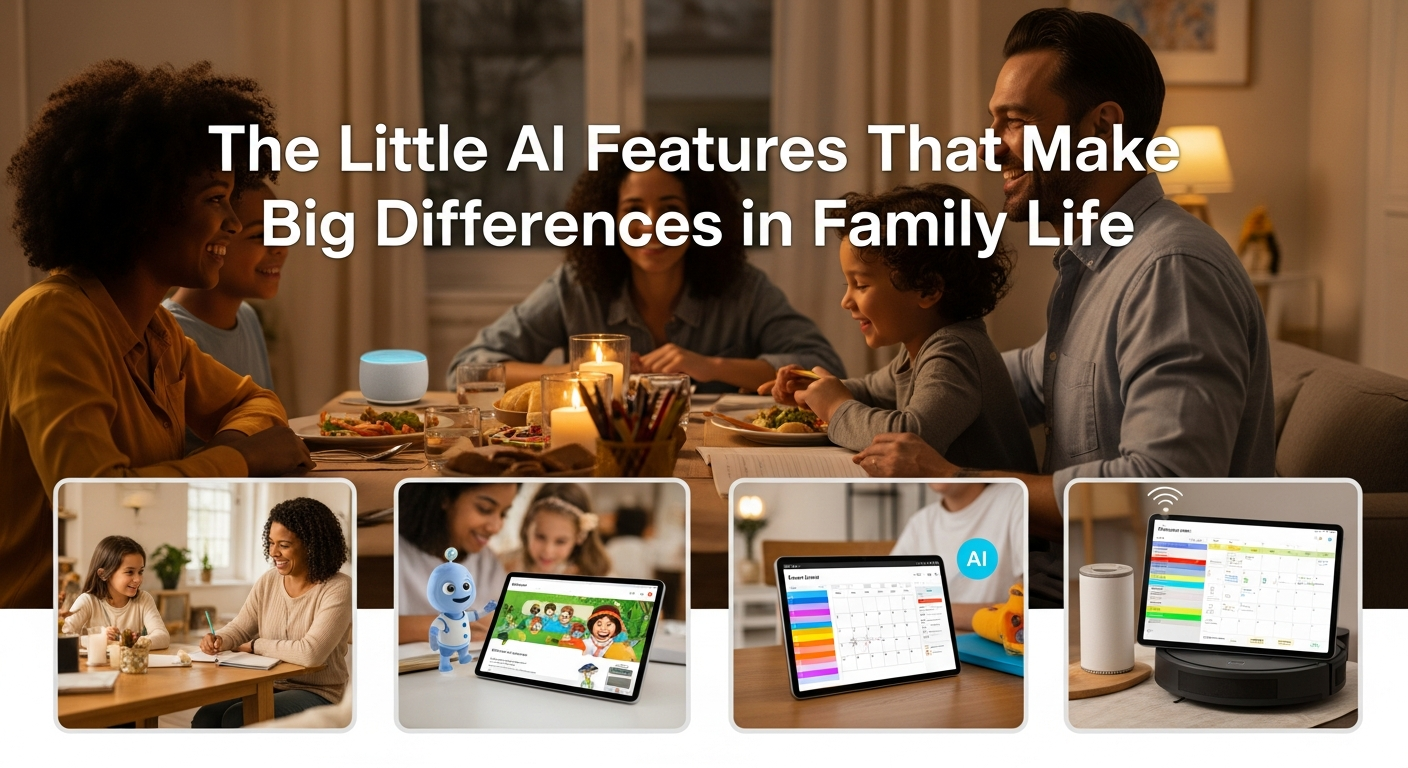
The Little AI Features That Make Big Differences in Family Life
- November 21, 2025
- ~ 1 min read
- 195 views
- Lifestyle & AI , GenAI
Introduction to AI in Family Life
Imagine a typical morning in a busy household, where the alarm clock wakes you up, and the lights gradually brighten to simulate a sunrise. As you start your day, your virtual assistant, powered by AI, begins to play your favorite music, and the coffee maker starts brewing a fresh pot. This seamless integration of technology into daily routines is becoming increasingly common, and it's all thanks to the growing presence of AI in our homes. In this article, we'll explore the little AI features that make a big difference in family life, and how understanding and leveraging this technology can enhance our experiences and relationships.
The Rise of AI in Homes
In recent years, AI has become an integral part of our daily lives, from virtual assistants like Alexa and Google Home to smart home devices that learn and adapt to our habits. This innovation has transformed the way we interact with technology, making it more intuitive and user-friendly. As AI continues to advance, it's essential for families to understand its role in shaping their daily routines and relationships. By embracing AI, families can streamline their lives, reduce stress, and create more opportunities for quality time together.
Why Understanding AI Matters
As AI becomes more pervasive in our homes, it's crucial for families to grasp its potential and limitations. By doing so, they can make informed decisions about which AI-powered devices and services to adopt, and how to use them effectively. Understanding AI can also help families navigate the potential challenges and concerns associated with this technology, such as data privacy and security. By being aware of these issues, families can take steps to mitigate risks and ensure that AI enhances their lives without compromising their well-being.
A Sneak Peek into the Little AI Features that Make a Big Difference
In the following sections, we'll delve into the little AI features that can make a significant impact on family life. From smart home automation to personalized learning tools, we'll explore the ways in which AI can simplify, streamline, and enrich our daily experiences. Whether you're a tech-savvy individual or just starting to explore the world of AI, this article will provide you with valuable insights and practical tips on how to harness the power of AI to create a more harmonious, efficient, and enjoyable family life. As we'll discover, the key to unlocking the full potential of AI lies in its ability to enhance our human connections, rather than replace them.
Throughout this article, we'll examine the various ways in which AI is transforming family life, from the way we communicate and collaborate to the way we learn and play. By the end of this journey, you'll have a deeper understanding of the AI landscape and the exciting opportunities it presents for families to thrive in a rapidly changing world. So, let's embark on this exploration of the little AI features that make a big difference, and discover how technology can be a powerful tool for building stronger, more loving relationships.
Understanding AI Features for Family Life
When we talk about AI features in the context of family life, we're often referring to those small, sometimes overlooked technologies that can make a significant impact on our daily routines. These "little AI features" can be thought of as the building blocks of a smart home, working together to create an environment that is not only more convenient but also more efficient and safer. To understand how these features can benefit our family lives, let's first take a look at some of the common AI technologies used in homes today.
Common AI Technologies in the Home
At the heart of many smart home systems are voice assistants, such as Amazon Alexa, Google Assistant, and Apple Siri. These AI-powered assistants can control a wide range of devices, from lights and thermostats to security cameras and entertainment systems. Beyond voice assistants, smart devices themselves are becoming increasingly prevalent, offering automated solutions for everything from cooking and cleaning to healthcare and education. The integration of these devices into our homes is made possible by advancements in AI, which enables them to learn our preferences and adapt to our needs over time.
Contribution to a Smarter Home Environment
The collective impact of these AI features is profound. By automating mundane tasks and providing real-time information, they can significantly enhance our convenience and safety. For instance, smart thermostats can learn your daily schedule and preferences to optimize heating and cooling, saving energy and money. Smart security systems can alert you to potential threats, even when you're not at home, thanks to AI-powered anomaly detection. Moreover, voice assistants can help manage family schedules, set reminders, and even assist with homework, making them an indispensable tool for increasing quality time and reducing stress.
Introduction to AI Personalization
One of the most exciting aspects of AI features in family life is their ability to offer personalization. Through machine learning algorithms, these systems can analyze the behavior and preferences of individual family members, tailoring their responses and suggestions accordingly. This level of personalization can lead to a more harmonious and efficient home environment, where each person's needs are anticipated and met. For example, a smart home system can adjust lighting and temperature settings based on who is in the room, or recommend entertainment options that cater to everyone's tastes. As AI continues to evolve, we can expect even more sophisticated forms of personalization, further blurring the lines between technology and family life.
In conclusion, the little AI features that make big differences in family life are not just novelties but integral components of a smart home. By understanding and embracing these technologies, families can unlock a world of convenience, safety, and personalization, ultimately enhancing their quality of life. Whether through voice assistants, smart devices, or the concept of AI personalization, the potential of AI to transform family life is vast and promising.
Real-World Examples of AI in Family Life
As we delve into the world of AI and its impact on family life, it becomes clear that the technology is not just a futuristic concept, but a tangible tool that is already making a significant difference in the lives of many families. From family entertainment to education, health, and safety, AI is proving to be a versatile and invaluable asset. In this section, we will explore some real-world examples of how families are utilizing AI to improve their lives and overcome everyday challenges.
AI in Family Entertainment and Education
For many families, AI examples in entertainment are a great way to spend quality time together. For instance, streaming services like Netflix and Hulu use AI to recommend TV shows and movies based on a family's viewing history. This not only saves time but also helps families discover new content that they might not have found otherwise. Moreover, AI-powered educational platforms are revolutionizing the way children learn. These platforms use personalized learning techniques to tailor the educational content to a child's individual needs, abilities, and learning style. This approach has been shown to improve learning outcomes and increase student engagement.
A great example of this is the use of AI-powered virtual learning environments, which provide interactive and immersive learning experiences for children. These environments can simulate real-world scenarios, making complex concepts more accessible and fun to learn. For example, an AI-powered virtual lab can allow children to conduct science experiments in a safe and controlled environment, without the need for physical equipment or supervision.
AI-Assisted Health and Wellness for Families
AI is also playing a critical role in health and wellness for families. For instance, AI-powered fitness trackers and health monitors can track a family member's physical activity, sleep patterns, and nutrition, providing valuable insights into their overall health. This information can be used to identify potential health risks and develop personalized fitness plans to mitigate them. Additionally, AI-powered chatbots and virtual assistants can provide emotional support and guidance to family members who may be struggling with mental health issues, such as anxiety or depression.
Furthermore, AI can help families manage chronic health conditions, such as diabetes or asthma, by providing personalized treatment plans and medication reminders. For example, an AI-powered app can analyze a family member's medical history, lifestyle, and environmental factors to provide tailored advice on managing their condition. This not only improves health outcomes but also reduces the risk of complications and hospitalizations.
AI's Role in Family Safety and Security
Finally, AI is also being used to enhance safety and security for families. For instance, AI-powered home security systems can detect potential threats, such as intruders or fires, and alert family members in real-time. These systems can also be integrated with other smart devices, such as door locks and lighting systems, to provide an additional layer of security. Moreover, AI-powered parental control software can help families monitor their children's online activities, blocking access to inappropriate content and protecting them from cyberbullying and other online threats.
In conclusion, these real-world examples demonstrate the significant impact that AI can have on family life. From family entertainment to education, health, and safety, AI is providing families with the tools and resources they need to thrive in today's fast-paced world. As AI technology continues to evolve, we can expect to see even more innovative applications of AI in family life, leading to improved outcomes and a better quality of life for families around the world.
- Use AI-powered streaming services to discover new TV shows and movies
- Explore AI-powered educational platforms for personalized learning
- Utilize AI-powered fitness trackers and health monitors to track physical activity and nutrition
- Consider AI-powered home security systems for enhanced safety and security
By embracing AI and its many applications, families can create a more harmonious, productive, and fulfilling life, where every member can thrive and reach their full potential.
Advanced AI Concepts for the Tech-Savvy Family
As families become increasingly reliant on technology to manage their daily lives, understanding the advanced AI concepts that power these innovations is crucial. In this section, we'll delve into the technical details of machine learning, NLP, computer vision, edge AI, and ethical AI to explore their current state, future potential, and implications for family life.
Machine Learning and Smart Homes
Machine learning is a subset of AI that enables systems to learn from data and improve their performance over time. In the context of smart homes, machine learning can be used to optimize energy consumption, predict maintenance needs, and personalize the living experience. For instance, a smart thermostat can use machine learning to learn a family's temperature preferences and adjust the temperature accordingly. This not only enhances comfort but also reduces energy waste. As machine learning continues to evolve, we can expect to see more sophisticated applications in smart homes, such as predictive maintenance and automated troubleshooting.
Natural Language Processing and Voice Assistants
NLP is a fundamental technology behind voice assistants like Alexa, Google Assistant, and Siri. NLP enables these assistants to understand and interpret human language, allowing families to control their smart devices, access information, and perform tasks using voice commands. The current state of NLP is impressive, with voice assistants capable of understanding nuances in language and responding accordingly. However, there is still room for improvement, particularly in terms of contextual understanding and multi-turn dialogue. As NLP continues to advance, we can expect to see more seamless interactions between humans and voice assistants, making it easier for families to manage their daily lives.
Computer Vision, Edge AI, and Ethical Considerations
Computer vision is a technology that enables systems to interpret and understand visual data from images and videos. In the context of home security systems, computer vision can be used to detect intruders, recognize faces, and alert families to potential threats. Edge AI is a related concept that refers to the processing of AI workloads at the edge of the network, i.e., on devices themselves rather than in the cloud. Edge AI has significant implications for real-time data processing, enabling faster and more secure processing of visual data. However, as AI technologies become more pervasive in family life, ethical AI and privacy concerns become increasingly important. Families must consider the potential risks and benefits of these technologies and take steps to ensure that their data is protected and used responsibly.
Some key considerations for families include:
- Understanding how AI systems collect and use data
- Setting boundaries and limits on AI-powered devices
- Monitoring and controlling access to AI-powered systems
- Staying informed about the latest developments in AI and their implications for family life
As AI continues to evolve and become more integrated into family life, it's essential for families to stay informed and engaged in the conversation around AI ethics and privacy. By doing so, they can ensure that these technologies are used in a way that benefits and enhances their lives, rather than compromising their values and well-being.
Implementing AI Solutions in Your Family Life
As we explore the vast potential of AI features in enhancing family life, it's essential to understand how to effectively implement these solutions in our homes. AI implementation is not just about setting up devices; it's about creating a seamless and personalized experience for every family member. In this section, we will guide you through a step-by-step process of setting up a smart home system with AI integration, choosing the right AI-powered devices, and customizing AI assistants for unique family needs.
Setting Up a Smart Home System with AI Integration
The first step towards integrating AI into your family life is setting up a smart home system. This involves selecting a central hub that can connect and control all your AI devices. When choosing a hub, consider the compatibility of the device with your existing smart devices and the ease of use for all family members. Here's a simple, step-by-step guide to get you started:
- Choose a smart home hub that fits your needs, considering factors like voice control, device compatibility, and user interface.
- Connect your hub to your Wi-Fi network. This usually involves downloading an app, creating an account, and following the in-app instructions for setup.
- Start adding your smart devices to the hub. Ensure each device is compatible with your hub and follow the manufacturer's instructions for pairing.
- Customize your smart home system by creating scenes or routines that automate multiple actions with a single command. For example, a "good morning" scene could turn on the lights, start the coffee maker, and play your favorite music.
Choosing the Right AI-Powered Devices
Selecting the right AI-powered devices for your family is crucial for a harmonious and beneficial smart home setup. Consider the specific needs and preferences of each family member. For instance, if you have elderly family members, devices with simple interfaces and voice commands can be particularly helpful. Here are some tips for choosing the right devices:
- Assess your family's lifestyle: Consider your daily routines, hobbies, and challenges to identify where AI can make the most impact.
- Evaluate device compatibility: Ensure that any new device can integrate well with your existing smart home system and other devices.
- Read reviews and ask for recommendations: Look for devices that have been praised for their ease of use, effectiveness, and customer support.
Customizing AI Assistants and Integrating with Family Routines
Once you have your AI devices set up, the next step is to train and customize your AI assistants for personalized experiences. Most AI assistants allow you to create custom commands, routines, and even integrate with your calendar to anticipate your needs. Integrating AI with existing family routines and traditions can make the technology feel more natural and beneficial. For example, you can program your AI assistant to play traditional family music during holidays or to remind everyone of upcoming family events.
Customization is key to making AI a valuable part of your family life. By taking the time to understand and tailor AI solutions to your family's unique needs and preferences, you can unlock a more convenient, enjoyable, and connected home environment.
In conclusion, implementing AI solutions in your family life is a process that requires careful consideration of each family member's needs, preferences, and routines. By following these steps and tips, you can create a smart home that not only makes your life easier but also brings your family closer together through shared experiences and traditions. Remember, the goal of AI customization and family routines integration is to enhance your family life, making it more enjoyable, efficient, and fulfilling.
Comparing AI Solutions for Family Life
When it comes to integrating AI features into family life, there are numerous solutions available, each with its unique set of benefits and drawbacks. In this section, we will delve into a comparative analysis of popular AI-powered smart speakers, security systems, and entertainment services to help families make informed decisions. The goal is to find the perfect balance between functionality, compatibility, and cost, ensuring that the chosen AI solution enhances family life without breaking the bank.
Evaluating Smart Speakers and Compatibility
The market for smart speakers is flooded with options, including Amazon Echo, Google Home, and Apple HomePod, each boasting its own set of AI features. When choosing a smart speaker, it's crucial to consider compatibility with other devices in the home. For instance, if your family uses a lot of Apple products, the Apple HomePod might be the most seamless integration. On the other hand, Google Home offers superior voice recognition capabilities, making it a favorite among those deeply invested in the Google ecosystem. The following table highlights the key features and compatibility of these smart speakers:
| Smart Speaker | Compatibility | Key Features |
|---|---|---|
| Amazon Echo | Alexa-enabled devices, Android, iOS | Smart home control, voice shopping, entertainment |
| Google Home | Google Assistant-enabled devices, Android, iOS | Superior voice recognition, smart home control, Google services integration |
| Apple HomePod | Apple devices, iOS | Seamless Apple ecosystem integration, high-quality audio, Siri voice assistant |
Assessing AI-Driven Security Systems
AI-driven security systems offer an advanced level of home protection by learning patterns and detecting anomalies. Systems like Nest Secure and Ring Alarm Pro utilize AI features to enhance home security. However, the choice between these systems depends on specific family needs, such as the size of the home, the number of entry points, and the desired level of automation. Cost is also a significant factor, with some systems requiring monthly subscription fees for full functionality. It's essential to weigh the pros and cons, including the initial setup cost, monthly fees, and the level of security provided, to make an informed decision.
Considering AI Services for Entertainment and Education
Families have a wide range of AI services for entertainment and education at their disposal. Platforms like Netflix and Hulu offer personalized content recommendations using AI, while educational services like National Geographic Kids and ABCmouse incorporate AI to create interactive learning experiences. When selecting these services, consider the age range of your family members, the type of content you're looking for, and whether the service provides a free trial or subscription model. The following list outlines some key considerations for choosing AI-driven entertainment and education services:
- Content variety and appropriateness for all ages
- Personalization capabilities using AI
- Subscription costs and any available discounts
- Availability of educational content and interactive features
In conclusion, the process of comparing AI solutions for family life involves a meticulous analysis of smart speakers, security systems, and entertainment services. By considering factors such as compatibility, cost, and the specific needs of your family, you can make an informed decision that enhances your family's lifestyle without compromising on budget or functionality. Remember, the key to maximizing the benefits of AI features in family life is finding the right balance and ensuring that the chosen solutions integrate seamlessly into your daily routines.
Ultimately, the best AI solution for your family is one that is tailored to your unique needs, providing a harmonious blend of convenience, entertainment, education, and security, all while being mindful of your budget.
Conclusion and Next Steps
In conclusion, the little AI features that make big differences in family life are numerous and varied. From AI-powered virtual assistants to smart home devices, these technologies have the potential to significantly enhance family relationships and experiences. Throughout this article, we have explored the various ways in which AI can improve communication, organization, and entertainment within families. By leveraging these AI solutions, families can create a more harmonious and efficient home environment.
Reflecting on the Potential of AI
As we look to the AI future, it is clear that the potential for family enhancement is vast. By adopting technology adoption strategies that prioritize AI, families can stay ahead of the curve and reap the benefits of these innovative solutions. Whether it's using AI-powered chatbots to help with household chores or implementing smart home security systems, the possibilities are endless. As families continue to evolve and grow, it is essential to stay informed about the latest AI trends and advancements.
Next Steps for Families
So, what's next for families looking to integrate AI into their daily lives? The first step is to explore and learn about the various AI features and devices available. This can involve researching online, reading reviews, and seeking recommendations from friends and family members. Some popular resources for families include:
- AI-focused websites and blogs
- Online forums and communities
- Technology stores and retail websites
A Call to Action
In conclusion, we encourage all families to embrace the future of AI and start exploring the many benefits that these technologies have to offer. Whether you're looking to enhance family relationships, improve household efficiency, or simply stay entertained, there's an AI solution out there for you. So why not start today and discover the exciting possibilities that AI has in store for your family? With the right mindset and a willingness to learn, the AI future is bright, and the potential for family enhancement is limitless.
As you embark on this journey, remember that the key to successful technology adoption is to stay curious, stay informed, and always be open to new ideas and experiences. By doing so, you'll be well on your way to creating a more harmonious, efficient, and enjoyable home life for you and your loved ones.

Comments (0)
Please login or register to leave a comment.
No comments yet. Be the first to comment!