
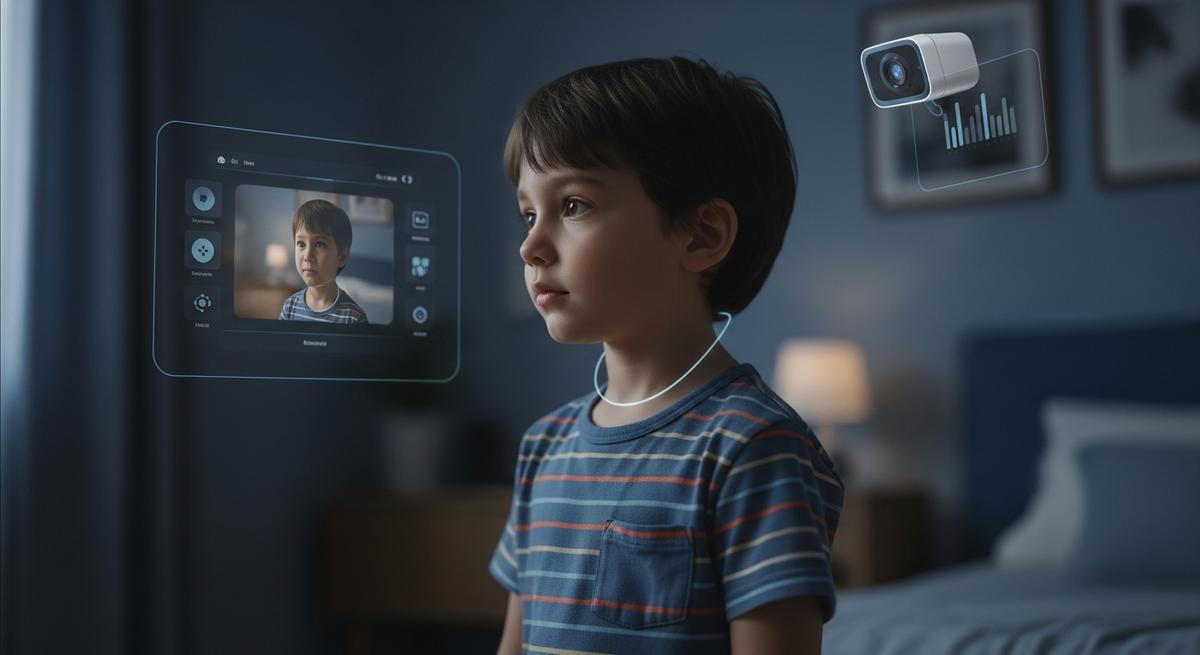
The Kid in the Room: How AI Monitors Safety at Home
- November 28, 2025
- ~ 1 min read
- 190 views
- Everyday AI , AI Security , GenAI
Introduction to AI-Powered Home Safety Monitoring
For parents and caregivers, ensuring the safety of children and vulnerable individuals at home is a top priority. In today’s fast-paced world, traditional monitoring methods—like periodic check-ins or basic surveillance cameras—often fall short. Enter AI home safety technology, a game-changer that’s transforming how we protect our loved ones within the home environment. With the rise of smart home security systems, artificial intelligence is no longer just a futuristic concept; it’s a practical, accessible tool that brings peace of mind to millions of households.
The Growing Role of AI in Home Security
AI-powered monitoring systems are rapidly becoming the cornerstone of modern home safety. These advanced technologies go beyond simple motion detection, using sophisticated algorithms to analyze real-time video, audio, and behavioral patterns. Whether it’s a child playing alone, an elderly family member needing assistance, or a pet wandering into a restricted area, AI can identify potential risks and alert caregivers instantly. This shift from passive observation to active, intelligent monitoring marks a new era in smart home security.
Why Monitoring Children and Vulnerable Individuals Matters
Children and vulnerable individuals are often the most at risk within the home. From accidental falls to wandering off or encountering hazards, the need for vigilant supervision is constant. AI-driven systems offer a level of protection that’s both comprehensive and unobtrusive. By leveraging features like real-time alerts, pattern recognition, and predictive analytics, these systems help prevent incidents before they happen, giving families greater confidence and control.
What to Expect in This Article
In the following sections, we’ll explore the latest advancements in AI-powered home safety monitoring, focusing on practical applications for child monitoring and safeguarding vulnerable individuals. You’ll learn about the technology behind these systems, the benefits they offer, and real-world use cases that demonstrate their impact. We’ll also provide actionable advice on choosing and implementing the right solutions for your home, ensuring that you can harness the full potential of AI home safety to keep your family secure.
AI is not just enhancing home security—it’s redefining what it means to protect those we care about most.
Join us as we dive into the world of AI-powered monitoring, where technology meets compassion to create safer, smarter homes for everyone.
Understanding AI Technologies in Home Safety Monitoring
AI-powered surveillance systems have transformed the way homeowners monitor safety, especially when it comes to protecting children and vulnerable individuals. These systems combine advanced hardware and intelligent software to create a vigilant, responsive environment that adapts to the unique needs of every household.
Core Components of AI Surveillance
At the heart of every AI home safety system are three essential components: high-definition cameras, smart sensors, and AI algorithms. Modern cameras are equipped with high-resolution video sensors and infrared capabilities, allowing them to capture clear images even in low-light conditions. These cameras work in tandem with motion sensors and microphones to gather real-time data from the home environment.
The collected data is processed by AI algorithms—often powered by neural networks and machine learning models. These algorithms analyze video feeds and sensor inputs to detect patterns, recognize objects, and identify potential threats. By processing information locally (edge computing) or in the cloud, AI surveillance systems can deliver fast, accurate responses without relying solely on human monitoring.
Smart Motion Detection and Activity Zones
One of the most valuable features of AI surveillance is smart motion detection. Unlike traditional motion sensors that trigger alerts for any movement, AI-powered systems can distinguish between humans, animals, and vehicles. This means parents can receive alerts only when a child enters a restricted area, while movements from pets or passing cars are ignored.
Activity zones further enhance this capability. Homeowners can define specific areas—such as a playroom, staircase, or pool area—where monitoring is most critical. The system can be programmed to send real-time alerts if a child enters or lingers in these zones, ensuring immediate awareness of potentially unsafe situations.
Facial Recognition and Identity Verification
Facial recognition technology adds another layer of security and convenience. Advanced AI surveillance systems can identify known individuals, such as family members or caregivers, and differentiate them from strangers. This feature is especially useful for monitoring who enters or leaves the home, and can trigger tailored alerts or automated responses—like unlocking doors for authorized users or notifying parents if an unfamiliar face is detected.
Identity verification also helps reduce false alarms. By learning the faces of regular household members, the system minimizes unnecessary notifications, ensuring that real-time alerts are reserved for genuine safety concerns.
AI surveillance systems don’t just watch—they understand. With smart motion detection, activity zones, and facial recognition, these technologies provide a proactive, personalized approach to home safety.
By integrating these AI technologies, homeowners gain peace of mind knowing their loved ones are protected by a system that’s always alert, always learning, and always ready to respond.
Real-World Applications and Use Cases of AI Monitoring at Home
AI monitoring is rapidly transforming how families protect their homes, especially when it comes to safeguarding children and vulnerable individuals. By leveraging advanced sensors, machine learning, and smart device integration, AI-powered systems now offer real-time, context-aware protection that adapts to the unique needs of each household.
Child Safety Monitoring in Playrooms and Bedrooms
One of the most impactful AI home use cases is child safety monitoring. In playrooms and bedrooms, AI-enabled cameras and sensors can track a child’s movements, detect unusual activity, and alert caregivers if something seems amiss. For example, if a toddler wanders into a restricted area or climbs on furniture, the system can instantly send a notification to a parent’s smartphone. These systems learn normal behavior patterns over time, reducing false alarms and focusing only on genuine risks.
AI-powered monitors can also detect signs of distress, such as prolonged crying or sudden silence, and trigger alerts if a child appears unresponsive. This level of vigilance is especially valuable for parents who need peace of mind while working from home or attending to other responsibilities.
Emergency Detection and Unusual Behavior Alerts
AI monitoring excels at emergency detection, whether it’s a fall, a sudden health issue, or an intruder. Smart cameras equipped with AI can distinguish between normal play and potentially dangerous situations, such as a child falling from a bed or a stranger entering the home. Facial recognition and behavioral pattern analysis allow the system to differentiate between family members, visitors, and unauthorized individuals, ensuring that alerts are relevant and actionable.
In one real-world scenario, a family’s AI security system detected a child who had wandered outside the yard and alerted the parents before the child could reach a nearby street. In another case, an AI-powered camera recognized signs of a medical emergency and automatically contacted emergency services, potentially saving a life.
Smart Device Integration for Comprehensive Safety
The true power of AI monitoring lies in its ability to integrate with other smart home devices. AI systems can work in tandem with smart doorbells, locks, and lighting to create a seamless safety ecosystem. For instance, if an intruder is detected, the system can automatically lock doors, turn on lights, and notify authorities. Similarly, if a child is detected in a hazardous area, the system can trigger a voice alert or adjust the environment to prevent accidents.
This level of smart device integration ensures that every aspect of home safety is covered, from physical security to environmental monitoring. By combining AI with IoT technology, homeowners can create a truly intelligent and responsive environment that prioritizes the safety of their loved ones.
AI monitoring isn’t just about surveillance—it’s about creating a safer, smarter home where every family member feels protected.
Advanced Insights into AI Monitoring Systems
Neural Networks Mimicking the Human Visual Cortex
At the core of modern AI monitoring systems lies the use of neural networks designed to emulate the human visual cortex's intricate processing capabilities. These artificial neural networks consist of multiple layers of interconnected nodes that simulate how neurons in the brain analyze visual stimuli. Specifically, convolutional neural networks (CNNs) are widely employed for image and video analysis because they excel at recognizing patterns such as faces, movements, and objects within complex scenes.
By mimicking the hierarchical structure of the human visual cortex, these models can detect subtle cues in a child’s behavior or environment, such as identifying if a child has fallen, detecting unauthorized entry, or recognizing distress signals. This biological inspiration allows AI to interpret visual data with remarkable accuracy, enabling real-time safety alerts and reducing false positives in home monitoring applications.
AI Learning and Adaptation Over Time for Improved Accuracy
One of the defining features of advanced AI monitoring systems is their ability to learn and adapt continuously using deep learning techniques. Through exposure to diverse data inputs over time, these systems refine their understanding of normal and abnormal behaviors within the home environment. This adaptive learning process enhances detection accuracy and personalization, tailoring responses to the unique habits and safety needs of individual households.
Techniques such as reinforcement learning and transfer learning enable models to update themselves based on new scenarios without requiring complete retraining. For example, an AI system monitoring a child may initially flag a new toy as a potential hazard but will quickly learn to distinguish it as a safe object after repeated observations. This dynamic evolution reduces false alarms and improves trustworthiness in safety-critical applications.
Edge Computing and Local AI Processing for Privacy and Speed
Edge computing has revolutionized AI monitoring by enabling data processing directly on local devices rather than relying solely on cloud servers. This shift is crucial for AI privacy and operational speed. By analyzing video feeds and sensor data on-site, edge AI systems minimize latency—delivering real-time alerts essential for child safety—and drastically reduce the risk of sensitive data exposure during transmission.
Local processing also supports compliance with stringent privacy regulations by ensuring that personal data never leaves the home network. Advanced edge devices incorporate specialized AI accelerators and secure enclaves to perform complex computations efficiently and securely. Hybrid architectures further optimize performance by handling immediate threat detection locally while selectively escalating anonymized or encrypted data to the cloud for model improvements, leveraging techniques like federated learning and differential privacy.
Data Privacy, Encryption, and Ethical Considerations
Privacy and AI ethics are paramount in home safety monitoring systems, especially when vulnerable individuals such as children are involved. To safeguard sensitive information, these systems employ robust encryption methods, including homomorphic encryption that allows computations on encrypted data without decryption, and secure multi-party computation that protects individual data during collaborative processing.
Ethical frameworks guide the design and deployment of AI safety systems to ensure transparency, fairness, and user control. This includes clear consent mechanisms, data minimization principles, and audit trails that provide accountability. Manufacturers and developers increasingly integrate tamper-detection, secure boot processes, and hardware-based protections to prevent unauthorized access and manipulation of AI components.
“The future of AI in home safety hinges on balancing technological innovation with rigorous privacy safeguards and ethical responsibility,” notes leading AI ethicist Dr. Elena Martinez.
Expert Opinions on the Future of AI in Home Safety
Experts foresee a transformative evolution in AI-driven home safety, emphasizing smarter, more intuitive systems that seamlessly integrate into everyday life. Dr. Raj Patel, a pioneer in smart home AI, predicts that neural networks will become increasingly sophisticated, enabling predictive safety analytics that anticipate risks before they occur.
Furthermore, the convergence of edge computing with emerging privacy-preserving AI techniques is expected to enable fully autonomous monitoring systems that respect user confidentiality without compromising responsiveness. Innovations such as blockchain-based audit trails and standardized AI security protocols promise to enhance trust and regulatory compliance.
As AI monitoring systems continue to mature, their role will expand beyond reactive safety alerts to proactive guardianship, offering caregivers peace of mind through intelligent, ethical, and secure technology.
Implementing AI Monitoring for Home Safety: A Practical Guide
Bringing AI-powered monitoring into your home is a smart way to keep children and vulnerable individuals safe, but getting started can feel overwhelming. This practical guide walks you through the essential steps to set up and optimize AI monitoring for your unique needs, ensuring both security and peace of mind.
Selecting the Right AI-Enabled Devices
Begin by choosing AI devices specifically designed for home safety and child monitoring. Look for smart cameras with advanced computer vision, such as those from Alarm.com, Ring, or ADT, which offer features like person detection, activity zones, and real-time alerts. Make sure the devices are compatible with your existing smart home ecosystem—whether that’s Google Home, Amazon Alexa, or Apple HomeKit. Consider models with two-way audio and night vision for added functionality. Always check for certifications and privacy policies to ensure your family’s data is protected.
- Choose cameras with AI-driven person and pet detection
- Verify compatibility with your smart home platform
- Look for devices with local storage or end-to-end encryption
Configuring Activity Zones and Alert Settings
Once your devices are installed, use the companion app to set up activity zones—virtual boundaries around key areas like playrooms, stairways, or pools. This helps the system focus on relevant spaces and reduces false alerts. Customize alert settings so you only receive notifications for specific events, such as a child entering a restricted area or unusual movement at night. Many systems allow you to schedule alerts, so you’re not disturbed during nap times or school hours. Proper alert configuration ensures you get timely, actionable information without unnecessary interruptions.
Tip: Start with broad zones and refine them as you learn your family’s routines. This helps the AI adapt to your home’s unique patterns.
Integrating AI with Your Smart Home System
Maximize your AI monitoring by integrating it with other smart devices. Link your cameras to smart lights, locks, and thermostats for automated responses—like turning on lights when motion is detected or locking doors at bedtime. Use voice assistants to check camera feeds or receive alerts hands-free. This level of smart home integration creates a seamless, responsive safety network throughout your home.
Privacy Best Practices and Common Pitfalls
While AI monitoring offers powerful protection, it’s crucial to follow privacy best practices. Regularly update device firmware, use strong, unique passwords, and enable two-factor authentication. Avoid placing cameras in private areas like bedrooms or bathrooms. Review and manage data retention settings to control how long footage is stored. Be mindful of sharing access with family members or caregivers, and always educate everyone on responsible use. By prioritizing privacy, you can enjoy the benefits of AI monitoring without compromising your family’s security.
- Regularly update device software
- Use strong passwords and two-factor authentication
- Limit camera placement to common areas
- Review and manage data retention settings
With thoughtful AI device setup and ongoing attention to privacy, you can create a safer, smarter home environment for your family.
Comparing AI Home Safety Solutions: Pros, Cons, and Alternatives
Leading AI Home Safety Platforms: A Side-by-Side Look
When it comes to monitoring children or vulnerable individuals at home, several AI-powered platforms stand out. Systems like ADT, Vivint, SimpliSafe, and Deep Sentinel offer advanced AI analytics that distinguish between people, pets, and packages, reducing false alarms and providing targeted alerts. For example, Vivint’s AI-powered video doorbell and outdoor cameras deliver smart notifications and can automatically activate deterrents like sirens and spotlights. SimpliSafe’s Active Guard monitoring uses AI and live agents to intervene in real time, while Deep Sentinel combines AI detection with live human guards for verified police dispatch. These platforms integrate seamlessly with smart home ecosystems, allowing users to control lights, locks, and cameras from a single app.
AI vs. Traditional Monitoring: Weighing the Trade-offs
AI monitoring brings significant advantages over traditional security systems. AI home security comparison reveals that AI systems are faster, more efficient, and less prone to false alarms. They can differentiate between a child playing and an actual intruder, making them ideal for homes with kids or elderly residents. However, traditional systems may still appeal to those who prefer simplicity or have privacy concerns. Traditional motion detectors and basic cameras often lack the nuanced detection capabilities of AI, but they are generally less expensive and do not require ongoing subscription fees.
One major limitation of AI monitoring is its reliance on internet connectivity and cloud processing. If the internet goes down, some AI features may be unavailable. Additionally, privacy concerns arise with cloud-based AI, as video data is often stored and analyzed remotely. Local AI processing, found in some newer cameras like the Aqara G5 Pro, keeps data on-device, offering better privacy but sometimes at the cost of advanced features.
AI-powered systems excel in proactive threat detection and smart integration, but traditional systems remain a reliable, low-cost alternative for basic home safety needs.
Cloud vs. Local AI: Privacy, Reliability, and Performance
The choice between cloud vs local AI processing is a key consideration. Cloud-based AI offers powerful analytics, remote access, and easy integration with smart home platforms. However, it requires a stable internet connection and raises privacy concerns. Local AI, on the other hand, processes data on the device, enhancing privacy and reliability during outages. The trade-off is often reduced feature set and higher upfront costs for hardware.
Security Alternatives and Complementary Measures
For those hesitant about AI monitoring, several alternatives exist. Traditional security cameras, motion sensors, and door/window alarms provide basic protection without AI. Complementary measures like smart locks, environmental sensors (for smoke, CO2, and water leaks), and regular check-ins can enhance safety. Combining AI monitoring with these traditional and complementary technologies offers a layered approach to home safety, balancing innovation with reliability.
- Traditional vs AI monitoring: AI offers smarter alerts and automation, while traditional systems are simpler and more affordable.
- Cloud vs local AI: Cloud AI provides advanced features but less privacy; local AI prioritizes privacy and reliability.
- Security alternatives: Basic cameras, sensors, smart locks, and environmental monitors can complement or replace AI systems.
Ultimately, the best solution depends on your specific needs, budget, and comfort with technology. By understanding the pros, cons, and alternatives, you can make an informed decision that keeps your home and loved ones safe.
Conclusion and Future Outlook on AI Home Safety
The Transformative Impact of AI on Home Safety
Throughout this exploration of AI-powered home safety monitoring, we've witnessed how artificial intelligence has fundamentally transformed the way families protect their homes and loved ones. From intelligent threat detection that distinguishes between a curious pet and a genuine security concern, to automated responses that activate in real time, AI home safety solutions have evolved far beyond simple motion sensors and basic alarms. The technology now offers homeowners a sophisticated, adaptive layer of protection that learns household routines, anticipates threats, and responds with precision—all while significantly reducing the false alarms that plagued earlier security systems.
The benefits of AI in home monitoring are substantial and multifaceted. Real-time video analysis enables cameras to identify genuine threats while filtering out harmless activity, ensuring that alerts demand your immediate attention rather than causing alarm fatigue. Facial recognition and vehicle detection capabilities add another dimension of awareness, allowing you to understand who and what is approaching your property. Meanwhile, automated security responses—such as locking doors, activating lights, and triggering alarms—eliminate precious seconds of delay during critical moments. For families monitoring children or vulnerable individuals, these capabilities provide peace of mind that extends beyond traditional security into genuine safety assurance.[1][3][5]
Balancing Innovation with Responsibility
As we embrace these powerful technologies, it's equally important to approach implementation with thoughtfulness and intention. Privacy considerations must remain at the forefront of any home safety strategy. While AI's ability to recognize faces, track patterns, and learn household behaviors creates remarkable safety benefits, homeowners should carefully evaluate how their data is stored, who has access to it, and what safeguards protect their family's information. The most effective home safety solutions are those that combine cutting-edge AI capabilities with robust data protection and transparent privacy policies.
Additionally, the human element remains irreplaceable. Technology serves as an enhancement to, not a replacement for, parental awareness, caregiver attentiveness, and family communication. AI monitoring works best when integrated into a comprehensive safety approach that includes open conversations with children about security, clear household protocols, and regular reviews of system settings to ensure they align with your family's evolving needs.
Looking Forward: The Future of AI Home Safety
The trajectory of AI home safety technology points toward even greater sophistication and accessibility. As we move deeper into 2025 and beyond, expect to see AI systems that become increasingly predictive—not just responding to threats but anticipating them based on behavioral patterns and environmental factors.[2] Emerging technologies like AI-driven drones and patrol robots are already being tested for property monitoring, offering capabilities that extend security coverage to blind spots and outdoor areas previously difficult to monitor effectively.[4]
The integration of voice recognition, biometric authentication, and seamless smart home ecosystems will make these systems more intuitive and user-friendly, removing technical barriers that might otherwise prevent families from adopting protective measures. As AI continues to learn and adapt, the gap between false alarms and genuine threats will narrow further, creating security systems that truly understand the difference between normal household activity and actual danger.
The future of home safety is intelligent, responsive, and increasingly personalized to your family's unique needs. For homeowners and caregivers serious about protecting their loved ones, the question is no longer whether to consider AI-powered home safety solutions, but how to select and implement the right combination of technologies for your specific situation.
Your Next Steps
We encourage you to assess your current home safety situation honestly. What vulnerabilities exist in your property? What concerns keep you awake at night? Whether you're focused on monitoring children, protecting elderly family members, or securing your home against external threats, AI home safety solutions offer practical, effective answers. Start by researching systems that align with your priorities, comparing features that matter most to your family, and consulting with security professionals who can recommend tailored approaches.
Stay informed about advancements in this rapidly evolving field. Subscribe to security blogs, follow industry developments, and don't hesitate to upgrade your systems as new capabilities emerge. The technology landscape of home safety is shifting dramatically, and families that remain engaged with these innovations will be best positioned to protect what matters most.
Your home should be your sanctuary—a place where your family feels secure, monitored with care, and protected by technology that works intelligently on your behalf. With AI home safety solutions, that vision is no longer aspirational; it's achievable today.

Comments (0)
Please login or register to leave a comment.
No comments yet. Be the first to comment!