
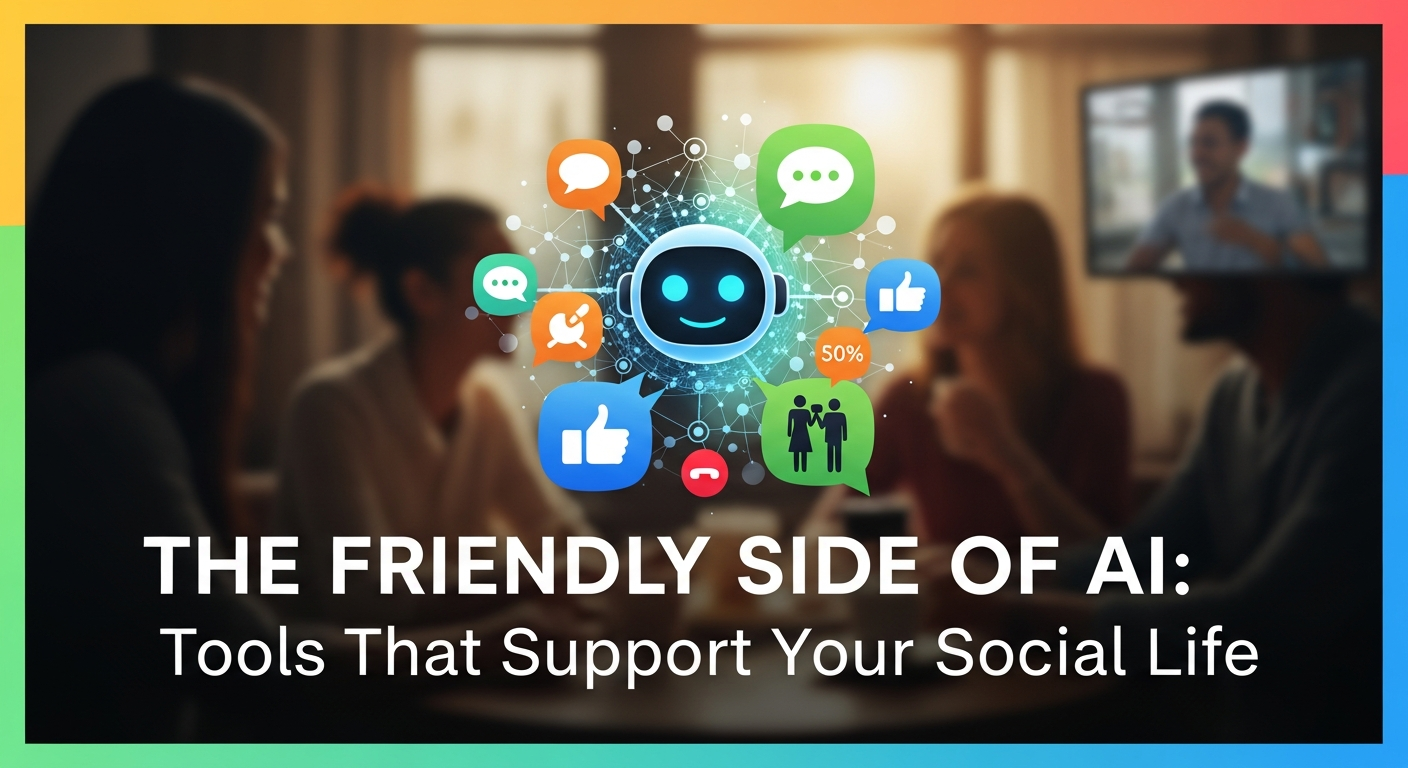
The Friendly Side of AI: Tools That Support Your Social Life
- November 21, 2025
- ~ 1 min read
- 172 views
- Lifestyle & AI , GenAI
Introduction to AI-Powered Social Tools
Imagine having a personal assistant that helps you navigate the complexities of your social life with ease, making it simpler to connect with others and build meaningful relationships in the digital age. This is now a reality, thanks to the increasing presence of AI in our daily lives. From scheduling social events to suggesting new connections, AI is revolutionizing the way we interact with each other. In this article, we will delve into the world of AI-powered social tools, exploring how they can enhance our social life and make it more enjoyable.
The Rise of AI in Daily Life
In recent years, AI has become an integral part of our daily routines, from virtual assistants like Siri and Alexa to personalized product recommendations on e-commerce websites. The technology has advanced to the point where it can now understand and respond to our needs in a more human-like way, making it an ideal solution for supporting our social life. As we spend more time online, building and maintaining relationships has become a crucial aspect of our lives, and AI is poised to play a significant role in this process.
The Importance of Social Interactions in the Digital Age
In the digital age, social interactions are no longer limited to in-person meetings. With the rise of social media, online communities, and messaging apps, we can now connect with others from all over the world. However, this increased connectivity also brings new challenges, such as information overload and social isolation. This is where AI-powered social tools come in – they can help us filter out irrelevant information, suggest new connections, and even facilitate meaningful conversations. By leveraging these tools, we can make the most of our social life and build stronger, more meaningful relationships.
Introduction to AI Tools That Support Social Life
In the following sections, we will explore the various AI-powered social tools that are available, including social media management tools, online community platforms, and personalized matchmaking services. We will examine how these tools can help us manage our online presence, connect with like-minded individuals, and even find new friends and romantic partners. By the end of this article, you will have a comprehensive understanding of the AI-powered social tools that can support and enhance your social life in the digital age.
Some of the key topics we will cover include:
- The benefits and limitations of AI-powered social tools
- The different types of AI-powered social tools available
- How to choose the right AI-powered social tool for your needs
Whether you are looking to expand your social circle, build meaningful relationships, or simply navigate the complexities of online interactions, this article will provide you with the insights and knowledge you need to make the most of AI-powered social tools and enhance your social life in the digital age.
Understanding AI in Social Contexts
As we delve into the world of AI-powered tools that support our social lives, it's essential to understand the basics of Artificial Intelligence (AI) and machine learning. In simple terms, AI refers to the development of computer systems that can perform tasks that typically require human intelligence, such as learning, problem-solving, and decision-making. Machine learning is a subset of AI that involves training algorithms to learn from data and improve their performance over time.
How AI Analyzes and Responds to Human Behavior
AI-powered tools use natural language processing to analyze and understand human behavior, including the way we interact with each other on social media platforms. By processing vast amounts of data, these tools can identify patterns and trends in our behavior, allowing them to respond in a more personalized and effective way. For instance, chatbots can use machine learning algorithms to learn from customer interactions and improve their responses over time, providing a more seamless and intuitive experience for users.
Examples of AI-Powered Social Tools and Their Functions
There are numerous AI-powered social tools available, each with its unique functions and benefits. Some examples include:
- Social media management tools that use machine learning to analyze user engagement and suggest content optimization strategies
- Virtual event platforms that utilize natural language processing to facilitate more effective communication and networking among attendees
- Online community builders that leverage AI-powered sentiment analysis to monitor and improve user experience
Benefits of Using AI in Social Media and Online Interactions
The benefits of using AI-powered tools in social media and online interactions are numerous. Some of the most significant advantages include:
- Improved connectivity: AI-powered tools can help us connect with others who share similar interests and passions, expanding our social circles and opportunities
- Personalized experiences: By analyzing our behavior and preferences, AI-powered tools can provide us with tailored content and recommendations, making our online interactions more enjoyable and relevant
- Increased efficiency: AI-powered tools can automate routine tasks, such as content scheduling and customer service, freeing up time for more strategic and creative activities
The future of social media and online interactions is undoubtedly linked to the development and integration of AI-powered tools. As we move forward, it's essential to prioritize transparency, accountability, and ethics in the development and use of these technologies, ensuring that they serve to enhance and augment human relationships, rather than replace them.
Real-World Applications of AI in Social Life
The integration of Artificial Intelligence (AI) in our daily social lives has become increasingly prevalent, making various aspects of social interaction more efficient and personalized. From social media platforms to virtual event planning tools, AI is revolutionizing the way we connect and interact with each other. In this section, we will explore the real-world applications of AI in social life, highlighting its impact on content curation, customer service, event planning, and recommendation systems.
AI-Driven Content Curation on Social Media
Social media platforms have been at the forefront of AI adoption, leveraging its capabilities to enhance user experience. One of the primary applications of AI in social media is content curation. Platforms like Facebook and Twitter use AI algorithms to personalize the content users see on their feeds, ensuring that they are more likely to engage with the posts they come across. This is achieved through machine learning techniques that analyze user behavior and preferences, allowing the platforms to filter out irrelevant content and prioritize posts that are likely to generate more interactions. For instance, Facebook's News Feed algorithm uses AI to rank posts based on their relevance to the user, taking into account factors like engagement, relationships, and post type.
Chatbots and Customer Service
Another significant application of AI in social life is the use of chatbots for customer service and support. Many companies have integrated AI-driven chatbots into their websites and social media platforms to provide instant support to customers. These chatbots use natural language processing (NLP) to understand customer queries and respond accordingly, often resolving issues without the need for human intervention. For example, a customer reaching out to a company's Facebook page with a query about their order can be assisted by a chatbot that provides them with order tracking information, return policies, or even helps them with the return process. This not only enhances customer experience but also reduces the workload for human customer support agents, allowing them to focus on more complex issues.
Virtual Event Planning and Personalized Recommendations
AI is also being used in virtual event planning and management, making it easier for organizers to host successful events. Platforms like Eventbrite and Meetup use AI to suggest potential attendees based on their interests and past event attendance, increasing the likelihood of a well-attended and engaging event. Furthermore, AI-powered personalization is being used in social apps to provide users with tailored recommendations. For instance, dating apps like Tinder use AI to suggest potential matches based on user preferences, behavior, and demographics, increasing the chances of a successful match. Similarly, social media platforms use AI to recommend content, groups, or events that are likely to interest the user, fostering a more engaging and interactive community.
In conclusion, the applications of AI in social life are vast and varied, from social media content curation to chatbots and personalization in social apps. As AI technology continues to evolve, we can expect to see even more innovative applications of AI in social life, further enhancing our online interactions and experiences. Whether it's through more efficient customer service, personalized content recommendations, or streamlined event planning, AI is poised to play an increasingly important role in shaping our social lives.
- AI-driven content curation enhances user experience on social media platforms.
- Chatbots provide instant customer support, reducing the need for human intervention.
- AI-powered personalization recommends content, events, and connections based on user preferences and behavior.
By embracing AI in social life, we can unlock new opportunities for connection, community building, and social interaction, ultimately making our online experiences more enjoyable, efficient, and personalized.
Advanced AI Concepts for Social Enhancement
The integration of AI algorithms in social tools has revolutionized the way we interact with each other. These algorithms are designed to analyze vast amounts of data, identify patterns, and make predictions about user behavior. For instance, machine learning algorithms can be used to recommend friends, posts, or content based on a user's interests and preferences. Furthermore, natural language processing algorithms can be used to analyze and understand the nuances of human language, enabling more effective communication and sentiment analysis.
Technical Explanation of AI Algorithms
At the heart of AI-powered social tools are complex AI algorithms that enable data analysis, pattern recognition, and prediction. These algorithms can be broadly categorized into two types: supervised and unsupervised learning. Supervised learning algorithms are trained on labeled data, allowing them to make predictions based on predefined outcomes. Unsupervised learning algorithms, on the other hand, are trained on unlabeled data, enabling them to identify patterns and relationships without prior knowledge. Deep learning algorithms, a subset of machine learning algorithms, have also gained popularity in recent years due to their ability to analyze complex data structures and make accurate predictions.
Data Privacy and Security in AI-Powered Social Platforms
As AI-powered social platforms continue to collect and analyze vast amounts of user data, concerns about data privacy and security have become increasingly prominent. It is essential for developers to prioritize data protection and implement robust security measures to prevent data breaches and unauthorized access. This can be achieved through the use of encryption algorithms, secure data storage, and transparent data sharing policies. Moreover, users must be educated about the importance of data privacy and the measures they can take to protect their personal information, such as using strong passwords and being cautious when sharing sensitive data.
Advanced Applications of AI in Social Life
One of the most significant applications of AI in social life is sentiment analysis. This involves using AI algorithms to analyze and understand the emotional tone and sentiment of user-generated content, such as posts, comments, and reviews. Sentiment analysis can be used to identify trends, monitor user engagement, and predict user behavior. Other advanced applications of AI in social life include facial recognition, voice recognition, and predictive analytics. These technologies have the potential to revolutionize the way we interact with each other and with social platforms, enabling more personalized and engaging experiences.
In addition to these applications, AI can also be used to enhance social interactions through personalized recommendations and content moderation. By analyzing user behavior and preferences, AI algorithms can recommend content that is likely to be of interest to the user, increasing engagement and user satisfaction. Moreover, AI-powered content moderation can help to identify and remove inappropriate or offensive content, creating a safer and more respectful online environment.
According to experts, the future of AI in social enhancement is promising, with
potential applications in areas such as mental health support, social skills development, and community building. As AI technology continues to evolve, we can expect to see more sophisticated and effective social tools that prioritize user well-being and social interaction. Some potential future developments include the integration of AI algorithms with virtual reality and augmented reality technologies, enabling more immersive and interactive social experiences.
In conclusion, the integration of AI in social tools has the potential to transform the way we interact with each other and with social platforms. By understanding the technical aspects of AI algorithms, prioritizing data privacy and security, and exploring advanced applications such as sentiment analysis, we can unlock the full potential of AI in social enhancement. As we look to the future, it is essential to consider the potential benefits and challenges of AI in social life and to work towards creating a more personalized, engaging, and respectful online environment.
- Prioritize data privacy and security when using AI-powered social platforms
- Stay informed about the latest developments in AI technology and its applications in social life
- Support the development of AI-powered social tools that prioritize user well-being and social interaction
Implementing AI Tools in Your Social Life
As we explore the vast potential of AI in enhancing our social lives, it's essential to understand the practical aspects of implementation. Integrating AI tools into your daily social interactions can seem daunting, but with a step-by-step guide, you can start leveraging these technologies to streamline your social media management and improve your online presence. In this section, we'll delve into the world of AI-powered social tools, providing you with actionable tips and best practices to make the most out of these innovative solutions.
Setting Up AI-Powered Social Tools: A Step-by-Step Guide
To begin, you'll need to choose the right AI-powered social tools that align with your needs and goals. This could include chatbots for customer service, content generation tools for social media, or analytics platforms to track your online performance. Once you've selected the tools you want to use, follow these steps:
- Sign up for the tool or platform, providing the required information and setting up your account.
- Configure the tool according to your preferences, which may include setting up keywords, customizing responses, or integrating with existing social media accounts.
- Test the tool to ensure it's working as expected, making any necessary adjustments to optimize its performance.
By following these steps, you can successfully implement AI-powered social tools into your social media strategy, enhancing your online presence and streamlining your social media management efforts.
Tips for Effective Usage and Best Practices
To get the most out of AI-powered social tools, it's crucial to use them effectively and follow best practices. Here are some tips to keep in mind:
- Start small, experimenting with one or two tools at a time to avoid overwhelming yourself or your audience.
- Be transparent about your use of AI-powered tools, ensuring that your audience is aware of the technology behind your social media presence.
- Monitor and adjust your tool settings regularly, as your needs and goals may evolve over time.
- Stay up-to-date with the latest developments in AI-powered social tools, attending webinars, workshops, or conferences to expand your knowledge and skills.
By embracing these tips and best practices, you can harness the full potential of AI-powered social tools, elevating your social media management and fostering a more engaging, personalized experience for your audience.
Common Pitfalls to Avoid
While AI-powered social tools offer numerous benefits, there are also potential pitfalls to avoid. Over-reliance on automation, for instance, can lead to a lack of authenticity in your social media presence, damaging your reputation and relationships with your audience. Additionally, failing to implement AI-powered tools in a way that aligns with your brand values and voice can result in inconsistent messaging and a disjointed online presence.
Remember, the key to successful AI-powered social media management is finding a balance between technology and human touch. By being mindful of these potential pitfalls and following best practices, you can create a harmonious blend of automation and authenticity, elevating your social media presence and fostering meaningful connections with your audience.
In conclusion, implementing AI-powered social tools into your social life requires a thoughtful and strategic approach. By following the step-by-step guide, tips, and best practices outlined in this section, you can unlock the full potential of these innovative technologies, streamlining your social media management and enhancing your online presence. As you embark on this journey, remember to stay flexible, adapt to new developments, and always prioritize the needs and preferences of your audience.
Comparing AI Social Tools and Platforms
As we delve into the world of AI-powered social media platforms, it's essential to conduct a thorough comparison of the various tools and platforms available. This analysis will help us understand the pros and cons of each platform, enabling us to make informed decisions about which ones to use. In this section, we'll explore the features, benefits, and drawbacks of popular AI social tools and platforms, discussing the trade-offs between privacy and personalization.
Popular AI-Powered Social Media Platforms
A closer look at popular AI-powered social media platforms reveals a range of features and functionalities. For instance, platforms like Facebook and Twitter utilize AI to personalize user feeds, while others like LinkedIn and Instagram leverage AI to suggest connections and content. When conducting a comparison of these platforms, it's crucial to consider factors such as user interface, algorithmic feed ranking, and data privacy policies. Some platforms, like TikTok, have gained immense popularity among younger generations due to their AI-driven content recommendation algorithms, which provide an immersive user experience.
Pros and Cons of Using AI in Social Interactions
The use of AI in social interactions has both advantages and disadvantages. On the one hand, AI-powered social tools can help users discover new content, connect with like-minded individuals, and even provide mental health support. On the other hand, the over-reliance on AI can lead to echo chambers, where users are only exposed to information that confirms their existing beliefs. Furthermore, the collection and analysis of user data by AI algorithms raise significant privacy concerns. To mitigate these risks, it's essential to weigh the pros and cons of using AI in social interactions and consider alternatives that prioritize user privacy and agency.
Trade-Offs and Alternatives
When using AI-powered social tools, users often face a trade-off between privacy and personalization. While personalized feeds and content recommendations can enhance the user experience, they often require the collection and analysis of sensitive user data. To address these concerns, users can explore alternatives such as decentralized social networks, which prioritize user privacy and data ownership. Other options include using AI-powered social tools in conjunction with traditional social media platforms, allowing users to balance the benefits of AI-driven content discovery with the need for meaningful human interactions. By considering these alternatives and being aware of the pros and cons of AI-powered social tools, users can make informed decisions about their social media usage and protect their online privacy.
In conclusion, the comparison of AI social tools and platforms reveals a complex landscape of features, benefits, and drawbacks. By understanding the pros and cons of using AI in social interactions and considering alternatives that prioritize user privacy and agency, users can navigate this landscape effectively and make the most of AI-powered social media platforms. As the use of AI in social media continues to evolve, it's essential to remain aware of the trade-offs between privacy and personalization and to seek out alternatives that align with our values and priorities.
- Consider the features and functionalities of different AI-powered social media platforms
- Weigh the pros and cons of using AI in social interactions
- Explore alternatives that prioritize user privacy and agency
- Balance the benefits of AI-driven content discovery with the need for meaningful human interactions
The key to harnessing the benefits of AI-powered social media platforms while protecting our online privacy is to remain informed and aware of the trade-offs involved. By considering the pros and cons of AI social tools and exploring alternatives that prioritize user privacy and agency, we can create a more balanced and empowering social media experience.
Conclusion and Future of AI in Social Life
In summary, our exploration of AI tools for social life has revealed a myriad of innovative solutions designed to enhance and simplify our interactions. From virtual event planning to social media management, these tools have the potential to revolutionize the way we connect with others. As we reflect on the key points discussed, it becomes clear that AI is not just a novelty, but a game-changer in the realm of social interactions.
Reflection on AI's Impact
The potential of AI to transform social life is vast and multifaceted. By leveraging AI-powered tools, we can streamline our social media presence, expand our professional networks, and even find new friends and like-minded individuals. As AI technology continues to evolve, we can expect to see even more sophisticated solutions emerge, further blurring the lines between the physical and digital worlds. The future of social interactions is undoubtedly intertwined with the development of AI, and it's exciting to consider the possibilities that lie ahead.
Call to Action
As we look to the future of AI in social life, it's essential to encourage readers to take the next step by exploring AI-powered social tools. Whether you're interested in enhancing your online presence or simply curious about the latest advancements, there are numerous resources available to help you get started. We recommend checking out online courses, such as those offered on Coursera or Udemy, which provide in-depth tutorials on AI-powered social media management and virtual event planning. Additionally, you can visit websites like Meetup.com or Eventbrite.com to discover new events and communities that align with your interests.
Some other notable resources include:
- Hootsuite: A social media management platform that utilizes AI to optimize your online presence
- Canva: A graphic design platform that leverages AI to help you create stunning visual content
- LinkedIn: A professional networking platform that uses AI to connect you with potential employers and like-minded individuals
By exploring these resources and staying up-to-date on the latest developments, you'll be well-equipped to navigate the ever-changing landscape of AI-powered social tools and unlock their full potential.
Final Thoughts
In conclusion, the future of AI in social life is bright and full of promise. As we continue to push the boundaries of what's possible, we may find that AI becomes an indispensable companion in our social lives, helping us to connect, communicate, and thrive in ways we never thought possible. As the renowned futurist,
Ray Kurzweil, once said, "The future is not something we enter, but something we create."Let us embrace the potential of AI to enhance our social interactions and create a brighter, more connected future for all.

Comments (0)
Please login or register to leave a comment.
No comments yet. Be the first to comment!