
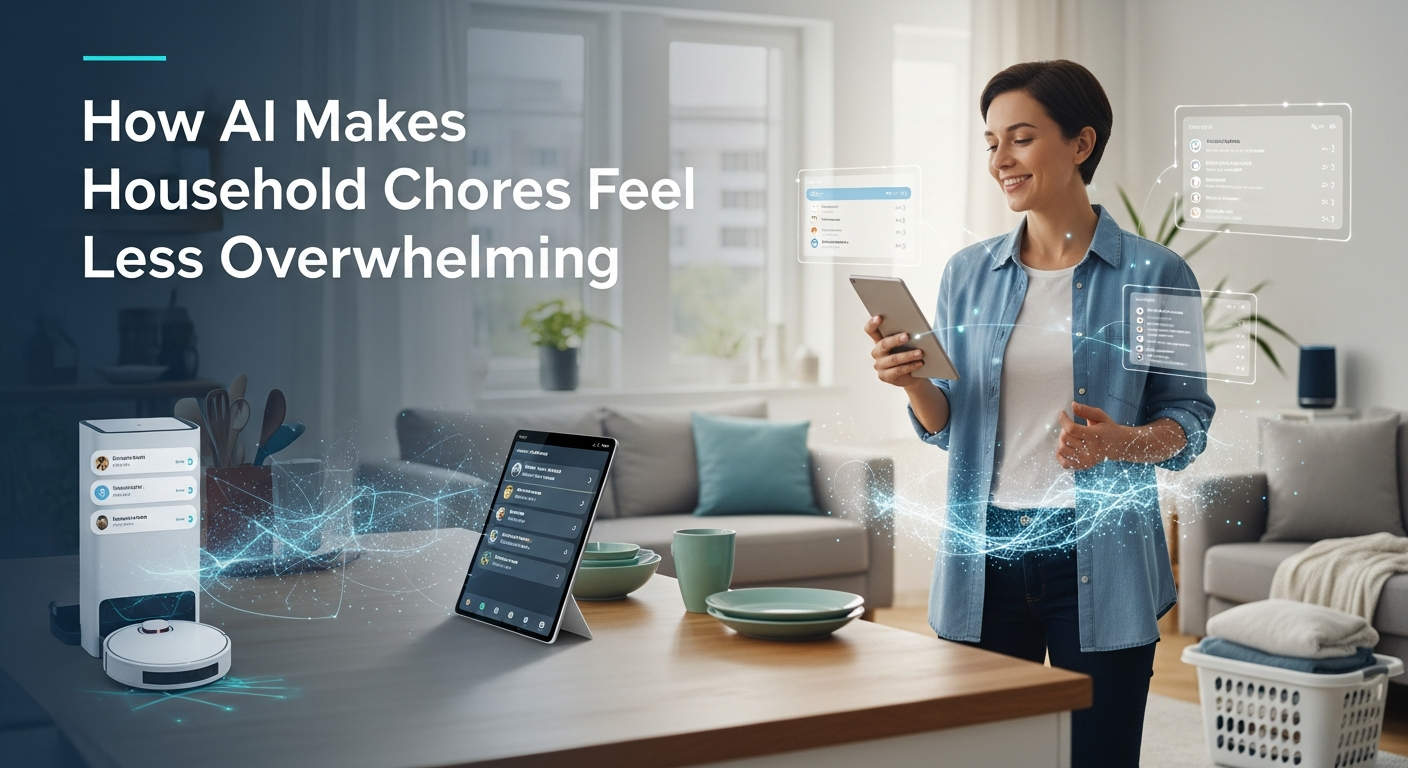
How AI Makes Household Chores Feel Less Overwhelming
- November 21, 2025
- ~ 1 min read
- 122 views
- Lifestyle & AI , GenAI
Introduction to AI-Powered Household Chores
Imagine coming home from a long day at work, only to be greeted by a never-ending list of household chores. The laundry needs to be folded, the dishes are piling up, and the vacuuming hasn't been done in weeks. For many of us, managing the daily grind of household responsibilities can feel like a full-time job in itself. But what if there was a way to make these tasks feel less overwhelming? Enter the world of AI-powered household management, where smart home technology and home automation are revolutionizing the way we approach domestic duties.
The Challenges of Managing Household Chores
Let's face it: adulting is hard. Between work, social obligations, and personal interests, it can be difficult to find the time and energy to tackle our household to-do lists. And yet, a clean and comfortable living space is essential for both our physical and mental well-being. The consequences of neglecting our household chores can range from stress and anxiety to health problems and safety hazards. It's no wonder that many of us feel like we're drowning in a sea of dirty laundry and uncooked meals.
The Emergence of AI in Home Automation
In recent years, AI has begun to make a significant impact on the world of home automation. From voice-controlled assistants like Alexa and Google Home to smart appliances and automated cleaning systems, the options for streamlining our household chores are rapidly expanding. By leveraging the power of AI and machine learning, these technologies can learn our habits and preferences, anticipating our needs and adapting to our lifestyles. The result is a more efficient, more convenient, and more enjoyable living experience.
The Potential Benefits of AI-Powered Household Management
So what can we expect from AI-powered household management? For starters, increased productivity and reduced stress are just the beginning. With the ability to automate routine tasks and receive personalized recommendations, we can free up more time for the things we love. We can also look forward to improved energy efficiency and cost savings, as smart home systems optimize our energy consumption and reduce waste. And with the help of AI-powered maintenance and repair, we can extend the lifespan of our appliances and prevent costly breakdowns. In this article, we'll delve into the exciting world of AI-powered household chores, exploring the latest innovations, benefits, and best practices for making the most of these cutting-edge technologies.
In the following sections, we'll cover topics such as:
- The current state of AI-powered household management
- The benefits and drawbacks of smart home technology
- Practical tips for implementing AI-powered solutions in your daily life
- The future of home automation and what it holds for homeowners
- Real-life examples of AI-powered household management in action
By the end of this article, you'll have a comprehensive understanding of how AI is transforming the world of household chores, and be equipped with the knowledge and inspiration to start simplifying your own home life.
Understanding AI in Household Chores
Artificial Intelligence (AI) has revolutionized the way we approach household chores, making them feel less overwhelming and more manageable. At the heart of this revolution are AI technologies that enable devices to learn, adapt, and perform tasks with increased efficiency. To understand how AI makes household chores easier, it's essential to delve into the specifics of how these technologies work and the various applications they have in the home.
Introduction to AI-Powered Devices
A range of AI-powered devices are now available for cleaning, cooking, and organization, each designed to simplify and streamline household tasks. For example, robotic vacuum cleaners use machine learning algorithms to map out spaces and navigate around furniture, ensuring a thorough and efficient clean. Similarly, smart refrigerators can suggest recipes based on the ingredients stored inside, making meal planning and grocery shopping easier. These devices not only save time but also reduce the mental load associated with managing a household.
Other examples of AI-powered devices include smart thermostats that learn a household's temperature preferences and adjust accordingly, and smart lighting systems that can be controlled remotely or programmed to turn on and off at specific times. These devices contribute to a more automated and comfortable living environment, allowing homeowners to focus on more enjoyable activities.
Machine Learning and Adaptation
Machine learning is a key component of AI in household chores, enabling devices to adapt to a household's routines and preferences over time. This process can be thought of as similar to how a new employee learns the ropes of a job; at first, they may need guidance, but as they gain experience, they become more independent and efficient. In the context of household chores, machine learning allows devices to recognize patterns and make predictions, such as when the household is likely to be awake or asleep, and adjust their operations accordingly.
For instance, a smart coffee maker might learn that every weekday morning, the household needs coffee at 7:00 AM, and automatically start brewing at that time. This level of personalization and automation makes household chores feel less overwhelming, as tasks are anticipated and managed by the devices themselves.
Voice Assistants and Home Automation
Voice assistants, such as Alexa, Google Assistant, and Siri, play a significant role in home automation, acting as a central hub that controls and coordinates various smart devices. With voice commands, homeowners can manage multiple tasks simultaneously, such as turning on the lights, adjusting the thermostat, and playing music, all without needing to physically interact with each device. This integration of voice assistants with smart devices enhances the convenience and efficiency of household management, making it easier to maintain a comfortable and organized home environment.
In conclusion, understanding how AI technologies, including machine learning and voice assistants, are applied in household chores is crucial for appreciating the potential of these technologies to simplify and streamline domestic tasks. By embracing these technologies, homeowners can create a more automated, efficient, and enjoyable living space, where chores feel less overwhelming and more manageable.
As we continue to see advancements in AI and smart home technology, the future of household chores looks increasingly automated and personalized, promising a significant reduction in the time and effort required to manage a home.
By exploring the capabilities and applications of AI-powered devices and voice assistants, individuals can make informed decisions about how to integrate these technologies into their daily lives, ultimately creating a more balanced and fulfilling lifestyle.
Real-World Applications of AI in Household Chores
The integration of Artificial Intelligence (AI) in household chores has revolutionized the way we manage our homes. From smart homes that optimize energy consumption to AI-assisted cleaning robots, the applications of AI in household chores are vast and innovative. In this section, we will explore some real-world examples of how AI is being used to simplify household chores and improve the overall quality of life.
Case Studies of Smart Homes Utilizing AI for Efficient Energy Consumption
One of the most significant applications of AI in household chores is in the optimization of energy consumption. Smart homes equipped with AI-powered systems can learn the occupants' schedules and preferences to adjust energy usage accordingly. For instance, a smart thermostat can adjust the temperature when the house is empty or when the occupants are sleeping. According to a study, smart homes that utilize AI for energy management can reduce energy consumption by up to 30%. This not only helps reduce the carbon footprint but also saves homeowners a significant amount of money on their energy bills.
Examples of AI-Assisted Cleaning Robots and Their Effectiveness
AI-assisted cleaning robots are another example of how AI is being used to simplify household chores. These robots use advanced navigation systems and sensors to map out the home and clean it efficiently. They can also be programmed to clean specific areas of the home, such as the kitchen or bathroom, and can even be controlled remotely through smartphone apps. For busy professionals, these robots are a game-changer, as they can save a significant amount of time and effort that would otherwise be spent on cleaning. According to a survey, 75% of homeowners who use AI-assisted cleaning robots reported a significant reduction in cleaning time and an improvement in the overall cleanliness of their homes.
AI-Driven Kitchen Appliances for Meal Planning and Preparation
AI-driven kitchen appliances are also becoming increasingly popular, especially among home cooks who want to make meal planning and preparation easier and more efficient. These appliances, such as smart refrigerators and ovens, can be programmed to recognize the ingredients and recipes stored in them and provide suggestions for meals based on the ingredients that are near expiration. They can also be controlled remotely, allowing homeowners to preheat the oven or start cooking a meal from their smartphone.
A homeowner who uses an AI-driven kitchen appliance reported that it has saved her up to 2 hours a week in meal planning and preparation time, which she can now spend on more enjoyable activities.
In addition to these examples, home security is another area where AI is being used to simplify household chores. AI-based systems can be used to monitor the home and detect any potential security threats, such as intruders or fires. These systems can also be integrated with other smart home devices, such as door locks and lighting systems, to provide an additional layer of security and convenience. By leveraging these AI-based systems, homeowners can enjoy increased peace of mind and a sense of security, knowing that their home is being monitored and protected at all times.
Overall, the applications of AI in household chores are vast and innovative, and they have the potential to revolutionize the way we manage our homes. By providing increased efficiency, reduced stress, and improved home safety, AI-powered systems are making household chores feel less overwhelming and more manageable. As the technology continues to evolve, we can expect to see even more exciting developments in the field of smart homes and AI-assisted cleaning.
Advanced AI Concepts for Household Chores
As we delve deeper into the world of AI-powered household chores, it becomes essential to understand the advanced concepts that drive these innovative solutions. In this section, we will explore the technical aspects of AI in household chores, including natural language processing, computer vision, and predictive maintenance. These technologies are revolutionizing the way we manage our homes, making household chores feel less overwhelming and more efficient.
Natural Language Processing and Voice Assistants
Natural language processing (NLP) is a subset of AI that enables voice assistants to understand and respond to human voice commands. NLP is a complex technology that involves machine learning algorithms to recognize patterns in language, allowing voice assistants to perform tasks such as scheduling, reminders, and even controlling other smart devices. For instance, voice assistants like Amazon Alexa and Google Assistant use NLP to understand voice commands and execute tasks, making it easier to manage household chores with just voice commands.
Some of the key applications of NLP in household chores include:
- Voice-controlled lighting and thermostat systems
- Smart home security systems with voice-activated alerts
- Automated scheduling and reminders for household tasks
Computer Vision and Home Surveillance
Computer vision is another AI technology that is being increasingly used in household chores, particularly in home surveillance systems. Computer vision enables cameras to detect and recognize objects, people, and patterns, allowing for advanced security features such as motion detection, facial recognition, and object tracking. This technology is also being used in smart home devices such as robotic vacuum cleaners, which use computer vision to navigate and avoid obstacles.
The application of computer vision in household chores is vast, with some examples including:
- Smart doorbells with facial recognition and motion detection
- Security cameras with object tracking and alerts
- Robotic vacuum cleaners with navigation and obstacle avoidance
Predictive Maintenance and Emerging Trends
Predictive maintenance is a technology that uses machine learning algorithms to predict when a device or system is likely to fail, allowing for proactive maintenance and reducing downtime. This technology is being increasingly used in smart home devices, such as refrigerators and air conditioners, to predict when maintenance is required. Emerging trends such as IoT and edge computing are also expected to play a significant role in revolutionizing home automation, enabling faster and more efficient processing of data and reducing latency.
As we look to the future of AI in household chores, it is clear that emerging technologies such as IoT and edge computing will play a significant role in shaping the industry. Some of the potential applications of these technologies include:
Smart homes that can predict and adapt to the needs of their occupants, reducing energy consumption and improving efficiency. With the integration of IoT and edge computing, smart homes will be able to process data in real-time, enabling faster and more efficient automation of household chores.
In conclusion, advanced AI concepts such as natural language processing, computer vision, and predictive maintenance are revolutionizing the way we manage our homes, making household chores feel less overwhelming and more efficient. As emerging trends and technologies continue to evolve, we can expect to see even more innovative solutions that simplify and automate household chores, enabling us to focus on the things that matter most.
Implementing AI Solutions for Household Chores
As we explore the vast potential of AI in simplifying household chores, it's essential to understand the practical steps involved in implementing these solutions. In this section, we'll delve into the process of setting up a smart home setup, choosing the right AI-powered devices, and integrating them with existing appliances and systems. By following these guidelines, you'll be well on your way to creating a seamless and efficient household chore management system.
Setting Up a Smart Home System: A Step-by-Step Guide
To get started, you'll need to set up a central hub that connects all your AI-powered devices. This can be a smart speaker like Amazon Echo or Google Home, or a dedicated smart home controller. Once you have your hub, follow these steps:
- Connect your hub to your Wi-Fi network and download the accompanying app.
- Start adding your AI-powered devices, such as smart lights, thermostats, and security cameras, to the network.
- Configure each device to work with your hub, using the app to customize settings and create routines.
- Test your system to ensure all devices are working together seamlessly.
By following these steps, you'll have a solid foundation for your smart home setup, making it easier to manage and automate your household chores.
Choosing the Right AI-Powered Devices for Specific Chores
With so many AI-powered devices on the market, it can be overwhelming to choose the right ones for your specific needs. Here are some tips for selecting the best devices for common household chores:
- For cleaning, consider a robot vacuum or mop that can navigate and adapt to your home's layout.
- For laundry, look into smart washing machines and dryers that can detect fabric types and optimize wash cycles.
- For cooking, invest in a smart slow cooker or instant pot that can adjust cooking times and temperatures based on the recipe.
When selecting AI-powered devices, remember to consider compatibility and integration with your existing smart home system. This will ensure a seamless and efficient experience.
Budgeting for AI-Powered Home Solutions and Integration Tips
Implementing AI-powered home solutions can seem like a significant investment, but with some careful planning and budgeting, you can create a smart home system that fits your needs and budget. Here are some tips for budgeting and integrating your AI-powered devices:
Start by identifying the areas of your home where you want to implement AI-powered solutions. Then, research and compare prices for different devices and systems. Consider the cost-benefit analysis of each device, taking into account the potential time and energy savings.
By investing in AI-powered home solutions, you can save time, reduce energy consumption, and create a more comfortable and convenient living space.
When it comes to integration tips, remember to:
- Check for compatibility with your existing smart home system and devices.
- Look for devices with open APIs or protocols that allow for easy integration.
- Consider hiring a professional to help with installation and setup, especially if you're not tech-savvy.
By following these guidelines and tips, you'll be well on your way to creating a smart home system that simplifies your household chores and makes your life easier. Remember to always prioritize compatibility and integration when selecting AI-powered devices, and don't be afraid to seek help when needed.
Comparing AI-Powered Household Chore Solutions
As the world of smart home systems continues to evolve, homeowners are faced with a plethora of options when it comes to managing household chores. From voice assistants like Alexa and Google Assistant to dedicated AI devices, the choices can be overwhelming. In this section, we'll delve into a comparative analysis of popular AI-powered solutions, highlighting their pros and cons, and discussing the trade-offs between cost, convenience, and security considerations.
Smart Home Systems: A Comparison
The following table provides a snapshot of popular smart home systems and their AI capabilities:
| System | AI Capabilities | Cost |
|---|---|---|
| Amazon Echo | Voice control, smart home automation | $99-$149 |
| Google Home | Voice control, smart home automation, Google Assistant | $99-$199 |
| Apple HomeKit | Smart home automation, voice control with Siri | $99-$299 |
As seen in the table, each system has its unique features and price points. While cost-effectiveness is an important consideration, it's essential to weigh the benefits of each system against individual needs and preferences.
Voice Assistants vs. Dedicated AI Devices: Weighing the Pros and Cons
When it comes to managing household chores, voice assistants offer a convenient and hands-free experience. However, dedicated AI devices can provide more specialized functionality and enhanced security features. The following list highlights the pros and cons of each option:
- Voice Assistants:
- Pros: convenient, hands-free, integrates with various smart devices
- Cons: may require additional hardware, limited functionality compared to dedicated AI devices
- Dedicated AI Devices:
- Pros: specialized functionality, enhanced security features, no need for additional hardware
- Cons: may be more expensive, limited compatibility with other smart devices
Ultimately, the choice between voice assistants and dedicated AI devices depends on individual preferences and needs. By considering the pros and cons of each option, homeowners can make an informed decision that suits their lifestyle and budget.
Security and Privacy Considerations
As with any technology that involves data collection and analysis, security considerations are paramount when it comes to AI-powered household chore solutions. Homeowners must be aware of the potential risks and take steps to mitigate them. This includes:
- Regularly updating software and firmware
- Using strong passwords and enabling two-factor authentication
- Monitoring data collection and usage
By being mindful of these security considerations and taking proactive measures, homeowners can enjoy the benefits of AI-powered household chore solutions while minimizing the risks. As the world of smart home technology continues to evolve, it's essential to stay informed and adapt to the changing landscape.
The key to harnessing the power of AI in household chores is to find a balance between convenience, cost, and security. By weighing the pros and cons of different solutions and considering individual needs and preferences, homeowners can create a smart home ecosystem that simplifies their lives and enhances their overall well-being.
Conclusion and Future of AI in Household Chores
In conclusion, the integration of AI into household chores has revolutionized the way we manage our homes. From automated cleaning and laundry to smart home devices that learn and adapt to our habits, AI has made a significant difference in simplifying our daily lives. Throughout this article, we have explored the various ways in which AI can assist with household chores, making them feel less overwhelming and freeing up time for more enjoyable activities.
Reflection on Future Developments
As we look to the future, it is exciting to consider the potential developments in AI and smart home technology. We can expect to see even more sophisticated devices that can learn and adapt to our habits, anticipating our needs and making our lives easier. The future of AI in household chores holds much promise, with potential advancements in areas such as voice control, facial recognition, and predictive maintenance. These advancements will not only make our homes more convenient but also more efficient and sustainable.
Call to Action
So, what can you do to start exploring the benefits of AI-powered solutions for your home? We encourage you to take the first step by researching the various smart home devices available on the market. Consider your specific needs and identify areas where AI can make a significant impact. Whether it's automating your cleaning schedule or optimizing your energy consumption, there are countless ways to leverage AI to simplify your household chores. Don't be afraid to experiment and try out new devices and technologies – you might be surprised at the difference they can make.
As you embark on this journey, remember that the potential of AI to improve home life is vast. By embracing AI-powered solutions, you can create a more comfortable, convenient, and sustainable living space that enhances your overall well-being. So, take the leap and discover the power of AI in transforming your household chores – your future self will thank you.
The future of household chores is exciting, and with AI by your side, you can look forward to a more streamlined, efficient, and enjoyable home life.

Comments (0)
Please login or register to leave a comment.
No comments yet. Be the first to comment!