
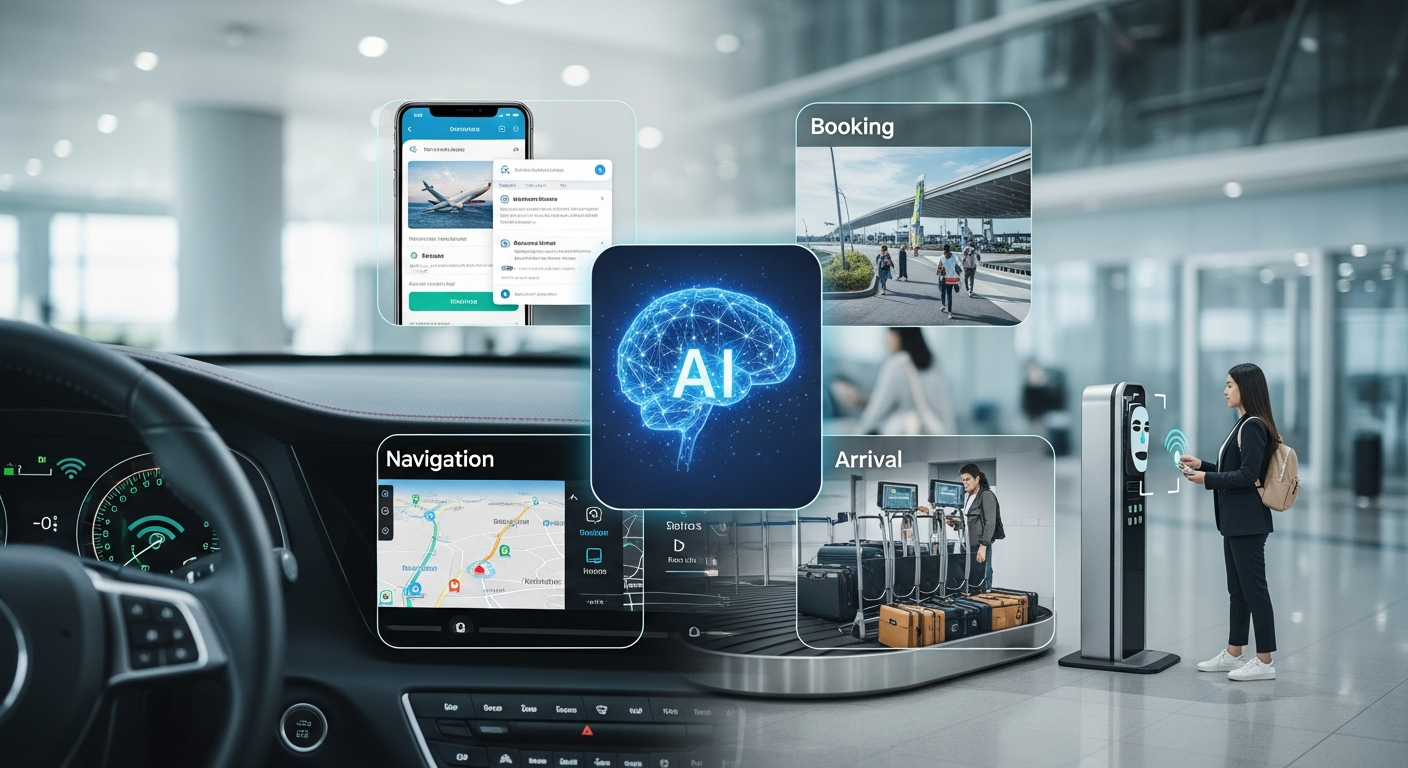
How AI helps make travel smoother—from booking to arrival
- November 20, 2025
- ~ 1 min read
- 140 views
- Lifestyle & AI , AI in Business
Introduction to AI in Travel
The travel industry has witnessed a significant transformation in recent years, and one of the key drivers of this change is the integration of AI in travel. Artificial intelligence has revolutionized the way we plan, book, and experience travel, making it more efficient, personalized, and enjoyable. As technology continues to advance, the role of AI in travel is becoming increasingly important, addressing common pain points and enhancing the overall travel experience.
The Growing Importance of AI in Travel
Travelers today expect a seamless and hassle-free experience from booking to arrival, and travel technology is playing a crucial role in meeting these expectations. With the help of AI, travel companies can analyze vast amounts of data, identify patterns, and make informed decisions to improve their services. For instance, AI-powered chatbots can assist with booking and customer support, while machine learning algorithms can help predict and prevent flight delays. The potential of AI in travel is vast, and its applications are being explored in various areas, including booking, transportation, and accommodation.
Current Challenges in Travel that AI Can Address
Despite the advancements in travel technology, there are still several challenges that travelers face, such as long waiting times at airports, last-minute flight changes, and difficulty in finding suitable accommodation. AI can help address these challenges by providing personalized recommendations, predicting and preventing disruptions, and streamlining processes. For example, AI-powered systems can analyze flight data and predict the likelihood of delays, allowing travelers to plan accordingly. Similarly, AI-driven booking platforms can help travelers find the best accommodation options based on their preferences and budget.
Preview of AI Applications in Travel
As we explore the role of AI in travel, we will delve into various applications of AI in the industry, including smoother travel experiences through personalized recommendations, intelligent transportation systems, and automated customer support. We will also examine how AI is being used to enhance the travel experience, from virtual travel assistants to augmented reality experiences. Some of the key areas we will cover include:
- AI-powered booking and planning tools
- Intelligent transportation systems and route optimization
- Personalized recommendations and travel assistants
- Automated customer support and chatbots
By the end of this article, readers will have a comprehensive understanding of the transformative power of AI in travel and how it is revolutionizing the industry. Whether you are a traveler, a tourism industry professional, or a technology enthusiast, this article will provide valuable insights into the role of AI in travel and its potential to create smoother travel experiences.
Main AI Applications in Travel
The integration of Artificial Intelligence (AI) in the travel industry has revolutionized the way travelers plan, book, and experience their trips. From AI travel booking systems to intelligent travel assistants, AI technologies such as machine learning and natural language processing are being leveraged to enhance every aspect of travel. In this section, we will delve into the primary ways AI is being used to improve travel, focusing on the core applications that are making a significant impact.
AI-Powered Booking Systems and Personalized Recommendations
One of the most significant applications of AI in travel is in booking systems. AI-powered booking platforms use machine learning algorithms to analyze user behavior, preferences, and search history to provide personalized recommendations. These recommendations can range from suggesting alternative destinations based on a user's interests to offering customized travel packages that include flights, hotels, and activities. For instance, travel companies like Expedia and Booking.com use AI-driven systems to offer personalized hotel recommendations based on a user's past bookings and search history. This not only enhances the user experience but also increases the likelihood of bookings, as travelers are more likely to choose options that are tailored to their preferences.
Intelligent Travel Assistants and Chatbots
Another key application of AI in travel is in the form of intelligent travel assistants and chatbots. These virtual assistants use natural language processing to understand and respond to user queries, providing real-time assistance and support throughout the travel journey. From helping travelers plan their itineraries to providing information on flight schedules and hotel bookings, travel assistants and chatbots are becoming increasingly popular. For example, companies like Skyscanner and Kayak have introduced chatbots that can help users find and book flights, hotels, and car rentals. These chatbots can also provide personalized travel advice and recommendations, making the travel planning process more efficient and enjoyable.
Predictive Analytics for Flight and Accommodation Pricing
Predictive analytics is another area where AI is making a significant impact in the travel industry. By analyzing historical data and real-time market trends, AI-powered predictive analytics tools can forecast flight and accommodation prices, enabling travelers to make informed decisions about when to book. This can help travelers save money and avoid price volatility. For instance, companies like Google Flights and Hopper use predictive analytics to provide price forecasts and alerts, notifying users when prices are likely to drop or rise. This not only helps travelers save money but also enables them to plan their trips more effectively, taking into account factors like predictive analytics and price trends.
In addition to these applications, AI is also being used to drive travel planning and itinerary management. AI-powered travel planning tools can analyze a user's preferences and travel style to create customized itineraries, including recommendations for activities, restaurants, and accommodations. These tools can also provide real-time updates and alerts, ensuring that travelers stay on track and make the most of their trips. Some examples of AI-driven travel planning tools include TripIt and TripCase, which use AI travel booking data to provide personalized travel recommendations and itineraries.
Overall, the integration of AI in the travel industry is transforming the way travelers plan, book, and experience their trips. From travel assistants and chatbots to predictive analytics and AI-powered booking systems, the applications of AI in travel are numerous and diverse. As the technology continues to evolve, we can expect to see even more innovative solutions that make travel smoother, more efficient, and more enjoyable.
The future of travel is increasingly being shaped by AI, with predictive analytics, machine learning, and natural language processing playing key roles in enhancing the travel experience. As travelers, we can expect to see more personalized recommendations, streamlined booking processes, and real-time assistance throughout our journeys.
Real-World Examples and Use Cases
The integration of AI in the travel industry has led to numerous innovative applications, transforming the way travelers plan, book, and experience their journeys. From AI case studies of airlines and hotels to the development of AI-powered travel apps, the potential of artificial intelligence to enhance customer experiences and improve operational efficiency is vast. In this section, we will explore real-world examples and use cases of AI implementation in the travel industry, highlighting the benefits and challenges faced during implementation.
AI-Powered Customer Service in Airlines and Hotels
Airlines and hotels have been at the forefront of adopting AI to enhance customer service. For instance, many airlines now use chatbots to provide 24/7 support to passengers, helping them with flight bookings, cancellations, and other queries. Hotels have also started using AI-powered virtual concierges to offer personalized recommendations and services to guests. These applications of AI have not only improved customer satisfaction but also reduced the workload of human customer support agents, allowing them to focus on more complex issues that require human empathy and understanding.
AI-Powered Travel Apps and Their Features
The development of AI-powered travel apps has revolutionized the way travelers plan and book their trips. These apps use AI algorithms to provide personalized recommendations, predict flight prices, and offer real-time updates on flight schedules and traffic conditions. Some popular AI-powered travel apps include:
- Google Trips: Uses AI to provide personalized travel recommendations and itineraries
- Hopper: Employs AI to predict flight prices and offer alerts when prices drop
- Triplt: Uses AI to provide real-time updates on flight schedules and traffic conditions
Success Stories of AI Implementation in Travel Companies
Several travel companies have successfully implemented AI to improve their operations and customer experiences. For example,
Expedia has used AI to develop a personalized booking platform that offers tailored recommendations to customers, resulting in a significant increase in bookings and customer satisfaction. Similarly, AI implementation has enabled airlines to reduce flight delays and cancellations, leading to improved customer satisfaction and reduced costs. These success stories demonstrate the potential of AI to transform the travel industry and highlight the importance of continuous innovation and investment in AI technologies.
In conclusion, the integration of AI in the travel industry has led to numerous innovative applications and success stories. As the industry continues to evolve, we can expect to see even more AI-powered solutions that enhance customer experiences, improve operational efficiency, and solve complex travel issues. The future potential of AI in the travel industry is vast, and it will be exciting to see how companies leverage AI to stay ahead of the competition and provide exceptional travel experiences to their customers.
Advanced AI Concepts in Travel
The integration of Artificial Intelligence (AI) in the travel industry has led to the development of innovative solutions that enhance the overall travel experience. From machine learning algorithms that analyze travel patterns to Natural Language Processing (NLP) that powers travel chatbots, AI has revolutionized the way we travel. In this section, we will delve into the advanced AI concepts that are transforming the travel industry.
Machine Learning and Travel Pattern Analysis
Machine learning algorithms are being used to analyze travel patterns, enabling travel companies to provide personalized recommendations to their customers. These algorithms can analyze vast amounts of data, including travel history, preferences, and behavior, to predict future travel plans. For instance, a travel company can use machine learning to identify the most popular destinations among its customers and offer tailored packages and promotions. This level of personalization can lead to increased customer satisfaction and loyalty.
Some of the key applications of machine learning in travel pattern analysis include:
- Predictive modeling: predicting future travel demand and identifying trends
- Recommendation systems: providing personalized travel recommendations
- Travel behavior analysis: analyzing customer behavior and preferences
Computer Vision and Travel Security
Computer vision is another AI technology that is being used in the travel industry to enhance security and services. Computer vision can be used to analyze images and videos, enabling travel companies to monitor and respond to security threats in real-time. For example, computer vision can be used to detect suspicious behavior at airports or to monitor crowd levels at popular tourist destinations. This technology can also be used to improve the overall travel experience by providing personalized services, such as automated check-in and baggage handling.
In addition to security, computer vision can also be used to improve travel services, such as:
- Facial recognition: enabling personalized services and security checks
- Object detection: detecting and responding to security threats
- Image analysis: analyzing images and videos to improve travel services
Blockchain, NLP, and Edge AI in Travel
Blockchain technology is being used in the travel industry to provide secure and efficient travel documentation. Blockchain can be used to create a secure and decentralized database of travel documents, enabling travel companies to verify the authenticity of documents and reduce the risk of fraud. This technology can also be used to improve the overall travel experience by providing a secure and efficient way to store and manage travel documents.
In addition to blockchain, NLP and Edge AI are also being used in the travel industry to improve the overall travel experience. NLP can be used to power travel chatbots, enabling customers to interact with travel companies in a more personalized and efficient way. Edge AI can be used to process travel data in real-time, enabling travel companies to respond quickly to changing travel patterns and preferences.
By leveraging these advanced AI technologies, travel companies can provide a more personalized, efficient, and secure travel experience for their customers.
Implementing AI Solutions in Travel
As the travel industry continues to evolve, AI implementation has become a crucial aspect of enhancing customer experiences and streamlining operations. Travel companies can leverage AI to personalize services, improve efficiency, and reduce costs. However, successful AI implementation requires careful planning, execution, and maintenance. In this section, we will provide a step-by-step guide on how to integrate AI into travel businesses, best practices for implementation and maintenance, and common pitfalls to avoid.
Step-by-Step Guide to Integrating AI into Travel Businesses
To implement AI solutions effectively, travel companies should follow a structured approach. First, identify areas where AI can add value, such as customer service, booking processes, or destination recommendations. Next, assess the quality and availability of relevant data, as data quality is essential for training accurate AI models. Then, select the most suitable AI technologies and tools for the specific use case, considering factors such as scalability, security, and integration with existing systems.
The following steps outline the AI implementation process:
- Define project scope and objectives, including key performance indicators (KPIs) to measure success.
- Assemble a cross-functional team with expertise in AI, data science, and travel industry operations.
- Design and develop AI models, using techniques such as machine learning or natural language processing, depending on the application.
- Train and test AI models using relevant data, ensuring continuous monitoring and evaluation of performance.
- Deploy AI solutions, integrating them with existing systems and infrastructure.
- Provide ongoing maintenance and support, updating AI models as needed to adapt to changing market conditions and customer needs.
Best Practices for AI Implementation and Maintenance
To ensure successful AI implementation and maintenance, travel companies should adhere to best practices, including:
- Ensuring data quality and integrity, as AI models are only as good as the data they are trained on.
- Addressing ethical considerations, such as transparency, fairness, and accountability, in AI decision-making processes.
- Providing ongoing training and support for staff, to ensure they can effectively use and maintain AI systems.
- Continuously monitoring AI performance, using KPIs and feedback mechanisms to identify areas for improvement.
Strategies for Training AI Models with Travel Data
Training AI models with high-quality travel data is crucial for achieving accurate and reliable results. Travel companies can collect data from various sources, including customer interactions, booking systems, and social media platforms. To ensure effective training, it is essential to:
Use diverse and representative data sets, avoiding biases and ensuring that AI models can generalize well to new, unseen data.
By following these guidelines and best practices, travel companies can successfully implement AI solutions, enhancing customer experiences, improving operational efficiency, and gaining a competitive edge in the market. As the travel industry continues to evolve, the effective use of AI implementation will become increasingly important for companies looking to stay ahead of the curve.
Comparison and Analysis of AI Travel Solutions
The travel industry has witnessed a significant surge in the adoption of AI travel solutions, transforming the way travelers plan, book, and experience their journeys. With numerous AI-powered travel platforms available, it's essential to compare and analyze their features, benefits, and drawbacks to determine the most suitable options for different needs. In this section, we'll delve into a comprehensive comparison of various AI travel solutions, examining their strengths, weaknesses, and suitability for different types of travelers.
Comparison of AI-Powered Travel Platforms
Several AI-powered travel platforms have emerged, each offering unique features and services. Some popular options include travel planning platforms like TripIt, Google Trips, and Microsoft Travel, which utilize AI to provide personalized travel recommendations, itinerary management, and real-time flight updates. Other platforms, such as Booking.com and Expedia, leverage AI to offer tailored hotel suggestions, price predictions, and travel alerts. When comparing these platforms, it's crucial to consider factors like user interface, customization options, and integration with other travel services.
A key aspect to consider is the level of personalization offered by each platform. For instance, some AI-powered travel platforms use machine learning algorithms to learn a user's preferences and provide tailored recommendations, while others rely on more general data-driven approaches. Additionally, the accuracy of AI-driven travel predictions, such as flight delays or price changes, can vary significantly between platforms, impacting the overall travel experience.
Analysis of AI-Driven Travel Services vs. Traditional Methods
When evaluating the effectiveness of AI travel solutions, it's essential to compare them to traditional travel planning methods. AI-driven travel services offer several advantages, including increased efficiency, personalized recommendations, and real-time updates. However, traditional methods, such as working with human travel agents, can provide a more personal touch and emotional support during the travel planning process. Ultimately, the choice between AI-driven travel services and traditional methods depends on individual preferences and needs.
A balanced analysis of the pros and cons of AI adoption in travel reveals both benefits and drawbacks. On the one hand, AI-powered travel platforms can significantly reduce planning time, provide more accurate predictions, and enhance overall travel experiences. On the other hand, the cost of implementing and maintaining AI systems can be substantial, and the reliance on technology can lead to decreased human interaction and potential technical issues.
Future Outlook and Potential Advancements in AI Travel Solutions
As the travel industry continues to evolve, the future of AI travel solutions looks promising. Emerging technologies like natural language processing and computer vision are expected to further enhance AI-powered travel platforms, enabling more sophisticated personalized recommendations, improved sentiment analysis, and enhanced travel experience management. Moreover, the integration of AI with other technologies, such as the Internet of Things (IoT) and augmented reality (AR), will likely revolutionize the travel industry, providing seamless, immersive, and highly personalized experiences for travelers.
In conclusion, the comparison and analysis of AI travel solutions highlight the significance of these technologies in transforming the travel industry. As the industry continues to adopt and develop AI travel solutions, it's essential to consider the pros and cons, alternatives, and trade-offs to ensure that these solutions meet the diverse needs of travelers. With a future outlook that promises continued innovation and advancement, the potential impact of AI on the travel industry is substantial, and its adoption is likely to shape the future of travel for years to come.
The future of travel will be shaped by the strategic integration of AI, IoT, and other emerging technologies, providing travelers with unparalleled levels of personalization, efficiency, and convenience.
By understanding the current state of AI travel solutions and their potential future developments, travelers, tourism industry professionals, and technology enthusiasts can work together to create a more seamless, enjoyable, and technologically advanced travel experience for all.
Conclusion and Future of AI in Travel
In conclusion, the integration of AI in the travel industry has revolutionized the way we plan, book, and experience our trips. From personalized travel recommendations to automated check-in processes, AI has made travel smoother and more enjoyable. Throughout this article, we have explored the various ways in which AI is transforming the travel landscape, including its applications in virtual travel assistants, predictive analytics, and chatbots.
Summary of Key Points
A summary of the key points discussed highlights the significance of AI in enhancing travel experiences. AI has improved the efficiency of travel planning, enabled real-time language translation, and enhanced the overall customer experience. Moreover, AI-powered solutions have helped travel companies to better understand their customers' needs and preferences, allowing them to provide more personalized services. The future of AI in travel looks promising, with potential applications in areas such as augmented reality and biometric authentication.
Final Thoughts on the Transformative Potential of AI
As we look to the future, it is clear that AI will continue to play a vital role in shaping the travel industry. The AI future of travel is exciting, with possibilities ranging from autonomous vehicles to hyper-personalized travel experiences. However, it is essential to acknowledge the challenges associated with the adoption of AI, such as data privacy concerns and job displacement. By embracing these innovations and addressing the challenges, we can unlock the full potential of AI in travel and create a more seamless and enjoyable experience for travelers.
Call to Action
As a traveler or industry professional, we encourage you to explore the many AI-powered travel solutions available today. Consider implementing AI in your travel-related business to enhance the customer experience and stay ahead of the competition. Consider the following steps:
- Research and invest in AI-powered travel technologies
- Develop strategies to address the challenges associated with AI adoption
- Stay up-to-date with the latest travel innovation trends and developments
The future of travel is AI, and it is an exciting time to be a part of this journey. By embracing travel innovation and the AI future, we can create a more seamless, enjoyable, and personalized travel experience for all.


Comments (0)
Please login or register to leave a comment.
No comments yet. Be the first to comment!