
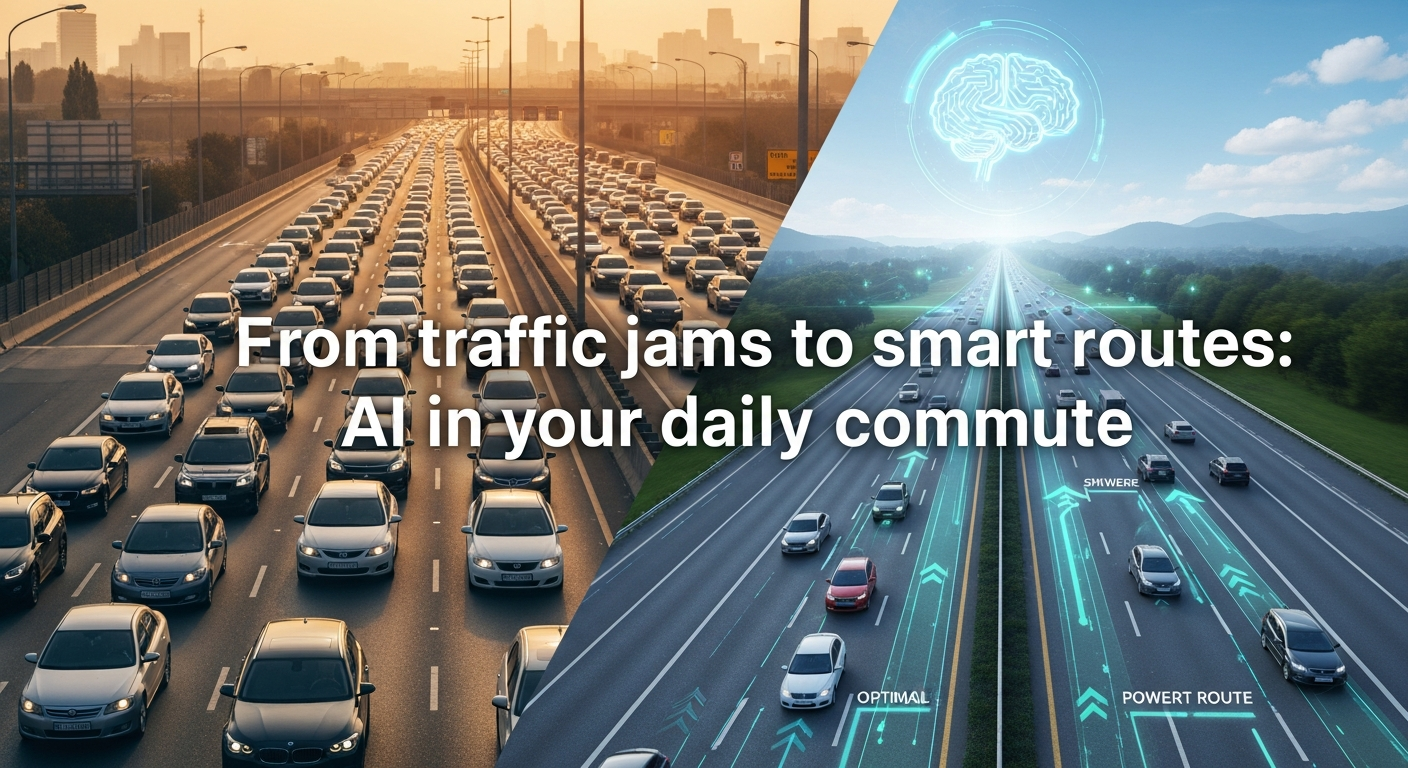
From traffic jams to smart routes: AI in your daily commute
- November 20, 2025
- ~ 1 min read
- 180 views
- Smart Cities , Lifestyle & AI , GenAI
Introduction to Smarter Commutes
Imagine being stuck in a traffic jam, watching the minutes tick by as you inch along the highway, feeling frustrated and helpless. This scenario is all too familiar for millions of commuters around the world. Traffic jams not only waste time and fuel but also have a significant impact on our daily lives, affecting our productivity, mental health, and overall well-being. The problem of traffic congestion is complex and multifaceted, involving factors such as urbanization, population growth, and inadequate infrastructure. However, with the advent of AI in transportation, there is hope for a smarter, more efficient, and less frustrating commute.
The Impact of Traffic Jams
Traffic jams are more than just a nuisance; they have serious economic and environmental consequences. According to recent studies, traffic congestion costs billions of dollars in lost productivity and fuel each year. Moreover, the idling engines and stopped vehicles contribute to air pollution, negatively impacting public health. It's clear that something needs to change. By leveraging AI-powered solutions, we can begin to address these issues and create a more sustainable, efficient transportation system.
The Potential of AI in Transportation
AI in transportation has the potential to revolutionize the way we commute. By analyzing real-time traffic data, optimizing routes, and predicting traffic patterns, AI can help reduce congestion, decrease travel times, and improve overall traffic flow. Smart commutes are no longer just a concept; they are becoming a reality, thanks to advancements in AI and machine learning. From intelligent traffic management systems to autonomous vehicles, the possibilities are endless, and the benefits are numerous.
What to Expect
In this article, we will delve into the world of AI in transportation and explore the various ways it is transforming our daily commutes. We will discuss the latest technologies and innovations, from traffic management systems to route optimization algorithms. You will learn about the current state of smart commutes, the challenges and opportunities, and what the future holds for AI in transportation. By the end of this article, you will have a deeper understanding of the role of AI in shaping the future of transportation and how it can improve your daily commute. Whether you are a commuter, urban planner, or simply interested in the latest technologies, this article will provide you with valuable insights and information on the exciting world of AI in transportation.
The future of transportation is not just about moving people from point A to point B; it's about creating a seamless, efficient, and sustainable experience that improves our daily lives.
As we embark on this journey to explore the world of AI in transportation, we invite you to join us in discovering the possibilities and potential of smarter commutes. In the following sections, we will dive deeper into the applications, benefits, and challenges of AI in transportation, providing you with a comprehensive understanding of this rapidly evolving field.
Understanding AI in Transportation
The integration of Artificial Intelligence (AI) in transportation systems is revolutionizing the way we commute. At its core, AI refers to the development of computer systems that can perform tasks that typically require human intelligence, such as learning, problem-solving, and decision-making. In the context of transportation, AI technologies are being leveraged to improve traffic flow, reduce congestion, and optimize routes. To understand how AI is applied in transportation, it's essential to grasp the basic principles of machine learning and predictive analytics, two key types of AI technologies used in traffic management.
Basic Principles of AI in Transportation
Imagine you're driving to work, and your GPS suggests an alternative route to avoid traffic. This is a simple example of machine learning in action. Machine learning algorithms analyze historical traffic data to predict future traffic patterns and provide optimized routes. These algorithms can learn from experience, adapting to new data and improving their predictions over time. For instance, during rush hour, the algorithm may suggest a route that avoids major intersections, reducing travel time and decreasing the likelihood of accidents. By applying machine learning to traffic management, cities can reduce congestion, lower emissions, and improve air quality.
Types of AI Technologies Used in Traffic Management
In addition to machine learning, predictive analytics plays a crucial role in traffic optimization. Predictive analytics involves using statistical models and machine learning algorithms to analyze data and make predictions about future events. In transportation, predictive analytics can be used to forecast traffic volume, identify potential bottlenecks, and optimize traffic signal timing. For example, predictive analytics can help cities anticipate and prepare for large events, such as concerts or sporting events, by adjusting traffic signal timing and deploying additional traffic management resources. Other AI technologies used in traffic management include computer vision, natural language processing, and the Internet of Things (IoT).
Some examples of AI-driven traffic optimization strategies include:
- Smart traffic signals that adjust their timing based on real-time traffic conditions
- Dynamic lane management, which optimizes lane usage to reduce congestion and minimize travel times
- Route optimization, which provides drivers with the most efficient routes based on real-time traffic data
The Role of Data in AI-Powered Transportation Systems
Data is the lifeblood of AI-powered transportation systems. AI technologies rely on high-quality, real-time data to make informed decisions and optimize traffic flow. This data can come from a variety of sources, including traffic sensors, cameras, and GPS devices. By analyzing this data, cities can identify trends and patterns in traffic behavior, anticipate potential problems, and develop proactive solutions to mitigate congestion and improve traffic flow. The role of data in AI-powered transportation systems cannot be overstated, as it enables cities to make data-driven decisions and create more efficient, sustainable, and safe transportation systems. As the use of AI technologies in transportation continues to grow, the importance of data will only continue to increase, driving innovation and improvement in traffic optimization and route planning.
The future of transportation is being shaped by AI, and the potential benefits are vast. By leveraging AI technologies, cities can reduce congestion, improve air quality, and create more efficient, sustainable transportation systems. As we look to the future, it's essential to continue investing in AI research and development, ensuring that our transportation systems are equipped to meet the challenges of tomorrow.
Real-World Applications of AI in Commutes
The integration of Artificial Intelligence (AI) in daily commutes is transforming the way we travel, making our journeys faster, safer, and more environmentally friendly. From smart traffic signals to route optimization apps, AI is being leveraged to tackle the complexities of urban mobility. In this section, we will delve into real-world applications of AI in commutes, exploring the benefits, challenges, and successes of these innovative solutions.
Smart Traffic Signals and Route Optimization
One of the most significant applications of AI in commutes is the optimization of traffic signal timing. By analyzing real-time traffic conditions, smart traffic signals can adjust their timing to minimize congestion and reduce travel times. For instance, the city of Pittsburgh has implemented an AI-powered traffic signal system, which has resulted in a 21% reduction in travel times and a 17% decrease in congestion. Similarly, route optimization apps like Waze and Google Maps use AI to suggest the fastest routes, taking into account real-time traffic conditions, road closures, and other factors that may impact travel time.
These AI-powered solutions have numerous benefits, including reduced travel times, decreased congestion, and environmental advantages. By minimizing the time spent in traffic, commuters can reduce their fuel consumption, lower their emissions, and arrive at their destinations feeling less stressed and more productive. Moreover, public transportation systems can also be enhanced with AI, enabling better scheduling and management of buses and trains, and providing commuters with more reliable and efficient services.
Public Transportation and AI-Driven Traffic Management
Public transportation systems are another area where AI is making a significant impact. By analyzing data on passenger demand, traffic conditions, and other factors, AI can optimize bus and train schedules, reducing wait times and improving the overall commuting experience. For example, the city of Copenhagen has implemented an AI-powered public transportation system, which has resulted in a 10% reduction in travel times and a 5% increase in passenger satisfaction.
In addition to public transportation, AI is also being used to develop AI-driven traffic management systems. These systems use real-time data and machine learning algorithms to optimize traffic flow, reducing congestion and minimizing travel times. Cities like Singapore and Barcelona have successfully implemented such systems, resulting in significant reductions in traffic congestion and improvements in air quality.
Successful Implementations and Challenges
While the benefits of AI in commutes are numerous, there are also challenges to be addressed. Implementing AI-powered traffic management systems requires significant investments in infrastructure, data collection, and analytics. Moreover, there are concerns about data privacy and cybersecurity, which must be carefully addressed to ensure the safe and secure operation of these systems.
Despite these challenges, many cities have successfully implemented AI-driven traffic management systems. For example, the city of Dubai has implemented a smart traffic system, which uses AI to optimize traffic signal timing and reduce congestion. The system has resulted in a 20% reduction in travel times and a 15% decrease in congestion. Similarly, the city of Melbourne has implemented an AI-powered public transportation system, which has resulted in a 12% reduction in travel times and a 10% increase in passenger satisfaction.
The key to successful implementation is to start small, focus on specific pain points, and scale up gradually. By doing so, cities can unlock the full potential of AI in commutes, making their transportation systems more efficient, sustainable, and commuter-friendly.
In conclusion, the real-world applications of AI in commutes are numerous and varied, ranging from smart traffic signals to route optimization apps and public transportation systems. By leveraging AI, cities can reduce congestion, minimize travel times, and create more sustainable and efficient transportation systems. As the technology continues to evolve, we can expect to see even more innovative solutions emerge, transforming the way we commute and making our cities more livable and sustainable.
Advanced AI Concepts for Future Transportation
The integration of autonomous vehicles into our daily commutes is poised to revolutionize the way we travel. By leveraging advanced computer vision, machine learning algorithms, and sensor data, autonomous vehicles can navigate through complex traffic scenarios with ease, reducing the likelihood of accidents and decreasing travel times. Moreover, the widespread adoption of autonomous vehicles is expected to have a significant impact on traffic flow, as they can optimize their routes in real-time to minimize congestion and reduce the overall volume of traffic on the roads.
Integration of IoT Devices with AI for Real-Time Traffic Monitoring
The Internet of Things (IoT) plays a crucial role in the development of intelligent transportation systems. By integrating IoT devices with AI, transportation authorities can monitor traffic conditions in real-time, receiving valuable insights into traffic patterns, congestion hotspots, and accident-prone areas. This data can be used to optimize traffic signal control, redirect traffic flow, and provide commuters with real-time updates on traffic conditions, enabling them to make informed decisions about their route. Furthermore, the use of sensor data from IoT devices can help to identify potential issues before they occur, allowing for proactive maintenance and minimizing the risk of accidents.
Advanced Predictive Models for Traffic Forecasting
Predictive models are a key component of AI-driven transportation systems, enabling authorities to forecast traffic conditions and make data-driven decisions. By analyzing historical traffic data, weather patterns, and other factors, predictive models can identify trends and patterns that inform traffic management strategies. For instance, predictive models can be used to optimize traffic signal timing, reducing congestion and minimizing travel times. Additionally, machine learning algorithms can be used to analyze real-time data from IoT devices, enabling predictive models to adapt to changing traffic conditions and provide more accurate forecasts.
The development of advanced predictive models also raises important AI ethics considerations. As predictive models become increasingly reliant on real-time data, there is a risk that they may perpetuate existing biases and inequalities in transportation systems. For example, if predictive models are trained on data that reflects existing traffic patterns, they may reinforce these patterns rather than challenging them. Therefore, it is essential to consider the ethical implications of predictive models and ensure that they are designed and developed with fairness and equity in mind.
Future Directions and Innovations in AI for Transportation
As AI continues to evolve, we can expect to see significant innovations in the field of transportation. One potential area of development is the integration of autonomous vehicles with IoT devices and predictive models to create a seamless and efficient transportation experience. Additionally, the use of edge computing and 5G networks is expected to enable faster and more reliable data transmission, supporting the development of more sophisticated AI applications in transportation. Ultimately, the future of transportation will be shaped by the AI ethics considerations that we prioritize today, and it is essential that we consider the potential impacts of AI on our transportation systems and work to create a fair, equitable, and sustainable future for all.
- Increased adoption of autonomous vehicles
- Integration of IoT devices with AI for real-time traffic monitoring
- Development of advanced predictive models for traffic forecasting
- Greater emphasis on AI ethics and fairness in transportation systems
The future of transportation is not just about technology – it's about creating a better quality of life for commuters and citizens. By prioritizing AI ethics and fairness, we can ensure that the benefits of AI are shared by all, and that our transportation systems are designed to support the well-being of people and the planet.
Implementing AI Solutions for Smarter Commutes
As we delve into the world of Artificial Intelligence (AI) in daily commutes, it's essential to understand the practical steps that can be taken to leverage AI for better commutes. Both individuals and cities can benefit from AI implementation by following a set of guidelines and best practices. In this section, we will explore the steps individuals can take, guidelines for cities, and the importance of data privacy in AI-driven transportation.
Steps for Individuals: Leveraging AI for Smarter Commutes
Individuals can take several steps to harness the power of AI for better commutes. One of the most effective ways is by using route optimization apps that utilize AI algorithms to provide the most efficient routes in real-time. These apps can help reduce travel time, avoid traffic congestion, and decrease fuel consumption. Additionally, individuals can use AI-powered public transit apps to plan their trips more efficiently. By using these apps, individuals can contribute to a smarter commute and reduce their carbon footprint.
Some popular route optimization apps include Waze, Google Maps, and Inrix. These apps use real-time traffic data and AI algorithms to provide the most efficient routes. Individuals can also use AI-powered virtual assistants like Siri, Google Assistant, or Alexa to get traffic updates and plan their commutes.
Guidelines for Cities: Implementing AI-Powered Traffic Management Systems
Cities can benefit from AI implementation by developing AI-powered traffic management systems. These systems can analyze real-time traffic data and optimize traffic signal timing to reduce congestion and decrease travel times. Cities can also use AI-powered sensors and cameras to monitor traffic conditions and detect incidents more quickly. By implementing these systems, cities can improve traffic flow, reduce congestion, and enhance public safety.
Cities should follow best practices for data collection and privacy when implementing AI-powered traffic management systems. This includes ensuring that all data collection is transparent, secure, and compliant with relevant regulations. Cities should also establish clear guidelines for data sharing and usage to maintain public trust.
Overcoming Common Challenges and Best Practices
When implementing AI solutions for smarter commutes, both individuals and cities may face common challenges such as data quality issues, cybersecurity concerns, and public acceptance. To overcome these challenges, it's essential to follow transportation best practices such as ensuring data quality, implementing robust cybersecurity measures, and engaging with the public to raise awareness about the benefits of AI in transportation.
Some key best practices for data collection and privacy include:
- Ensuring transparency in data collection and usage
- Implementing robust cybersecurity measures to protect data
- Establishing clear guidelines for data sharing and usage
- Complying with relevant regulations and standards
By following these guidelines and best practices, individuals and cities can harness the power of AI implementation to create smarter commutes, reduce traffic congestion, and enhance public safety. As we continue to explore the potential of AI in transportation, it's essential to prioritize data privacy and security to maintain public trust and ensure the long-term success of these initiatives.
By working together, we can create a future where AI-powered transportation systems make our commutes faster, safer, and more efficient, while also protecting our privacy and security.
Comparing AI-Powered Transportation Solutions
The application of Artificial Intelligence (AI) in daily commutes has led to the development of various transportation solutions, each with its strengths and weaknesses. In this section, we will delve into a comparison of different AI technologies used in transportation, analyze various route optimization algorithms, and discuss the pros and cons of public vs. private transportation systems enhanced with AI. We will also evaluate the cost-effectiveness of AI solutions for traffic management.
AI Technologies Comparison
When it comes to AI technologies used in transportation, two popular approaches are machine learning and deep learning. Machine learning algorithms can be used to analyze traffic patterns and optimize routes, while deep learning techniques can be applied to more complex tasks such as image recognition and natural language processing. The choice of AI technology depends on the specific application and the complexity of the problem being solved. For example, machine learning can be used for predictive maintenance of public transportation systems, while deep learning can be used for autonomous vehicle navigation.
- Machine learning: suitable for route optimization, traffic prediction, and predictive maintenance
- Deep learning: suitable for autonomous vehicle navigation, image recognition, and natural language processing
Route Optimization Algorithms
Route optimization algorithms are a crucial component of AI-powered transportation solutions. These algorithms can be used to find the most efficient routes, reduce traffic congestion, and minimize travel times. Some popular route optimization algorithms include the Dijkstra's algorithm, A\* algorithm, and genetic algorithm. Each algorithm has its strengths and weaknesses, and the choice of algorithm depends on the specific application and the complexity of the problem being solved.
- Dijkstra's algorithm: suitable for finding the shortest path in a graph
- A\* algorithm: suitable for finding the shortest path in a graph with heuristic functions
- Genetic algorithm: suitable for solving complex optimization problems
Public vs. Private Transportation Systems
The application of AI in public vs. private transportation systems has different pros and cons. Public transportation systems can benefit from AI-powered route optimization, predictive maintenance, and real-time scheduling. However, public transportation systems often face challenges such as limited funding, aging infrastructure, and regulatory hurdles. Private transportation systems, on the other hand, can benefit from AI-powered autonomous vehicle navigation, personalized routing, and real-time traffic updates. However, private transportation systems often face challenges such as high development costs, liability concerns, and regulatory uncertainties.
The key to successful AI-powered transportation solutions is to strike a balance between accuracy and complexity, and cost and benefit. By carefully evaluating the pros and cons of different AI technologies, route optimization algorithms, and public vs. private transportation systems, we can create more efficient, sustainable, and equitable transportation systems for all.
In conclusion, the comparison of AI-powered transportation solutions reveals a complex landscape of trade-offs and opportunities. By understanding the strengths and weaknesses of different AI technologies, route optimization algorithms, and public vs. private transportation systems, we can make informed decisions about the development and deployment of AI-powered transportation solutions. As we move forward, it is essential to prioritize collaboration, innovation, and sustainability to create a better future for transportation.
Conclusion and Future Directions
In conclusion, the application of AI in transportation has the potential to revolutionize the way we commute, making our daily travels more efficient, safe, and sustainable. Throughout this article, we have explored the various ways in which AI can improve traffic flow and route optimization, from predicting traffic congestion to providing personalized route recommendations. The benefits of AI-powered transportation solutions are numerous, including reduced travel times, decreased fuel consumption, and lower emissions.
Reflection on the Potential of AI
The future of transportation is undoubtedly linked to the development and implementation of AI-powered solutions. As we look to the future, it is clear that AI will play an increasingly important role in shaping the way we travel. With the ability to analyze vast amounts of data and make predictions in real-time, AI can help to create more smart commutes that are tailored to the needs of individual commuters. Whether it's optimizing traffic signal timing or providing real-time updates on traffic conditions, AI has the potential to make a significant impact on the way we travel.
Call to Action
As we move forward, it is essential that we embrace AI-powered solutions and support their development. By doing so, we can help to create a more sustainable, efficient, and safe transportation system that benefits everyone. We encourage readers to explore the various AI-powered transportation solutions that are available, from mobile apps that provide personalized route recommendations to smart traffic management systems that optimize traffic flow. By working together, we can create a future of transportation that is shaped by the power of AI and driven by a commitment to innovation and sustainability.
Some key takeaways from this article include:
- The application of AI in transportation can improve traffic flow and route optimization
- AI-powered solutions can provide personalized route recommendations and real-time updates on traffic conditions
- The development and implementation of AI-powered transportation solutions can help to create a more sustainable, efficient, and safe transportation system
The future of transportation is not just about getting from point A to point B, it's about creating a system that is sustainable, efficient, and safe for everyone. With the power of AI, we can make this vision a reality.
In final thoughts, the potential of AI in transportation is vast and exciting. As we look to the future, we are hopeful that the development and implementation of AI-powered transportation solutions will continue to shape the way we travel, making our daily commutes more efficient, safe, and sustainable. We encourage readers to join us on this journey, exploring the various ways in which AI can improve our transportation systems and creating a better future for all.

Comments (0)
Please login or register to leave a comment.
No comments yet. Be the first to comment!