AI Washing: What It Is, Why It’s Dangerous, and How to Spot It in 2026
- January 06, 2026
- ~ 1 min read
- 186 views
- GenAI , AI in Business
Section 1
In the electrifying world of 2026, where **AI washing** has become the buzzword du jour, companies are racing to slap "AI-powered" labels on everything from chatbots to coffee makers. But what exactly is this deceptive practice, and why should you care? This introductory section pulls back the curtain on **AI washing**, revealing its mechanics, dangers, and the red flags to watch for in an era of unchecked hype.
What Is AI Washing?
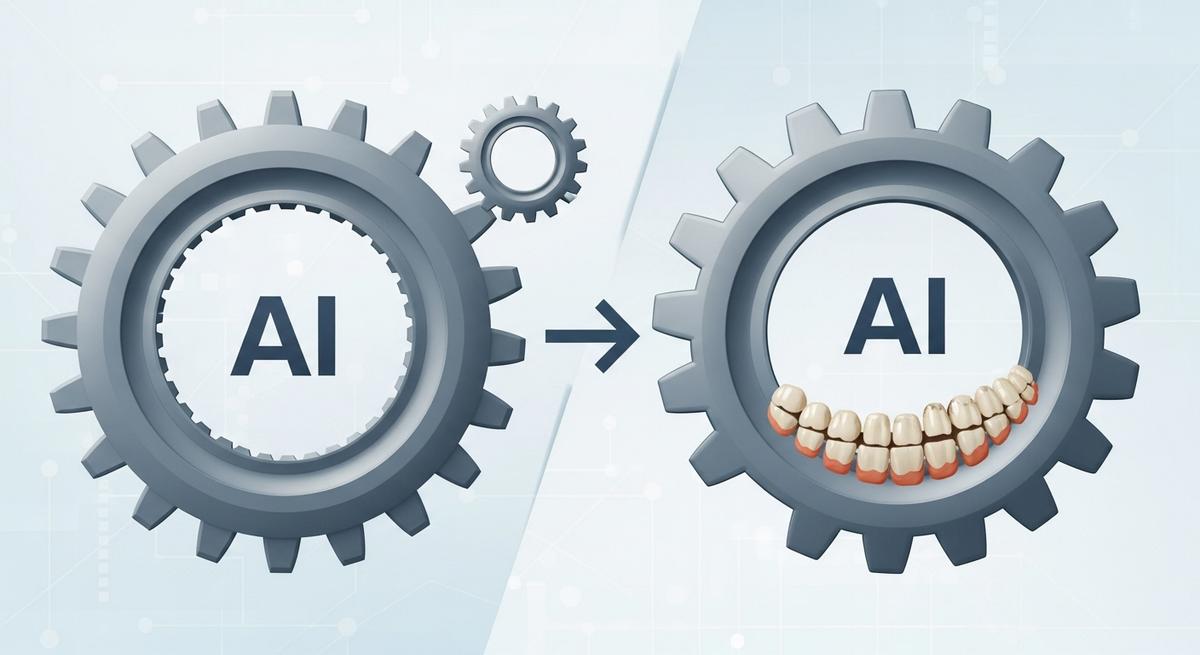
**AI washing** is a cunning marketing tactic where companies exaggerate—or outright fabricate—their use of artificial intelligence in products and services to capitalize on the technology's skyrocketing popularity.[1][2] Much like greenwashing peddled false eco-credentials or rainbow washing faked inclusivity, **AI washing** inflates expectations by misrepresenting basic automation as cutting-edge AI, misleading consumers, investors, and regulators alike.[1]
Picture a startup touting a "world's first robot lawyer" that promises "ironclad" legal documents, only for it to be little more than scripted templates—or e-commerce tools claiming **AI** will "maximize profits" on platforms like Amazon, when they're just repackaged rule-based systems.[2][5] As generative AI demand surges across sectors, this practice distorts the market, eroding trust in genuine innovations.[1]
Why AI Washing Is Dangerously Pervasive in 2026
By early 2026, **AI washing** isn't just a fringe issue—it's a full-blown crisis fueled by investor frenzy and regulatory scrutiny. The U.S. Federal Trade Commission (FTC) launched Operation AI Comply in 2024, targeting deceptive claims, with actions continuing into 2025 and beyond.[2] The SEC has ramped up enforcement, scrutinizing false statements about AI in trading algorithms, chatbots, and investment advice, even charging firms with securities fraud.[2][5]
The dangers? It inflates an **AI bubble**, channeling funds into hollow ventures while genuine AI pioneers struggle for recognition. Consumers waste money on underperforming products, businesses face lawsuits, and the industry risks a backlash that stifles real progress.[1][3] With the DOJ and international regulators joining the fray, non-compliant companies are paying steep penalties—from fines to reputational ruin.[2]
What to Expect from This Guide
This blog—your roadmap to navigating **AI washing** in 2026—breaks it down across seven sections. We'll explore its mechanics, unpack why it's exploding now, spotlight real-world examples, teach you how to detect it (with checklists), reveal regulatory crackdowns, and arm you with strategies to avoid falling victim. Whether you're an investor, consumer, or business leader, you'll finish equipped to separate hype from reality.
- Spot exaggerated claims before they cost you.
- Understand enforcement trends shaping 2026.
- Implement safeguards for authentic AI adoption.
Ready to demystify **AI washing**? Let's dive deeper.
What Exactly Is AI Washing?
AI washing is a deceptive marketing tactic where companies exaggerate, misrepresent, or outright fabricate their use of artificial intelligence in products and services to capitalize on the technology's hype.[1][2][4] Much like greenwashing misled consumers with false sustainability claims or rainbow washing exploited inclusivity trends, AI washing inflates expectations by portraying basic automation or rule-based systems as cutting-edge AI innovations.[1] In 2026, as generative AI continues to dominate headlines, this practice has surged, with businesses across sectors—from e-commerce to finance—slapping the "AI-powered" label on offerings to attract customers, secure funding, and outpace competitors.[1][5]
The core issue lies in the disconnect between promises and reality. A company might claim its chatbot uses advanced machine learning when it's merely a scripted FAQ responder, or tout "AI-driven" investment advice that's little more than repackaged algorithms without genuine learning capabilities.[5] This not only misleads investors pouring money into overvalued ventures but also erodes trust in legitimate AI advancements.[1][3]
Why AI Washing Is Dangerously Problematic in 2026
The dangers of AI washing extend far beyond individual scams, threatening the entire AI ecosystem. It inflates an AI bubble, drawing overinvestment into hollow ventures that collapse when hype meets scrutiny, much like past tech bubbles.[1] Consumers face financial losses from bogus schemes promising "done-for-you" AI e-stores on platforms like Amazon or Etsy that fail to deliver profits.[2] Investors, lured by exaggerated claims, fund startups lacking substance, distorting market dynamics and stifling genuine innovation.[3]
Regulatory backlash is intensifying. The FTC's 2024 Operation AI Comply sweep targeted deceptive claims, including a so-called "world's first robot lawyer" hyped for "ironclad" documents.[2] By 2026, the SEC and DOJ have ramped up enforcement, charging firms for false AI statements in trading algorithms, recruitment tools, and predictive analytics—leading to civil penalties, disgorgement, and even criminal wire-fraud charges.[2][5] Internationally, similar trends in the UK and EU signal a transatlantic crackdown, with regulators demanding transparency on whether "AI" means true machine learning or just basic automation.[3][5]
"AI washing distorts the true capabilities of artificial intelligence, causing an overinvestment in businesses that fail to fully deliver on their promises."[1]
Key Examples of AI Washing to Watch For
Real-world cases illustrate the pervasiveness. In 2023-2024, the FTC sued business coaching firms peddling AI-powered e-stores as passive income machines, while the SEC hit investment advisers for misleading AI use claims.[2] A 2025 DOJ case targeted an AI recruitment startup falsely advertising machine learning.[2] Even public companies aren't immune: SEC panels in 2025 emphasized scrutiny of chatbots, AI-generated advice, and trading tools lacking verifiable machine-learning functionality.[5]
- Exaggerated capabilities: Claiming AI can "maximize profits" without evidence of model performance or testing.[2][5]
- False attribution: Labeling rule-based tools as AI to boost sales or valuations.[1][4]
- Hype-driven schemes: "AI-as-a-service" promising instant online empires that underperform.[2]
These examples underscore why vigilance is crucial in 2026's maturing AI landscape. By understanding AI washing, businesses can avoid pitfalls, and consumers can demand proof—such as model testing results or transparent methodologies—before buying in.[5]
Section 3
Consumer Brands Riding the AI Hype Wave
In the consumer goods sector, AI washing often manifests through flashy marketing campaigns that promise futuristic innovation without substantive AI integration. A prime example is Coca-Cola's 2023 launch of Coca-Cola Y3000, marketed as the first drink "co-created with artificial intelligence" to deliver "the flavor of tomorrow."[1][2] The campaign generated buzz, but critics quickly pointed out the lack of transparency on how AI contributed to the flavor development process. Was it machine learning algorithms analyzing taste data, or merely superficial name-dropping to capitalize on AI excitement? This vagueness exemplifies AI washing, where brands leverage the term to appear cutting-edge without delivering genuine technological advancement.[1][2]
Similarly, McDonald's 2021 partnership with IBM introduced AI-powered drive-thru ordering at over 100 locations, aiming to streamline operations and enhance customer experience.[1] Initial hype portrayed it as a revolutionary voice AI solution. However, by June 2024, the experiment ended amid viral social media backlash. Customers shared frustrating videos, like one where the AI relentlessly added Chicken McNuggets to an order, escalating to 260 pieces despite pleas to stop.[1] These incidents highlight how overhyped AI washing can backfire, eroding consumer trust when reality falls short of promises.
Tech Startups and False Promises of Autonomy
Tech companies, particularly startups, frequently engage in AI washing by exaggerating product capabilities to attract investors and users. In August 2025, the Federal Trade Commission (FTC) targeted Air AI in a high-profile case under Operation AI Comply, accusing the firm of deceptive claims about its "conversational AI technology" that supposedly replaced full-time human sales reps with no ramp-up time or management needed.[4] Purchasers reported faulty tools unable to handle basic tasks like accurate call-making or scheduling, revealing the gap between marketed autonomy and actual performance.[4] This enforcement action underscores the legal risks of AI washing, including violations of the FTC Act and Telemarketing Sales Rule.
Another stark case involved Nate, a mobile shopping app. Its founder, Albert Saniger, raised over $40 million by touting AI-driven autonomous purchase processing. In reality, the system relied on overseas human workers manually handling transactions, mimicking automation.[6] Charged by the SEC and DOJ in April 2025, this scandal illustrates how AI washing can lead to securities fraud and investor losses, prompting stricter regulatory scrutiny in 2026.
Everyday Products Masquerading as Intelligent
Beyond high-profile brands, AI washing permeates household appliances and software tools. Many "smart" fridges, vacuum cleaners, and thermostats are labeled as AI-powered simply for internet connectivity and app control, lacking true learning or autonomous capabilities expected from artificial intelligence.[2] Content creation tools follow suit, promising full automation of videos or copy, yet requiring extensive human tweaks for usable output.[2]
- Smart appliances: Connected devices rebranded as "intelligent" without adaptive algorithms.
- Marketing software: Tools downplaying human input while hyping AI generation.
- Financial services: Platforms claiming AI fraud detection that merely uses basic rule-based automation.[3]
These real-world use cases demonstrate AI washing's pervasiveness across industries. By 2026, with impending EU AI Regulation fines and FTC crackdowns, companies face mounting pressure for transparency. Spotting these examples empowers consumers and businesses to demand genuine innovation over hype.[5]
The Technical Underpinnings of AI Washing: Beyond Hype to Reality
In 2026, AI washing has evolved into a sophisticated challenge, where companies leverage complex terminology to mask rudimentary technologies as cutting-edge AI. At its core, true artificial intelligence involves machine learning models—such as neural networks trained on vast datasets—that exhibit adaptive learning, pattern recognition, and predictive capabilities without explicit programming[1][5]. However, AI washing often repackages simple rule-based algorithms, basic automation, or even static scripts as "AI-powered" solutions, misleading stakeholders about actual performance and scalability[5].
This deception hinges on technical ambiguities. For instance, a chatbot using predefined if-then rules might be marketed as employing "advanced natural language processing," when it lacks genuine machine learning. Regulators like the SEC scrutinize such claims, evaluating whether disclosures accurately describe machine-learning functionality or merely rebrand traditional automation[5]. In practice, detecting this requires probing the system's transparency: Does it retrain models periodically? Are outputs explainable via techniques like SHAP values or LIME? Without these, claims inflate expectations unrealistically[1].
Regulatory Evolution and Enforcement in 2026: Cracking Down on Deception
By 2026, enforcement against AI washing has intensified globally, building on milestones like the FTC's 2024 Operation AI Comply sweep, which targeted exaggerated claims in AI-as-a-service products[2]. The SEC's Cybersecurity and Emerging Technologies Unit (CETU) now prioritizes "rooting out" fraud in areas like predictive analytics, AI-driven trading, and generative tools, demanding robust evidence for public statements[5]. Internationally, the DOJ and UK regulators echo this, charging firms for false AI use in recruitment and legal tech[2][3].
Key enforcement triggers include:
- Misrepresentation of capabilities: Claiming an AI tool produces "ironclad" legal documents without human oversight, as seen in FTC actions[2].
- Overstated scalability: Promising AI that "maximizes profits" on e-commerce platforms without model validation[2].
- Lack of transparency: Failing to disclose if "AI" is just rule-based logic rather than trained models[5].
These cases underscore the need for ongoing model testing, where firms must validate performance metrics like accuracy, bias, and drift over time to sustain claims[5]. Non-compliance risks fines, injunctions, and reputational damage, eroding investor trust in the broader AI ecosystem[1].
Expert Strategies to Spot and Mitigate AI Washing Risks
For businesses and consumers in 2026, mitigating AI washing demands technical diligence. Experts recommend expanding disclosure committees to review AI claims under SOX 302 processes, ensuring investor materials undergo rigorous vetting[5]. Actionable steps include:
- Request technical demos: Ask for model cards detailing training data, architecture (e.g., transformer vs. decision tree), and validation results.
- Conduct audits: Use third-party tools to test for true ML behaviors, like generalization on unseen data.
- Monitor for red flags: Vague buzzwords like "revolutionary AI" without benchmarks signal potential washing[1].
"Slight changes in AI technology can result in significant changes to overall reliability—periodic testing is essential."[5]
By prioritizing verifiable technical substance over hype, stakeholders can foster genuine innovation while sidelining deceptive practices[3]. This deep dive equips you to navigate 2026's AI landscape with precision.
AI Washing vs. Legitimate AI Implementation: Understanding the Differences
As AI washing becomes increasingly prevalent in 2026, understanding how deceptive AI claims differ from genuine artificial intelligence implementation is critical for consumers and investors alike. The distinction between companies that legitimately use AI and those engaging in AI washing often comes down to transparency, measurable capabilities, and honest communication about what their technology actually does.
The Core Differences: Real AI vs. AI Washing
Legitimate AI implementation involves companies that transparently describe their technology's actual capabilities and limitations. These organizations use machine learning, predictive analytics, or algorithmic solutions with clear documentation of how the technology functions. In contrast, AI washing occurs when companies either falsely claim to use AI entirely or significantly exaggerate what their AI systems can accomplish.
The key difference lies in accountability. Companies using genuine AI are willing to explain their technology's functionality, acknowledge its constraints, and provide evidence of its effectiveness. AI washers, by contrast, rely on vague marketing language and avoid specific technical details. For example, a legitimate AI recruitment tool would clearly explain its machine learning methodology and validation results, whereas an AI washing competitor might simply claim to use "advanced AI" without substantiation.
Red Flags That Indicate AI Washing Over Legitimate Use
Several warning signs can help you distinguish between authentic AI implementation and deceptive marketing practices:
- Vague technical descriptions: Legitimate AI companies explain how their systems work. If a company cannot or will not describe its AI methodology, that's a red flag.
- Unrealistic promises: Claims that AI can replace human expertise entirely (such as producing "ironclad" legal documents without human review) often indicate AI washing rather than genuine capability.
- Lack of transparency about data and testing: Real AI systems undergo rigorous testing and validation. Companies should be able to discuss model performance, accuracy rates, and limitations.
- Rebranding simple automation as AI: Some companies relabel basic rule-based automation or simple conditional logic as artificial intelligence to capitalize on AI hype.
- No independent verification: Legitimate AI implementations often have third-party validation, case studies, or peer-reviewed research supporting their claims.
Regulatory and Market Implications
The regulatory landscape has shifted dramatically to address AI washing concerns. The Federal Trade Commission's Operation AI Comply, announced in September 2024, specifically targets companies making deceptive claims about AI capabilities. The SEC has also made rooting out AI washing fraud an immediate enforcement priority, scrutinizing how both public companies and startups describe their AI capabilities to customers and investors.
This regulatory crackdown creates a significant trade-off: while legitimate AI companies may face increased scrutiny and compliance costs, they ultimately benefit from enhanced credibility and market trust. AI washers, meanwhile, face growing legal and financial risks. Companies making false AI claims now risk SEC enforcement actions, FTC lawsuits, and reputational damage that can be far more costly than honest marketing would have been.
The broader implication is that transparency about AI capabilities is becoming a competitive advantage rather than a liability. As regulators and investors demand more accountability, companies that honestly communicate their AI implementation—including its limitations—will build stronger long-term relationships with customers and stakeholders than those attempting to exploit AI hype through misleading claims.
Key Takeaway: The difference between legitimate AI use and AI washing ultimately comes down to honesty. Real AI companies can explain their technology, document its performance, acknowledge its limitations, and provide evidence of effectiveness. AI washers rely on vague promises and avoid technical specifics.
Section 7
Key Takeaways on AI Washing in 2026
AI washing remains a pervasive issue, where companies exaggerate or fabricate their artificial intelligence capabilities to lure investors and customers amid ongoing AI hype.[1][2] This deceptive practice not only inflates market bubbles but also erodes trust in genuine AI innovations, as seen in regulatory crackdowns like the FTC's Operation AI Comply and SEC enforcement actions targeting misleading claims.[2][5] By 2026, with heightened scrutiny from bodies like the DOJ and international regulators, the risks—ranging from civil penalties to securities fraud charges—have never been clearer.[3][5]
Understanding AI washing empowers you to navigate this landscape wisely. It distorts true AI potential, leading to overinvestment in hollow ventures and undermining consumer confidence across sectors.[1][4] As AI integrates deeper into business coaching, recruitment, legal tools, and e-commerce, spotting these red flags is essential for informed decisions.[2]
How to Protect Yourself and Stay Ahead
To combat AI washing, adopt a vigilant approach grounded in scrutiny:
- Verify claims rigorously: Demand transparency on AI functionality—ask if it's genuine machine learning or repackaged rule-based automation.[5]
- Check for red flags: Watch for vague promises like "AI-powered" without specifics, or exaggerated outcomes such as "ironclad" results from unproven tools.[1][2]
- Follow regulatory updates: Stay informed on FTC sweeps, SEC priorities, and emerging guidelines to avoid falling for hype-driven schemes.[2][5]
- Test and validate: For businesses, implement ongoing model testing and enhanced disclosure controls to ensure claims hold up over time.[5]
"AI washing poses significant challenges for consumers, businesses, and the broader AI industry by inflating expectations and distorting reality."[1]
Your Next Steps: Take Action Today
Don't let AI washing derail your AI journey. Start by auditing your current tools and partnerships—question every "AI-enhanced" label you encounter. For professionals and investors, integrate AI literacy into your due diligence processes to separate substance from spin.
Join the fight for authentic innovation: share this article, engage with regulators pushing back against deception, and prioritize vendors with verifiable AI ethics. In 2026, the discerning will thrive while the misled falter. What will you do next to spot and stop AI washing?

Comments (0)
Please login or register to leave a comment.
No comments yet. Be the first to comment!